
Learning Can’t Wait · Episode 92
Amy Azano: Rural Education, Equity in Education, Virginia Tech Center for Rural Education
- Amy Azano
 Hosted by Hayley Spira-Bauer, Chief Academic Officer at Fullmind
Listen now
Amy Azano: Rural Education, Equity in Education, Virginia Tech Center for Rural Education
Episode summary
In the rural education miniseries, Amy Azano of Virginia Tech describes growing up in Appalachia, discovering rural stereotypes in college, and founding the Center for Rural Education so scholars could find community. She explains coursework in rural foundations, research, policy, and place-based pedagogy, and her equity work on rural talent development, contrasting $10,000 per-pupil spending in southwest Virginia with $20,000 in Northern Virginia. The center's SEE-VT camp brings rural middle schoolers to campus with place-based enrichment, and its summit and forthcoming book center queer and Latina Appalachian identities.
Key takeaways
- Rural education is opportunity, but out of sight, out of mind leaves rural places undervalued in policy
- Rural scholars often arrive through other disciplines; the center gives them courses, community, and a hub
- Talent development must start in early grades and be place-based so rural is reinforced as valued
- Per-pupil funding gaps between rural and suburban Virginia districts can be nearly double
- Rural is not a monolith; the center's summit and book highlight queer, multilingual, and Latina Appalachian voices
About this episode
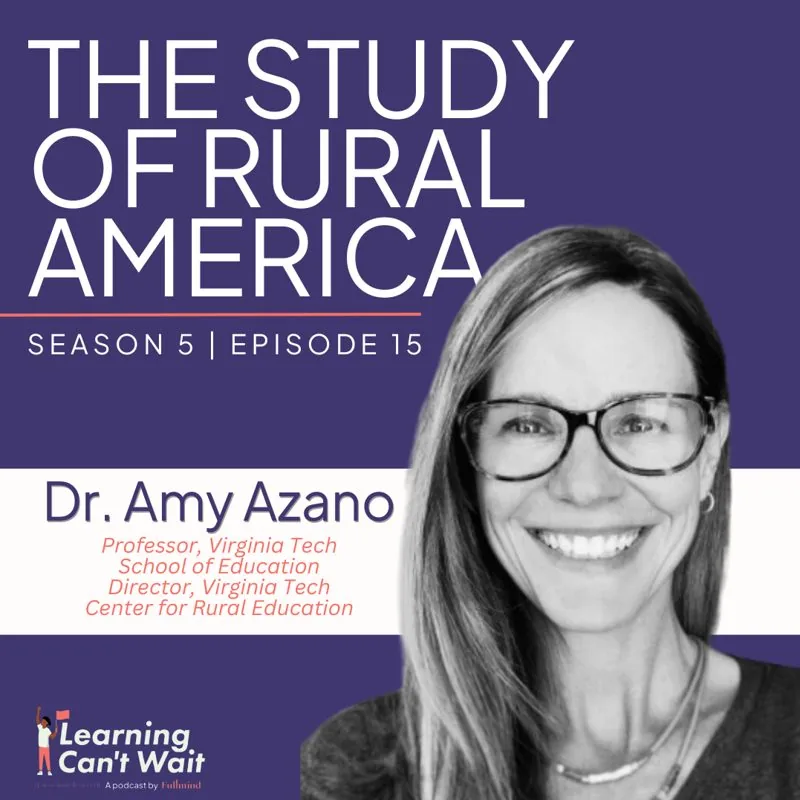
In this episode of the Learning Can't Wait podcast, host Hayley Spira-Bauer continues her miniseries on rural education with Dr. Amy Azano, a professor at the School of Education at Virginia Tech and the founding director of Virginia Tech's Center for Rural Education. Dr. Azano shares her journey from a small town in the Shenandoah Valley to becoming a leading scholar in rural education. She discusses how her upbringing shaped her passion for supporting rural educators and students.
Dr. Azano highlights the unique challenges and opportunities in rural education, emphasizing the importance of valuing the cultural and geographical contexts of rural areas. She explains how this understanding should shape educational policies to better serve rural communities.
The conversation also covers the initiatives of the Center for Rural Education at Virginia Tech, including specialized courses, research, and outreach programs like a summer enrichment camp for high-achieving rural middle school students. Dr. Azano underscores the importance of equity in rural education, addressing funding disparities and fostering inclusive environments for all rural learners.
Produced by Fullmind
Learn more:
Teaching in Rural Spaces: Thriving in Classrooms, Schools, and Communities
Episode notes
Discover the often-overlooked world of rural education through the inspiring journey of Dr. Amy Azano, a passionate advocate and director at the Center for Rural Education at Virginia Tech. Growing up in a tight-knit community in the Shenandoah Valley, Amy developed a deep appreciation for the cultural richness and unique challenges of rural life. In our latest Learning Can’t Wait podcast episode, she shares her insights on the importance of advocating for equity and opportunities in rural education, celebrating the diversity within rural America, and creating inclusive educational environments. Join us as we explore how her work is bridging gaps and promoting equity, ensuring that every rural student has the chance to succeed.
Want to bring equity, opportunity, and innovation to your rural district? Schedule your free consultation today and learn how Fullmind can help you support students, celebrate local culture, and build thriving, inclusive learning environments—no matter where you are.
In this episode of the Learning Can't Wait podcast, host Hayley Spira-Bauer continues her miniseries on rural education with Dr. Amy Price Azano, a professor at the School of Education at Virginia Tech and the founding director of Virginia Tech's Center for Rural Education. A large advocate of rural education, Dr. Price Anzno utilizes her upbringing in the Shenandoah Valley to fuel the important work she does for these districts.
Key Takeaways
- Appreciate the Cultural Richness of Rural Life: Amy's journey highlights the unique cultural elements and tight-knit community bonds in rural areas, emphasizing the importance of recognizing and valuing these aspects in rural education.
- Advocate for Equity and Opportunities in Rural Education: Ensuring that rural students receive the same quality of education and opportunities as their urban and suburban counterparts is crucial for promoting equity and bridging gaps.
- Celebrate Diversity Within Rural America: Rural spaces are diverse and multifaceted. Recognizing and celebrating this diversity is essential for creating inclusive educational environments that respect and nurture all students.
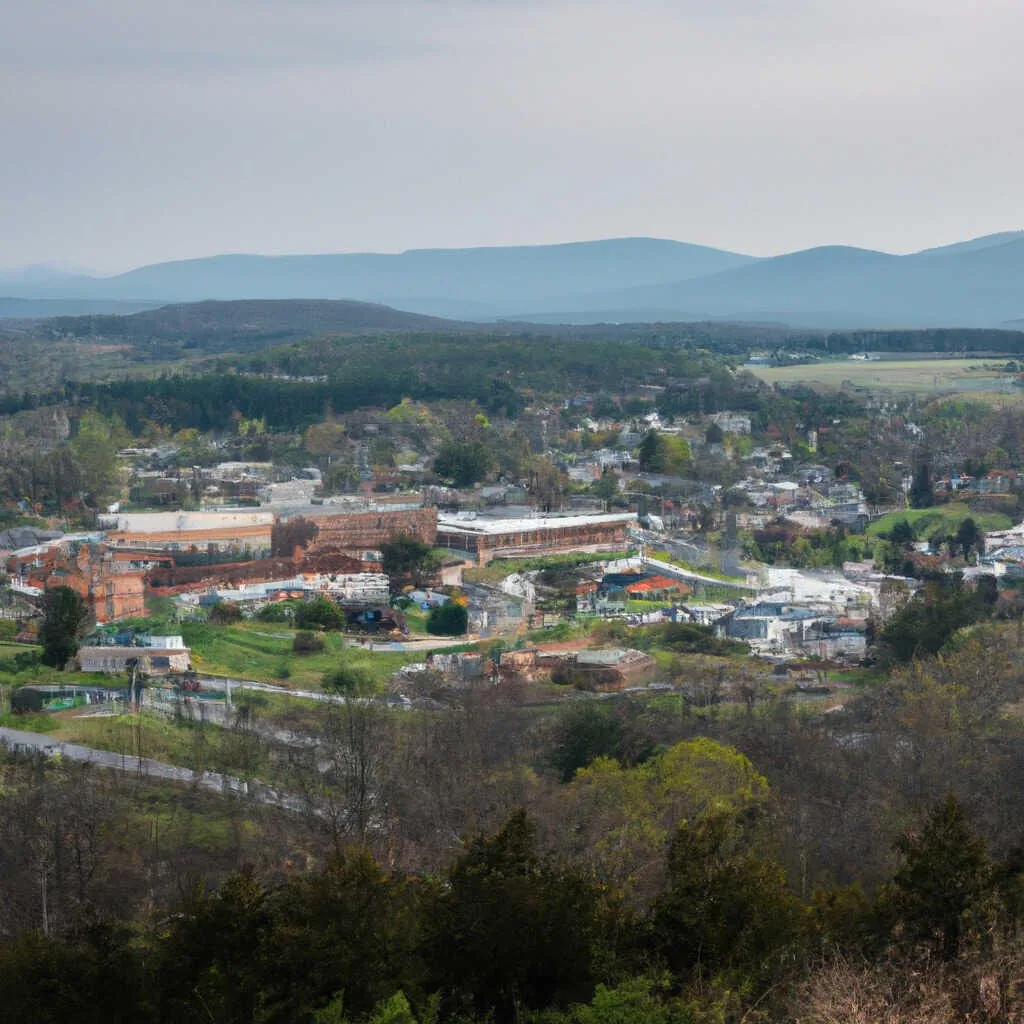
When you think of education, what comes to mind? Perhaps bustling urban schools or sprawling suburban campuses. But what about the often-overlooked rural schools? Dr. Amy Azano has spent all of her professional life bringing light to rural spaces and carving out resources for these districts. Her journey from a small rural town in the Shenandoah Valley in Virginia to becoming a leader in rural education is both inspiring and enlightening.
Growing Up Within Rural Education
Amy's roots in a small rural town in the Shenandoah Valley have profoundly shaped her perspective on education. Growing up in a tight-knit community, she developed a deep appreciation for the unique experiences and challenges that rural students face. Her upbringing, filled with distinctive cultural elements and community bonds, gave her a unique viewpoint on the world.
“When you grow up a particular way, you don’t know that that’s unique or that you’re really developing a superpower. You don’t know that you’re just growing up in a community or with your family. ” — Dr. Amy Price Azano
This realization of her unique background came later in life, particularly when she left her rural environment and noticed the cultural differences. Simple things like accents or common foods in her hometown highlighted the cultural richness of rural life, which she hadn't initially recognized as unique.
The Importance of Rural Education
For Amy, rural education is about opportunity and perspective. She believes it's a critical way to understand essential aspects of life, such as where our food, energy, and water come from. Rural education should not be an afterthought, and it is crucial to advocate for the needs and opportunities of rural learners, educators, and communities.
At the Center for Rural Education, the focus is on creating opportunities and experiences for rural learners. This advocacy ensures that rural students receive the same quality of education and opportunities as their urban and suburban counterparts, aiming to bridge gaps and promote equity.
“I think that in rural spaces, we sometimes have a little bit of a challenge of out of sight, out of mind. And so I think that that’s a lot of our work, that we are scholars and we’re researchers, but we’re also huge advocates. We’re advocates for the rural teachers that are doing the hard work, the principals and superintendents, and of course the learners that are in those rural schools and communities.” — Dr. Amy Price Azano
Addressing Equity and Diversity
A core mission of the Center for Rural Education is addressing the equity challenge in rural education. Amy's work has focused on youth talent development, particularly in identifying and nurturing the potential of young students from early on.
She also emphasizes the diversity within rural America, pointing out that rural spaces are far from homogeneous. Recognizing and celebrating this diversity is essential for creating inclusive educational environments that respect and nurture all students.
“A lot of my work has addressed not just the equity challenge, that there is an opportunity gap between rural and non-rural spaces, but also what can we do pedagogically? What can we do with a curriculum to make sure that we’re reinforcing that rural is important and rural is valued, and to embed that into the gifted curriculum.” — Dr. Amy Price Azano
Innovative Initiatives in Rural Education
Situated in Appalachia, the Center for Rural Education has become a home for many students of all levels. To put these principles into action, the Center for Rural Education has developed several innovative programs. One notable initiative is a summer camp for high-achieving rural middle school students, focusing on rural places. This program aims to show students that they can achieve greatness without needing to leave their rural environment.
“We’re in a beautiful part of southwest Virginia. And so if you haven’t thought about rural spaces before and then you find yourself living in southwest Virginia, you learn to care pretty quickly. And so it’s also an open and welcoming hub, I think, for those folks who find us as well.” — Dr. Amy Price Azano
The Center also offers a range of courses designed to equip educators with the skills and knowledge needed to support rural students. These include courses in the foundations of rural education, rural education research, and policy. Understanding and addressing the unique needs and challenges of rural schools is at the heart of their work.
The Future of Rural Education
Looking ahead, Amy envisions a future where rural education is more prominently recognized and valued. She highlights the importance of community and resilience in rural spaces, drawing parallels between her experiences and those of others in rural environments worldwide.
The Center for Rural Education at Virginia Tech was established with the goal of making a significant impact on rural education. By focusing on the unique challenges and opportunities in rural spaces, and advocating for equity and diversity, the Center aims to ensure that every student has the chance to succeed, no matter where they come from.
“We first launched the Center for Rural Education, we did so with a real intentionality of making sure that we had equity at the center of all of our work.” — Dr. Amy Price Azano
Conclusion
Amy's journey and her work at the Center for Rural Education serve as a powerful reminder of the importance of rural education. By recognizing the unique challenges and opportunities in rural spaces and advocating for equity and diversity, we can ensure that every student has the chance to succeed, no matter where they come from.
In rural education, it’s important to see the opportunities and be ready to be inspired every day. Despite the challenges, if one remains open to the unique beauty of rural communities, they will find success and fulfillment.
Full transcript
Transcript generated from the recording; minor errors may remain.
Hayley Spira-Bauer: Welcome back, everybody to the Learning Can't Wait podcast. I'm so excited to continue our miniseries on rural education with Dr. Amy Price Azano a professor at the School of Education at Virginia Tech, as well as the founding director of Virginia Tech's Center for Rural Educationucation. Welcome, Amy.
Dr. Amy Price Azano: Thank you. Thanks for having me.
Hayley Spira-Bauer: I'm so excited for you to be here. In addition to your extensive knowledge on rural education schools, setting them up, supporting teachers, you also teach teachers who become rural educators. So I have a lot of questions to ask you
Dr. Amy Price Azano: Ask. Sure.
Hayley Spira-Bauer: To start us off though, I'd love to know how you came to be the personal and professional version of yourself.
Dr. Amy Price Azano: Oh my. Well, I'll say that with that kind introduction that I'm probably more comfortable with Amy Sue. So that's part of my personal identity, I guess. I come from a very small rural town in the Shenandoah Valley in Virginia, and so when I think about how I've arrived as a professional in this space, it definitely goes back to my earliest memories of being a rural kid myself. And many, when you grow up a particular way, you don't know that that's unique or that you're really developing a superpower. You don't know that you're just growing up in a community or with your family. And so it wasn't until I left my rural space of Luray, Virginia, I was a first generation college student, my sister and I both. And so when I left my community, it was when I realized that I had an accent that not everybody has biscuits and gravy on Saturday mornings, or that you have these particular traditions that I grew up with and that were a big part of my life. ([01:57](https://www.google.com/url?sa=E&q=https%3A%2F%2Fwww.rev.com%2Ftranscript-editor%2Fshared%2FizjhCHBFr5VPl0a3uAa9Lvv-ZDTR4aB0arYnl5PHM0eVyda41Aw-4jCwYQou0_R9Iu_Rs1Hgx0kyFU1bImWnmax9Wxw%3FloadFrom%3DDocumentDeeplink%26ts%3D117.24)): And so I think it was later that I realized it was later when I realized that there were a lot of rural stereotypes that came with being, particularly from Appalachia. And so that really shaped the way that I moved through college when I became an English teacher myself in urban and suburban spaces. And really when I was able to kind of see the contrast between the opportunities that I had as a young person, which were rich and plentiful, but not ways that were necessarily valued in formal schooling, and the contrast between that and what I was seeing as a teacher in suburban and urban spaces. And so that created a bit of a rub for me and took me back to graduate school to become a scholar in rural education.
Hayley Spira-Bauer: Your origin story, as I sometimes call it, is so interesting. I love how you have the purview of multiple types of learning environments and then return back to your roots. When you think about your own education, you've shared a few anecdotes that really highlight what it was like, but what does rural education mean to you? I've had the good fortune now of meeting many rural teachers, rural educators, leaders, et cetera, but when you think about what makes rural education beautiful and unique, what would you say sticks out in your mind?
Dr. Amy Price Azano: Gosh, that's a great question, Hayley. I think rural education to me is its opportunity. It's a way of seeing the world. It's a way of seeing where our food and energy and water come from. It's a way of seeing where our poetry and our natural habitats come from. It's endless opportunity. I think the challenge that many of us and other rural led folks that you've had on your show are talking about is that there's that opportunity or that beauty is not always valued in the same ways. Not that they're not valued by policymakers or people in cities. I'm not suggesting that, but I am suggesting that sometimes we get overshadowed and that there's not a lot of place conscious thinking when we think about educational policy or the ways that rural schools are unique, that our geographies and our communities make us unique. And that's true for any community. But I think that in rural spaces, we sometimes have a little bit of a challenge of out of sight, out of mind. And so I think that that's a lot of our work that we are scholars and we're researchers, but we're also huge advocates. We're advocates for the rural teachers that are doing the hard work, the principals and superintendents, and of course the learners that are in those rural schools and communities.
Hayley Spira-Bauer: So obviously you're very passionate about this topic and you even founded the Center for Rural Educationucation. Talk to our listeners about what do students, and they're adult students, but what do adult students, what can they expect if they become a part of the Rural Education Center?
[05:00] **Dr. Amy Price Azano:** Sure. Yeah. So I am not unlike many of the colleagues that I have in this space. So a lot of us, we come to rural education through another discipline. So for example, I was an English teacher. I taught English and creative writing, and I loved being a high school English teacher. But when I was looking at PhD programs, those were the programs that were available, literacy programs, reading English education. And the context for that work was rural, but the content was something very different. It was many, again, of my friends and colleagues in rural education. It's kind of this aha moment we have in grad school. We're like, wait, people study rural education. That's fascinating because at other universities, there are centers or urban studies, that's an entire discipline. But I think that we find that space for studying rural education. And so as I became a professor, I was teaching teachers and mostly in the space of the humanities, like preparing teachers to teach English or our history and social studies. ([06:08](https://www.google.com/url?sa=E&q=https%3A%2F%2Fwww.rev.com%2Ftranscript-editor%2Fshared%2FRhqZ7O5b7-vhHsgvqSRjcAxAguc_qLe78wQ0v_7svMWmaIo_xQO2PqzuuooAAP2q0U3GGPBsM3PFj202fIX4WOb1K_o%3FloadFrom%3DDocumentDeeplink%26ts%3D368.72)): And then every once in a while I would get someone who was from a rural area or that's really what they were interested in. And so there are a lot of us at different universities and also at Virginia Tech who are doing space in rural education or also in the rural sort of ecosystem, like rural communities, rural public health, different disciplines that influence rural schooling. And so to create a Center for Rural Education at Virginia Tech was critically important to me as a scholar to find my community, to find those people because I'm not the only one doing it, but there wasn't really a place for us to land. And so it's been a wonderful opportunity to connect with people outside of my college and across the university who are also deeply invested in the opportunities and experiences of rural learners. And so for students coming to us, I work mostly with graduate students, PhD students who also want to become rural education scholars. ([07:05](https://www.google.com/url?sa=E&q=https%3A%2F%2Fwww.rev.com%2Ftranscript-editor%2Fshared%2FCYbjGwuSbTM1bKSWhIbM8AhIb49CxZ89xouY1j2YE_ObkdStlwn6nDzbkVwvdHNiBiyhtXnkRjokCdjXnIQXBGuIMck%3FloadFrom%3DDocumentDeeplink%26ts%3D425.18)): And when they find the center, they're really excited because they're like, I didn't know this existed, or they found us. One of my newest students is from Malawi, and so she is deeply interested in rural education in Africa, and she was looking for programs in rural education, and she found the Virginia Tech Center for Rural Education, and now she's starting her second year here in Blacksburg, Virginia was her first time to the United States. So we're already feeling how it's resonating just beyond Blacksburg and Central Appalachia, but it can have a pretty far reach if we continue to grow the center.
Hayley Spira-Bauer: That's incredible. Do you have the statistics about what percentage of your students are from rural America? Do you know? Oh,
Dr. Amy Price Azano: For the ones that are involved in the Center for Rural Education, I would say a hundred percent. I'm just thinking very quickly, but yeah, you're
Hayley Spira-Bauer: Like, quick count.
Dr. Amy Price Azano: Yep, quick count. And if they're not from a rural area, there are lots of people. Like our most recent, one of the things that our center has been doing is sponsoring a rural education scholar in residence program. And so we're able to connect with people from around the university that way. And one of our recent scholars in residence is Dr. Hannah Scherer, and she's a professor in our College of Agriculture and Life Sciences. And she grew up in Minneapolis, I'm pretty sure. And so she doesn't come by way of her learning experience herself, but as a ag professor has become deeply invested in rural communities. And so we're not gatekeeping in any way here. And it's wide open. You're from New York, you told me you learned about rural and now you're all in. So we meet a lot of folks like that who, especially here at Virginia Tech, we are situated in Central Appalachia. We're in a beautiful part of southwest Virginia. And so if you haven't thought about rural spaces before and then you find yourself living in southwest Virginia, you learn to care pretty quickly. And so it's also an open and welcoming hub, I think, for those folks who find us as well.
Hayley Spira-Bauer: Yeah, that makes a lot of sense. And I am sure as you continue to grow, you're going to find all types of people. As you continue to reach more continents and countries, you'll continue to expand all the different mindsets, which I think is probably the goal about rural education in America.
Dr. Amy Price Azano: Yeah, absolutely.
Hayley Spira-Bauer: I'm curious for students that are, they're pursuing their PhD and they're studying rural America and they're studying rural education in America, what is it that is it that they can expect from their coursework? My familiarity, as I mentioned before, is in urban and suburban settings. And my entire teaching career is in urban setting. So I did a ton of learning about the uniqueness of urban environments. And talk us through, again, sorry to put you at ground zero. I know that for folks listening who are unfamiliar with rural education, many of them are at ground zero about what education looks like in rural America. But how does the coursework differ from your work at the School of Education in the rural education setting? What are the pathways that people are studying? How is your focus unique?
[10:00] **Dr. Amy Price Azano:** Yeah, absolutely. So I'm really lucky. I am a professor in the School of Education, and our school of ed is deeply committed to rural spaces. So we have lots of folks, my name's on the center as the director, but there are lots of faculty members who I partner with and collaborate with in the space. And so the students who come and work with us in the Center for Rural Education, the doc students, are often doctoral students and foundations of education, which is a more traditional program that you would find at lots of different universities. We also work with students in counselor education, ed leadership, educational leadership, higher education. So different students, like I was saying before, who have maybe a different content area or a different discipline, but they are passionate about rural spaces and what their content or discipline looks like in a rural community. ([11:28](https://www.google.com/url?sa=E&q=https%3A%2F%2Fwww.rev.com%2Ftranscript-editor%2Fshared%2F96eOgIybE4KyoJzTiH5LsrTLPkE7obU16lXBONJQpsq24zeLCp4oE8roHbWR0lBylG9Y0vqmfnorjkjKymd_YkW-z0E%3FloadFrom%3DDocumentDeeplink%26ts%3D688.86)): So those are the students that we tend to work with. But for the students who want to study rural education, what they would find is that they are able to take courses that we've created at Virginia Tech so that they don't have to do what I did. And what many of us did was find that person who would do an independent reading list with them or do that work. So we have a course in the foundations of Rural Education at Virginia Tech. I did a research course, a rural education research class to really understand what makes research with rural communities different and unique, and what are the dispositions and sensitivities and the nuances that a researcher would want to think about when they're working in rural communities. This semester, I'm teaching a class in policy, so thinking about rural education policy and the ways that policy desperately needs to be placed specific or placed nuanced so that it can serve rural places in the same way that it might serve non-rural areas. ([12:27](https://www.google.com/url?sa=E&q=https%3A%2F%2Fwww.rev.com%2Ftranscript-editor%2Fshared%2FxWKnuAfxYGUC3-ePpewOu58R2kXRoJt9kL18Jeq_oZREAcknpZ7pIbcwSdHoosA26KWcF69fO68wBEufn6fU9H449OY%3FloadFrom%3DDocumentDeeplink%26ts%3D747.91)): And so those are some of the classes. We also have a class that we've created on place-based pedagogy that we're hoping to have more embedded into our undergraduate program for pre-service teachers. So yeah, I'm a professor in the School of Education, and then the Center for Rural Educationucation is the other part of my job. But we work together very closely to make sure that what we're doing in the Center for Rural Education also serves not just the students who think of themselves as future rural teachers or rural scholars, but also to the benefit of anyone who's a pre-service teacher, even if they end up in an urban or suburban place, to have some of those courses in rural education that will only help them advocate for those spaces as they move about throughout the world.
Hayley Spira-Bauer: I love that having the mindset, you shouldn't only be learning about the context in which you're teaching. You should be learning about all the context of education that's following. Right. Because best practice is best practice, and so you can learn. That's right. I know one of your principal areas of research is equity issues in rural education. And as you know, just from our time together before we recorded today, equity in education is a focus area of mine. So let's talk a little bit about what equity issues you are most encouraged by or most passionate about and focused on in your work today.
Dr. Amy Price Azano: Sure. So what I've done a lot of work in around equity challenges is around youth talent development for rural communities. I call it talent development because sometimes when I say gifted education, people bristle a little bit, a lot of strong feelings, and it becomes politicized when we talk about gifted ed. But so I would encourage listeners to not be distracted by that, right? I'm talking about talent development in rural spaces. And so when we think about that as an equity challenge, it comes to a conversation about how schools are funded in America. And so that's another podcast. You can have it on that
Hayley Spira-Bauer: A lot of questions.
Dr. Amy Price Azano: We could also talk about that, but assume that you know what we're talking about and that there's a huge equity challenge in the way that we fund schools. And so in Virginia, for example, we're shaped like a triangle, and I'm down in the far left corner in southwest Virginia. And up at the top of that triangle is northern Virginia, and it's the DC metro area. And a lot of people refer to that space as NoVA. So Northern Virginia, and I often make the joke thatI'm from Rova, which is the rest of Virginia.So we're this really big state. We're also a very rural state. The rural populations in Virginia map onto the national percentages about 20% or one in five students in Virginia is a rural student. And so where I live and work in southwest Virginia, a lot of our school districts are, they have about a $10,000 per pupil expenditure in Northern Virginia by comparison. ([15:28](https://www.google.com/url?sa=E&q=https%3A%2F%2Fwww.rev.com%2Ftranscript-editor%2Fshared%2FxfvSgAyGG_GoeanTbdi8vdZ8KpTng5Nj3AAnatzoahFboLmiLqjpM82rbvR047ByXv7xPcQ3t3vVu6qmg8Lm6CtxR1k%3FloadFrom%3DDocumentDeeplink%26ts%3D928.58)): That's almost a, a lot of the big schools that you've heard about with Arlington Fairfax, Alexandria are closer to $20,000 per pupil. And so just starting at that, we don't even really need to have much more of a conversation to know that if you have double the amount of money that you might have double the resources. And so what does that look like for programs like talent development? It has huge consequences. And so especially for programs that people might see as extra. And so I say that because I think that a lot of times we talk about the sustainability of rural places or when people have conversations about what rural needs. I always come back to this idea of where do we develop the talent? Where do we nurture those students in elementary school or middle and high school? And there's often a lot of attention on secondary opportunities for dual enrollment and AP and college going, who goes to college, who stays, who completes? ([16:30](https://www.google.com/url?sa=E&q=https%3A%2F%2Fwww.rev.com%2Ftranscript-editor%2Fshared%2F3NCrHA9r0anSQReYUUGJUe44m8m97jwznKukMdTiSOnYI9XV6SddB4YQOyaU9fvuQDcL2P2ikrdLFiyJIavI3qV9auk%3FloadFrom%3DDocumentDeeplink%26ts%3D990.2)): But where do we begin that, right is with looking at those first and second graders and finding out who could benefit from some enrichment. And so if we think about it just sort of in that basic tenant who would benefit from enrichment, and then think about that enrichment reinforcing what we said at the beginning. If rural education is opportunity, if rural education is beautiful and we know that people want to stay in rural spaces and want to thrive there and benefit and have a living wage and be successful in all of the things, then let's develop that. And then in those enrichment programs, have those be place-based and rural focused. And so a lot of my work has addressed not just the equity challenge, that there is an opportunity gap between rural and non-rural spaces, but then also what can we do pedagogically? What can we do with a curriculum to make sure that we're reinforcing that rural is important and rural is valued, and to embed that into the gifted curriculum. ([17:31](https://www.google.com/url?sa=E&q=https%3A%2F%2Fwww.rev.com%2Ftranscript-editor%2Fshared%2F9R0HycbI-q65NAovdLczZjv1ItQf8DdR1ojeCUytDpp_Vsh-pesVJXcUuBi3Sye-Xg3JvFWRJeDp_qOZIAHFV9tGz-I%3FloadFrom%3DDocumentDeeplink%26ts%3D1051.49)): So I've done lots of studies. I've had lots of grants doing that kind of work. And then probably something I'm most proud of is that we've taken that research and it has sort of manifested into a summer camp that we have at Virginia Tech where it's gifted or high achieving rural middle school students. And they come and it's a residential camp. They come on campus for a week. It's called SEE-VT, so Summer Enrichment Experience at Virginia Tech. So It's called SEE-VT, they get to see Virginia Tech. But what's different is that we're trying to not drive home this message that you have to go to college or you have to go away to be great or to be something special. So what we do at that camp is it's all rural focused, it's all place-based, so rural communities are at the middle of every course that we have. And so it's a great way to bring to life, taking the equity challenge, studying it, but then doing something. We're trying to now be at the part where we're addressing it.
[18:00] **Hayley Spira-Bauer:** It's cultural competency at its finest. It's meeting kids where they are. It's using their context and their environment to shape their education and be contextually relevant for them. Absolutely. Absolutely. It's just in a different way than I think a lot of the mainstream dialogue discusses when you talk about cultural competency and some of the political debates about that. This is maybe, as you mentioned, gets less attention. It's not getting as much focus, hence me wanting to focus on it here because I think there's such an audience for it. Most of America is rural, maybe not dense population, but not population
Dr. Amy Price Azano: Geographically. You're right. Yeah.
Hayley Spira-Bauer: Not population density. Thank you. Most America is rural, and so when we're talking about rural America, we're talking about America.
Dr. Amy Price Azano: Yeah.
Hayley Spira-Bauer: Wow. That summer camp sounds incredible. When is that coming? Just that
Dr. Amy Price Azano: It's coming up now in June? Yeah, so we're just a couple weeks out from having 50 middle schoolers show up on campus, so we're very
Hayley Spira-Bauer: Excited. By the time this airs, it might actually be Oh, wonderful. Real time. So for the listeners, it might be real time. What else is on the horizon for you? What has you excited about the future for the Center for Rural Educationucation?
Dr. Amy Price Azano: Yeah. Well, we have two things on the horizon. So one of the things that we've been really focused on in the Center for Rural Educationucation, especially where we're situated in Central Appalachia, is to drive home the message that rural spaces are,they're not a monolith, they're not all white, they're not monolingual, they're not all heteronormative, they're not All of these things that I think, again, get put on to rural schools and communities. And so when we first launched the Center for Rural Educationucation, we did so with a real intentionality of making sure that we had equity at the center of all of our work. And so each year, part of what the Center for Rural Educationucation does is it hosts a rural education summit. And at that very first summit in 2022, I invited a childhood friend of mine, Estela Knott, who has an Appalachian band called the Lua Project, and you can find them luaproject.org. ([20:47](https://www.google.com/url?sa=E&q=https%3A%2F%2Fwww.rev.com%2Ftranscript-editor%2Fshared%2FEpAvWrc4g9TWp7riAZWNyg8Upko8EzLya5mwqs3ad3C_vnZMynBBmwlz-LB-Oui2X9qkwhtJ9qjWCq2gtn2o48dDYEY%3FloadFrom%3DDocumentDeeplink%26ts%3D1247.47)): So she grew up biracial, multilingual. Her mom was from Mexico. And again, this is a very small town. So all our parents, our parents are friends. We all grew up in the same church, and so I've known her for a long time, but they have a brand of music that they call Mexilachian, where they take a lot of the folk traditions, both of Mexico and of Appalachia, and they do what she calls, what her group calls. They do cultural pollination. So they're cultural pollinators. And so they were our musical guest at that first summit. And recently Estela and I applied for another, we applied for a grant together and we were successful. And it's from the Mellon Foundation, and it's called Monuments Across Appalachian, Virginia is the grant from the Mellon Foundation. And our piece of that is something called the Niñas Reimagined. And so we are creating a monument to celebrate the Latina Appalachians from our part of the world in the Shenandoah Valley, and we're putting on a festival this September. ([21:53](https://www.google.com/url?sa=E&q=https%3A%2F%2Fwww.rev.com%2Ftranscript-editor%2Fshared%2FJZC8eDXzJ5lVa1zC82YVaUuXZ-VcLAryxA2zl0RD0wh-sfbVd7dB8sHk6eG7wL2P4Nk0yyGzq-NKiSyL-TCqRpY0lDI%3FloadFrom%3DDocumentDeeplink%26ts%3D1313.38)): The Lua Project is releasing a digital album. And so it's just really exciting. We get to partner not just with each other, but we're also partnering with the Veterans of Foreign Wars, the VFW in Luray, and my dad's a member, so it's very familial. It's a full circle moment for me personally. So that's very exciting. And then the other thing that we're doing this year's Rural Education Summit, continuing again, in that line of really keeping equity at the focus of our work this year, our theme is Rural for All. And so we are focusing on rural education and queer identities, the intersection of those complex identities that people hold in rural spaces because there are a lot of queer folks in rural spaces, and we want to make sure that they are valued and seen and that we have queer affirming pedagogies in our rural schools. And so we are just really excited to host that this October. I can't hear you.
[22:00] **Hayley Spira-Bauer:** That's a lot to look forward to.
Dr. Amy Price Azano: Yes, thank you. Thank you. We are,
Hayley Spira-Bauer: I imagine that you're bringing in people from all types of rural settings all over the country and maybe even the world for your earlier comment about who's joining in at the center these days and really will have such a profound impact on people returning to their communities and bringing what they've learned into their schools and into their classrooms.
Dr. Amy Price Azano: Yeah. Thank you. Yeah. I'm actually my former doc student, Clint Whitten, and I have a book that we're called Rural Education and Queer Identities: Rural and Out, Rooted. And so that book, we are wrapping it up now. It comes out next year. And so we're really hoping that the book and also the Rural Education Summit this October really highlights that work and makes excited. And again, we're sort of also hoping to open up the field of rural education to people who might not readily think of themselves as that way. That's what we found when we put out a call for book chapters is that people are like, well, I'm not really a rural person. I do this other work. And I'm like, no, you get to be rural. You're doing really important work. So yeah, again, just trying to sort of open the field in that way as well as another one of our aims, I guess, here at the center.
Hayley Spira-Bauer: One of the themes that came across in almost every single recording I've done with rural school leaders and folks working in rural spaces is the idea of collaboration. And you've really highlighted that without outright naming it. The spirit of rural America is this, we help each other, we work together, we collaborate for the betterment of our communities. And so even without openly naming it, you've carried that spirit here in this conversation as well. And it feels so authentic. I know it's true now. Everybody has basically alluded to it, or even just given examples that highlight that in ways that feel so unique and special.
Dr. Amy Price Azano: Yeah, thank you for saying that. Yeah. When I hear that, it's so rural, right? That's how rural communities thrive. And a couple months ago in my hometown, there was a very devastating fire in the Shenandoah National Park that came down into our town, and just the community response of helping each other, the community's response to the first responders, a childhood friend of mine who owns a local restaurant taking food to the families that were displaced during the fires. And so, yeah, that's a very rural resilience. It's community knowing that you can sort of rely on each other in that way. And again, my student from Malawi was saying that that's her rural too, that people, there's a lake that goes through Malawi, a river, and that's where neighbors and community members and people from different tribes, different languages, but they're all there fishing and being out in the community, the kids are playing together. And so we were just commenting the other day that we had, couldn't be more worlds apart and yet have had really similar experiences as children growing up in our rural spaces. So I think that's universal,
[25:00] **Hayley Spira-Bauer:** Just going to say. That's so beautiful. I love that. Amy, I feel like we could record 10 more episodes, talk about different topics, but for the sake of today's, I'm going to ask you my final question, which is what advice would you give a rural, I mean, I'm sure you do this all the time, you give people starting their career in rural education advice, but what advice would you give a teacher starting their career in a rural school?
Dr. Amy Price Azano: Oh my goodness. Well, I've had this wonderful opportunity with my colleagues and some of my closest friends to write a book called Teaching in Rural Places. And the subtitle is Thriving in Rural Schools and Communities. That's not quite Right. Schools, classrooms, and communities thriving in rural places. This is the name of the book. And I would say we took the five of us, we took a lot of our research and a lot of our experiences, and I don't know if it reads advice, but I hope that people who come across that book would see that as a resource to get started. And I think if I had to distill into a piece of advice, again, thinking about the communities that I work with, I would say to be ready to be inspired, to be open, to be to the opportunities, because a lot of, I think it's very difficult right now to be a teacher in any setting, and I think it is a very challenging job, but I thinkif you're everyday willing to be inspired and you're everyday willing to see the opportunities in that rural community, then you will be successful.And so I think that's the advice. Yeah, I think that's the advice.
Hayley Spira-Bauer: I think that's pretty incredible advice. And along with a link to the Lua Project, I've linked in our show notes for this episode, your book, Teaching in Rural Places. And now I think I said wrong, Teaching in Rural Places: Thriving in Classrooms, Schools, and Communities.
Dr. Amy Price Azano: There we go. That's the title.
Hayley Spira-Bauer: I've linked that as well with your co-authors to the show notes here.
Dr. Amy Price Azano: Wonderful. Thank you,
Hayley Spira-Bauer: Amy. Thank you so much for coming today and sharing about the work you do at Virginia Tech and in supporting the Center for Rural Educationucation, the center that you founded. I'm so grateful for your time.
Dr. Amy Price Azano: Thank you so much. Thanks for having me. This is a joy,
Hayley Spira-Bauer: And thank you everybody who tuned in today. I.