
Learning Can’t Wait · Episode 208
Lucy Martin: Literacy Justice, Storytelling for Impact & Community-Based Solutions
- Lucy Martin, of the Children’s Literacy Project
 Hosted by Hayley Spira-Bauer, Chief Academic Officer at Fullmind
Listen now
Lucy Martin: Literacy Justice, Storytelling for Impact & Community-Based Solutions
Episode summary
Lucy Martin of the Children's Literacy Project, the first film producer on the podcast, describes how a family of comedians and musicians came to make documentaries about illiteracy as a poverty and justice issue. She explains Sentenced, which follows adults living with illiteracy and was narrated and executive-produced by Steph and Ayesha Curry, and Moonshot, which tells the solution story of Indian River County, Florida. She previews a film on Mississippi's statewide literacy turnaround and argues faith communities are an untapped volunteer force for early language development.
Key takeaways
- Illiteracy is inextricably linked to poverty and passes between generations
- Sentenced has no experts on camera; it shows what living with illiteracy is like
- Moonshot and the Mississippi film focus on solutions, not another crisis story
- Faith communities are an untapped volunteer force, especially for birth-to-five language skills
- Meet families where they are: churches, barbershops, laundromats, football sign-ups
About this episode
In this episode of Learning Can’t Wait, host Hayley Spira-Bauer speaks with Lucy Martin of the Children’s Literacy Project about the power of storytelling to expose—and solve—the literacy crisis in America. Lucy shares her unconventional path from creative work in music, comedy, and film into documentary filmmaking focused on literacy as a justice and poverty issue. The conversation centers on Sentenced, a feature-length documentary that tells the story of adults living with illiteracy and its generational consequences, as well as the Moonshot series, which highlights districts and states—like Mississippi—that have made meaningful, systemic progress in literacy. Together, they explore why stories change culture in ways data alone cannot, how communities beyond schools can play a role, and why literacy is one of the most solvable and urgent challenges facing our education system today.
Full transcript
Transcript generated from the recording; minor errors may remain.
Hayley Spira-Bauer: Welcome back, everybody, to the Learning Can't Wait podcast. We have the first-of-their-kind type of guest today. I am so excited, because while I get to interview all types of brilliant people, this is the first movie producer I've ever gotten to interview, so…
Lucy Martin: Wow.
Hayley Spira-Bauer: Lucy Martin of the Children's Literacy Project. Welcome to the Learning Can't Wait podcast!
Lucy Martin: Thank you, wow, first of its kind. I'm honored.
Hayley Spira-Bauer: Hopefully not the last.
Lucy Martin: Yeah, we have a whole… I have a whole new network now.
Hayley Spira-Bauer: It's incredible.
Lucy Martin: See you too.
Hayley Spira-Bauer: Incredible. Lucy and I met at the Begin Early Learning Summit, where she was screening one of the movies that her organization has produced, and it blew my mind, as well as the story behind it blew my mind. And of course, I unabashedly approached Lucy at the subsequent happy hour and said, I must have you on the podcast. So, here we are, folks, making it happen.
Lucy Martin: Yeah. Thank you for having me.
Hayley Spira-Bauer: Yeah, Lucy, I'm gonna have you tell us all about the movies you've made, and, like, what's kind of on the horizon, but starting us off, will you just tell everybody, please, how you came to be the personal and professional version of yourself?
Lucy Martin: Yes. I've had quite a roundabout way of getting into the literacy filmmaking space. Lots of creative work. I'm a professional singer, I was in a band with my brothers, we made music videos, we, I… did stand-up comedy, I make film trailer music, this is… I… all this is somehow insane that I'm in this position now, but through all of that creative work. I have been interested in poverty and what lifts people out of poverty, and I work with my family on creative work around that, and we stumbled into literacy as a poverty issue. And, because I think, as everyone knows in this podcast, that, you know, education is what, can change lives and transform, you know, a trajectory. So, that foundational skill of literacy is… is so important. So, we, as a family, and I'll probably talk more about it, but yeah, I work with my dad and my older brother. We… Started making films around this crisis.
Hayley Spira-Bauer: Yeah, this is… this is, like, such an interesting story to me, because creative… taking your creative talents and applying them to an issue of this… this incredible import is so… cool and powerful and important, and I believe, clearly, that storytelling helps to connect people to important topics, and obviously, you're seeing that, too. We will talk in depth about the movies, as I mentioned, but, you know, ancillary to producing these movies. The organization, the Children's Literacy Project, is… fostering and supporting the creation of literacy intervention organizations. Is that the best way to put it? Like, how do you describe this, secondary goal that you all have?
Lucy Martin: Right. I mean, yeah, the filmmaking is designed to support our goal of activating volunteers into the cause of literacy. Changing the culture's mind around this crisis as a justice issue, preventative justice, as we've kind of talked about. So, initially, you know, my dad's work was about engaging volunteer groups from churches, senior centers. You know, where there are people with time and a heart to give, to… To insert themselves into the public schools, and initially it was just, you know, providing food pantry support, and even, you know, a childcare center in a very urban school, and a, you know, clothes closet. And then as he dove deep into that work, he saw, you know, it doesn't really matter if we're giving a kid a coat, which, you know, it does matter, but if that kid can't read in high school. You know, what chances do they have to… to function in a healthy way in our society. So, it kind of all got pushed back to focusing on literacy. And then from there, because we were making little videos. You know, I've done lots of odd jobs, so I wasn't quite in the mix until Sentenced, but my dad was like, we need to make, you know, the feature-length story of this crisis. Mostly to support all these organizations on the ground that have volunteers in the kind of closing of the gaps. Part of education, not necessarily systems change, you know. Now that I'm in the work, I know that it's, you know, not volunteers are not going to solve the literacy crisis, but they actually will help, I think, become advocates on the ground, and have their own lives transformed just by the love of a child, and, you know, reading… reading with a child, helping a child get get the light bulb. There's a lot of power there, so… Anyways…
[05:00] **Hayley Spira-Bauer:** Yeah, you said that way more eloquently than I did. No, yeah, like, I was trying to, like, talk about the secondary mission of activating people for this cause, so thank you for… I mean, describing your work so beautifully. Can you tell us now, tell us about what movies you've made, what purpose, like, how they've been received, and then what's coming in the future?
Lucy Martin: Yeah, so when we set out to make Sentenced, that's when my dad hired my older brother, Connor, and yes, there's nepotism, but it's merited. My brother, Connor's really, really a talented director, and super creative, and it's funny because we come from comedy, so… it feels slightly unnatural, but I think the thing… my favorite line about comedy is that, humor… this is from these really smart girls, they said, humor is the truth having fun. And… When you're interested in truth. You actually are able to get You know, the most beautiful… Kind of deliveries from… you know, when we're… sorry, when we're doing Sentenced, it's like you're in very vulnerable situations, but if your focus is on truth, you get kind of that magic. And so I think actually having a comedy background allows you to enter in the magic of truth. And that's where I think Sentenced has had such a big impact, because it was… so vulnerable, you know, there was… we made a deliberate choice, and this wasn't how we were started, this is actually because of COVID, but we just filmed the people who live with illiteracy. There were no experts, no talking heads of a literacy expert, education expert. We actually thought that would take away from just seeing what it's like to live. Live this reality, and what we saw and discovered that we didn't expect to see and discover was that it is so inextricably linked to poverty. And that… and seeing, you know, the film follows these adults, and you see the generational impact that it's now their kids that are suffering, and that they were, you know, the result of of parents who are suffering. So, that if we're gonna disrupt poverty, you know, this is a… this is a very doable solution.
Hayley Spira-Bauer: Yeah, and it is interesting to call out that there were no professionals, there were no teachers, there were no literacy experts.
Lucy Martin: There were teachers, but the teachers and the principals were just describing, you know, what… how the kids are coming to the classroom. Sure. They weren't talking about the crisis of literacy from an academic view. They were talking about, like, that they're almost, you know, what they are dealing with on a daily basis. So, it is… we're… we feel lucky that we made that film, because there's films that are out there that are really smart and well done, like A Right to Read, Left Behind, but they… They have experts, but… I think it's great, and I'm glad… then we would have just made that same film, you know? So we accidentally, because of COVID, we didn't have access the way we thought we would to a lot of different people, that we ended up just building relationships with. If you see the film Fuji, Hayley, Bianca, Anna, be able to spend time with them and tell their story. I wasn't with them, our directors were. But…
Hayley Spira-Bauer: Yeah, and sentenced itself was, you know, meant to be a call to action. You had really big co-producers? Is that accurate?
Lucy Martin: Forget, like, the most important thing. We had made the film, you know, totally… our version finished, and we showed it at the Justice Film Festival in New York. 23, I think? And and then someone from Steph Curry's team, his Unanimous Media, said, you know. This is really in line with what we're trying to do with the Curries, you know, let's present this to Steph and see if she wanted him to be the narrator, and they agreed, and naturally, then they come on as, executive producers. And having their name attached to the film, and he really did a great job with the narration. You know, the biggest fear that we had was that it would not be that good, or it would be a distraction. And all in the name of, you know, having a celebrity attached, and he did a phenomenal job, and I actually think his voice is very soothing, and yeah, having them as partners on this film was game-changer. I mean, we would… we couldn't have even dreamed of that when we set out. For making, like, little, you know, short videos around literacy nonprofits, and and then because of that, we were able to premiere the film at the Library of Congress and, you know, get the kind of endorsement from… the first Black American Librarian of Congress, you know, there's a lot of, like, amazing things that happened with that partnership with the Curries. And they're doing great work in Oakland, and they've… They've tackled literacy, and a lot of that is You know, learning about it as a poverty issue.
[10:00] **Hayley Spira-Bauer:** Yeah, and it really speaks volumes that it wasn't just money that a celebrity threw behind this project, but, like.
Lucy Martin: No, zero money.
Hayley Spira-Bauer: Yeah, but you know what I mean? Like, often, often you hear, like, oh, this person was involved, and it really just means that they gave their money, but the fact that Steph gave his time, and Ayesha and him were so involved in making sure people heard the story is really powerful, and I think it really speaks to… how connected all of us are to this issue, even if we don't necessarily realize it. Can you talk a little bit about what came next, and Moonshot?
Lucy Martin: Yeah, so, after we release Sentenced, we… my dad was invited to Indian River County, Florida, to check out a district that was doing amazing things, and he tells it better, but he walked into their Moonshot school, which they actually made a school that was kind of a pilot for A place where they could try out all the things they were trying out, and then bring it to the rest of the district. And he walked into that school, and he's, like, he thought they were, like, putting on a show. Like, is this real? Like, do… is this how happy everyone is? Is this, you know, just… just the feeling he had of, well, this is a great place of learning, and then he left that going, like, we have to tell the story. So then, kind of ran it all back, but this time… focusing on solutions, and there's something that's so exciting about being a part of the… telling the solution story. Not… not another, you know, what's wrong, but hey, here's what's right. And, the team in Indian River County and the Learning Alliance, they've just done amazing work. They are a model for districts across the country, but… And they're… they're what's leading to a… am I gonna jump to my next project? Am I allowed to… to talk about?
Hayley Spira-Bauer: Yeah, of course, please!
Lucy Martin: Todd has brought us then to Mississippi, which is the project that I'm fully leading and, in pre-production fundraising for, but, essentially what we learned from the Moonshot team is that, you know, they did a lot at a district level, but if they had the backing fully of the state, you know, how much even further they could go, and that's where we're heading to Mississippi to tell, you know, what's happened at scale at a statewide level, and their change from going from 50th in the nation to in the, you know, top 10, I think they're 9th in literacy. And they… They had policy, teacher training, Coaching, higher ed involvement, you know, a ton…
Hayley Spira-Bauer: Huge, huge wraparound to… to start moving the needle in a… in a state that was…
Lucy Martin: You know, considered a… the butt of every joke. I mean, we're naming it Thank God for Mississippi, because that's actually a phrase that people used. To say, at least we're not Mississippi, you know? Think, oh, they're the most racist, they're the dumbest, they're the, you know, everything. And now we can kind of turn that phrase on its head and say, like, hey, thank God for Mississippi, this is a model that we can… that we can follow. So, that's been really fun, and how we shot Moonshot and focused on success is why we're so excited to be a part of another you know, solution story. And, you know, we don't really feel like we need to tell another crisis story. There are many that are now out there. I think you can watch about 4 or 5 literacy docs. I think ours… I'm biased towards ours because I think it's the most heartbreaking, and the most get-out-of-your… you know, get out of your seat and sign up immediately kind of… kind of film, where the others maybe are more for academics. I don't think they necessarily hit make the culture… you know, feel ashamed of what they don't know. You know, I'm not trying to shame anyone, but it is… you watch Sentenced and go like, oh my god, I cannot believe I didn't know this.
Hayley Spira-Bauer: Yeah.
Lucy Martin: And so. I think… I think we did that. I mean, it doesn't cover, you know, I read some review that was like, it doesn't go into how we got here. It's like, no, this is just to show what it's like to live with this. So, yeah, Mississippi being about a solution at scale is huge, because states are really trying to replicate it, but You know, no article, no panel is gonna… gonna let you see what's possible, you know, that a story… you know, I… we said… we spoke at, the Begin Early Learning Summit, and We talked about how storytelling is the language of the culture.
[15:00] **Hayley Spira-Bauer:** Yeah.
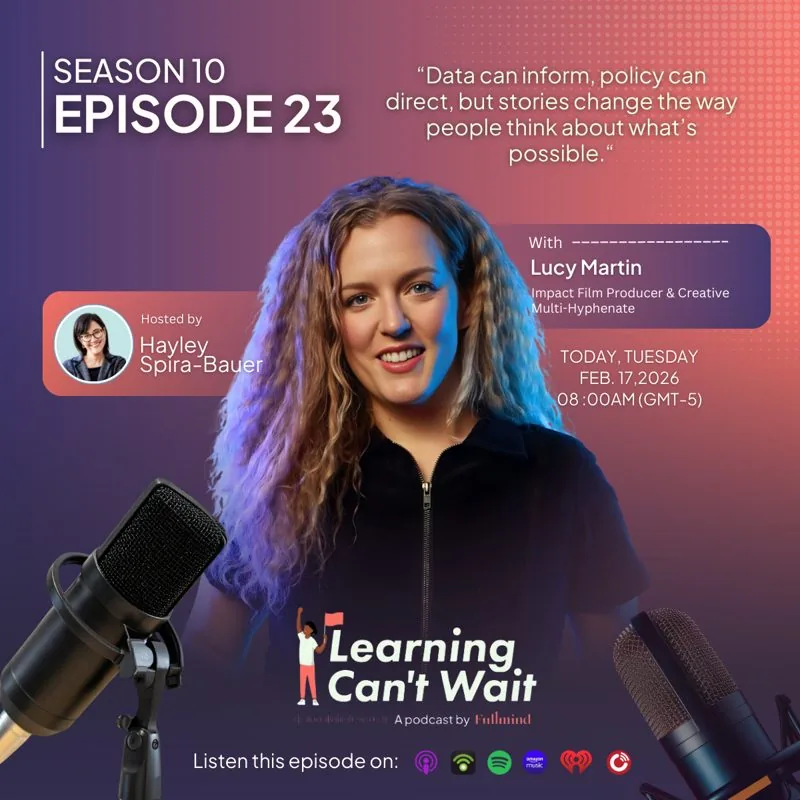
Lucy Martin: And that, you know,data can inform, policy can direct, but stories change the way people thinkAbout what's possible So, that's why we want to tell Mississippi, and we are going to tell it, we've… we just… We're getting it going.
Hayley Spira-Bauer: You know, if this was a live audience, I would ask, like, how many of you have not heard of the Mississippi Miracle? Just because of who typically listens to my podcast, I think it's… in this space, it's pretty well known, to your point. They, like, really thoughtfully rallied various stakeholders to focus on a particular issue with research-based information, and the outcomes were… Hopeful, and inspiring, and really encouraging at a time when literacy issues. The NAEP scores for students are at an abysmally low rate, but yet Mississippi just has this forward and upward trajectory. This is such an important story, but I think It also really highlights how… Like, just, like, what hope does, and, like, what really thoughtful action does, at a time when it feels really hard, and there's so many headwinds against… certain spots of education, and our society, and the political dynamics, it's… tough. So I'm looking forward to that movie being made. I'm really looking forward to it.
Lucy Martin: Good, good. I'm excited. I know it's gonna be the hardest film we do, because there's so many stakeholders, you know, and so many people who are part of it, and… you know, I don't want to hit any, landmines. I have to kind of keep my North Star as a producer on this project that… This is about outcomes for kids and future generations, and in other states, and continuing… helping sustain the success in Mississippi. Because if I get too concerned with the inner politics, you know, I've spent some time on the ground there, and people are like, well, I don't want her to… Claim this, and them to claim this, and this, and you're like, well, I… If it supports another state going. Oh, we can do this, you know? Then I… that's… that's what I'm gonna show. I'm not… we're not ignoring the complications of… of, you know, two sides of the aisle coming together. I mean, this is… This is a conservative state, but at the same time, many of the people in education are, you know, on the left, and they all figured out how to come to the table and agree on…
Hayley Spira-Bauer: Yeah.
Lucy Martin: On this, and do right by their kids. So, I think it's fair to highlight, you know, the values of the state, but also see how they're… differences… didn't get in the way of children. And I think that's… that's what I'm so… I have to say, disappointed in our country that… or in certain… I guess, in states, that, you know, that they're choosing adult comfort over the outcomes of children, and that… they do that… they talk about that really well and Moonshot. You know, you'll see in our trailer, this woman says, you know, this isn't about adult comfort, you know, we're… this is about kids, and…
Hayley Spira-Bauer: Yeah.
Lucy Martin: That really stuck with me, becausewe've designed our school systems for adults and not for, our most vulnerable kids.So… that's what I'm really proud to, like, even just be someone that gets to tell the Mississippi story in this way.
Hayley Spira-Bauer: Yeah. Because I… I…
Lucy Martin: This divide is so dark in our country, and it's, it's… Great to highlight places where people with different views come together.
Hayley Spira-Bauer: Well said. It's such a… I mean, like, it's… put your adult… yeah, put your adult comfort aside. You have this hypothesis as well, about, the particular spaces and places where we are under-resourced, or, like, where we're not currently investing in moving literacy forward, and that is, places of worship. Can you talk a little bit about this hypothesis and… why we should be excited about ideas like this that are, I mean, pretty outside the box.
Lucy Martin: Yeah, yeah, you know, it is interesting, because I sit now in a lot of these convenings and rooms, and one group that's never mentioned as a potential to engage in this crisis is the American Church Place Communities of Faith. And I, I understand the, hesitancy But, what we have found at the Children's Literacy Project is that the… The church is such an untapped… group, like, group of do-gooders that could be engaged in this as a justice issue. You know, the church has figured out, you know, a lot of times if you look at, like. You know, hunger, and homelessness, and Sex trafficking, those are issues that have been taken on by faith communities. And actually, pretty well, I mean, in terms of their… their… kindness and, you know, goodness to… to do something. And we're actually just trying to point them that… that literacy and the inability to read and children left behind is… is on the same level of those, Crisis? Crisis? But what's the plural here? I'm new to…
[20:00] **Hayley Spira-Bauer:** I'm not sure. Crisis. Crises.
Lucy Martin: Crisis, crises. And yeah, so we… one of the things that we do at Children's Literacy Project is help equip churches to appropriately engage, in this. And we think a really incredible spot to… for the church to insert themselves is in the birth to… to 5, actually. In, you know, so many… like, in the Moonshot series, you see there's a Closing Gaps episode, and they engage with a local church that says, you know, we're part of the Moonshot initiative in our community, and we, you know, they've been equipped with The tools to help their little ones, develop language skills. So… you know, in urban communities, they… they're very religious, and they go to church on Sunday, and they know who's in their community. I mean, they're… we're engaging with people within the Black church who say, like, we want to… we want to be able to screen our own members, and find out how they're doing on reading so we can support them. So I just think more places Where families go is where we should be, equipping them to be able to tackle, the literacy crisis, because kids are just not coming into kindergarten prepared. And school readiness is… is huge, you know? You all know that. And so I think that when I was sitting in this room that was, like, supposed to be the, you know, the great experts of the crisis, and they're saying, where are our families? And they're the YMCA, and they're little, they're listing everything but a church. And I'm like, I know that you guys… You know, I know that it's not gone well. You know, in America. But, like, you're forgetting that this is such a huge part of the population there is somewhere every Sunday, and and their kids are there, and they need to be let in on this, so… it is something that we, because we're comfortable in that community, we're able to provide, kind of, context, on how… context and materials on how to… how to engage. So we're piloting in a few cities, but our films are, you know. Fully secular. Just that… Yeah, I don't know if… I'm… sorry, I'm, like, rambling, but .
Hayley Spira-Bauer: No, but I, you know, you hear a lot on the news all the time about the barbershops being kind of converted into literacy centers, and folks who spend time in these spaces and places meeting kids where they are, and I was just… yesterday on an off-the-record panel with a bunch of superintendents and school leaders, and they were saying how the… sometimes, you know, parents are going through so much when they're raising their kids. They have their own personal struggles, they have traumas from the past, it's not just about, like. If they don't show up to a PTA meeting or a school event, it's not because they don't want to. And, like, how do we meet parents and families where they are to support them in their student's education? And so I think this really speaks to that, and one of the leaders who came on was, a leader from Texas, and they were saying, like, parents come to sign up their kids for football. And we were like, great, so, like, what can we bring to that event when the parents are signing up for football? That's a priority. For whatever reason, that's a priority. Like, what else can we bring to that event when they're signing up for football, right? Like, what else can we bring to the barbershop? What else can we bring to the churches? Or the religious spaces?
Lucy Martin: Yeah. Like, people… Talking about the laundromats, too.
Hayley Spira-Bauer: The laundromats, yes!
Lucy Martin: So cool.
Hayley Spira-Bauer: Oh, that was something else we heard at begin, was, one of the initiatives was.
Lucy Martin: To make a doc about it.
Hayley Spira-Bauer: I… that really…
Lucy Martin: I'm… she's.
Hayley Spira-Bauer: Sorry.
Lucy Martin: Not us.
Hayley Spira-Bauer: Sorry, say that one more time, I talked over you.
Lucy Martin: I said, no, no, I said I needed to follow up with her, because she's, she was at Google, but she was like, oh, we could get, like, Tide to sponsor it. I'm like, yeah, a Tide-sponsored, you know, laundromat doc about, you know, converting laundromats into little, like, cozy reading spaces. Totally. I mean, getting to where families are is so… so important, because it's the parents, you know, everyone's… I'm learning, I'm learning from all of you, butthe parents are the first teachers, which seems obvious, but a lot of times they, you know, they really have no idea how Beneficial it is just to… hold their kid, and point at something and name it, and say the texture and the color, and everything, you know, they have to be taught, and, you know, from our film, in Sentenced. You, you really… if you really enter… our communities of poverty, they are gnarly. Like, it is not… we have to figure out how to… Support these families. And it's not easy. They… they have generational trauma, they… it's… it's… it's disheartening, and then there's… then there's some amazing stories that have, you know, come out of it. So it's… it's just like… It's real out there. And…
[25:00] **Hayley Spira-Bauer:** And truthfully, at the end of the day, the reason why so many folks who listen to this podcast and come on this podcast are inspiring to me is because there are systemic factors that make the struggle even more challenging than it needs to be. The system was built in many ways to support a certain population, and that population is… maybe benefit and thriving, and everyone else may not. And so, doing work to ensure our most vulnerable populations, our most vulnerable learners, are getting access and equitable encounters with learning opportunities is so incredibly valuable. So, I feel grateful that you're telling these stories, and grateful that you're calling attention to topics that not everybody knows about. And I guess as my final question, I would ask you, what advice would you give to someone who is watching Sentenced or Moonshot, and one day soon, thank God for Mississippi. What advice would you give them if they do want to get involved?
Lucy Martin: What kind of person… because I feel like what I've learned is that there's a role for someone at every level of society, right? So… For, you know. The billionaire from the town, you know, they could… they could pull a Jim Barksdale in Mississippi and put that stake in the ground and say $100 million towards literacy. I think that was a huge reason That the state energetically you know, changed. Like, even if, you know, there's… they put a lot into R&D and higher ed, and, you know, they declared literacy as their, you know, as their issue that they were tackling.
Hayley Spira-Bauer: Hmm.
Lucy Martin: Because this, you know, kind of brilliant businessman who's… Said. You know, said to himself after he made, you know, just a stupid amount of money that he said, that, hey, like, what is… how do you change people's minds? That was what he said thought was the most valuable thing he could do. And he's like, well, if they can't read, you can't change their mind, you know, change how they think. So he went, he chose literacy. So we have… we have the billionaire, you know, then we have the… the almost billionaire in Steph Curry, how they've adopted their city in Oakland. And we have… you know, the parents, the upper-class parents who can potentially spend some time volunteering with their kids, or helping support, you know, the local literacy nonprofits in town. And then we have, you know, the senior who is trying to figure out how to just keep the wheels turning and give back, and… and get off their depression meds that they… there's science behind, you know, just… just volunteering. We have high school students who could You know, be learning I don't know, I want schools to be able to be feeding into their elementary schools, you know, these communities, and then there's the new mom, and the new parents, and I… there's a role for everyone in society for this, for this issue. It's… and again, this solvable… Issue.
Hayley Spira-Bauer: Yeah.
Lucy Martin: So, yeah, I guess that would be how I would say get involved, is also be aware that That, people aren't learning to read.
Hayley Spira-Bauer: Yeah. I am grateful for you. Thank you so much, Lucy, for continuing to do this work and sharing your story. It is an honor to have you on the podcast today.
Lucy Martin: I'm… I… thank you, this is my first podcast, so, you know. All feedback is welcome, I'm learning how to communicate. I.
Hayley Spira-Bauer: I'm new, I'm new on the scene, but I'm lucky.
Lucy Martin: Everyone in education is… You know, naturally. Interested in helping others, you know?
[30:00] **Hayley Spira-Bauer:** Yeah.
Lucy Martin: I've yet to meet someone that wasn't, you know, inspiring and passionate about The people they serve.
Hayley Spira-Bauer: Yeah.
Lucy Martin: Oh, it's refreshing from Hollywood, from a Hollywood perspective.
Hayley Spira-Bauer: Well, I bet this is the first of many, so… Thank you to everybody who tuned in today as well.