
Learning Can’t Wait · Episode 84
Brandon Cardet-Hernandez: Science of Reading, Play Based Learning, Universal Pre-K
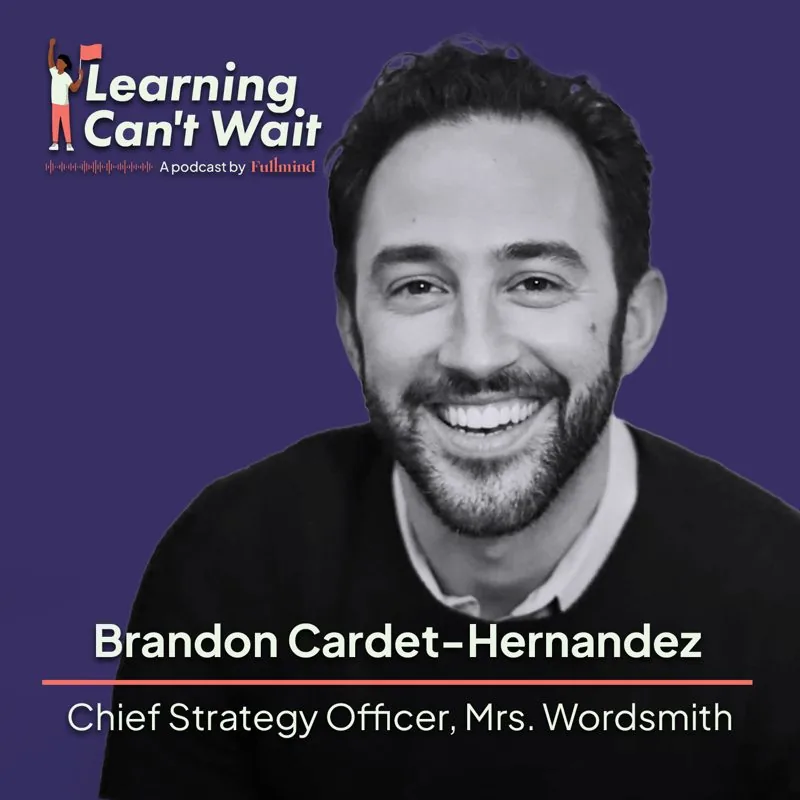
- Brandon Cardet-Hernandez, Chief Strategy Officer at Mrs
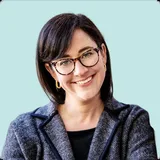 Hosted by Hayley Spira-Bauer, Chief Academic Officer at Fullmind
Listen now
Brandon Cardet-Hernandez: Science of Reading, Play Based Learning, Universal Pre-K
Episode summary
Brandon Cardet-Hernandez, chief strategy officer at Mrs Wordsmith, credits learning to read on grade level and adults who saw him for breaking the odds of a childhood with incarcerated parents and foster care. He describes advising Mayor de Blasio as a job of influence, the power of universal pre-K, and why rigor is the greatest lever for disruption. Founded in the UK in 2017, Mrs Wordsmith pairs science-of-reading skills with funny, game-based products that let families adjust dosage. He argues not all screen time is equal and parents should co-play.
Key takeaways
- Systems are designed to produce achievement gaps; disruption means high standards for the most marginalized kids
- Universal pre-K equalizes early direct instruction and frees caregivers, mostly women, to work
- Mrs Wordsmith games like Readiculous and Word Tag adapt dosage of phonics and vocabulary to each child
- Not all screen time is equal; model good use, choose rich tools, and play what your kids play
- New teachers: it's okay not to be great every day, and use small-group play to free time for direct instruction
About this episode
This week on the Learning Can’t Wait podcast, host Hayley Spira-Bauer sits down with Brandon Cardet-Hernandez, Chief Strategy Officer at Mrs. Wordsmith.
In this delightful conversation, Brandon describes how both rigor and play are central to his work helping kids to read and tackling the ‘30 million word gap’. Brandon also shares lessons from his early career and what it’s like to work on education at a political level. Lastly, Brandon emphasizes that “not all screen time is created equal” and shares tips for how adults can be more involved in children’s use of technology.
Produced by Fullmind
Full transcript
Transcript generated from the recording; minor errors may remain.
Hayley Spira-Bauer: Welcome back everybody to the Learning Can't Wait. Podcast I have an incredible guest here today. I have Brandon Cardet-Hernandez, the chief strategy officer of Mrs Wordsmith. Welcome, Brandon.
Brandon Cardet-Hernandez: Hello! Nice to see you and be with you.
Hayley Spira-Bauer: So nice to see you and so nice to have you on the podcast a fun fact about our recording. Today, we are mere days away from getting to meet in person at ASU+GSV. So this is like an appetizer to the in person gathering of ASU+GSV.
Brandon Cardet-Hernandez: It's gonna be good. We're gonna learn a lot.
Hayley Spira-Bauer: And I'm so excited to be there, and to meet some of your colleagues that Mrs Wordsmith. So let's jump right in so that the listeners can understand why I'm excited both to meet you and your colleagues, and learn more about Mrs Wordsmith. Sound good.
Brandon Cardet-Hernandez: Sounds, great.
Hayley Spira-Bauer: Awesome. Brandon. I ask all my guests the same the same first question not to be redundant, but I feel like people get into different levels of depth on their answer. And I'd love to hear what you have to say. How did you come to be the personal and professional version of yourself?
Brandon Cardet-Hernandez: I know that you ask your guests this, and so I've been thinking about it, which is, you know, the the guest of the future have a nice intel into what? How? They'll start this conversation? I could answer that question different every day, right? Anytime you asked me you could get a different answer. I guess I'll say this. I started my life sort of as a young person and pretty humble beginnings. You know I'm the son of 2 immigrants. My parents were both incarcerated when I was growing up. And I grew up between different family members and foster care, and you know, just like a complex reality that millions of kids across the United States experience every single day. And at the same time I'm here. We're having this conversation. I'm the chief strategy officer at this company. Right like I was the education advisor to Mayor Bill de Blasio, and I was ran a school in the South Bronx. I've had this really sort of incredible journey. And I recognize it's statistically significant. And so I think I will spend my whole life sort of making sense of like. How did I start in this place where I can look at the community I come from? And people are living very different lives than the one I get to live, and I will always be in service of that experience that got me here. But I think sort of headline for me. It'sI'm here because people saw me. They were curious about who I was.They subsequently invested in May. And then, without a doubt, I am here because I learned to read, and I learned to read on grade level, and it allowed me to stay on track and break the the sort of statistical realities that young people who grow up in poverty with incarcerated parents in the foster care system often experience. And so that's my short and sometimes long answer.
Hayley Spira-Bauer: Brandon. First, I want to take a moment and just thank you for your vulnerability and your honesty. I know you know everybody has stories that they are open to sharing and not open to sharing, and yours is a powerful one. I love how you've rooted your answer in people and the the the way that you were invested in to help you find your way and find what gave you the energy and the excitement and the passion that you have today. Curious why you chose education. Was it that formative experience of what you named being able to read? Maybe perhaps loving reading? Or was there something else that drew you to the path of working in and around schools?
Brandon Cardet-Hernandez: Hmm! I often say folks who work in and around education are often doing their own reparative work around their experience. And I think if we talked about that more, we would like be able to really sort of tune into the heart space of education, and you know we are all showing up doesn't matter where you fall in this continuum of services in service of young people. For me it has always been work that felt very justice focused like I show up for vulnerable kids. I show up for every kid. But like my real focus is on the most marginalized kids. Vulnerable kids with limited with limited access and opportunity. And I would argue, that is by design. Like, we have designed systems that do exactly what they're supposed to do. And they have created achievement gaps. And they have kept certain kids and certain families away from opportunity for generations. And so I'm here to disrupt that. I like to think of myself as a disruptor. I was a disruptor. As a teacher I was a disruptor as a principal. I tried to do disruptive work in when I worked in politics, and I get to do that now from this side with Mrs Wordsmith, building really cool games and products that I think create access and opportunity in a really different way. But focus on skills. Because I would also sayone of the greatest levers for disruption is rigor.You teach a kid with high at a high standard, and you really shift and shape what the opportunities will be for that young person later in their lives. And those opportunities we know are big. Those are economic opportunities. But those are also health opportunities. They're much larger than just a high school diploma or a acceptance letter to college.
Hayley Spira-Bauer: This justice work that you're naming here is definitely a through line. When you look at your resume. I I mean I looked at LinkedIn. I don't have access to your resume. But whatever highlights you chose to put on LinkedIn, that's where I can like. See how you carve a path for yourself personally curious what it was like working within the largest school district in the entire country. On the political side of it.
Brandon Cardet-Hernandez: What's it?
Hayley Spira-Bauer: This is like through pure curiosity, because I was a teacher and a school leader and a school founder in New York also, what does it look like at mayor mayoral level advising how much of what you advise gets through like talk to talk about that, please.
Brandon Cardet-Hernandez: It was one of the most incredible professional opportunities I've ever had. I every day would walk into City Hall. And and this is like real. This is like real talk. I would walk into that building and recognize. I was walking into a space that was not built for me to enter. And I felt such gratitude, and I also felt such gratitude for Mayor Bill de Blasio for choosing me right, and believing that I could be of service to him and his work. The role was like, I would often joke like, you're just like a real life influencer. My goal was just to influence good decisions. Sometimes I was convincing, and sometimes I wasn't, but it was a job of influence and.
Hayley Spira-Bauer: Glad I asked this question. Cause that is not the response I expected.
Brandon Cardet-Hernandez: I think if people were honest across the sort of Staffer spectrum they would tell you, this is really what you're doing. You are trying to influence good. And there are competing priorities. And there's other people who are elbowing their way in to be more influential. But they were all just trying to influence the real decision maker around stuff that we think can really make a difference in people's lives. I felt really lucky the mayor's agenda was focused on education. It was deeply focused on early childhood. New York City became the largest provider of universal pre-K. In the country. And we are, we're offering free early childhood education to 3 and 4 year olds. The economic opportunity for the workforce which we have to be very real is a workforce mostly of women and the economic opportunity for parents to go back to work, which again, oftentimes the folks who stay home are often women like that piece of the puzzle was incredibly inspiring. And what we could do for people's lives and generational wealth. And then, of course, as we talk about the real way to disrupt is to create opportunities for kids to engage with high quality materials and to engage with rigorous activities that deep in learning. Well, that's what was happening when you put a young person in a program at 3 and 4 years old to learn those skills that for generations and for for for long, for since the inception of school, certain families have always been doing direct instruction to their 3 and 4 year old, and certain families have just been without that support. And so this was like a a moment of great equalizing, and I felt really proud of of what we were able to do, and the services we were able to offer, and I felt really proud also as a dad myself, to a young person who was able to access those experiences.
Hayley Spira-Bauer: Brandon. When I moved to the suburbs out of New York. I was shocked by how few school districts where I live have universal free K programs. Because I I was in New York when this was when you built what you built with the mayor, and I couldn't believe it. There there were, I think, 2 districts at the time I moved out, which was about 7 years ago, that had universal pre-K.
Brandon Cardet-Hernandez: Listen.
Hayley Spira-Bauer: Yeah. Go.
Brandon Cardet-Hernandez: You do understand.If men were the primary caregivers who stayed home with children, we would see universal Pre K programs across the country.
Hayley Spira-Bauer: Right.
Brandon Cardet-Hernandez: And if men were the workforce who engaged in early childhood education, we would see universal pre-K programs across the country. It takes real leadership. To say this. This system and structure that we have to build, which in many ways impacts the economic opportunities for women and the lifelong opportunities for vulnerable people who have had less access to these programs like those are big considerations that I think you know, we talking about being disruptive, I think we can be really honest that if the whole thing was flipped around there'd probably be different kind of urgency around it.
Hayley Spira-Bauer: That's so true, and probably could have a whole. Podcast but what.
Brandon Cardet-Hernandez: I miss.
Hayley Spira-Bauer: Impacted by this, but you know we'll leave it there for now. That is so very, very true. I I still, I still get kind of gobsmacked by situations like that that I find myself in, or observe. That seem just like obviously inequitable and not right, for you know what I would say. Not right for a country that bases itself on capitalism. Capitalism should allow for everybody to work right? That's kind of the that's kind of the move. But yet our systems are intentionally not structured to be that way. So.
Brandon Cardet-Hernandez: Yes, and they're not structured for women to have real financial freedom. And I think there's a real connection between all of this.
Hayley Spira-Bauer: Virgin. We've come not so far from Virginia Woolf. But you know, here we are. Okay. So let's talk about rigor now, because you this is you've named like a couple of big buzz words for Hayley. Right. Selfish. My listeners probably feel the same way because they're listening to this. They've gotten the theme and the vibe Rigor's huge talk about. Tell me about Mrs Wordsmith. Why it was built, and how rigor is central to the work of the children who use Mrs Wordsmith.
Brandon Cardet-Hernandez: Yeah. So our company was built out of the UK. Which is a sort of fascinating place to think about the English language. We're focused on literacy. And we think about our products and everything that we're doing in sort of 2 ways. We want it to be fun. We want it to be funny. And we also recognize there are foundational skills that have been absent from a lot of young people's early learning. And we wanna make sure that they're there. And for us, that's work that's rooted in the science of reading, right? So that's phonics focused vocabulary, rich products that allow for a young person to develop skills in these 2 critical areas that will change the rest of their lives and allow them to move from that, learn to read stage into what we often talk about as the reading to learn stage that moment after fourth grade, where you're the the skills you have as a reader will allow you to access complex content, and acquire new skills, but without that foundational skill, that sort of 3 years old until fourth grade skill set that's necessary. As as a reader, it's going to make it really difficult for you to find and access the the more complicated material that you're going to come into starting in middle school. And so everything we do is built around that. But we do it like, I said, like, just in a really funny way, and we take science of reading all of that stuff which I'm sure you have talked about a million times here, right? Science of reading stuff all the stuff and things. We know, all the research, all the brain science around. How people learn to read, we take that stuff and we mix it up with game-based learning this belief that you that play is a central part of of pedagogy, and then, at the same time, that process of playing can create what is sometimes invisible learning opportunities, but also explicit learning opportunities that allow for real retention.
Hayley Spira-Bauer: When was Mrs Wordsmith found? And you said it was found in the UK. Did you say the year.
Brandon Cardet-Hernandez: I didn't say. The year 2017.
Hayley Spira-Bauer: So before all of the hullabaloo about the science of reading and the US Based curriculum that didn't have any grounding in research. Wow, okay, so where are we now? So we're all over the UK.
Brandon Cardet-Hernandez: All over the UK. And now we're all over the world. We're coming to the US And we have a lot of families who've already started to find us here. And I think the interesting part about what we do is we're not a program, right? This isn't like you do this thing, and you start at A and you end at Z, and like, now, your kids gonna be able to read. I think families have been sold that sort of myth for a really long time, because the reality is, you and I will always be on a different journey as learners. Whether tomorrow we decide. You know, we're going to like, get from like. Get ourselves more sort of curious about. I don't know. Solving multi quadratic equations. We're gonna take different approaches. We're gonna have different. We're gonna have different skills that we're starting with. And the reality is, we're gonna need different dosage. We're gonna need different amounts of support to get us to the same place, and those are the scaffolds sort of. We've talked about in education for a long time, and so the way that we build our products right is that we have one game. And I really love called Readiculous which is like an early phonics video game, right? That I'm learning phonemes. And I'm pushing those phonemes. And I'm really getting familiar with those phonemes. At the same time, I'm learning high frequency words, those like complex sight words that I need to know in order to be able to start reading. And then the game gets a little bit more difficult, as the engine understands what I'm doing well and what I'm not. And for our older kids we have this game called Word Tag, which is all vocabulary focused right? And everyone you've probably talked about this before. At least you're familiar, you know. There's the 30 million word gap that we're trying to address by age 3. There's an estimate that the gap is about 30 million words and a 30 million word difference in the exposure between children from high and low income families, and so vocabulary matters, because, like, I can have all the skills to read which is really important. I can have all the phonemic awareness. I can even read fluently. But I'm going to be able to access more complicated text. If I also have a rich vocabulary to support that reading. And so, like both things are happening, but you and I are going to be coming at it at different places. We've had different vocabulary exposure. We've had different phonics exposure, and so it is about dosage. And that's how our games work they like allow you to do as much as you need, and a recognition that it doesn't have to be this sort of rote boring process.And then we have, like flip books and workbooks and all this other stuff that's also like print as well as card games. And just this really sort of playful space. That anchors all the different ways a family wants to create learning opportunities in their home that are low stakes, but high impact.
Hayley Spira-Bauer: Yeah love. Play-based learning. I love the idea of it. I was devastated when my kindergartner, 2 years ago, came home and said school was so boring.
Brandon Cardet-Hernandez: Oh! And.
Hayley Spira-Bauer: And let me let me count myself on the back here. But the year prior I had homeschooled him because of the pandemic. And it was not boring. We were dissecting worms made out of Play-Doh and studying worms and doing all the things, and I really feel like the best classrooms are the ones where kids are joyful and they are laughing, and they are interacting with content in a playful way.
Brandon Cardet-Hernandez: Yeah.
Hayley Spira-Bauer: Very cool to hear about a phonics based curriculum that isn't just steel and drill, especially given like the current. I think, like anxiety that schools and families have around, how big we messed up, and how our curriculums were not teaching our kids correctly. That's really cool. So this is supplemental.
Brandon Cardet-Hernandez: Yeah.
Hayley Spira-Bauer: And you're you're aiming it towards families or families and schools.
Brandon Cardet-Hernandez: Both. So we have been really focused on families and recognizing which I think you know, is true. And I know this as the dad of a 6 year old. The work does extend into the home and kids again back to dosage. I talk about dosage all the time, like everyone needs a different dose. They need different things. And so like, there may be a kid who like needs a lot less at home. And there might be a kid who's gonna need a lot more at home. And we just have to like meet kids where they're at and then have the stuff and things that we can give them in a way that doesn't turn them off from learning. And that's where the play comes in.
Hayley Spira-Bauer: Well and educator. You're an educator like, we know what kids need to do to read like, how many of your friends have kids the same age as your 6 year old, who feel really stuck at at supporting, at own learning, like I get questions on a weekly basis about supporting kids at home.
Brandon Cardet-Hernandez: Same, and like, what are the strategies? And that's what I you know, with no shade to like any of the sort of programs out there. I it's why I don't love a home a program that is like for the home. Because I think what starts to happen is that sort of like plug and chug sort of wrote, experience makes a kid. Learning is hard. Learning is hard for all of us, and feeling like you're failing is really tough. And we have to create these moments, particularly in our house, where we're trying to engage in complicated things that are rigorous and skill building. But also allow it to be a ple, an experience that feels really fun and really joyful and really exciting, and not a burden. And that's how which. Why, I love game based learning. It's why I think video games have this incredible power to transform outcomes. It's why we have a game, you know. It's why, like I get rid of the Uno in my house, and I'm playing phonics card games. Do you know we're playing Blah Blah Blah in my house, which is one of our games. Where, instead of like, I'm helping you match a number that's just sort of random, like we're matching phonemes. And we're like playing with words in this very different way. And it's fun. And we're laughing. And you know we're skipping turns and reversing and drawing 4 and doing all this stuff, but I know that I'm using this 30 min that I have as a working dad with my son to engage in something that I know is rich cognitively. But also not high pressure.
Hayley Spira-Bauer: Let's talk about those video games.
Brandon Cardet-Hernandez: Yeah.
Hayley Spira-Bauer: There is. You know, I IA lot of parental concern about the amount of screen time our kids have. And actually one of my favorite writers, Jessica Grose put out a piece yesterday about screen time, and how she thinks it's like the end of schools right now, and kids are on screens way more than she realize. She writes about parenting topics and education.
Brandon Cardet-Hernandez: Brilliant. I read it yesterday. It's it was.
Hayley Spira-Bauer: Good. So good. How do we combat an amazing game that is rigorous and joyful and helping kids learn with the fact that they're using the screen for at least part of the time.
Brandon Cardet-Hernandez: Yeah. I think 2 things can be true. You know one. I say this often not. All screen time is created equal, yours and mine included, as well as that for our kids. So like not you, Hayley, but maybe me. The moments I sit around on my phone doom scrolling Instagram for 30 min is probably not the best use of my time. We know there's research right of like what that's doing to me on an emotional state. What that's doing to me in terms of productivity like. That's not a great use of my time now. At the same time I bring in AI notetaker with me to meetings now. Cause that's a great use of my time to have a tool that helps me summarize. I can read it. I go back. I feel less forgetful when I don't remember what's going on. Not all tools and not all screens are created equal. And the same is true for kids, so like in the piece that I also read. You know, she talks about like kids, just like sort of floating around on YouTube watching like crazy things. And like probably not a great use of a young person's time. But as a video game. That's a multiplayer game where they're collaborating with a peer. And there's an educational value. They're gonna be on the screen. What do you want them doing on that screen? And I am always worried in this debate, as the adults are all talking about kids, and a generation that we are is so far away from the way we experienced adolescence that we forget this other piece that like, we are also helping them learn skills around how they use screens from the second, they start using it. One, we are modeling it. They're watching us. They're watching us, you know, engage in a conversation with them while we're sitting on our phone looking at, you know, a high, a person from high school on Facebook. We haven't talked to since high school, right? But we're like more engaged in that than the conversation with our child. They're watching how we do it. And they're gonna watch what we choose to do on that phone. I just had a conversation with someone who's like my kids obsessed that I'm playing Duolingo all the time. And I was like, it's amazing. And then I said, and you should have them playing Word Tag like you should both be engaged and like, if you're going to use this, you have this tool in front of you, and it's amazing. Use it for good. Use it as a learning opportunity. Yes, it's great for FaceTiming grandparents, and it's amazing for making sure you have. You have a GPS, and you know where your kids are. And then there's times where we just like, let kids do whatever they want and fall into an abyss with the screen. And that's not great. But being mindful of the what you put in front of them. It's like that's that's our job. It's important. And there are good things. There are rich things out there. And not just the Mrs Wordsmith products, right? Not just our game Word Tag and Readiculous. And there's tons of good stuff out there. But we have to be consumers who are looking at it. And I will say this, and then I'll end this point. We also have to play the thing our kids are playing. It is not enough to just be like, Here, go, do you know what the user experience is? Do you know what they're even trying to do, because there's a dialog that can start happening in this space. I can start talking to you about the game you're playing. How many coins did you collect. Did you open up a new level, did you? There? We could keep going. But, like I can only ask you those questions that for the kid playing will feel good and create dialogue if I understand what it is just like. I can. Only I can tell you what snack to have in the fridge. If I know it's in the fridge right? I can help you make a good choice if I understand what's in it. I think that's just like. It's a big part that really matters. We have to be in dialogue with our kids around it, and we also have to be supervising and understanding what we're going to give them.
Hayley Spira-Bauer: So like Mike Drop, that was so good like, so spot on. I just to throw in another resource that is on my Instagram doom scroll. It's like you. It's like you're in my house like, you see, The Gamer Educator, Ash Brandon is an educator in a school who does puts out a ton of content for families about how to make screen time valuable. And so much of it is focused on what you're saying here, which is the engagement you have with your child, the way that your what your child is doing, why, they're doing it matters so much more than the number on the clock.
Brandon Cardet-Hernandez: Yes. It's the same, even like I'll have this conversation about even letting our young people watch TV. Well, it's really different. If like, and listen, working down me and my husband. We're busy guys like there are moments where we're just like right now. You and I need to talk for 30 min, and we're gonna put on a TV show. But I need to know what that show is. I wanna like, be able to talk to you about it. I'm gonna be able to ask you questions about it. I love coviewing things with my son. I love co-playing with my son. It has to be in dialogue, and at the same time, with a lot of love for parents. We're not perfect. And so there's gonna be times where it's like, just like the fridge metaphor, right? Like, just go find a snack in front of the in the fridge. There's gonna be times just to be like, Go just do. And the kids are gonna be alright. But we've just got to be mindful of the frequency. And we're just trying to create a sort of curated experience within our homes for our kids that allow them to have a lot of opportunity to choose the good stuff.
Hayley Spira-Bauer: Yes, yes, yes, yes, yes, yes. I'm I'm like really sad at the clock time that we have right here. I'm looking at the time, and I'm like, Oh, man, I have to end this conversation. But you know there's so much of what you've shared here today, both on a philosophical level, but also on a tactical level that that really resonates. I think our listeners will find a lot of solace in how you've shared both your journey and education, and the the Mrs Wordsmith tool that you're building and creating and loving and and highlighting here now I'm wonder, for I'm wondering for the educators that are listening in the audience. You remember your first year teaching everybody has, I'm sure, mixed feelings about that first year. Things they wish they could have done differently things they're really proud of. A lot of learning. What advice would you give an educator starting their career today?
Brandon Cardet-Hernandez: I'm gonna give 2 pieces of advice. One that's up here sort of in the clouds, and one that's like on the ground and practical. Because I think the job requires both. I think it's okay not to be great every single day. As long as you're reflecting on what you can do better. I think it's the hardest it is. Still to this day teaching was the hardest job I've ever done. It was the most cognitively demanding work I've ever done, and it was emotionally the most complex relationships I've ever had to sort of engage with day to day. Because you're you're, you know, moving between young people and adults and adult feelings and young people's feelings. It's complex. So it's okay not to be great every day, as long as you're thinking about it, and you're making sense of it, and you're trying to do a little bit better. And then on a practical level, my advice to every teacher, because teaching a big group of kids is harsh is create opportunities for small group instruction.And this will bring us fully back. I think one of the best ways to do that is to allow small groups to play.do something that is playful, some sort of small group, small group, play-based learning, so that you can spend some time with a different small group doing direct instruction, and then you flip, and then you flip, and then you flip, and then you flip.and I think at the end of the day that just allows the relationships to get stronger and more meaningful.
Hayley Spira-Bauer: Brandon. It has been such a delight. Having you on the podcast I feel particularly inspired. By this conversation. And I'm sure our listeners feel the same. Thank you so much for joining us.
Brandon Cardet-Hernandez: Thanks for having me. This was great.
Hayley Spira-Bauer: This was great, and soon we get to see each other in person. So.
Brandon Cardet-Hernandez: Yay. I'm I I've just rambled so I hope it was.
Hayley Spira-Bauer: That's wonderful, and and thank you to everybody who tuned in to learn about Mrs Wordsmith, to learn about Brandon, and to continue to get inspired.
Brandon Cardet-Hernandez: I can't wait. Thank you. I'll see you soon.