
Learning Can’t Wait · Season 1, Episode 17
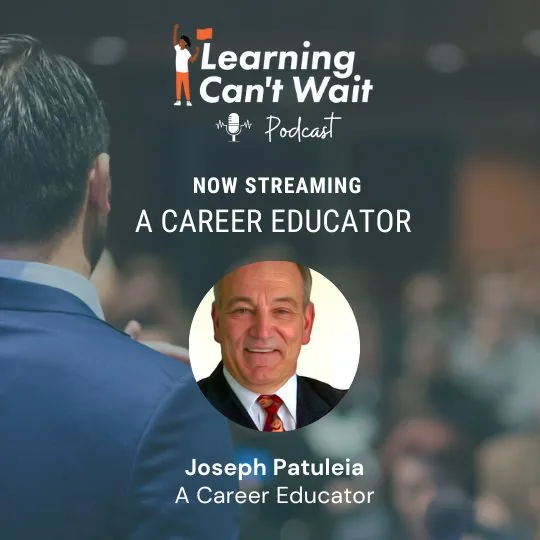
A Career Educator
 Hosted by Hayley Spira-Bauer, Chief Academic Officer at Fullmind
Listen now
A Career Educator
Episode summary
Joe Patuleia, former high school principal, Boys & Girls Club executive director, and leader of Boys Hope Girls Hope New York, describes an eight-year residential program that sent 100% of its scholars to college. Raised by Portuguese grandparents, he decided to teach when a sixth-grade student teacher stopped classmates from laughing at him. He recounts 17 years at Bedford, a Harvard sabbatical that pushed him to inner-city principalships, and a leadership code of unconditional love paired with clear, consistent boundaries. He argues teachers must learn how to teach, not just what, and advises new educators to close the door and teach.
Key takeaways
- Boys Hope Girls Hope pairs residential support, tutoring, and college counseling across eight years, not four
- Unconditional love is a free gift; tough love is holding the line on five non-negotiable rules consistently
- Hire the best person for the job even when it costs political capital with the school committee
- Every broken rule is a teaching moment; start from what the student knows, Socratic style
- Teacher prep covers lesson plans and grading but rarely how to work with kids and their trauma
About this episode
Joseph Patuleia is an experienced non-profit director, a community leader, a lecturer, a teacher, and so much more. Sometimes it seems like he’s done it all. But the most significant thing Joseph accomplished is building his career with the sole purpose of serving students. Through his efforts, countless students have excelled within the demanding field of education. Hayley Spira-Bauer and Joseph Patuleia explore his successes, challenges, and the wisdom he’d pass on to other professionals looking to make a difference.
Learning Can't Wait is brought to you by iTutor.com.
Full transcript
Transcript generated from the recording; minor errors may remain.
Welcome to the Learning Can't Wait podcast an iTutor production at iTutor. Our vision is to ensure every child has access to education regardless of circumstance. Each episode, we will be joined by Pathfinders within and around the education space. Who are bringing about transformational change? On behalf of deserving students, I am your host, Hayley Spear Ofour.
Welcome back everybody. To today's recording we have Joe Patuleia. Did I say that right? Yes, you did. I did. , we did some practice the last time we talked. We have Joe Patuleia, a very good friend of iTutor's and an incredible. Former school leader, and I'm gonna, actually, I'm gonna let you tell a little bit about yourself, all the things you've done in and, and around education, but welcome, welcome, welcome.
So glad you're here. Well, thank you. I'm really, pleased to, talk with you because you're so enthusiastic. It kind of gets me even more enthusiastic, although I never been shot on that, area. Well, thanks. The, the origin is kind of, I think, unique and sometimes I wonder how in the world I wound up where I am.
I think our listeners are excited to hear that story of how you wound up exactly where you are. So, so why don't you start with that. Where are you now? What are you doing in the world? What was your most recent involvement in education related activity? And then where did you start? Well, my most recent prior to iTutor was to help a nonprofit that's called Boys Hope.
Girls Hope, and it's an affiliate in New York. There's 14 others across the country. And it was a great end of my, so I thought professional career and it kind of answered a lot of the questions for me, as a high school principal and as a Boys and Girls Club executive director. . There were kids that I knew we could help and we helped them, but there were kids I knew we, we could only help if we took them out of their environment and put them, and that was always a question, where were you gonna put 'em?
Right? So, Boys Hope Girls Hope answered that question. We would recruit kids in the eighth grade who had the ability to go to college, had the desire to go to college, had the skills to go to college. But lived below the poverty line and for one reason or another was, in a living situation that was at best non-supportive.
And these were inner city kids, so you can imagine the range of what that that meant. And so they came to live, this was a, in the city residential program, we paid their tuition to go to a, a private school next door. And they live with us and we. Total control of their life. , not exactly, but they would go to school and when they got outta school that they'd walk right back to us.
The commute was tough. It's like 50 yard, not even 50 yards. But then we would engage them immediately with academic support tutors and, and really help them to make sure they got what they got in school and that they got their homework the way it should be done flowing with that. Was a, a program that we put together.
I kind of, resurrected, uh, the program that was there and I hired this fantastic woman who just turned it upside down. And so right from freshman year, these kids are, Preparing to figure out what they wanna do, what college they want to go to, what do they wanna study, where do they wanna live, what is their game plan, and so that by the time they became seniors, they were really applying to colleges that were realistic in terms of what they wanted.
A hundred percent of our kids got to college. Actually, more than that college, 87% got full, you know, tuition paid. And the best part of the program and one of the best parts is this was not a four year program. We then helped them for the next four years in college. This was an eight year program. We wanted to guarantee that in eight years they would walk out of college with a degree into a nice white collar, job professional, and in all of that, so on top of the academic and the college prep, then we.
On values and community service, and how do you live by yourself? They had chores in the dorm. They had to turn in their electronic equipment at 10:00 PM the lights went out at 10:30 PM We were, listen, I, I feel like that that phone addiction in and of itself, or device addiction and of itself is a huge distractor.
Child and adult success, but sounds like there were a lot of components that that, yeah. Boys Hope Girls Hope considered as it tried to craft a program that would be supportive and provide, opportunities for the students to really thrive. Right. It, it's a well designed, it's across the country. The leadership, across the country is terrific.
The support they give is incredible to each of the affiliates, and I was very fortunate to have a board that was terrific and a staff that was terrific. So it was a great opportunity and I think I, I helped them, get to their next level and, I look forward to seeing them grow. So that was my, my last, that was your last sin.
And then, you know, let's, let's do a little bit of an origin story. So how did you get, how did you find your way into education in the first place and why did you stay in education, Joe? Well, I grew up with my grandparents who were from Portugal. And needless to say, I was there, my grandfather, didn't have, hands, he had had an accident, so he had no hands.
And I was his hands at six years old, five years old. So life was, Let's put it that way. And along the way, first grade, second grade, third grade, I was an okay student. I think my aunt, she gave me a little tough love where she would not allow me to watch Superman and Zorro on TV unless I had my multiplication tables done.
She had been a top student. When she graduated from high school and she was determined to make me the same and I was resisting a lot, but I would do anything to watch Superman and Zorro. I was not about to not do my math table. How was your carrot? Your carrot For the carrot instinct. Oh, what a carrot man.
So, then my life turned around into sixth grade. We had a student teacher, my first male teacher, and I had some really good female teachers before that. But I had. Whether male or female didn't make a difference. I had some teachers that were not, they just, they didn't understand kids. And I was in a tough school.
We had 30 kids in the classroom, and it was not pretty. It was not pretty. Anyway, we had a student teacher come in and I answered a question in class and everybody laughed and he stopped. The laughing stopped. The, the, the students have said, Hey, stop. We never laugh at any student's. And by the way, Joseph is correct.
That was it. Mr. DeGiacomo, that was it, you know, and, I'll do anything for that guy. I decided right then and there in October of whatever year that was, I'm gonna be a teacher. I'm gonna be, what a powerful story. I, I mean, That teacher had the ability to intervene at what we now call bullying.
Maybe it wasn't called that then, but had it had the ability to intervene and change the trajectory of your life. So after that moment, tell us, tell us about the, the big transformation and change and kind of your attention and, and desire to learn. Yeah. Well, if it was followed by a, uh, tough seventh grade teacher, Who, challenged everybody in the class to get on the honor roll, and he would buy everybody a frat down at Curtis's.
And, again, we were, was it Tough school, tough kids. And I don't know. He motivated me. I was already on fire with, Mr. DeGiacomo and this guy, became a, a mentor for me, came in and out of my life for many years. I think we were his first class teaching, but so, I excelled. I was on the honor roll every quarter.
I mean, it's the first time I've been in honor roll in my life every quarter. Eighth grade continued and then the high school got turned onto all kinds of things. I was going to a youth group, which really was supportive. But you know, my, French teacher became a lifelong friend and. I was going on to college and I knew where I wanted to go.
I knew three colleges and I had a part-time job senior year at Firestone Tire Company. I came back, my hands were greasy wear, had my work clothes on, and I was walking through the mail room and there was a little door to a room where they were doing college interviews and a gentleman was standing there by the name of Leon La.
He saw me walk by, he said, Hey, are you a senior? I said, yes. What do you teach? I mean, what, what's your major? He says, mathematics, cuz of my aunt. Right? I get on my multiplication tables, . And he said, well, we're dying for a math teacher. Well what community are you? Bedford. I never heard of Bedford ever.
And he interviewed me and practically hired me on the. And of all the places I could have gone, of all the places I, I applied, Bedford was perfect for me. Everything about it was per, it was a great school system with great processes, great procedures, great things in place, great curriculums. And I had in those days, I was one of the last teachers hired before this big, like a hiring freeze for years because of Prop 13 or Prop 2 1/2.
I mean, there was some real societal, governmental, issues with their education. And so everybody there was eight years older than I was. I was, you know, easily the youngest teacher there. But I learned, they all became my mentor. So I taught math. I. Involved in school up to my eyeballs. I coached three major sports.
I was a class advisor, student legislative court. And I drove my principal crazy because I'd always be asked them, what else do you want me to do? , , they couldn't, they couldn't fill your roster enough. . Oh my God. So then I got a, early on, I got a, a degree from Salem State University in counseling because I wanted to, cuz kids were coming to me and I wanted to be, I wanted to know what I was helping them , you know?
But then I realized, wow, guidance counselors, they. Guide do. What they do is they change their schedule, they answer parent complaints, and they help the top kids get to college. I mean, you know, it's going be, too cynical. But no, they're burdened with a lot of responsibilities that take away from what they're trained and capable of doing, which is really supporting student social, emotional needs.
I think the amount of time they spend, talking with a student about what's going on in their life consist. It really's, almost impossible. So then I had a, a, a one year, I was awarded a one year sabbatical. I went to Harvard, graduate School of Education and the next chapter in, in my life occurred because I met two rebel rousers, one Don Oliver from, Concord and the other one, Harold Howe II, who was a former Secretary of Education.
And both of 'em we had, I was older than most of the grad school students, and we just had a. Experience. And when I came back, I knew I was, I had outgrown the classroom. I wanted to take what I did in the classroom and make the school better. And, I realized that that Bedford was not gonna be that, that place, you know?
So I swallowed hard and left a home for 17 years. He went to weddings, went to children's, baptism, ate everything, you know, and so it was a tough, it was a, a tough decision to make. I did it and then the path went, you know, and I went, became an assistant principal for a couple of years, then a, a principal at a few schools that I realized that my MO became, take everything I learned at Bedford and make the school I was going to better.
Look at the inner city schools, because that's what the challenge was from doc, from, Don Oliver. He said, anybody can teach in a suburban school. Don't kid yourself. Go test your metal. Go to where it's tough. Go to the inner city schools. And that's where I went. And it was tough, you know, I mean, besides, uh, confiscating drugs and, and knives and breaking up fights, you had to get the kids focused.
Learning, gotta get the teachers to buy in. Teachers who have become cynical and in some case, you know, racist. So it was a while as my last, my last high school principalship came to a close at back of my original high school, which was, that's an own own story. I got an opportunity now to carry that idea a step further and go to New York City.
All my Boston friends were going, Let me get this right. You go into New York City, you're cheering for the Yankees, you switched teams home, home, home of the Yankees. Yeah, and I. Listen, I'm bringing my Red Sox, uh, Patriot Celtics, Bruins, you know, hats with me. I went there and got a chance to, help a, again, help an organization that was not doing well.
And rebuild them in their ed education program. And it c it culminated fantastically in, raising 90 million in building a brand new, clubhouse in the last worst place in in Harlem. So it was great. And then I went to Boys Hope Girls Hope. So my whole life has been about helping kids, making sure no one's being bullied.
I had, I had my own, I had those school rules and I had my own rules for kids. And they knew where everybody stood. They knew consequences. That's what I always felt was the consequences. And I worked really hard with kids to separate the kid from the. Because the kid I, I, I guess I practiced, what I learned in my teens and twenties was, you know, tough love versus unconditional love, and how both of them really can live together.
And so the, the unconditional love was, Hey, look,I love you for nothing. You're a human. You're alive, you're breathing. You are worthy.You are worthy. So, affirmations, confirmations, you didn't have to earn that. It was a gift. We gave it to you free. But tough love was, I can only do this in the framework of my value system.
So whether where, you know, I, I love you, but if you bring a knife to school that is outside my value system and I have to, I have to expel you. But now did I throw 'em out the door? No. I created alternative schools where they could find their way, gave 'em a path back. To the mainstream. So let's talk about that for a second, Joe.
So let's talk about this idea of, of love is a, is a gift. You get it for free, just for existing. And tough love is the boundaries you hold. So you know, a lot of schools. Have really stringent policies regarding, things that would involve safety of students. And I'm wondering how you created what you call your values and how that that expectation and those expectations were communicated to students.
Right. Because it's one thing for the school leader top down to have an idea in their, in their head, but the best schools have buy-in from community members. Stakeholders, everybody involved to really allow for the success of the students that are being served. Well, I think I took my experience in my youth group and I, I counseled for 10 years after high school at a, summer camp for week that continued that, relationship.
I coached, I was with kids all the time, so I was always in a position of. Monitoring slash influence, you know, all of this. So it happened in a generic, holistic way. But when I found myself in, a position of, school leadership, now I had the opportunity to take my, style in the classroom and my style with a team and have it go across the board into a.
Now, it wasn't easy. I teachers, some teachers were resistant and on the political level, some school committee people had issues because I didn't do a favor for them. I didn't help their neighbor or move their kid or something like that. I mean, I kind of went by the book. I would start off every school year the same way, be me, the, the, the student body.
And it'd be very explicit. Let's say here is the student handbook. I've carefully written this with a lot of help from teachers. You have two choices. You can, you can read this book and memorize it. It's a hundred pages. Read a book and memorize it. Or you can listen to me for the next 10 minutes. And in the next 10 minutes, I said, here are five ways you can get thrown out of this school.
Five ways, bring a gun, a knife, any kind of a weapon. Assault a teacher. You know, I, I went down, you know, drug, I went down, and by the way, the last one was, if you harass a bully, any student in this school. And I said, here are the consequences. And I made very. I love all of you. You're, you're all good kids, but good kids make bad choices.
Sometimes. You get influenced by your peers, and I'm sorry, that's a decision you make. You have the next four years to do some pretty stupid things, and most of the time you're not gonna go to jail for it. Our job is to help you not do those stupid things because when you leave us, when you're 18 and you go into the real world and you do stupid things, You're gonna face the law, you're gonna face policemen, you're gonna face, hopefully, not jail, but you know, so you got four years to screw up and have us help you.
And our job is to help you not screw up too much. We're gonna be the boundaries. Your job will be to push because that's what teenagers do. I get that. But know this, know this, the line is here. We will not. I may bend a little bit, but not break. And so this is how we do it. This is rules. And then after that it's consistency.
Consistency. The teachers don't even, is this, she really gonna do that? Cuz they had had other principals that didn't do that. You know, they, they say one thing do somehow had pets. , but I was involved with the kids. I was at the events, you know, that was my mo. That was actually gonna be the second part of what I say, right?
Because schools all have boundaries. They think about how they're gonna keep kids support, they're gonna keep, excuse me, they're gonna set the boundaries for the students so they know the expectations, which you clearly communicated to them beginning of the year. But then, It doesn't matter if you have the rules, if you're not doing the things to fill the student's social emotional cup.
So, so start telling me about that, not just for you, but for your staff as well. Like how did you build a community and a culture that was supportive of the challenges the students face? Well, it, it's, interesting in, in the, in the last high school I was at, which was the one I, graduated from an average four year career.
You have seven teachers a year. So in four years you get 28 teachers. Okay. So I had 28 teachers when I was in high school, and when I came back as a new principal, I looked up the faculty roster and there were six teachers left out of my 28 who. Had I looked at my whole 28 before I went there. I said, who are the best six teachers?
It was the same ones. I mean, that is not a coincidence. And so I relied on them. Of course, they had a tough time calling me, you know, what do they, they called me, okay, boss. But they were laughing. Cause now I was their boss. They go, it's time for us to retire when one of our students is now the principal.
But I relied on them. I empowered the, the, the, the leaders of the school, the, the, the faculty leaders to help me hire great teachers who. We're not political. Had only one interest in that to help kids. So it's really about building the culture that got the community involved. We did so many community things.
We evolved the kids, we evolved the parents. Peabody High became, really, really something, but it was, you know, being consistent. You know, not playing f favorites. Having some empathy and just making sure their kids knew that, you know, they weren't being thrown to the wolves. I mean, I can think of time, after time after time that we had situations.
We, we had one, student. There's a awful situation where he wound up selling drugs from the bathroom and then he assaulted a teacher to try to intervene. This is a question whether he assaulted 'em or just tried to push 'em away. From the bathroom toilet where he was flushing down the drugs. But anyway, he not only got felt, but the, this attorney wanted to make an example of him and sent him to jail.
So his mom had come in and she was obviously a distraught single mom, trying to figure out how, you know, I said, look, he made a bad decision. I know he is not a bad kid, but we gotta help him. So I helped her help him get his high school diploma. While he was in jail and he went to actually school after, after he got out.
And every once in a while, I, I get a note from this guy who's now in his, I don't know, forties, fifties. So that's, you know, the reward of education where you can help, you know, and it's not just me. I mean, I had a, I had great assistant principals. Again, I mean, you just gotta create the staff. And when you have the boo birds on your faculty, you have to, as a friend once told me, you create creatively neglect.
They do their job and that's fine. But you know, and cause I never give up on anybody, but you know, you just have to do well, what's right. You have to stay forward going, going ahead. And sometimes, you know, you cause issues for superintendents because you make a decision that is awkward for them because they get a parental, phone call from someone that's influential.
And I, you know, I, I'll give you an example, a basketball job. Right. And so my, superintendent who was my big champion, he called me, and he said, look, you know, the guy in the school committee, he's really done a lot of support for us. He has a candidate that he wants you to look at. I said, sure, I'll look at anybody.
I interviewed the guy, he wasn't the guy for the job, a good candidate, but was the guy that I hired, somebody else. So my superintendent called me and said, Joe, well what did you do? He, he, he didn't hire the guy. I said, no, I didn't. I found a better. Joe, this guy, the super, the school committee person really, you know, he, you know, he, he's been on our corner.
I said, look, Lou, my job was always to hire the best person for the job. The guy was good, but he wasn't the best person for the job. And so, you know, you have to spend a little political capital, which I did at that moment, to a guy who had my back all the time. But he had to do what was, what was right and.
That was also part of my mo , you know, that, you know, that, that's how I, I went. So, I don't know if that answers your question. I think that's, you know, school leaders that are listening and, and folks that are in and around education are probably recognizing some, some parallels to the, their own experiences.
I'm wondering, let's shift gears for a second and think about school leaders today. What do you think is the most important thing school leaders today need to be focusing on to. Their community, their school communities in this, you know, stage of the pandemic, huh? There are so many. There's so many issues that get underlined, put in, bold, and put quotation marks around it.
Not be, not because of the pandemic, but they've become more pronounced because of the pandemic. And some cases they, they've gone, a muck. Principles are under great pressure all of the time. All of the time they say it's lonely at the top. You have no idea and your, your superintendent better be in your.
You know, covering your back, being supportive of you because you are gonna make some decisions that you know are not the most popular. Period. And the superintendent is the one that needs to back you up, but, but not, but also kind of, uh, support your decision and why it was made as opposed to no, you know, we'll, we'll get, so-and-so to, you know, he'll, he'll owe us one.
No, no, I'm not gonna owe you. One Now I believe in compromise. I mean, I, you know, I learned a long time ago when I first became an administrator. . You know, I, I always thought, okay, I've watched this assistant principal for years, so I know that, this is what he does. Then I get into the job and I realize, whoa, his job was really like this.
Then as an assistant principal, I go, I, I kind of know what a principal does, and I thought the principal did this, and I realized he does all of this. So I learned a lot every time I moved up and I learned that black and white, a lot of teachers see things as black or. , but as you get fur long education, you realize the amount of gray grows a lot.
You can't bend your values. , but you have to find a way that compromises without, I guess not being able to live with yourself. You're making a decision. You have to be able to live with yourself and, and stick to that. But principals are facing situations where the school now is everything for them. Most schools have a health clinic now in there.
Why do they have a health clinic? Why aren't parents taking their kids to the doctors, like they used to do. No, the school has become mom and palm, mom and pop with, with, with health clinics and of course school committees like a hearing. Oh no, they're giving out condoms. They're, they're supporting, this and that.
And, you know, it is just becomes a political mess when all you're trying to do is give kids access to. All you're trying to do. So you have that issue. You have SAT and prep issue where you're going to school. I mean, it, it's, you're doing everything as a teacher. You're doing everything. You are the, you know, the, the, the disciplinarian.
we used to laugh. A lot of teachers would say that the first time. Their kid, ever heard the word no was when they said it, meaning obviously their parents, didn't say no, but parents are under seize. We always say that, you know, when you're a parent, you're a king, you're a queen, and you're a son or daughter's eyes until they hit about 13 or 14.
Then you become incredibly stupid for the next four years because peers. Become more important, the appears opinions and values become more important than you're yours, which is hard to believe, but it is the fact. So how do you keep your relationship with your own son and daughter, you know, positive it's straight, and then everybody else's.
What are we supposed to be doing teaching math, right? For 40 minutes of teaching math. There were sometimes issues in class that popped up, social issues in class that popped up, and my department head that I had that supervised me would roll over now in a grave, but I wouldn't teach math. That class, we would talk about that issue.
We would talk about the issue, you know, because that was more important than trying to prove, Pythagorean theorem in class that. So you had to, and I, I'm not saying that that was the right way to do things, but that's, that's what I did. That's what worked for me. And the same way in education, I would sometimes take teachers that I thought were unhappy and I would ask them this question like, why are you here?
Why are you here? Cause the union would get, you can't say that. I said, yeah, I can. I'm, I'm asking a, a question because he's miserable. He's miserable. And he only has like one life to live. Like retire, go do something else. Enjoy your life. He goes, you don't enjoy it here. Guess what? If you don't enjoy it, the kids are miserable and they have fun making you more miserable.
You know? So these are all the other things that go on and it's the challenge, you know? And MCAS and. You know, the pressure of, I, I love, I don't know if you know about MCAS exams, but we're in a first, one of the first, 1993, the Reform Act occurred, and one of my good friends who was the, my, student.
He was my supervisor. When I student taught. He became actually the commissioner of education, and he was one of the instrumental people in development of that. But he started getting grades, schools started getting grades. What they were trying to do is help the inner city schools, but they had to do 'em all at the same time.
So schools didn't really need any help. Like the, a lot of the suburban, wealthy. You know, they were rocketing to the top. So there was a, Harvard, Massachusetts was a, the school system, very small school system. They were number one in the state, three years in a row on their MCAS scores, Massachusetts com comprehensive assessment system.
And so he got on the radio and they said, tell us, tell his a secret Mr. Superintendent, how, how is it you have been, you know, number one in the state, three years in a row? He said, well, I'd love to tell you. It's my leadership. But it's not. I'd love to tell you it's my staff. They're great, but it's really not them.
I'd like to tell you it's the curriculum we developed. It's not really them. So the reporters say, well, okay, what's the secret? What? What is it? The kids walk into kindergarten and they can read and they can write, and they're computer literate. That job is easy after that. Kids in inner cities, they're worried about being hungry.
I'm serious worry about being hungry to worry about maybe where they're gonna sleep at night. They're worry about who's sleeping at their house that night. And that's just the inside. What about the danger of, of the neighborhood? I mean, there's some pretty tough stories from boys and girls clubs and, and, uh, Boys Hope Girls Hope
So, I mean, you know, it's, it's crazy what's out there. So as an educator, and I think as any, oh, I don't care if you are the superintendent of the principal or the teacher.You have to have empathy. Not, not sympathy, empathy for, for the kid.You know, like we say, don't give a handout, give a hand up. Right?
Believe in them, believe in their ability to be a, a success, to be something, to be, you know, someone they can be proud of. You can't give them esteem, right? You know, you can't give them self-esteem. They will get self-esteem when they do something that they know was hard and they. . So you have to support them a little.
Tough love. Don't, don't, w wash away things that they did, you know, and, and, and teach them. It's, it's a every thing time they break a rule, honestly, is like a teaching moment if you look at it that way. And it's no different than being a coach. It's no different than being in a classroom teaching equations and they take a wrong.
Teaching moment doesn't mean they were stupid. In fact, some of the best lessons I had was when I would, write a question on, on the board and I'd pick on a kid who I knew was struggling and, okay, let's solve this problem. [student] and, [student]'s answer Media would be, I couldn't get that one. I don't know what to do.
I don't know what to do. Okay, well, let's see. What do you know? And it's kind of Socratic method. We'll start with what he knew. And we take him down that path until he came up with the answer, which he was trying to do without building upon all the things that he already learned. Well, isn't that like life, right?
Is that life, if you come into something that you don't know what to do, you start relying on what are the lessons you learned in life, or what are the things you do know, or what are the people you know that could possibly help you get to this? That's what education is supposed to be. Absolutely.
Absolutely. It's a, it's, it's supposed to be this hands-on collaborative effort. Learning from people, learning from experiences, learning from. Just discovery in and of itself. You know, when I think back to school and I think about the best lesson I ever had, and the funny story is the one who taught this lesson I saw recently when I was walking through my old high school and I had this moment of like, I was completely starstruck.
The lesson was a simple lesson, but she made it come to life and it was a simple concept, but learning was hands-on. Learning was discovery, learning was asking questions. There was, you know, just space for exploration. And making sure that kids have, if, if, if I grow nothing else in my own children and the students I've taught in the past, I hope I grow.
Curiosity, empathy too. Empathy is like number one in my, like home. But curiosity and, and the desire to want to learn or know more or discover more is so valuable and pays such a, has pays dividends for a child's future. Kids do not remember. Most of the time they don't remember the, grade they got in a class with a teacher they really liked, but they always remember how that teacher made 'em feel, always remembered the confidence they, they had, with that teacher.
And if they had a teacher that. Was, not so, empathetic. You know, like you stop any kid in the classroom, Hey, what did you get in your last test? If the kid failed, he's gonna say, the teacher's terrible. It, they don't accept that they failed. It's, the teacher was terrible. And that meant what the teachers did to help him.
Wasn't empathetic, mean, spoke, didn't, you know, whatever it was. . That's how a kid hides, you know, kid, kids. Today what I learned, it is much cooler for a kid to disrupt the class and get thrown out than it is to say, I don't know the answer to that question. I don't know how to do it. That's not cool.
You come across stupid. But if you swear to teacher, he says, get outta the. Then what happens? Right then you walk out, you know, I mean, it's just, teachers don't get taught how to work with kids. They get taught how to do a lesson plan, how to come up with examples, how to do grades, how to, how to, you know, make tests, correct tests.
They're not, they don't change. They wanna be more optimistic and say that there are some programs. And I, and I kind of am now going into a deep dive in research this, where they're, they're really actively integrating social-emotional learning and how to support kids through trauma into the curriculum.
I, I, I am certain of the fact, Anna, and I don't wanna name anyone off the top of my head cuz I don't wanna be incorrect here. But, you know, I think that there is an understanding that investment in social-emotional learning and, and having trauma informed educators is powerful in every type of community, right?
Like, I wanna just, I wanna be the challenging host here and pushback on the notion that it only happens in inner cities and it only happens, is right. You know, it happens everywhere. Children face trauma all over. World in every type of community for all types of reasons. And so having educators, I think you make a really valid point that educators need to know, not just their content, not just be a subject matter expert, but they need to understand brain science and they need to understand how to help the children whose behaviors are most profound, which usually refer back to.
Some sort of internal chemistry mishap or trauma that has been experienced. So I wanna be optimistic in that, Joe. I think that education is shifting. I am to a better understanding of how kids tick and what teachers need to do to help them. I, I agree with you a hundred percent. I sometimes focus on, you know, the, the problems that need to be solved, but there is, there was a time where student teaching, was I think, you know, 20 weeks, 10 weeks, one place, 10 weeks, another place.
And then, and somehow that seemed to disappear. Where, where, student teacher became eight weeks. The supervising teachers didn't do that part. They didn't, work with you about, okay, this is how you teach, not what you teach. This is how you teach. And so there's more of that coming to socially com.
That's what I, that's what really put me over the edge. I put you over there over the Good Edge with iTutor because you take teachers and you work with them about how to get on the same page with kids before they actually get into lesson because virtual. Teaching now, you know, a lot of people say, oh, there's nothing like in-person teaching.
I, I don't. . I think if, if you have a teacher online that takes time to get on, you know, the same page with kids on their social, emotional where they are, that is actually, can be better than when you're in front of a class of 30 kids, cuz you're not reaching every single kid. That was part of what I, that's what I brought in with my youth group training with, with my guidance counselor, degree was being, having that, empathetic thing.
Teaching that to my staff. We had a lot of professional development. It was never about how to teach better. It was always about how to help kids, you know, with all the things that are going on in their lives. And you're right, inner city has their own set of problems. Suburban has, has their set of problems, but all kids.
You know, identity problems, all K you know, we know that. I mean, we're, we're on the same page with that. I, I, I think about how kids are lonely. A lot of them, even if they have a lot of friends, and you hear so many, Kevin teenage suicide is off the charts, gun violence is unprecedented. And how is this, And you can't point, people can't point to one thing, like, oh, bad family.
Oh, alcoholic dad. Oh, very affluent parents who are never around. I mean, I, I can share with you, great parents, you know, in a great situation, and the kid made some horrible decisions. So all we can do is the best we can. The best we can is. Help the kids understand that you care about them as a person, as a human being, and let 'em know that that unfortunately does not include when they do something, you know, that is out of bounds.
you still love 'em, Mr. It is just like, you know, you have two, two children. I have, three children. I love them for nothing. For nothing. There's nothing they can do. I say this, not as much as I used to, but I still say it to 'em. There's nothing you can do that will make me love you more. Nothing.
I'm loving you as much as I have. You have it all. It's a gift. There's also nothing that you can do that can make me love you less. I still love you. If you do something that's really horrific out there, I'll be sad and you'll have to obviously. You know, live with a consequence of that behavior. But I, I, I, unless you dramatically change who you are, which drugs can do and other things, I'm still gonna love you.
You know? But it doesn't mean you can do anything you want. You know, in fact, in fact, my no means that I love you. It means that, you know, this is always the boundary. You know, you can come up to here and my answer's always gonna be the same. No, no, you can't do that. So, so Joe, I'm gonna, we're we're getting near the end of our time together and I wanna, I wanna ask you the question I ask every one of my guests, which is, what advice would you give an educator starting their career this year in 2020?
Well, I, I don't, I actually don't care what year it is. I, I think when the noise, as the Patriots like to say, when the noise is out there, you don't pay attention to it. And when you're at a classroom teacher, when you're educated, the noise means administrative, bologna, parental issues, school committee crises.
You go in your room.Close the door and do what you came into education to do. Teach the kids, teach the kids.And that was my friend of mine gave me that advice from my, when I was a new teacher, he said, look, don't pay attention to that. Just go in there, close the door and teach. And so that helped me get, get through those things.
But in the times, You know, the door had to be opened. I just was always, you know, standing up for what I thought was right. Don't be afraid to not stand up for what you know, you believe. Right. And maybe you, you might be in the minority, you know? I mean, I don't, I don't know, maybe you've had this experience, but sometimes I would say that at a, at a faculty meeting or something as a teacher,
Other teachers were there to come up to me afterwards. Oh, I was so glad that you, you said that. I felt, you know, I wouldn't felt flat. I felt like, well, why didn't you put your hand up? Well, why didn't you do it? Oh, they get back at you, you know, the administration, they'll, they'll, they'll, they'll give you cafeteria duty next year.
You know, I'm, I like cafeteria duty, so I don't care. So that's all I would say, you know, be hungry to learn. Never stop learning. I, I'm still learning today. Close the door. Don't be, teach. Don't be afraid. What's right. And I'm gonna leave you with this quote, this quote I've had wherever I've taught, wherever I've been, and it's with me today.
It's from Cervantes. It's in, the book, Don Quixote, Man of La Mancha, his. , which has really meant so much to me, says too much sanity may be madness, but maddest of all is to see life as it is and not as it should be. And I spent my whole life, I know how life is. I grew up knowing how life is, and I spent my whole life looking and, and moving towards how life should be.
That's it. That's all I got today, Joe. That's a great way to end our, our time together today. I wanna say thank you so much from the bottom of my heart for joining our podcast recording and sharing your story with our listeners. It has been a pleasure talking to you today. Thanks. Appreciate it and thanks for everybody listening today.
Bye.
Thanks for listening to the Learning Can't Wait podcast. If you liked what you heard, please rate, review, and share this episode. Be the first to know when we have a new episode by subscribing wherever you listen to podcasts. If you'd like to be a guest on the show or have a suggestion for an episode, email us at podcast@itutor.com.