
Learning Can’t Wait · Episode 202
Dieumerci Christel: Empathy, Belonging, and Student Voice
- Dieumerci Christel, A Forbes 30 Under 30 honoree whose journey runs from a refugee camp in Tanzania
 Hosted by Hayley Spira-Bauer, Chief Academic Officer at Fullmind
Listen now
Dieumerci Christel: Empathy, Belonging, and Student Voice
Episode summary
Dieumerci Christel, CEO and founder of the Enlighten app and a Forbes 30 Under 30 honoree, shares growing up in a refugee camp in Tanzania where his father built the camp's first school, and arriving in the U.S. in 2010 speaking five languages but no English. He credits ELL and physics teachers who saw his assets, set creative incentives, and launched him toward his company. He explains Enlighten's goal of turning empathy into actionable daily data on belonging and engagement, argues schools must listen to students the way companies do, and tells new teachers to understand the assets every student brings.
Key takeaways
- The first decision a student makes in class is whether they belong; everything else follows
- Teachers who understood his assets and set creative incentives accelerated his English and his career
- Relationship-building must continue all year, not just the first week; climate surveys are too infrequent
- Students arrive with assets like multilingualism that schools often fail to recognize
- In the age of AI, human mentors and guides matter more, not less
About this episode
This episode of the Learning Can't Wait podcast features entrepreneur and EnlightApp founder Dieumerci Christel, a Forbes 30 Under 30 honoree whose journey runs from a refugee camp in Tanzania to building an empathy-centered edtech company in the U.S. He shares how his father started the first school in the Nyarugusu refugee camp, how multilingual refugee youth’s talents were often overlooked, and how culturally responsive educators in North Dakota unlocked his potential by seeing his assets and pushing him beyond labels like “ELL” or “C student.” These experiences fuel his mission to translate empathy and student voice into actionable data for teachers, so they can build ongoing, deeply relational classrooms where students feel they belong and can differentiate themselves in an AI-driven world.
Full transcript
Transcript generated from the recording; minor errors may remain.
Hayley Spira-Bauer: Welcome back, everybody, to the Learning Can't Wait podcast. I am so incredibly honored that we were able to secure time with this incredible guest we have. We have Dieumerci Christel… oh, I just said it wrong. We have Dieumerci Christel coming on from… as the CEO and founder of the Enlighten app. We are so excited you're here, DM!
Dieumerci Christel: I am so excited that I'm here too, Hayley. I mean, we've been trying to find time, and here we are, finally. We get… we get to do this.
Hayley Spira-Bauer: Let's talk about why this was even more exciting, because I think that's a large part of what made the scheduling process difficult. So, a couple months ago, Rita Ferrandino, hello Rita, introduced the two of us, but soon after. Forbes listed you and your app as a 30 under 30 recipient. Congratulations, DM!
Dieumerci Christel: Wow, yeah, thank you so much. Yeah, I mean, it's been… it's been such an honor. To just be able to be recognized on, you know, such a… you know, like, a list that has, you know, like, really shows how, like, that… it's been an honor to be able to be on a list that really shows the young people in, you know, in North America that are really spearheading, like, innovation. You know, for me. Coming from where I come from, and, like, working how hard I've been working to, you know, to do this work, it's honestly very refreshing, to be able to to be recognized by Forbes, and you know, I've been… I've been taking it in still, you know? Like, so it's been a really, really good end of the year going into this year. So yeah, just really looking forward to the momentum and the many other doors that this is going to open for us.
Hayley Spira-Bauer: And I think we'll get into a little bit of what doors it already has opened, and what it will continue to open in a moment, but again, just to put a fine point on it, thank you for making time to come on the Learning Can't Wait podcast and talk to us about what you're building, why you're building it, and tell your story. So, we're gonna jump right in with the first question, DM, which is. How did you come to be the personal and professional version of yourself?
Dieumerci Christel: Yeah, I came to become the professional, and personal version of myself. Through, you know, I believe… a story that, like, you know, I've been living, for the past, well, now I guess 27 years. But to me, the biggest inspiration came from, like, school, where I met educators that just honestly made such a big impact on my life. I think a lot of teachers that go into education, they go into it because they also had someone like I had that made an impact on them. You know, I feel like a lot of teachers, though, usually go the… teaching route, where did they become an educator, or, you know, you know, somewhere in that profession, you know, I chose to go more on the tech route, where I was like, you know, instead of just becoming an educator, how can I help teachers? And so, I've dedicated, a huge part of my professional career, really working alongside teachers to Figure out how, can help build their capacity to do what they're going to teaching to do, which is impact and connect, and ignite the minds of the, you know, young people that they're working with who have unlimited potential.
Hayley Spira-Bauer: I love that. So, you had people that believed in you, and that helped you through your education, but also find your path forward. Tell us about Enlighten, and why you think educators today need a tool like this to help develop empathy, and the soft… what people call soft skills in kiddos.
Dieumerci Christel: Yeah, I would, you know, like to start that by really kind of prefacing to, you know, where this whole, I believe, like, philosophy for me started to form. I was born and raised in a refugee camp in Tanzania. My family are Congolese, so for many of the people listening, you know, it is, like, one of those countries that's been, you know, at war with itself and the neighbors for the past, maybe, you know, my whole life, really, and before I was even born. So, you know, being born in a refugee camp, you already kind of are born feeling like you don't belong, right? I'm Congolese, born in a Tanzanian… in Tanzania. And so, like, you always kind of already feel like an outsider in a way, but for me, like, my family always cemented how, like, important education was. I mean, to the point where, like, my father, for example, Hayley, started the first refugee camp schools.
[05:00] **Hayley Spira-Bauer:** Wow.
Dieumerci Christel: Like, ever, like, in Tanzania, in the, in Nyarugusu refugee camps, specifically. But while, while, you know, like, imagine, right. Hundreds, maybe millions of people flooding into, you know, like, running from a war, flooding into, going… crossing a river, a lake. Crossing a lake, going into Tanzania, and then just dumping them into, basically a jungle, once they… they're being processed by the UN, or the Tanzanian Immigration Services, trying to figure out where to… to even place refugees. So you're in this jungle, there's tents and stuff, and… You know, kids are unsupervised, because school's out. There's no school, there's a war going on. Who's gonna be teaching? And so, a lot of people started to just basically start organizing, trying to figure out, like, okay, what… what do we do? And, you know…
Hayley Spira-Bauer: Like, things get real really fast, like I said, like, you know, so, by the way, Hayley, I'm, like, this is about to get a little serious. Please, I appreciate your vulnerability, and I appreciate, you know, you being willing to open up and share this, because I think it is a large part of your story, and why you think empathy matters so much, and I agree with you wholeheartedly.
Dieumerci Christel: Yeah, so basically, what happened was, in that refugee camp, early on, you know, I was still very young, maybe, like, very young, There was, you know, kids, again, the young kids don't have anything to do, they're, you know, you start wandering around, you hang out, that's all you basically do. And there was, you know, death that happened of a young boy who drowned in the river, because, you know, there was no supervising adults, and, you know, basically had nothing to do, and so you go look for fruits, or you go to the river and wander around, and… You know, that's kind of what you do. So, once that happened, my father kind of saw that, like, we needed to do something. The UN didn't have any schools. And, you know, like, so he rounded up, basically, a few of his friends, and they cut, basically, just a plot of land to start cutting, taking out grass, cutting trees, and they made that the first school. So that kids can have a place to go, and like, not just be supervised, but also learn because of how important education is. And so, like, that's the kind of, you know, cloth that I'm cut on, right? Like, my dad… my dad became, like, the principal there, started teaching. My family, on my mom's side, also my grandfather used to be a school principal, so I come from a family of a lot of educators, and, you know, through that, my dad starting that first school really kind of showed, like. How, not just important education is, but how it is to helping the youth, stay… stay safe, you know what I mean? Like, that became a safe space, for a lot of the youth that were… that were living in refugee camps. So for me, though, as I was growing up, I didn't see, like, the… you know, although, yeah, there was poverty, and that's real, it's 100% real. I also saw the other side, which is, like, how smart these kids, you know, how smart we were, honestly, speaking 3, 4, 5 languages by the time you're, like, 5, 6, 7, 10 years old. You're picking up so many different languages, And so all these things, like, I was like, you know, like, especially for me, like. You get to watch and see, you know, cause… you have to have a comparison in order for you to even sometimes know the position that you're at, right? So for us, that comparison was the window screens of TVs, where we got to see, you know, the American kids, you know, on computers, you know, microscopes, you know, I'm like, wow.
Hayley Spira-Bauer: Yay.
Dieumerci Christel: They're, you know, changing the world out there. So, you know, but again, it wasn't like I… I was excited about that possibility. I was excited about that opportunity, and I also knew that, like, if we also had the same kind of resources, we'd be doing the same kind of level of stuff. And so, like, I kind of was very passionate about, like, wow, if I ever go to America, like, you know, there's no way, right, like, there's no way America is letting students fall through the cracks.
[10:00] **Hayley Spira-Bauer:** Hmm.
Dieumerci Christel: There's no way America's letting students stay behind. There's no way. You know, I was imagining innovative schools, you know, full of engaged students, you know, and so I… and amazing food, by the way, the lunch always is a spot. But anyway, so, for me, it was kind of this, like. Coming to America finally in 2010, after, you know, spending 13 years in the refugee camps, so… After that, when we finally were able to get a resettlement here. It made… it made, you know, I was able to kind of see a different world than I imagined.
Hayley Spira-Bauer: Of education here.
Dieumerci Christel: It was really the same, you know? Teachers are in the front, students are in the back, you know, and honestly, like… More same in many different ways. Like, you know, for example, for us, like, we were, you know, we had a lot of educators who were from, like, Burundi. Teaching kids who come from Rwanda, you know, Tanzania, Uganda, Somalia. So you had also educators there in refugee camps who were teaching kids who were coming from so many different perspectives and languages and all the stuff, and they also had to be culturally responsive.
Hayley Spira-Bauer: Right.
Dieumerci Christel: So, from that perspective, when I came here, you know, it was also seeing, like, especially I started in ELL classes, and that's what I meant, like. By teachers who really made a difference in my life. I was so lucky to have, my, you know, one of my teachers, Mrs. Klemper, be… you know, the one that really took me in, and she was able to see my potential right away, to tell you that, like, I was so excited to get out of ELL because I was so bored. Like, I always thought that, you know, hey, let me learn English, because I came here, I didn't know any English, but I already knew. I was… could only… I could already speak almost 5 languages.
Hayley Spira-Bauer: Incredible.
Dieumerci Christel: So… but, you know, you come here, and the schools really didn't know what to do with that. I don't think they even… ask, or, like, even if they knew, they wouldn't even, I don't think, know what to do with that asset, right? So, like, like, I'm… I'm trying to say, like, I came with so many different assets and things that I could have been… I could have used to be able to help me continue learning, butI started to see that the teachers that truly saw me for who I was accelerated my learning.So, I had one of my teachers, Mrs. Klemper, say, hey, you know, I see you're really trying to learn English, so in order for you to really, like, do this, you should be talking to more students. So she just encouraged me, like, hey, you know. Go talk… don't go and just hang out with, you know, other students that speak the same languages as you. Like, go hang out with students who are speaking English, and you'll start learning it faster, because I was motivated to do it. And so, I started doing that, and then the next incentive she gave me, because one of my… one of our other… her co-teacher, Mrs. McGirl, ended up winning Teacher of the Year that year, so she came to me, and she's like, hey, DM, You know, instead of me writing this speech, like, you've been working so hard, instead of me writing this speech, like. I know you've done so well in reading, you've done so well in writing, you are doing so well in speaking, so… why don't you write the speech for that, you know, once, you know, at the ceremony for Teacher of the Year for Mrs. McGirl, and if you deliver it, then I will take you out of ELL.
Hayley Spira-Bauer: Hmm…
Dieumerci Christel: Bruh, what? That's a bargain I… what? Say less! I was… I was so happy, but I was so nervous, because, hey, I'm never in a speech, she's like, yo, just write it, come back, I'll review it, and, you know, just talk about, you know, because, you know, Mrs. McGirl was also really amazing. And so… I was… I was able to write this pitch, and I remember her husband, like, you know, because my family didn't even have a car, like… we had basically nothing as we just came… we came to America. I did… like, most of this I did… this was, like, still almost a year in. We're still a year in right now. So her husband picks me up, we go, you know, he gets me my first ever, kids' meal at McDonald's, which I didn't even know what to order, I didn't even know what McDonald's was. But he picks me up a kid's meal, you know, it came with a toy. I was like, damn, food that comes with toys, that was… that was a new experience. And then, you know, dropped me off, I delivered my first speech. But, you know, I was able to do it, and I got a standing ovation.
[15:00] **Hayley Spira-Bauer:** Wow.
Dieumerci Christel: Unlocked, like, that unlocked, like, that unlocked it. I was like, whoa, whoa! I was, like, 13, maybe 14.
Hayley Spira-Bauer: So…
Dieumerci Christel: I was like, oh my gosh, this is something. I didn't really know where I was gonna ever take that. But her believing in me, and her giving me that opportunity. Was, like, it honestly meant everything to me, because she pushed me, she challenged me, she knew exactly Who, like, where my mindset was, in order for her to put even the right incentives in front of me, for me to be able to, like. Learn, like, not on a standardized test way, truly. A way in which you can hear how clear I speak, you can even hear my accent.
Hayley Spira-Bauer: Hmm.
Dieumerci Christel: Like, that's the difference between, like. Her teaching from the heart, her encouraging me, her saying, hey, you need to be speaking to people, not just, like… like, the… all those maneuvers she was making, those decisions that she was making, understanding my mindset, understanding my background, what my interests were, like… It was… it was those moments that… Really helped me actually… be so articulate today, where I know so many other friends You know, not just friends, but… Like, not… like, a lot of… a lot of people that go… like, that come here, even in kindergarten, and still struggle with… with English, you know? And so for me, it was a huge testament in, like, how she changed my life, and I was able to take that, really, like, to say, how can I help other Mrs. Klemper out there who are working so hard to try to do this kind of work?
Hayley Spira-Bauer: You know, DM, you've shared a lot of powerful anecdotes here about both your journey to the United States, your journey abroad, and also the power that education has on changing lives. And it really makes me think about the Mrs. Klemper of the world and the work that all of us are doing. But I want to just highlight that you're really living the truth of the tool that you're creating, which is really focusing on translating empathy into actionable data for teachers and for educators in general. So, you're living this truth because you so clearly have highlighted that the… really, the power of your own path, you'd love to see it replicated in others, and that is empathy at its finest. Talk to me a little bit about How translating empathy into actionable data, how difficult it is, and what the goal is of this work.
Dieumerci Christel: Yeah, you know, it's been really interesting, because, you know, as we've been doing this work. You know, working with teachers and researchers, you know, it's… you know, it's changed, but it's also stayed very, very, very firm. And all of it Continues to be grounded in student-teacher relationships.
Hayley Spira-Bauer: Right.
Dieumerci Christel: I mean… The… more that… like… a lot of, you know, I always kind of say, you know, the… before… before any, like, notebooks is opened, before any, you know, before the teacher starts teaching something, like. When I go into class, and I sit down.The first thing I'm thinking about, the first decision I am making is whether I belong there.
Hayley Spira-Bauer: Mmm.
Dieumerci Christel: Simply. I'mma look around, I'mma look at my peers. I might look at the teacher, I might check out the teacher. Do I belong here? And imagine, for example, me, when I was living in North Dakota.
Hayley Spira-Bauer: So…
Dieumerci Christel: Barely anyone, you know, like, also look like me.
Hayley Spira-Bauer: Right.
Dieumerci Christel: So… Like, that decision, that decision, right, that decision leads, right, into engagement, leads into sometimes behavior, how I'm gonna show up, right? Leads into how the teacher might now even start to perceive who I am. And so, I always say, like, sometimes I come in with bias. Maybe everybody comes in with bias, but Rumi has this, you know, poem that I love so much, which… You know, maybe I might butcher it, but it kind of goes some, like, you know. Beyond, you know, good and bad, right, there's a field. I'll meet you there. And for me, it kind of encompasses, like. Beyond differences, beyond all these, like. You know, like, me going into the class, and like, oh, like, beyond all that is all these shared similarities and experiences that everybody brings into the classroom, and if we can all be empathetic about each other to try to understand each other, then we can start to build spaces and environments where kids feel like they belong. And when kids belong, they engage. And they engage very, very deeply, very respectfully, and they're actually have research that shows that sometimes this even can increase engagement by 30 times when teachers are able to actually connect with their students. And so, a lot of it is very grounded in research, and so the… but the hardest part of translating empathy into actionable, actionable insights for educators. Is… Being able to actually represent the voices of so many diverse students, right, and so many needs that they have, because they're so different. Into something that a teacher can do now, which is kind of like, you know, what I believe a lot of, you know, a lot of, a lot of, a lot of… a lot of… I believe, like, a lot of edtech is trying… can try to do, which is, like, what can I do now? And, like, we are providing the now, but we're also thinking about long-term. Like, building relationships shouldn't be just a thing you're doing on the first week of school. Or the first day of school, it's something that should be done all year long, and I believe that a lot of schools, you know, kind of do, like, the climate surveys, which are usually You know, maybe once or twice a month. I mean, once or twice, like, per, you know, per, Per semester. And so, it just kind of, like. Doesn't really have the daily realities on the things that are actually happening. But also, a lot of, like, schools have also social-emotional learning frameworks that don't give kids the capacity to be able to really show that, yes, you know. Like, for example, on CASEL, whether students are self-aware, whether students are, socially aware, whether they have good relationship skills, and all the other, competencies that are on there, like, in order to be able to look at that, we can't just, like. Send out… a survey to say, do you… do you have the skill? Or asking the teachers whether they have that. I feel like that's something that is built over time, and a lot of students, especially who are, like, in a lot of these different communities, whether they're online communities, in-person communities, student clubs, they're already exhibiting a lot of these, you know, a lot of these soft skills. And by being able to, like. Ask them, like, you know, not just, like, directly, but really working with students over time to be able to understand how they're thinking about You know, friendships, how they're thinking about, how they're thinking about engaging in school, how they're thinking about, like, you know, whether they even have pride, to, you know, to be in that school. Do they have Wi-Fi at home? It's like those kinds of little things that shows, again. What we're trying to do is, like, help the schools prove to students that they care. Because once the students have the feeling, like, okay, truly, this teacher, this school actually cares about me. Then the students are being able to be given a safe space in their head to be able to actually engage.
[24:00] **Hayley Spira-Bauer:** First of all, I love the quote by Rumi. I am a huge Rumi fan, so I'm really glad that you shared that, but I… I could not agree more. Having been a teacher myself and knowing what it means to see a student for who they are, and who they… want to be and what they want to achieve is so valuable. And it is… it takes a ton of work. Especially in education, when people come from all different backgrounds and teach students from all different backgrounds. It is not something that happens naturally, and that doesn't require upkeep, and continued learning, and continued focus on… A variety of topics, including… Geopolitics, race, religion, ethnicity. Climate of the world, it is so important to keep that centered in an educator's work. And I speak, like, from years of working as a person in schools that it matters so deeply, and you're a testament, you're saying it yourself, it matters so deeply that you felt seen, so you could feel safe and you could belong. You know, the world is changing a lot, and schools today in America, like you said. They aren't… perfectly solving an education crisis, as you thought they might be. So, what's your hope for education in the United States in the next… 10 years.
[25:00] **Dieumerci Christel:** My hope is that we start to listen to students, because the big companies are.They're listening to the youth, and they're adapting, and education is not. And it… I think it continues to stay at a detriment, that student voice and student-centered learning, although, right, like, I… you know, it's becoming more and more talked about, it's becoming more and more centered, But I feel like we can definitely do a lot more to involve students in their own journey, to give them space to truly show who they are, because in the age of AI that's coming up, it's gonna be so It's even more important for kids to find better ways to differentiate themselves.
Hayley Spira-Bauer: Yeah. And…
Dieumerci Christel: Why, you know, they're different than the AI bot in the creativity that they bring. Like, we cannot be able to extract those creativity. Like, how can we… help. Like, for example, when I was going through school, I learned DJing, I was doing videography, photography, I was doing design, 3D design, like, all that… all that meant sometimes, Hayley, like, I was that C student, you know?
Hayley Spira-Bauer: Right.
Dieumerci Christel: I was the C student, and, like, because I was doing so many other things that interested me, and, you know, like, we talked a little, you know, like, especially with ADHD, I didn't know at that time that I had that, but now, looking back.
Hayley Spira-Bauer: I'm a late-in-life diagnosed ADHD also.
Dieumerci Christel: So, I… just being able to remember, like, wow, you know, I could… I can see how that showed up there, but I… I want to bring this to a point to where, like. Through me doing all these things, even though I was that C student, Hayley. I met this other, you know, my other teacher that I want to tell a story about. Her name is, Mrs. Strand, so Mrs. Strand… was my physics teacher, and like I said, I was, like, a C student, right? So… She got to know me. Really well. We had a really… we had really good rapport, but I would always go to get help in her office hours. So every time I would go after her, get to… get to kind of, like, chill… chill out with her, get to know, get some help on my homework. And one thing that happened was, I got an opportunity to speak about this business idea I had, which is this idea, by the way.
Hayley Spira-Bauer: Yeah.
Dieumerci Christel: And I told her how scared I was, because I was like, I was still, like, I was about to start, I was about to graduate. I was scared, I was like, man, I don't know, this seems like it's gonna be too much. And so… to cut the story short, she also offers, like, hey, I know you have this project that you've been coming to get help on. So, if you decide to go and give out this speech about this business idea about school you have. I will replace that speech grade. If you go give the speech, I will replace the project for your speech.
Hayley Spira-Bauer: Mmm…
Dieumerci Christel: That's how I started Enlighten.
Hayley Spira-Bauer: I love it. I love it. And it's teachers like that who are willing to think outside the box, who make all the difference in kids' lives.
Dieumerci Christel: Here I am, on the Forbes list. I call her, like, I… you know, I call her, and she says some… She said something that was, like, you know, it's even making me feel like I… wow, so emotional, because, like, she said something that was, like, so deep to me, and she's like, you know, yeah, we all… we all… she's like, yeah, we already saw it, I'm glad you see it too now.
[30:00] **Hayley Spira-Bauer:** Awww.
Dieumerci Christel: You know?
Hayley Spira-Bauer: Lovely!
Dieumerci Christel: Like, how can I help more teachers see What, you know… Like, what they saw in me, and help them steer these kids towards their dreams, you know? It's… because now they can do it, they truly can. We have AI that can build apps, we could, you know, they can really go after these things now.
Hayley Spira-Bauer: Right. So…
Dieumerci Christel: Give them a chance. You know, like, sometimes the… so you could see, again, how standardized tests didn't really come through. For me, even though, yes, I was that C student, my university, by the way, that I graduated from, didn't even accept me.
Hayley Spira-Bauer: Wow.
Dieumerci Christel: Whole story out of itself, right? Again, thinking about, you know, I told you I was a C student, and the university, I applied to the university I went to, and now I'm on the board of entrepreneurship I'm, like, and… so, I went from not being accepted because of my grades to… Being on their board for entrepreneurship.
Hayley Spira-Bauer: It's incredible.
Dieumerci Christel: So, it's those kinds of things where, like, wow, so where was my grades? And which, by the way, my grades that I had in high school, by the way, were based in one semester, Hayley, because I went to a community college for one semester, got a 4.0, and just transferred.
Hayley Spira-Bauer: Wow.
Dieumerci Christel: So, what did my high school grades give me? Nothing, because it was…
Hayley Spira-Bauer: Thing.
Dieumerci Christel: Erased, literally, in a semester. That's the reality.
Hayley Spira-Bauer: Yeah. You know, DM, you have so much emotion behind the stories that you share, and you're… these incredible people that have stood beside you and believed in you. I appreciate how much, you know, credit you give to them, but also… credit deserves to be given to you as well for the hard work and the persistence and the dedication. When you spend time talking to teachers today, what's something that stands out for you as you listen to them share about The current situation in schools, the students that have been… really struggling in a post-pandemic world. What stands out to you the most?
Dieumerci Christel: They're trying.
Hayley Spira-Bauer: They're…
Dieumerci Christel: Fine. And, you know, it's… honestly incredible to see, because, you know, and they're not just trying, but they're… they're adapting really well. And they're… they're being asked, and they're being placed… there's, like, expectations that are being placed up on them. That… Sometimes, like, you know, you know… This one teacher we're talking to, you know, she's like, I can't… I'm trying to figure out whether I should be checking in on my students' mental health, whether I should be, like, doing their interests, whether I should be planning engaging lessons, whether I should be doing… like, and so it's so many different things that are layered on top of that, plus, like, writing IEPs, and so they're busy. And they're trying.
Hayley Spira-Bauer: Yeah.
Dieumerci Christel: And, like… What… what we're hearing that they're missing, and the big gap is, is that there's another big push again of, like, you have to build relationships with your students, but they don't have the capacity to keep it going beyond the first week of school.
Hayley Spira-Bauer: Hmm. So, I'll close us out with what advice you would give teachers who are starting their career today. Knowing all that you know and all that you've experienced, what would you tell them?
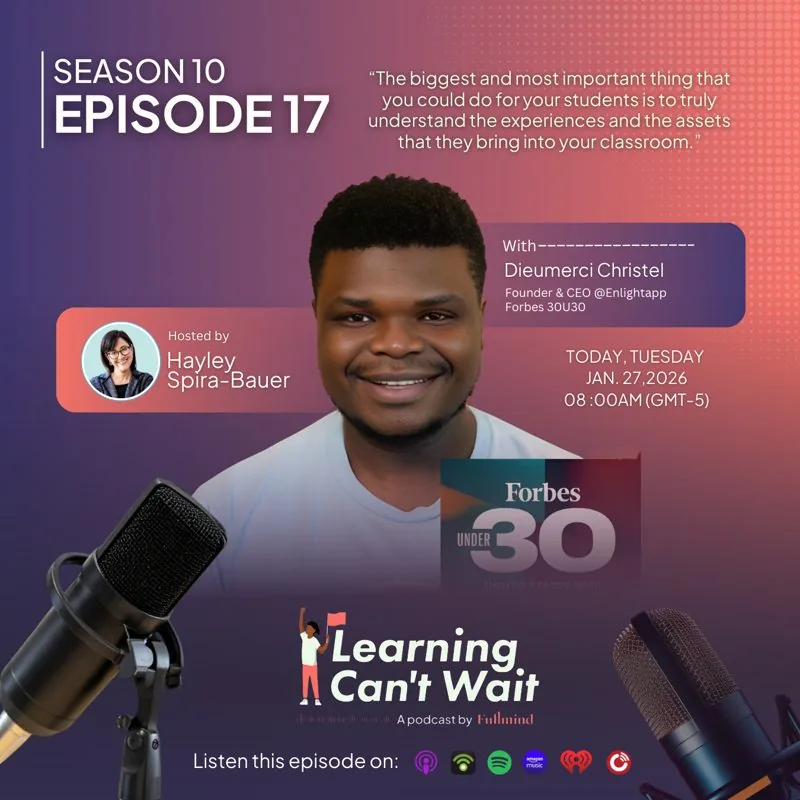
Dieumerci Christel: I would say that… The biggest and most important thing that you could do for your students Is to truly understand The experiences and the assets that they bring into your classroom. When you get to understand that, you can truly, truly make magic with our minds, and I'm a big testament of that. And so, like, there's many, many, many, many refugees, or immigrants, and… you know, even students here in the U.S. Who are ever more lonely now than ever… who are yearning for mentors, like, I believe that's… that's the role that, you know, I believe a lot of teachers who are coming into the education field in the future is going to be mentors, facilitators, and guides, because are, you know, the world, the youth needs it. Because right now, a lot of… a lot of students are starting to go towards AI for help, and I believe the human touch definitely is still the most relevant thing, and COVID was able to actually prove that to us. And so, if we can continue down the path of providing educators who are full of empathy to be able to actually guide the next generation towards their dreams, now they can create anything. And so. You know, be a part of that.
[35:00] **Hayley Spira-Bauer:** Damn, I love it. Thank you so much for sharing your story and bringing so much heart to this work. It is incredible to hear Everything that you're building and everything that you dream, so we're really grateful you came on the podcast today.
Dieumerci Christel: Thank you so much, Hayley, I appreciate you, and shout out to Rita, which, you know, we appreciate her very much, and, you know, the work that she's also doing in this space. Just… And also, just for connecting us, honestly. I really appreciate that, so shouts out to her, and hopefully I get to see her soon.
Hayley Spira-Bauer: And thank you to Rita, and thank you to everybody for tuning in today.