Connect with the Fullmind Team

For Education Leaders
Get proven strategies and expert analysis from the host of the Learning Can't Wait podcast, delivered straight to your inbox.
LIVE Staffing
LIVE Staffing fills hard-to-staff roles with certified educators who teach live, synchronously, on your schedule and curriculum.
Competency-Based Education Online

The traditional educational model, built around the Carnegie unit that measures learning in terms of "seat time," struggles to provide the personalization modern students need. This time-based approach leaves some students behind while holds others back, highlighting the need for personalized learning approaches that prioritize mastery over seat time.
Competency-based online education offers a powerful, flexible alternative. It shifts from measuring "time spent learning" to evaluating "what a student knows and can do." This approach recognizes that students learn at different paces and in different ways and leverages technology to accommodate these differences, making it one of the most effective personalized learning models available today.
This guide explores the principles, benefits, and implementation of online Competency-Based Education (CBE). It demonstrates how it serves as a framework for effective, skills-based virtual learning in the K-12 environment, complementing other personalized education approaches that focus on individual student needs.
What Is Competency-Based Education (CBE)?
Competency-Based Education (CBE) is an educational model that reshapes our approach to teaching, learning, and assessment. In this model, student progress is based on demonstrated mastery of defined skills and knowledge (competencies) rather than classroom time.
Focus on Mastery
CBE centers on mastery-based learning. In a traditional classroom, a student earns a C on a test and moves on, carrying knowledge gaps forward. These gaps compound over time, creating a shaky foundation for future learning. In a CBE model, students advance only after demonstrating thorough understanding of the current material, ensuring a solid foundation before tackling advanced concepts. This approach has become increasingly popular in K-12 virtual learning environments where individualized pacing is more easily implemented.
Defining "Competencies"
In this context, a "competency" goes beyond memorizing facts or formulas. It encompasses the knowledge, skills, and abilities that demonstrate meaningful application of learning. For example, a math competency isn't just about solving an equation correctly; it includes understanding the underlying concepts, explaining the process, and applying the skills to real-world problems. Competencies are typically cross-disciplinary and focus on transferable skills that prepare students for college, careers, and life through student-led learning approaches.
The Online Component
Technology transforms CBE from a promising theory to a scalable reality. Online platforms track student progress, deliver personalized content, and facilitate diverse assessments. This infrastructure enables a fully personalized online learning experience for every student, regardless of their starting point or pace.
Core Principles of a Successful Online CBE Model
Implementing effective online competency-based education requires adherence to several foundational principles:
Explicit and Measurable Competencies
Learning objectives must be clearly defined, transparent to all stakeholders, and tied to measurable outcomes. Students and parents should understand what skills need to be demonstrated for progression.
Authentic and Meaningful Assessment
CBE assessments extend beyond traditional multiple-choice tests. They often involve projects, presentations, or problem-solving tasks requiring students to apply their knowledge in meaningful contexts, demonstrating true understanding rather than mere recall.
Flexible Pacing and Student Agency
Flexible pacing is a cornerstone of CBE. Students can accelerate through material they grasp quickly or take more time with challenging concepts. This personalization gives students greater ownership of their learning journey and helps develop self-regulation skills.
Timely and Differentiated Support
When a student struggles, the goal isn't to assign a failing grade but to provide targeted support to help them achieve mastery. This approach transforms "failure" into a temporary state on the path to success, reducing stigma and building resilience in the whole child.
Emphasis on Real-World Application
Effective CBE models connect competencies to the skills students need for future success. This relevance increases engagement and helps students see the purpose behind their learning, reinforcing the value of skills-based learning that transfers to life beyond the classroom.
Key Benefits for Students and Schools
For Students: Fostering Deeper Learning and Engagement
- No More Gaps: By ensuring mastery before advancement, students build a solid foundation without the learning gaps common in traditional models.
- Reduced Anxiety: Self-pacing reduces the stress of keeping up with peers or falling behind due to absence or learning differences.
- Increased Motivation: Students gain ownership and accomplishment as they master skills at their own pace, boosting engagement and intrinsic motivation.
- Future-Ready Skills: The focus on application and deeper understanding prepares students for post-secondary success by developing critical thinking, problem-solving, and self-direction.
- Personalized Learning Paths: Students can pursue topics of interest in greater depth while receiving targeted support in areas of struggle.
For Schools and Districts: Creating Flexible and Efficient Systems
- Personalization at Scale: Meet the needs of every learner, from those needing remediation to those seeking advanced coursework, without overburdening your staff.
- Data-Driven Decisions: Online CBE platforms provide administrators with real-time data on student progress, highlighting intervention needs and enabling evidence-based resource allocation.
- Solving Staffing Challenges: By leveraging virtual educators for schools, offer courses in subjects without a full-time certified teacher (e.g., AP Physics, world languages).
- Efficient Credit Recovery: Provide a streamlined path for students to get back on track for graduation without repeating entire courses.
- Increased Graduation Rates: CBE can help more students graduate by providing multiple pathways to success and removing time-based barriers.
A Practical Guide to Implementing Competency-Based Education Online
Transitioning to an online CBE model represents a significant shift requiring careful planning and execution. The benefits are substantial, but implementation challenges exist. Key considerations include technology infrastructure, curriculum redesign, professional development for staff, and securing buy-in from all stakeholders, including parents, students, and board members.
Implementation Path:
- Define Your Vision: Start with a clear understanding of your goals. Many districts start with a pilot program or a specific use case, like credit recovery or offering advanced courses not available in your district.
- Choose the Right Technology: Select an online platform that supports flexible pacing, mastery tracking, and robust reporting. The system should provide meaningful data and remain intuitive for teachers, students, and parents.
- Develop or Adapt Curriculum: Ensure your curriculum is broken down into clear, measurable competencies that align with state standards and district goals. Quality content is essential for student engagement and success.
- Invest in Professional Development: On-site teachers need training to serve as facilitators and mentors in a CBE environment. Their role shifts from primary content delivery to providing targeted support and guidance.
- Establish Clear Assessment Protocols: Develop consistent rubrics and criteria for demonstrating mastery that ensure equity and rigor across the program.
- Find the Right Partner: Districts don't have to reinvent the wheel. Partnering with a virtual learning organization can provide the curriculum, technology, and certified teachers needed for successful implementation.
The Critical Role of the Live Virtual Teacher
While technology enables online competency-based education, effective learning requires human connection and expertise. A misconception is that online learning is just software and self-guided modules. In reality, successful programs balance technological tools with expert guidance.
In an online CBE model, the live, certified teacher serves as a facilitator, mentor, and content expert. Unlike a traditional classroom where teachers primarily lecture to a full class, virtual CBE teachers provide:
- Targeted, one-on-one and small-group instruction when data shows a student is struggling with specific competencies
- Deeper explanations and real-world context that help students connect abstract concepts to practical applications
- Motivation, encouragement, and relationship-building that foster student engagement and persistence
- Crucial support for Students with Disabilities (SWD) and other diverse learners who need specialized instructional strategies tailored to their unique learning profiles
The most successful K-12 online learning models combine the flexibility of CBE with the support of live, certified instructors. This is important when implementing CBE across multiple subjects or for specialized populations. Virtual staffing solutions are essential for providing high-quality instruction that meets all learners’ needs while addressing staffing challenges.
Conclusion
Competency-based online education represents a transformative shift toward meaningful, personalized, skills-based learning. It empowers students by focusing on mastery rather than time and provides schools with the flexibility to meet modern challenges, from learning loss to teacher shortages, with innovative solutions.
A strong CBE framework and expert live virtual instruction create a powerful educational model that adapts to individual student needs while maintaining high standards. This approach recognizes that technology alone cannot replace the human element in education; it amplifies the impact of skilled educators.
Implementing a flexible, competency-based model can feel daunting, but you don't have to navigate it alone. The right partner can provide the framework, curriculum, and certified educators to make it a reality for your district.
Ready to see how live, certified virtual teachers can help your students thrive? Explore Fullmind's customized learning solutions to discover how we support over 600 districts nationwide in implementing effective online learning programs that deliver measurable results.
Podcast
From the Learning Can’t Wait podcast
 Hosted by Hayley Spira-Bauer, Chief Academic Officer at Fullmind
Newest episodes
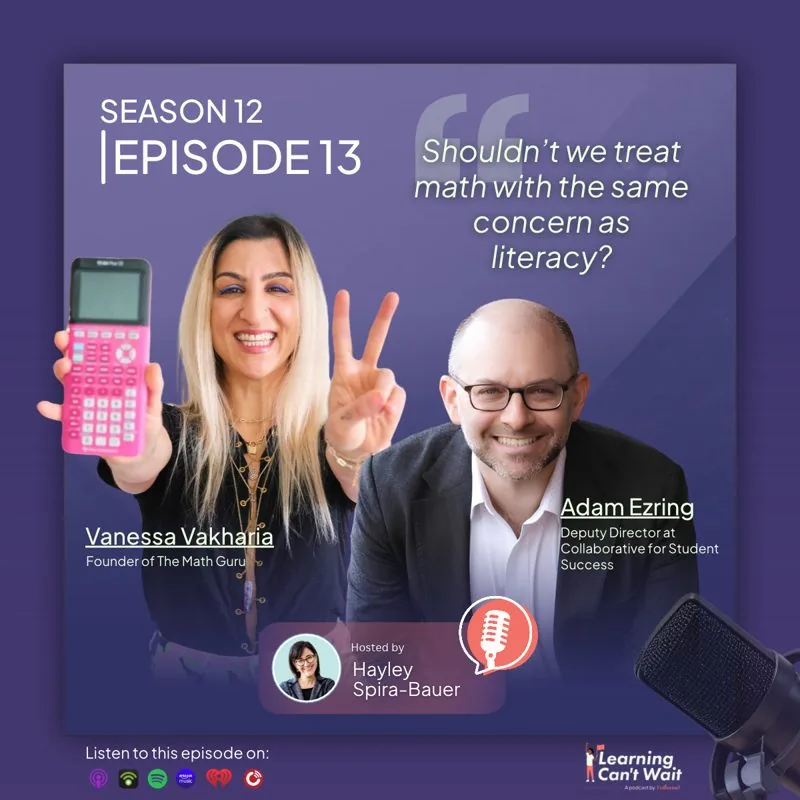 Vanessa Vakharia & Adam Ezring: Family Math, Math Confidence & Learning Through PlayOctober 13, 2026 · Vanessa Vakharia, Adam Ezring
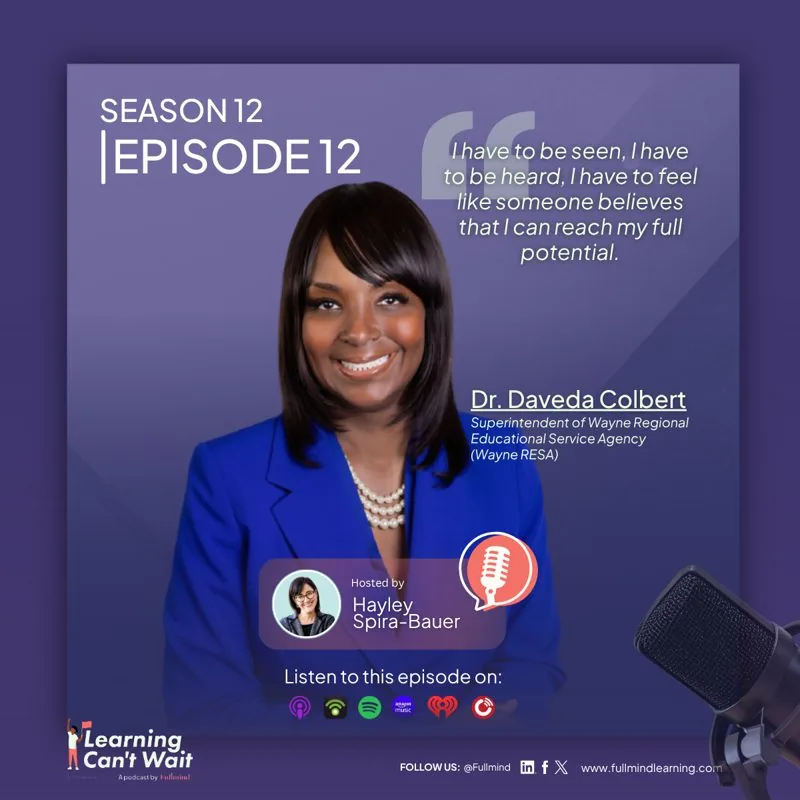 Dr. Daveda Colbert: Leadership, Belonging & ServiceOctober 6, 2026 · Dr. Daveda Colbert
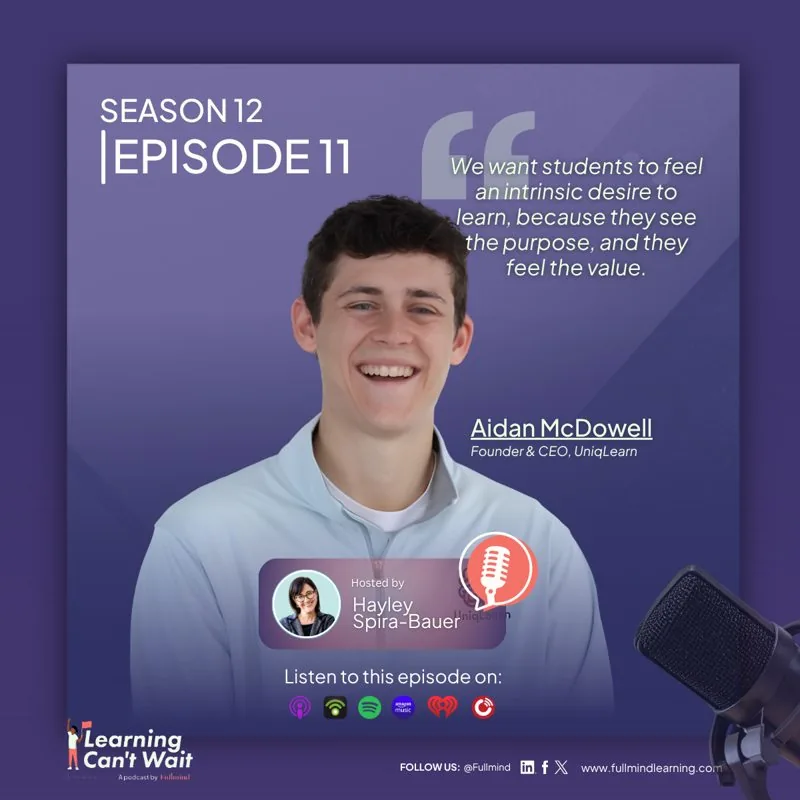 Aidan McDowell: Personalized learning, Student agency & Intrinsic motivationSeptember 29, 2026 · Aidan McDowell
For Education Leaders
Get proven strategies and expert analysis from the host of the Learning Can't Wait podcast, delivered straight to your inbox.









































































How can we help? Let’s connect.
Tell us what you need. It takes about a minute, and you’ll see the next steps right away.
Meet an education consultant
Talk through your students, schedule and goals.
Get a proposal for your district
A plan built around your needs and budget.
Prefer to call? 210-617-3009
Thanks! Pick a time that works
A 30-minute call with an education consultant. Your details are already filled in.
Your one-pagers
Matched to what you told us. They download as one PDF.
Every child deserves the opportunity to access exceptional education.