Connect with the Fullmind Team

For Education Leaders
Get proven strategies and expert analysis from the host of the Learning Can't Wait podcast, delivered straight to your inbox.
Virtual Staffing
Fill Teacher Vacancies in Days
- State-certified experts averaging 15+ years experience
- Fully aligned to your curriculum & standards
- Scalable, cost-effective hybrid solutions
Swing Education Review: Services, Costs, Terms and Reviews
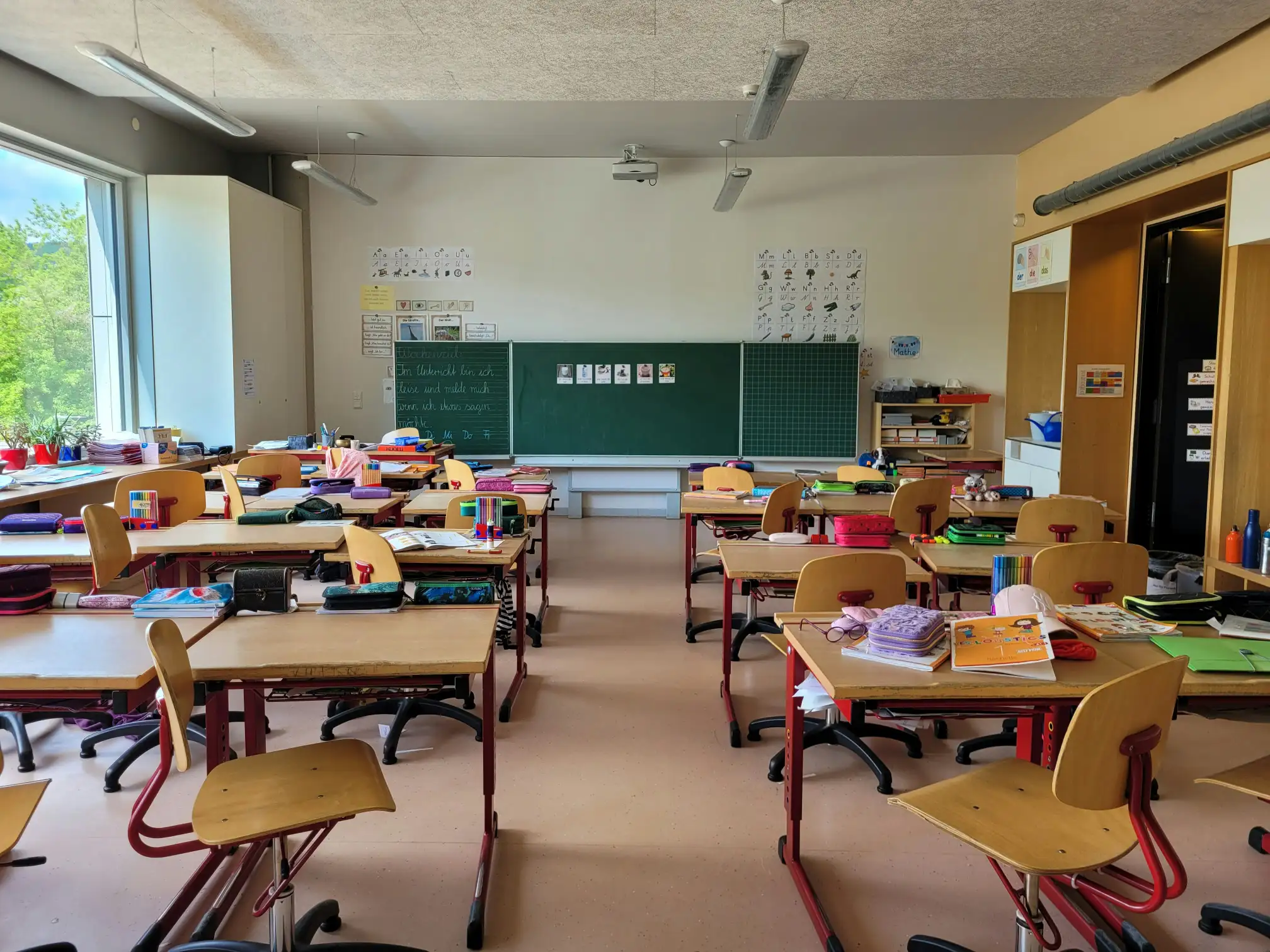
Swing Education is a web-based platform that allows schools and school districts to fill single-day or long-term vacancies with substitute teachers matched to meet their exact needs. Instructions are provided in person, and Swing services are available in a total of seven US states, though some districts may also consider local tutoring services in Chicago as supplemental educational support. So, is Swing worth it for schools and districts?
For schools needing more than just short-term subs, Fullmind offers certified, real-time virtual instruction in all 50 states—covering everything from full-time teaching roles to IEP-aligned support and one-on-one tutoring. It’s a modern solution to the growing teacher shortage that brings flexibility, quality, and curriculum alignment into every classroom.
This Swing Education review offers all the information that school districts and schools need to decide if they should hire the company to take care of their teacher shortage problems. This includes a company overview, service description, teacher background and qualifications, terms and conditions, and software use. We also look at what existing customers think about Swing and also highlight the main pros and cons of the platform compared to alternatives like what Fullmind offers for schools.
Swing Education Overview
Swing Education operates in the education administration space. The platform allows schools and districts to find substitute teachers dynamically, with a lead time of anything between one day and one year.
Mike Teng and Asha Visweswaran founded Swing Education in 2015, and the company has its headquarters in San Mateo, CA. The Swing team's goal is to connect reliable, high-quality substitute teachers with the schools and students that need them. This goal is based on the belief that every classroom deserves a teacher. Swing aims to use the power of technology to improve the way in which people work together and to address the tough problem of classroom vacancies caused by teacher shortages, including those filled through exchange programs. Thus, the company has built an innovative way to facilitate the process of matching substitute teachers with schools, helping districts avoid relying solely on local tutoring services in Chicago and similar supplemental solutions when regular staff is unavailable.
At the moment, Swing has a network of 4,000 Swing Subs, and new substitute teachers sign up every day. The company has partnered with over 2,800 schools from seven states and has served more than 8 million students. For those interested in similar educational platforms, understanding how Fullmind works can provide valuable insights into alternative approaches to educational technology solutions.
Swing Education Services
Swing offers a single service which is providing substitute teachers to school districts and schools. The platform handles the process from end to end, including recruitment, vetting, payroll, and management of subs. All that a school or a district needs to do is to sign up for the platform, set up its profile, and submit a request to have a class covered anytime of the school year.
As soon as a teacher is matched with the request, the school administration can meet the Swing Sub digitally by gaining access to their profile to review their education and work history. Meanwhile, Swing Subs can access the school sub plans and information beforehand to arrive ready for class. Schools and districts can identify their favorite subs on the platform so that they get notified first next time the school needs a substitute teacher.
Schools and school districts can benefit from a single-day or a multi-day teacher substitution, depending on their needs. This means they can avoid last-minute class cancellations as well as anticipate future needs or prepare for professional development programs by requesting substitutes for multiple classrooms with a single request submission.
Swing offers substitute teachers for all levels - K-12 grade - and for all core subjects.
Swing Education can help fill the following positions:
- Substitute teachers
- Paraeducators
- Instructional aides
- Front-desk staff
- One-on-one supports
- Library assistants
Swing Education Staff
Swing Subs qualifications depend on the requirements in the states where they teach. In some cases they have a teaching certificate, while in others this is not required. Some substitute teachers have a bachelor’s degree, but others don’t. All Swing Education teachers undergo a background check as determined by state requirements.
Swing Education Costs
Our review of Swing shows that the company does not provide pricing information on its website. According to the Swing Education Services Agreement, substitute teachers are paid an hourly or daily rate, while the platform charges a service fee as a percentage of the daily rates. Third-party sources quote hourly rates to start at $25.40 and daily rates to be between $147 and $167. Rates depend on the location, the teacher qualifications, and other factors.
Teacher payroll is handled by Swing. This means that the school or the district transfers the lump sum based on the daily rates and the service fees to Swing, and the company pays teachers.
In case an educational institution decides to hire or contract directly with a teacher provided by Swing, they need to pay Swing Education a finder’s fee of $2,500 which covers the finding, screening, and onboarding costs.
Swing Education Terms
To work with Swing Education, schools and districts need to sign a Services Agreement. The agreement is valid for one year and gets automatically renewed unless a 30-day written notice for termination is provided.
In terms of canceling services, educational institutions can cancel requests that have been accepted by a Swing Sub up to 24 hours before the start of the fill without paying any fees. Cancellations made within 24 hours of the start of the fill are subject to the daily fees.
Swing Education Software
Swing uses their own proprietary online platform to create school and teacher accounts and profiles, to allow schools to submit requests, to do the matching, and to help schools review substitute teachers. The platform is designed to be user-friendly. A mobile app is also available.
Swing Education Reviews
While the company has been around since 2015, there are no online Swing Education reviews by school or district administrators or parents whose children have been taught by Swing Subs. Third-party websites generally feature reviews by teachers who have worked or attempted to work with Swing. They highlight slow processes, complicated procedures, and delayed payments.
Swing Education Pros and Cons
Hiring Swing brings certain advantages and disadvantages to schools and school districts which they should take into consideration when deciding if this is the best option for their substitute teacher needs.
Swing Education Pros
The most important benefits of working with Swing include:
- Ability to provide substitute teachers on a short notice
- Opportunity to fill in both single-day and long-term staffing needs
- In-person instruction
- Possibility to work with favorite substitute teachers over and over again
- Alignment with substitute teacher state requirements
Swing Education Cons
The main drawbacks of hiring Swing are:
- Not necessarily state-certified teachers
- Lack of permanent staffing service
- Very limited geographical coverage within the US
- Lack of pricing information
Swing Education Availability
Swing substitute teacher services are available only in the following states:
- Arizona
- California
- Illinois
- New Jersey
- New York
- Texas
- Washington, DC
This limited geographical coverage is necessitated by Swing’s hyper-local strategy to find the best subs for partner schools and districts. Moreover, it’s also dictated by the fact that Swing Subs teach in-person rather than online.
The top 4 school districts where Swing operates include:
- Lighthouse Charter School, CA
- Chino Valley Unified School District, CA
- Dover Public Schools, NJ
- Whittier City School District, CA
Swing Education Alternatives
While Swing has an efficient way to fill short-term and long-term vacancies at schools, the company has a very limited geographical coverage restricted to only seven US states. Moreover, its services in the K-12 education space are limited to staffing with no other options such as tutoring. Thus, schools and school districts need to resort to using other companies and platforms to address different needs.
Following are the top Swing Education alternatives that are able to provide more diverse services nationwide:
Swing Education vs Fullmind
Fullmind is the top-ranked educational platform that provides comprehensive services to schools and school districts across the entire US. The company has a student satisfaction score of 4.3/5 stars, which testifies to the quality and effectiveness of its work.
Fullmind services go beyond what Swing offers and include core instruction, supplemental instruction (online tutoring), and virtual staffing for K-12 grade. The company operates online, providing educational institutions with access to the best instructors and tutors regardless of their location. Instruction is synchronous, which means that students benefit from a live teacher providing real-time teaching and interaction. Delivery modules include 1-on-1, small group, and whole class sessions.
Instruction includes all core and multiple elective courses. Importantly, Fullmind uses state-aligned and coordinated content to ensure smooth transitions between online and in-person instruction and consistency in the knowledge of students within the same school and district. Meanwhile, content and delivery are customized to the needs of individual students to ensure optimal results. Specifically, Fullmind has expertise in working with homebound students, students in suspension, and students with disabilities.
Another major advantage of Fullmind over Swing Education is that the former works only with state-certified instructors who are trained to work in an online setting. Staff is carefully vetted and checked to ensure high-quality teaching services and student safety. In case of virtual staffing, instructors are immersed in the school community through real-time communication with students, staff meetings and events, and parent-teacher conferences.
Fullmind has a flexible pricing model where the cost depends on the purchased services. Fees are competitive and affordable.
Swing Education vs Proximity Learning
Proximity Learning is a Swing Education competitor that offers staffing in addition to other services. Proximity focuses on e-learning services which allows it to operate nationwide.
Proximity services include core instruction, virtual tutoring, online summer school, and virtual schools for K-12 grade. Subjects cover both core and elective options.
A major disadvantage of Proximity Learning compared to Swing is that the company uses its own proprietary content which results in discrepancies in the knowledge and skills of students within the same district and even school. However, on the positive side, all Proximity teachers are state-certified in their subject(s).
Proximity is able to customize services and content to meet the needs of diverse students. Nevertheless, they have relatively limited experience in working with homebound students and students with disabilities.
Proximity Learning does not disclose pricing information, so interested educational establishments need to contact Customer Support for a custom quote.
Swing Education vs Elevate K-12
Elevate K-12 is a Swing Education alternative that offers online educational services to school districts and schools across the US with the exception of Georgia, Illinois, Louisiana, New Jersey, South Carolina, and Texas.
Elevate services comprise core and elective instruction, special education, supplemental instruction (tutoring), and summer school courses. Subjects cover core courses, electives, career readiness classes, exam preparation courses, and world languages.
As opposed to Swing Education, Elevate K-12 frequently uses its own content which creates gaps in the knowledge and skills of students instructed online and in-person. However, all Elevate teachers are state-certified and receive additional training by the company.
Elevate K-12 offers dedicated services to students with special education needs including core instruction, additional resource pull-out, and alleviating classloads.
Elevate K-12 fees are not disclosed, so schools and districts need to get in touch to get a custom quote based on their needs.
Bottom Line
Our Swing Education review shows that the platform offers an efficient way for schools and districts to handle the problem of vacancies via the provision of daily and long-term substitute teachers. The company embraces the power of technology to streamline the finding and management of subs, while delivering in-person instruction to K-12 grade students in a traditional classroom setting. However, the lack of additional services and the limited geographical availability make Swing a suboptimal choice for many educational institutions.
If you’re looking for an e-learning platform that offers comprehensive services to schools and districts in the entire US, check out Fullmind.
For Education Leaders
Get proven strategies and expert analysis from the host of the Learning Can't Wait podcast, delivered straight to your inbox.