Connect with the Fullmind Team

For Education Leaders
Get proven strategies and expert analysis from the host of the Learning Can't Wait podcast, delivered straight to your inbox.
Credit Recovery
Our online credit recovery program is taught live by certified educators, helping high school students make up missing credits and graduate on time with real instruction rather than self-paced software alone.
AI in Education Examples: Use Cases & Benefits

Artificial Intelligence (AI) is a practical solution to many challenges. It is currently being implemented in schools nationwide. The best AI in education applications show that technology works best not as a replacement for educators, but as a tool that amplifies their capabilities and frees them to focus on meaningful interactions with students.
This article explores eight AI use cases in K-12 education. It demonstrates how AI can support students' learning journeys, reduce administrative burdens for teachers, and provide administrators with insights for decision-making. These current applications offer a glimpse into the future of AI in education.
What Do We Mean by AI in K-12 Education?
AI in education refers to computer systems that can perform tasks requiring human intelligence. These systems can understand language, recognize data patterns, adapt to new information, and make recommendations. AI acts as a super-powered assistant for educators, one that can process vast amounts of information quickly and identify hidden insights. However, successfully implementing these AI tools across educational institutions requires strong digital leadership in education to guide the transformation effectively.
The goal of AI in K-12 education is not to replace human teachers but to handle repetitive, time-consuming, or data-heavy tasks that distract educators from their main work. By automating routine processes and providing data-driven insights, AI frees teachers to focus on aspects of education that require human skills: building relationships, providing emotional support, sparking curiosity, and offering nuanced guidance.
Category 1: AI-Powered Personalized Learning & Instruction
The promise of personalized learning AI is its ability to move education beyond the traditional one-size-fits-all model. Among the many AI in education applications, personalized learning stands out for creating customized educational experiences that meet each learner's needs by analyzing individual learning patterns and adapting accordingly.
1. Adaptive Learning Platforms
Adaptive Learning Platforms use algorithms to assess student performance in real-time. The system tracks mastered and struggling concepts as a student works through material. If a student master multiplying fractions, the platform advances them to dividing fractions. Conversely, if a student struggles with identifying themes in literature, the system provides more examples, explanations, and practice before moving on. These implementations follow established AI education guidelines for effective classroom integration.
This technology significantly impacts students by keeping them appropriately challenged to prevent boredom from easy material and frustration from difficult content. This creates a more efficient learning path, allowing students to progress at their optimal pace rather than being constrained by a single curriculum timeline.
2. High-Dosage Tutoring Support
High-Dosage Tutoring: intensive, consistent academic support multiple times per week, is one of the most effective interventions for students who have fallen behind. AI enhances this approach by analyzing assessment data to pinpoint knowledge gaps and misconceptions. This allows tutoring to focus on areas where a student needs support, rather than broadly reviewing entire units or subjects.
This blend of technology and human expertise is where solutions from companies like Fullmind excel. Fullmind connects schools with live, certified virtual educators for targeted, high-dosage tutoring to close learning gaps by leveraging data to identify student needs. This ensures the technology serves the ultimate goal: meaningful, one-on-one instruction from a qualified teacher.
3. Differentiated Instruction Tools
Differentiation, providing multiple learning paths based on students' needs, has long been a best practice in education. However, the time required to create different materials has made it challenging to implement. AI-powered tools now make differentiation more practical by automatically generating varied resources for a single topic.
These tools can transform a single reading passage into versions at different Lexile levels, create multiple practice problem sets with varying scaffolding, or generate assessment questions targeting the same concept at different knowledge depths. This reduces the time teachers spend preparing materials, allowing them to provide differentiated instruction without the previous workload.
Category 2: Enhancing Teacher and Administrator Efficiency
Administrative tasks consume a significant portion of educators' time, time that could be spent on instruction, relationship-building, and professional development. AI tools can automate many routine responsibilities, giving valuable hours back to educators and administrators.
4. Automated Grading and Feedback
AI grading systems have advanced beyond scoring multiple-choice tests. Today's technology evaluates short answers, checks mathematical work for errors, and provides initial essay feedback. Advanced natural language processing allows these systems to assess writing for grammatical accuracy, structural coherence, and adherence to assignment requirements.
The benefit is twofold: students receive immediate feedback to understand and correct their mistakes, while teachers are freed from hours of routine grading to provide deeper, conceptual feedback. This doesn't eliminate the teacher's role in assessment; rather, it allows educators to concentrate on aspects of student work that require human judgment and expertise, such as creativity, critical thinking, and nuanced understanding.
5. Intelligent Lesson Planning and Content Curation
Intelligent Lesson Planning tools serve as creative partners for teachers, helping them develop engaging, standards-aligned lessons efficiently. These AI assistants generate lesson outlines based on curriculum objectives, suggest relevant activities, create custom worksheets and assessments, and source high-quality digital resources (videos, articles, simulations) that align with the lesson's goals.
For schools facing staffing challenges, these tools can help less experienced teachers develop robust lesson plans or enable educators to teach outside their expertise. This doesn't diminish the art of teaching but provides a foundation for teachers to build upon with their creativity and judgment. Many districts find these tools valuable when integrated with virtual staffing solutions that connect schools with certified educators for specialized content.
6. Streamlined Administrative Management
Behind every successful educational experience lies a complex web of operational systems, scheduling, transportation, communication, and resource allocation. AI is transforming these functions through intelligent automation. Machine learning algorithms optimize bus routes to reduce fuel costs and transit time, generate master schedules that balance constraints, and manage parent communications through intelligent systems that ensure no family is overlooked.
These efficiencies translate to significant time and cost savings at the district level. For example, AI-powered attendance tracking systems can automatically identify patterns, flag concerning trends, and initiate interventions, a process that requires hours of manual analysis. Many schools are incorporating attendance management services that use these technologies to improve student participation and ensure compliance with attendance policies.
Category 3: Improving Student Assessment and Accessibility
AI offers tools for understanding student performance and creating more accessible learning environments, enhancing instruction and streamlining operations.
7. Predictive Analytics for Early Intervention
Predictive Analytics is a promising AI application for student support. By analyzing multiple data points; attendance, assignment completion, grades, standardized test scores, and digital learning platform usage; AI systems can identify students at risk of falling behind or disengaging from school. These systems can spot concerning trends before they are obvious to even the most attentive educator.
This early-warning capability allows schools to implement interventions proactively. When a student is flagged as at-risk, counselors, teachers, and administrators can coordinate targeted support, perhaps additional tutoring, check-ins with a counselor, or family outreach, before minor challenges become major obstacles to academic success. This preventative approach is far more effective and resource-efficient than waiting until a student has fallen significantly behind.
8. Support for Diverse Student Needs
AI-powered accessibility tools are creating unprecedented opportunities for equitable access to education for students with disabilities or learning differences. Speech-to-text technology allows students with physical disabilities or dysgraphia to express their ideas without the handwriting barrier. Text-to-speech and reading assistance tools help students with dyslexia or visual impairments access written content. Language translation features support English language learners in accessing grade-level content while developing proficiency.
These AI use cases in education are valuable for schools fulfilling Individualized Education Program (IEP) requirements. AI tools help schools meet their legal and ethical obligations for accommodations by providing multiple ways to access and engage with content. This technology-enhanced approach to inclusion can be powerful when combined with specialized SWD services & IEP fulfillment programs that provide support from trained special education professionals.
AI is a Tool, Not the Teacher
While educational AI capabilities are impressive and expanding rapidly, it's vital to remember what technology cannot replace: the irreplaceable human elements of education. AI can analyze a student's reading level with precision, but it cannot recognize the signs of a child having a difficult day at home. It can generate practice problems tailored to a student's skill level, but it cannot inspire a love of learning through personal passion and connection. It can flag a potential learning disability, but it cannot build the trust necessary for a student to take risks and grow.
This human-centered perspective on educational technology recognizes that even the most sophisticated AI lacks the empathy, ethical judgment, and inspirational qualities of great teaching. Data can show what students know, but only a skilled educator can understand who they are and who they might become.
The future of education isn't AI versus teachers; it's AI plus teachers. By leveraging technology to handle routine tasks and provide data-driven insights, we free educators to focus on aspects of education that require human capabilities: building relationships, cultivating wisdom, and nurturing the whole child. This balanced approach to innovation is at the heart of Fullmind's mission to support schools with solutions that combine technological efficiency with human expertise.
Conclusion
The examples we've explored of AI in education demonstrate the transformative potential of artificial intelligence in education. AI offers practical solutions to the pressing challenges facing schools today, from creating personalized learning experiences to reducing administrative burdens on educators and improving accessibility for diverse learners.
As educational leaders navigate this evolving landscape, the most successful approach will be strategic optimism. This means embracing AI capabilities while focusing on the ultimate goal: providing every student with the support, guidance, and opportunities to thrive. By integrating technology with human expertise, schools can create personalized, efficient, and equitable learning environments.
Podcast
From the Learning Can’t Wait podcast
 Hosted by Hayley Spira-Bauer, Chief Academic Officer at Fullmind
Newest episodes
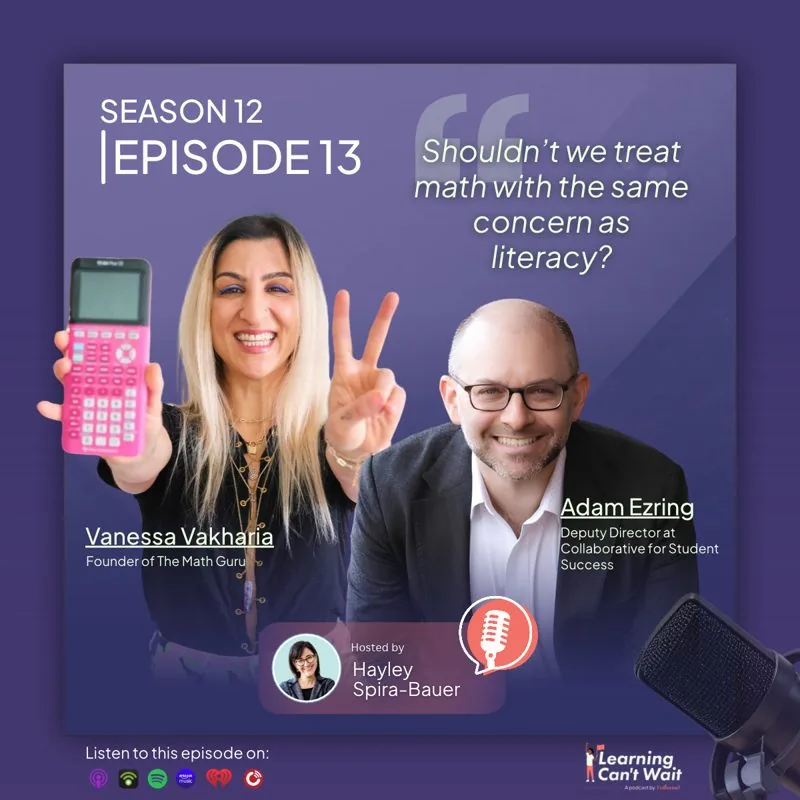 Vanessa Vakharia & Adam Ezring: Family Math, Math Confidence & Learning Through PlayOctober 13, 2026 · Vanessa Vakharia, Adam Ezring
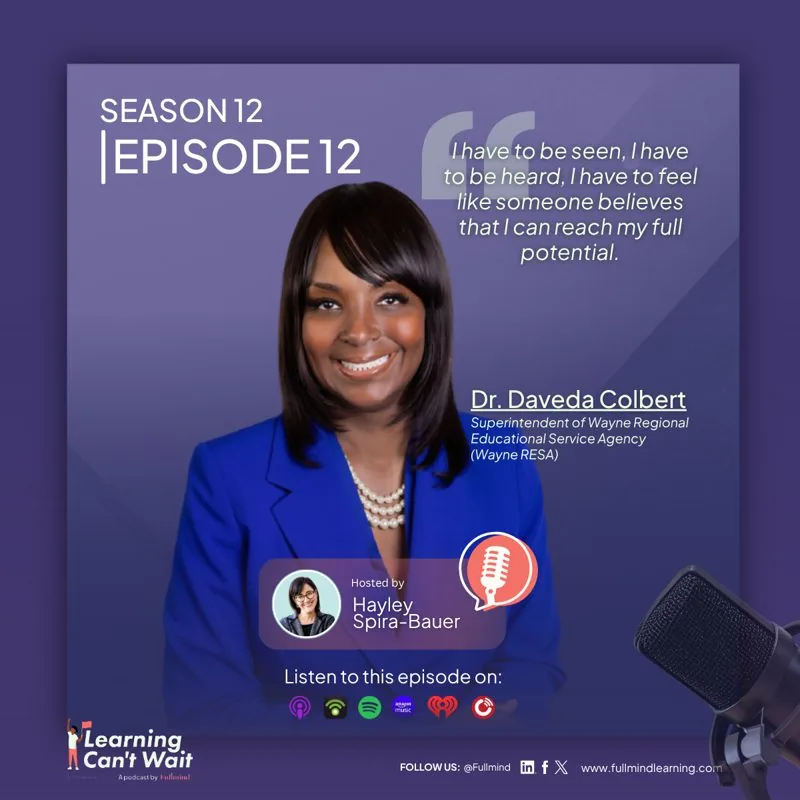 Dr. Daveda Colbert: Leadership, Belonging & ServiceOctober 6, 2026 · Dr. Daveda Colbert
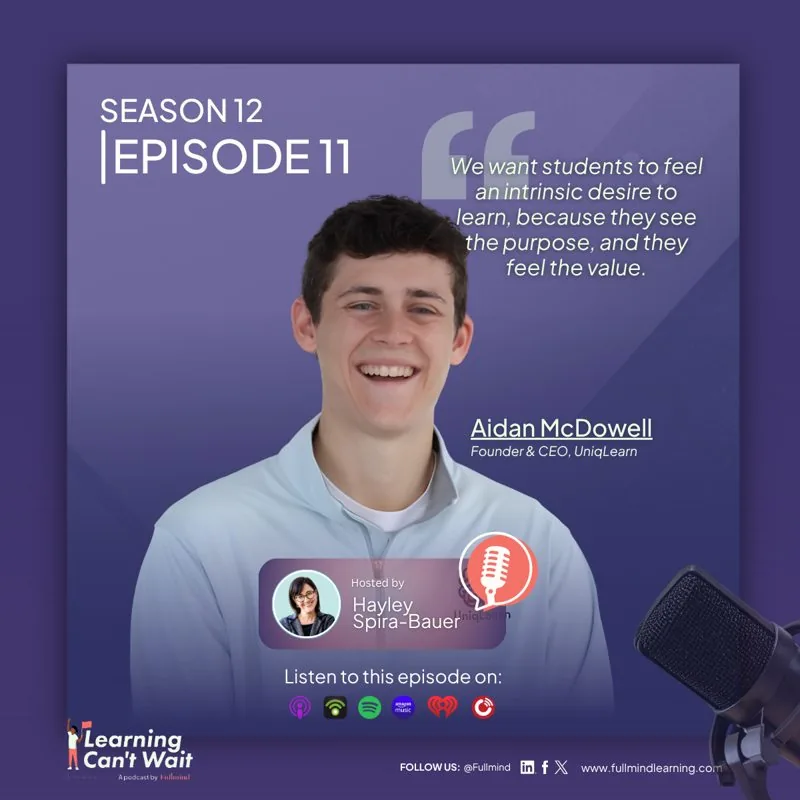 Aidan McDowell: Personalized learning, Student agency & Intrinsic motivationSeptember 29, 2026 · Aidan McDowell
For Education Leaders
Get proven strategies and expert analysis from the host of the Learning Can't Wait podcast, delivered straight to your inbox.





































































How can we help? Let’s connect.
Tell us what you need. It takes about a minute, and you’ll see the next steps right away.
We’ll reach out within one business day
An education consultant talks through your students, schedule and goals.
Get a plan for your district
A plan built around your needs and budget.
Thanks! Our team will reach out within one business day to set up a time that works for you.
Need help sooner? Book a time now
Your one-pagers
Matched to what you told us. They download as one PDF.
Every child deserves the opportunity to access exceptional education.