
For Education Leaders
Get proven strategies and expert analysis from the host of the Learning Can't Wait podcast, delivered straight to your inbox.
Teach with Fullmind
Fullmind hires state-certified teachers to teach live, online classes for K–12 schools across the country, from home.
A Guide to Personalized Learning Models
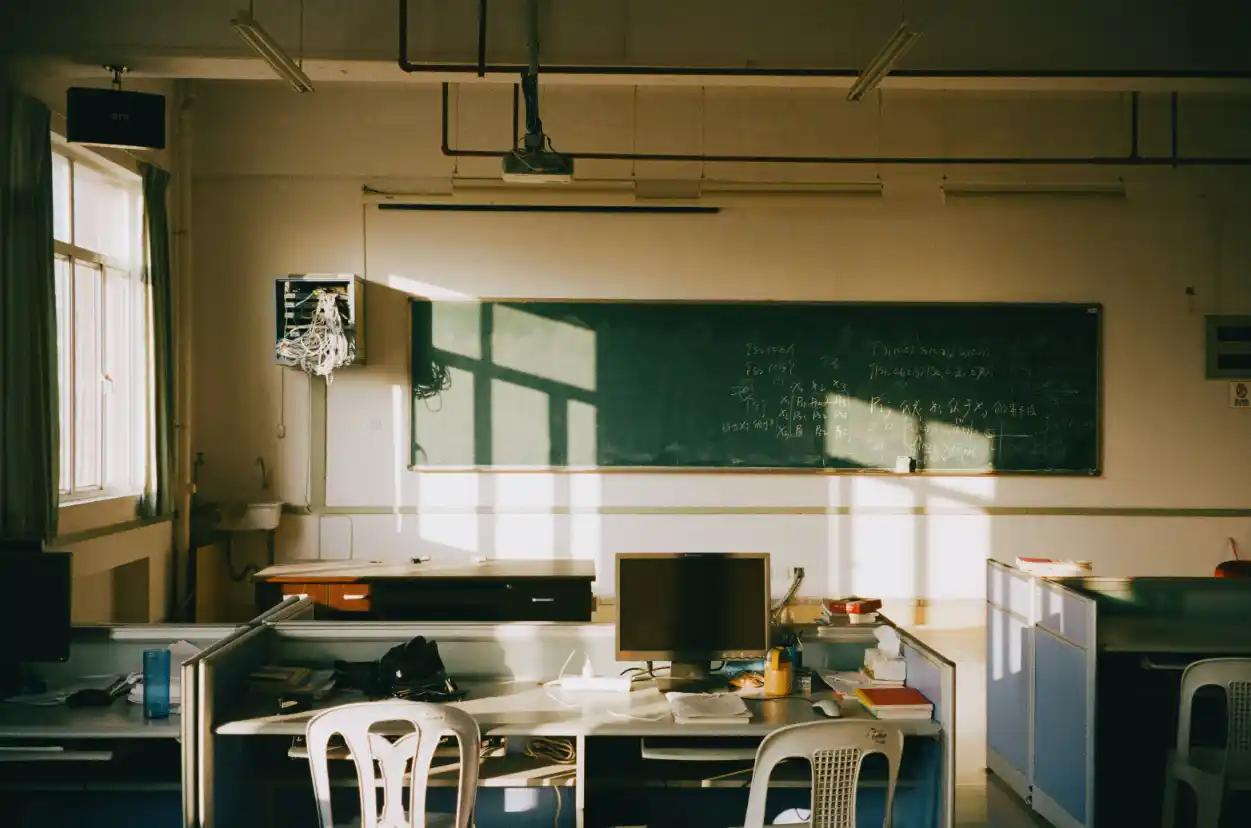
School administrators face a perfect storm of challenges: widening achievement gaps post-pandemic, diverse student needs, and a persistent teacher shortage. Addressing these issues requires more than incremental changes to traditional approaches. Personalized learning models have emerged as a framework capable of meeting these challenges, offering a systematic approach to individualized education that incorporates student-led learning methods to transform student outcomes while efficiently using limited resources.
This guide explores how personalized learning models work, including competency-based education online and other effective approaches, plus practical steps districts can take to implement these systems successfully amid staffing and budget constraints.
What is Personalized Learning?
Personalized learning tailors the educational experience to each student's unique strengths, needs, skills, and interests. Unlike traditional one-size-fits-all instruction, personalized learning models create pathways that adapt to individual students, allowing them to progress at their optimal pace while developing agency in their education. This approach demonstrates how personalized learning empowers students to take ownership of their educational journey.
Personalized learning shifts from a system designed for efficiency in delivering standardized content to one designed for effectiveness in developing each learner's potential. This approach recognizes that students learn differently and need various types and levels of support to succeed, which is why AI-powered personalized learning systems are becoming increasingly valuable for adapting to individual student needs.
To clarify this concept, it's important to distinguish between related terms that are often confused:
- Personalized Learning: The pace and path of learning can be customized. Students have input into what, how, when, and where they learn, taking ownership of their educational journey while meeting rigorous standards.
- Differentiation: The teacher adjusts their instructional approach for groups of learners with similar needs, but the learning objective and path remain the same for everyone in the class.
- Individualization: The instruction pace is adjusted based on individual student needs, but the learning goals and methods are identical for all students.
This evolution toward personalized learning isn't just a new trend. It's a response to neuroscience research on learning and our understanding of the skills students need for future success. In a world valuing creativity, problem-solving, and adaptability, personalized learning models prepare students to become self-directed learners who can navigate complex challenges.
Components of an Effective Personalized Learning Environment
Successful personalized learning models share foundational elements that create individualized educational experiences. Understanding these components is essential for administrators implementing effective programs that align with whole child education methods, including differentiated instruction strategies that meet diverse student needs.
Learner Profiles & Clear Goals
A personalized learning system requires a comprehensive understanding of each student. Learner profiles compile data on academic strengths and gaps, learning preferences, interests, and aspirations. These profiles are evolving records incorporating ongoing assessment data, student reflections, and teacher observations—foundational elements that support competency-based education online implementations.
Effective profiles help establish clear, measurable learning goals that are meaningful to the student and aligned with academic standards. This data-informed approach ensures that instruction targets the specific needs of each learner rather than teaching to the middle.
Flexible Pacing & Competency-Based Progression
In traditional education, time is constant and learning is variable. Students receive the same instruction regardless of needs. In personalized learning models, this flips: learning is constant, and time is variable.
Competency-based education allows students to progress based on demonstrated mastery rather than seat time. This approach ensures students build strong foundations before advancing, preventing gaps when classes move on too quickly. It also lets students who grasp concepts quickly advance without unnecessary repetition or waiting.
Student Agency & Customized Learning Paths
The most transformative aspect of personalized learning is the shift toward student ownership. When students have voice and choice in their education, selecting resources that resonate with their interests, choosing how to demonstrate their knowledge, and reflecting on their progress, engagement increases dramatically.
Customized learning paths don't mean students decide everything; they operate within a carefully designed framework that ensures they meet rigorous standards while having meaningful input into how they reach those standards. This balance of structure and flexibility is the hallmark of effective personalized learning models.
Key Blended and Personalized Learning Models
There isn't a single "correct" personalized learning model. The most effective approach often combines elements from several models, creating flexible learning environments that address a school's needs, resources, and goals. The Christensen Institute has developed a helpful taxonomy of blended learning models that serve as frameworks for personalization.
Rotational Models
In rotational models, students switch between learning modalities on a fixed schedule. There is at least one station for online learning. These models suit schools transitioning from traditional instruction to personalized approaches.
- Station Rotation: Students rotate through various stations in a single classroom, including online learning, teacher-led small groups, collaborative activities, and independent work. This approach allows teachers to provide targeted instruction to small groups while other students work independently or collaboratively.
- Lab Rotation: Students rotate between a traditional classroom and a dedicated computer lab for online learning. This model is useful for schools with limited in-class technology but access to a computer lab.
- Flipped Classroom: Students access direct instruction (often through video lessons) at home. This frees classroom time for active learning experiences like projects, discussions, and guided practice with teacher support.
- Individual Rotation: Unlike other rotation models where all students move through the same stations, each student has a customized rotation schedule based on their needs, determined by a teacher or algorithm.
Flex Models
In flex models, online learning is the backbone of instruction. Teachers provide support on a flexible, as-needed basis. Students work primarily through digital content in a brick-and-mortar setting where teachers provide face-to-face support through activities like small-group instruction, group projects, and individual tutoring.
This approach allows for individualized pacing and learning paths, making it effective for credit recovery programs, alternative education settings, or programs serving students with more flexible learning schedules.
A La Carte & Enriched Virtual Models
These models allow students to take one or more courses entirely online while continuing to attend a brick-and-mortar school for other subjects. The A La Carte model allows districts to expand course catalogs without hiring full-time specialists in every subject.
This approach is valuable for:
- Offering advanced courses like AP or IB that are not available
- Offering specialized electives or foreign language instruction
- Serving students with scheduling conflicts
- Addressing teacher shortages in hard-to-staff subjects
K-12 virtual learning connects students with expert educators regardless of geography, opening up educational opportunities that are otherwise inaccessible due to location or resource constraints.
Transformative Benefits for Students, Schools, and Teachers
When implemented thoughtfully, personalized learning models create significant advantages for all educational stakeholders. Understanding these benefits helps administrators build support among teachers, parents, and school boards.
For Students
- Increased engagement through learning experiences connected to their interests and preferences.
- Developing ownership of their learning journey and building self-regulation skills
- Learning at their optimal pace, reducing frustration when content moves too quickly and boredom when content moves too slowly
- More opportunities for one-on-one and small-group interactions with teachers
- Development of future-ready skills like self-direction, time management, and metacognition
- Ability to explore interests while receiving extra support in challenges.
For Teachers
- Access to real-time data on each student's progress and needs
- Ability to prioritize time for meaningful student interactions over whole-group instruction
- Reduced the burden of being the sole content delivery.
- More opportunities to serve as mentors and facilitators of learning.
- Greater professional satisfaction from meeting diverse student needs.
- More sustainable workload through strategic use of technology and collaborative structures
For Schools and Districts
- Improved student achievement and engagement metrics
- Enhanced ability to close opportunity and achievement Hailey
- Greater capacity to meet diverse learner needs, including fulfilling IEP requirements more effectively
- Efficient resource use through targeted interventions like high-dosage tutoring for students needing extra support.
- Flexibility to address teacher shortages by strategically incorporating virtual instruction
- Improved equity by ensuring all students receive the support and challenge they need to succeed.
The Role of Technology and Certified Educators
Despite the benefits, many administrators hesitate to implement personalized learning models due to challenges such as limited technology infrastructure, concerns about teacher capacity, and uncertainty about implementation. These concerns are valid but surmountable with the right approach.
Technology requirements, learning management systems, student devices, reliable internet access, represent a significant investment. Many districts have enhanced their digital infrastructure due to pandemic-era remote learning, creating a foundation for blended models. The bigger challenge lies not in the technology itself but in ensuring it serves educational goals rather than driving them.
The critical factor in successful personalized learning implementation is human expertise, not software. Even the most sophisticated adaptive learning platform cannot replace a skilled educator who builds relationships with students, interprets data to inform instruction, and provides essential guidance and feedback. The teacher’s quality remains the most important variable in educational outcomes.
Virtual instruction partnerships offer a solution. Districts can implement personalized learning models without local teacher shortages by collaborating with certified virtual educators. A partner like Fullmind provides the human infrastructure, qualified, certified teachers, to make these models work at scale, solving teacher staffing issues while maintaining instructional quality.
Virtual educators can support personalized learning in multiple ways:
- Providing specialized instruction in advanced subjects or electives
- Delivering targeted interventions for struggling students
- Supporting students with disabilities per their IEPs
- Offering enrichment for accelerated learners
- Enabling flexible scheduling that traditional staffing cannot accommodate
Implementing a personalized learning strategy requires exceptional teachers. Fullmind provides live, certified virtual educators who partner with schools to deliver customized instruction, fill staffing gaps, and ensure every student gets the attention they deserve. Discover how Fullmind's solutions can bring your personalized learning vision to life.
Conclusion
Looking ahead, personalized learning models represent a fundamental evolution in effective education. The industrial-era model of standardized instruction at a uniform pace is misaligned with our understanding of learning and what students need to thrive in a changing world.
Schools can create more equitable, engaging, and effective educational experiences by embracing student-centered learning approaches that honor each learner’s uniqueness while maintaining high expectations. These models empower every student to develop the knowledge, skills, and agency for future success, supported by the right technology tools and skilled educators, whether in person or virtual.
The journey toward personalized learning may be challenging, but the destination, an educational system that serves each student's needs, is worth the effort.
Podcast
From the Learning Can’t Wait podcast
 Hosted by Hayley Spira-Bauer, Chief Academic Officer at Fullmind
Newest episodes
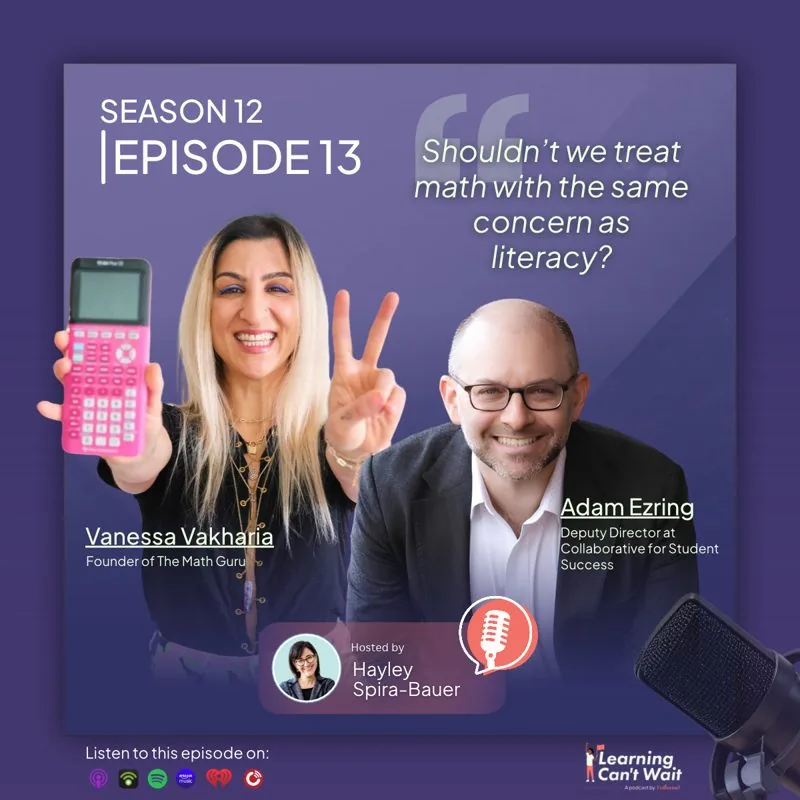 Vanessa Vakharia & Adam Ezring: Family Math, Math Confidence & Learning Through PlayOctober 13, 2026 · Vanessa Vakharia, Adam Ezring
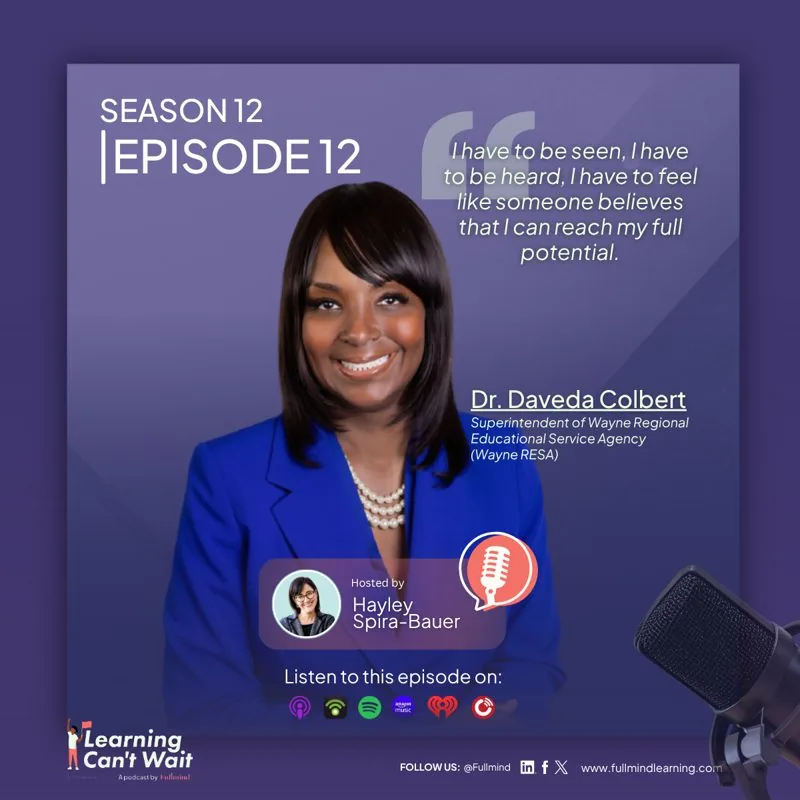 Dr. Daveda Colbert: Leadership, Belonging & ServiceOctober 6, 2026 · Dr. Daveda Colbert
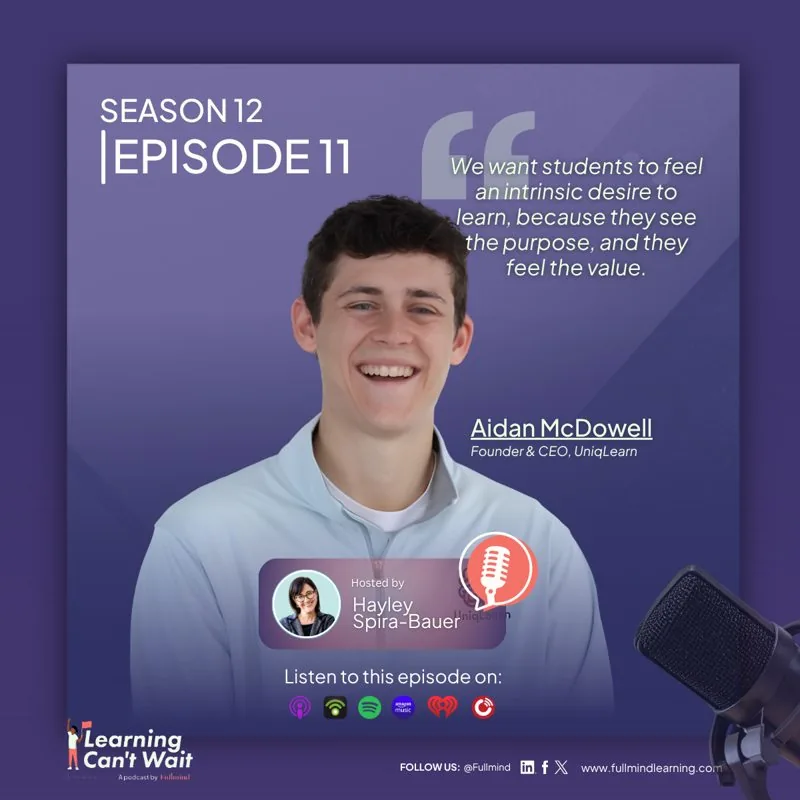 Aidan McDowell: Personalized learning, Student agency & Intrinsic motivationSeptember 29, 2026 · Aidan McDowell
For Education Leaders
Get proven strategies and expert analysis from the host of the Learning Can't Wait podcast, delivered straight to your inbox.
























How can we help? Let’s connect.
Tell us what you need. It takes about a minute, and you’ll see the next steps right away.
We’ll reach out within one business day
An education consultant talks through your students, schedule and goals.
Get a plan for your district
A plan built around your needs and budget.
Need support? Call 1 (888) 841-7840
Thanks! Our team will reach out within one business day to set up a time that works for you.
Need help sooner? Book a time now
Your one-pagers
Matched to what you told us. They download as one PDF.
Every child deserves the opportunity to access exceptional education.