
For Education Leaders
Get proven strategies and expert analysis from the host of the Learning Can't Wait podcast, delivered straight to your inbox.
Teach with Fullmind
Fullmind hires state-certified teachers to teach live, online classes for K–12 schools across the country, from home.
Virtual Experiential Learning: Hands-On Education

School administrators nationwide face a common challenge: how to provide a hands-on chemistry lab or an interactive history lesson to students not physically in the classroom. In an era where online learning is essential, the limitations of traditional screen-based instruction are apparent. Students need more than passive content consumption; they need active engagement through differentiated instruction tools that builds real skills and deep understanding.
Virtual experiential learning (VEL) offers a solution to this challenge. This innovative approach uses technology to enable students to "learn by doing" in digital environments, bridging the gap between theoretical knowledge and practical application. Similar to online project-based learning methodologies, VEL allows students to participate in simulated experiments and immersive historical recreations instead of simply reading about chemical reactions or historical events.
VEL is revolutionizing K-12 education by boosting student engagement in online learning, increasing accessibility for diverse learners, and providing solutions to challenges like teacher shortages and curriculum gaps. For districts seeking to enhance their educational offerings while addressing constraints, virtual experiential learning represents a technological advancement and a shift in delivering effective K-12 virtual learning implementation.
What is Virtual Experiential Learning?
Virtual experiential learning is a comprehensive educational methodology that extends beyond a single technology platform or digital tool. At its core, VEL combines active participation with reflective observation in simulated or virtual contexts. It applies the principles of experiential education, learning through direct experience and reflection, to digital environments where students can safely experiment, create, and problem-solve. This approach complements other innovative academic support methods like online supplemental instruction, creating multiple pathways for enhanced student engagement and learning outcomes.
Effective virtual experiential learning typically encompasses three essential elements working in harmony:
- A realistic virtual environment that simulates real-world conditions, such as a science lab, historical setting, or complex problem scenario.
- Clear learning objectives that align with curriculum standards and guide the virtual experience design.
- A feedback and reflection mechanism that helps students process what they've learned and connect it to broader concepts.
When these components are implemented using immersive learning technology, the result is an educational experience that engages students deeper than conventional online instruction or online project-based learning, leading to improved knowledge retention and skill development.
How Experiential Learning Works Online
The power of online experiential learning is rooted in David Kolb's Experiential Learning Cycle. This four-step process explains why "learning by doing" is effective and provides a framework for designing meaningful virtual learning experiences that can be enhanced with assistive technology tools to support diverse learners.
In online education, the experiential learning cycle transforms digital interactions from passive viewing to active learning:
- Concrete Experience: A student conducts an experiment in a virtual lab, manipulating variables and observing outcomes in real-time. For example, they mix virtual chemicals to observe reactions or navigate a 3D model of ancient Rome at its peak.
- Reflective Observation: The student analyzes their virtual experience. What changes occurred when they added the catalyst to the solution? What architectural features did they notice in the Roman Forum, and what do these suggest about Roman society?
- Abstract Conceptualization: The student draws conclusions and connects their observations to broader concepts, guided by a teacher. They recognize that their chemistry experiment demonstrates equilibrium principles or that Roman architecture features reflected specific cultural values and technological capabilities.
- Active Experimentation: The student applies their new understanding by testing a hypothesis in another simulation. They predict how changing the temperature would affect their chemical reaction and test it, or compare Roman architectural elements with those from another civilization.
This cycle distinguishes meaningful virtual experiential learning from superficial "edutainment." Technology provides the initial experience, but the learning deepens through reflection and application. When students complete this cycle, K-12 virtual labs and other experiential learning activities develop critical thinking skills and genuine understanding rather than mere memorization.
VEL in Action: From Virtual Labs to Global Field Trips
Virtual labs are transformative for experiential STEM education. Students can conduct complex chemistry experiments too dangerous, expensive, or time-consuming for a physical classroom. They can mix volatile chemicals, observe reactions in slow motion, and make "mistakes" safely, learning from consequences without real-world risks.
Virtual labs offer benefits beyond safety, including accessibility and depth of learning. Career and Technical Education (CTE) students can operate sophisticated machinery, practice medical procedures on virtual patients, or troubleshoot electrical systems, all without the cost of specialized equipment. A district can provide authentic experiences in fields like automotive repair and biotechnology without investing in multiple specialized labs.
A high school student interested in engineering can design, build, and test a bridge in a virtual environment. This experience reinforces theoretical knowledge with practical application, creating deeper understanding and retention while applying physics and mathematics principles and observing how design choices affect structural integrity.
Interactive History and Social Studies Simulations
When students can virtually "walk through" ancient civilizations or pivotal historical moments, history and social studies come alive. Instead of reading about the Constitutional Convention, students participate in a simulation where they role-play the Founding Fathers, debating the same issues and shaping a virtual government.
These simulations help students develop historical empathy and critical thinking skills in complex social and political scenarios. A middle school class explores an interactive map of Enlightenment ideas, seeing how concepts influenced societies. High school students simulate the 1929 stock market crash, making investment decisions based on historical data and witnessing economic effects.
Project-Based Learning in Digital Sandboxes
Digital sandbox environments provide open-ended platforms for students to collaborate on complex, multidisciplinary projects. A team designs a sustainable city, applying knowledge from environmental science, mathematics, social studies, and art to create a functioning urban ecosystem.
These environments foster creativity, collaboration, and problem-solving skills while providing immediate visual feedback on students' decisions. Elementary students build a virtual Rube Goldberg machine, applying physics principles while understanding cause and effect. Middle school students code simple video games, developing computational thinking and storytelling skills.
Virtual Field Trips and Cultural Exchange
One of the most exciting applications of virtual experiential learning is its ability to transport students beyond their geographical limitations. A class in rural America can "visit" the Louvre in Paris, exploring masterpieces with expert commentary. Students can tour NASA facilities, explore coral reefs, or walk through rainforests, experiences that are impossible for most school districts to provide physically.
Cultural exchange and global collaboration opportunities are powerful. Students from different countries can meet in virtual spaces to work on joint projects, developing cross-cultural communication skills and global awareness. A class studying immigration might conduct virtual interviews with students in other countries about their families' migration experiences, creating a rich comparative study impossible through traditional means.
Transformative Benefits for Your School District
Virtual experiential learning delivers concrete benefits that address pressing challenges facing K-12 administrators:
- Increased Student Engagement and Retention: The active nature of virtual experiential learning combats disengagement in online learning. When students are participants rather than spectators, their attention and motivation increase. This approach accommodates diverse learning styles; visual learners benefit from imagery, kinesthetic learners appreciate hands-on interaction, and reflective learners value analysis. Research from the Journal of Educational Technology Development and Exchange found that students in immersive virtual environments demonstrated 22% higher engagement rates and 27% better knowledge retention compared to traditional online instruction.
- Equitable Access to High-Quality Experiences: VEL democratizes access to educational experiences limited by geography or resources. A student in a rural or underfunded district can access the same virtual lab equipment as a student in a wealthy suburban school. This equity extends to support for Students with Disabilities (SWD), as virtual environments can be customized with accessibility features like text-to-speech, adjustable interfaces, and personalized pacing. For example, a student with mobility limitations can conduct virtual chemistry experiments independently, and a student with anxiety can practice social skills in a low-pressure simulated environment before real-world interactions.
- Enhanced Safety and Reduced Costs: Virtual labs eliminate safety concerns with hazardous materials and equipment, allowing students to experiment freely. The financial benefits are significant; no need for expensive lab equipment, materials, or field trip transportation. A 2021 International Journal of STEM Education study found schools using virtual science labs reported a 43% reduction in science education costs while expanding the range of experiments.
- Solving Staffing and Curriculum Gaps: In today's staffing environment, VEL allows your district to expand course offerings into niche subjects like forensic science, engineering, or advanced computer science, without a specialist on staff. A certified virtual teacher can guide students through simulations and projects, enabling a richer, more diverse curriculum. This approach is valuable for small or rural districts where recruiting specialized teachers is difficult.
A Realistic Look at Implementation
While the benefits of virtual experiential learning are compelling, successful implementation requires addressing key challenges with thoughtful planning and support.
The most immediate hurdle for many districts is the technology gap. Not all students have equal access to devices and reliable internet, creating potential equity issues in a VEL program. Fortunately, many modern platforms are accessible on standard devices like Chromebooks, and federal funding programs like E-Rate and Emergency Connectivity Fund provide resources to address digital equity. A phased implementation can help identify and resolve access issues before scaling to a full program.
Teacher training and buy-in are critical to success. Even experienced educators need professional development to integrate these tools into their teaching. The teacher's role shifts from "sage on the stage" to "guide on the side," requiring new facilitation skills and tech comfort. Successful implementations include comprehensive professional development for technical skills and pedagogical approaches. Teachers need time to experiment with the platforms before guiding students.
The third significant challenge is curriculum integration. Virtual experiences must align with state standards and district curriculum goals rather than serve as isolated "tech for tech's sake" activities. This requires mapping virtual experiences to specific learning objectives and assessment strategies. The best approach is to identify curriculum areas where hands-on learning is valuable but difficult to implement in traditional classrooms, then integrate targeted virtual experiences at those points.
The Essential Role of the Certified Teacher
While technology platforms enable virtual experiential learning, the skilled educator is the true catalyst for student success. Even the most advanced simulation becomes a game without a teacher to provide context, prompt reflection, and connect the experience to broader learning objectives.
Certified virtual teachers bring pedagogical expertise to the virtual environment, transforming technological possibilities into meaningful educational experiences. Their role is multifaceted and essential:
- Contextualizing the Experience: Teachers frame the virtual activity within the broader curriculum, helping students understand why they're engaging in the simulation and what to learn from it. This pre-activity framing sets expectations and focuses student attention on key concepts.
- Facilitating Reflection: After a virtual experience, teachers ask probing questions that prompt critical thinking. This guided reflection helps students process their observations and actions, connecting their experience to abstract concepts. Without this facilitation, students complete an activity without extracting its deeper meaning.
- Differentiating Instruction: Skilled educators adjust the challenge level or provide targeted support based on individual student needs. They provide additional scaffolding for struggling students or extend the activity with more complex challenges for advanced learners, ensuring all students are appropriately challenged in the virtual environment.
- Assessing True Understanding: Experienced teachers evaluate how students apply concepts during the virtual experience, beyond multiple-choice assessments. They look for evidence of critical thinking, problem-solving, and concept application, providing feedback that deepens understanding rather than merely checking boxes.
The magic happens at the intersection of powerful technology and expert instruction from certified virtual teachers. Many districts partner with organizations that provide technology platforms and specialized instructors who are experts in virtual facilitation. Finding the right staff with subject expertise and virtual teaching skills is often the most challenging aspect of implementing an effective VEL program.
Virtual Experiential Learning for Your District
You can approach implementing virtual experiential learning in your district as a manageable, step-by-step process that builds on your existing educational foundation.
Step 1: Identify Your Needs
Assess your district's challenges and opportunities. Are you struggling to staff specialized science courses? Do your students need more engaging credit recovery options? Are you looking to expand CTE pathways without investing in expensive physical labs? Identifying these needs will help you focus your virtual experiential learning initiative for the greatest impact. Many districts start with hard-to-staff areas like advanced sciences, foreign languages, or specialized electives.
Step 2: Evaluate Solutions
Look for solutions that provide both the technological platform and instructional expertise for success. The best virtual experiential learning programs combine high-quality simulations and virtual environments with pedagogical frameworks. Evaluate potential platforms based on their alignment with your curriculum standards, ease of use for teachers and students, and evidence of effectiveness in similar contexts.
Step 3: Partner for Success
Instead of building a virtual experiential learning program from scratch, consider partnering with an organization that specializes in flexible, customized K-12 virtual education solutions delivered by state-certified educators. The right partner will understand your district's needs and help design a program that addresses your specific challenges while leveraging existing strengths.
Implementing a robust virtual experiential learning program requires the right technology and people. Fullmind provides live, certified virtual teachers who leverage these tools for dynamic, hands-on learning. We partner with 1,000+ districts to fill staffing gaps, expand course catalogs, and deliver customized instruction.
Conclusion
Virtual experiential learning represents a powerful evolution in online education, delivering on the promise of engaging, equitable, and effective digital learning. By combining the accessibility of online education with the engagement of hands-on learning, VEL creates opportunities for students to develop subject knowledge and essential skills for future success.
The future of learning isn't just online; it's online and hands-on. As technology advances and educational needs evolve, virtual experiential learning will play a central role in creating resilient, flexible, and student-centered educational systems. For forward-thinking districts, the question is no longer whether to implement VEL, but how to do so effectively to meet the unique needs of their students and communities.
Podcast
From the Learning Can’t Wait podcast
 Hosted by Hayley Spira-Bauer, Chief Academic Officer at Fullmind
Newest episodes
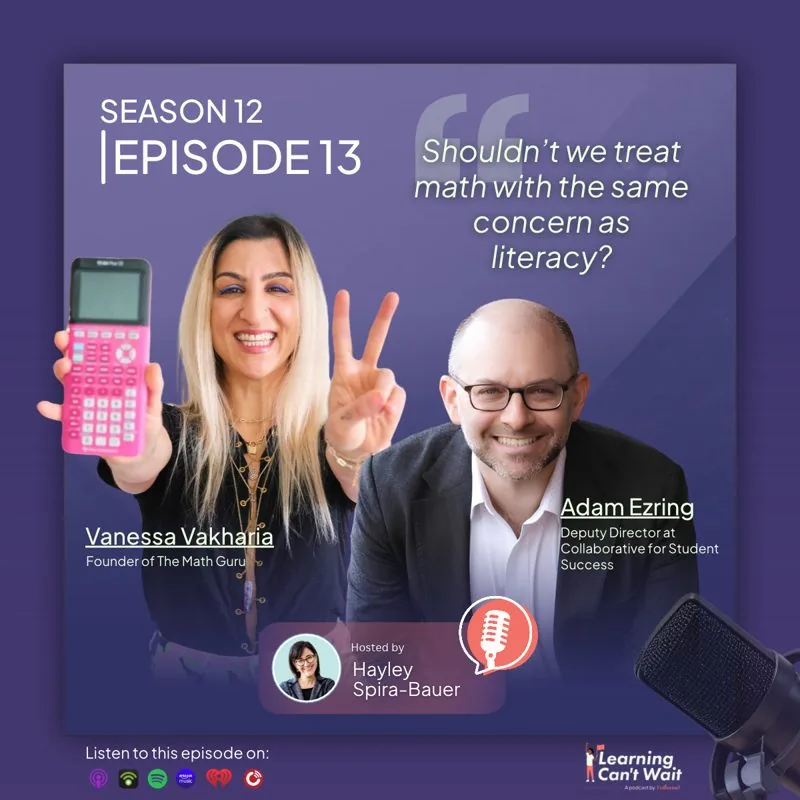 Vanessa Vakharia & Adam Ezring: Family Math, Math Confidence & Learning Through PlayOctober 13, 2026 · Vanessa Vakharia, Adam Ezring
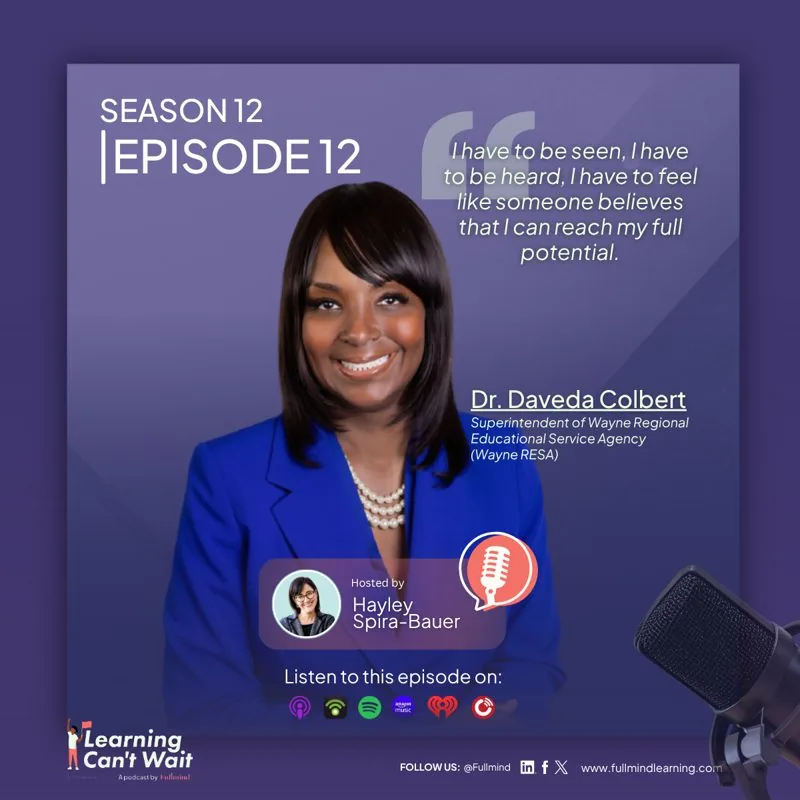 Dr. Daveda Colbert: Leadership, Belonging & ServiceOctober 6, 2026 · Dr. Daveda Colbert
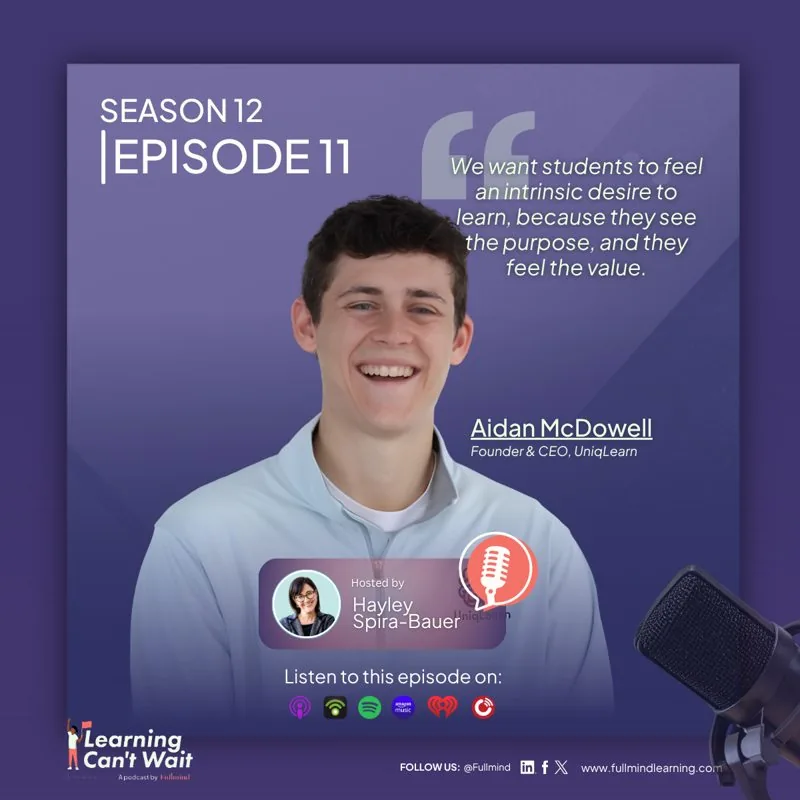 Aidan McDowell: Personalized learning, Student agency & Intrinsic motivationSeptember 29, 2026 · Aidan McDowell
For Education Leaders
Get proven strategies and expert analysis from the host of the Learning Can't Wait podcast, delivered straight to your inbox.








































How can we help? Let’s connect.
Tell us what you need. It takes about a minute, and you’ll see the next steps right away.
We’ll reach out within one business day
An education consultant talks through your students, schedule and goals.
Get a plan for your district
A plan built around your needs and budget.
Need support? Call 1 (888) 841-7840
Thanks! Our team will reach out within one business day to set up a time that works for you.
Need help sooner? Book a time now
Your one-pagers
Matched to what you told us. They download as one PDF.
Every child deserves the opportunity to access exceptional education.