
For Education Leaders
Get proven strategies and expert analysis from the host of the Learning Can't Wait podcast, delivered straight to your inbox.
LIVE Staffing
LIVE Staffing fills hard-to-staff roles with certified educators who teach live, synchronously, on your schedule and curriculum.
What is Student-Led Learning: Fostering Student Agency

Student-led learning offers a pedagogical approach that shifts the focus from the teacher delivering information to the student driving their own learning. This transformation helps develop critical 21st-century skills like problem-solving, critical thinking, and self-reliance; precisely the capabilities students need to thrive in today's rapidly evolving world. For educators looking to implement these methods, our comprehensive guide to student-led learning provides detailed strategies and practical frameworks.
In this guide, we explore student-led learning, its connection to student agency, benefits, and implementation models. Most importantly, we address how schools can implement this approach amidst modern challenges, along with practical student-led learning examples, creating classrooms where students are empowered, engaged, and equipped for future success.
What Student Led Learning Is
Student-led learning is more than "letting students do what they want." It's a sophisticated instructional framework and key component of personalized learning models, built on three essential pillars:
- Voice: Students have a say in how they learn and demonstrate their knowledge. For example, they can choose to create a podcast instead of writing a traditional essay to demonstrate their understanding of a historical event.
- Choice: Students have meaningful options in their learning, such as selecting a research topic within a theme or choosing which problems to solve. This student choice creates ownership and motivation that can't be replicated with predetermined learning.
- Ownership: When students have voice and choice, they develop a sense of responsibility and ownership over their education. This leads to greater intrinsic motivation and deeper engagement.
This approach evolves traditional teaching models rather than replacing them. The goal isn't to eliminate teacher guidance but to recalibrate the balance, transforming students from passive recipients to active participants in knowledge construction. Teachers remain essential, but their role shifts from being the sole information source to facilitators structuring the learning environment, providing feedback, and guiding student discovery through student-led learning approaches.
Student Led Learning and Student Agency
Effective student-led learning hinges on student agency in education, the capacity and propensity to take initiative in one's own learning. Agency goes beyond completing tasks; it involves students understanding why they're learning something, setting their own goals, monitoring progress, and making adjustments. For educators seeking to implement these principles, this comprehensive guide to student-led learning explores practical strategies for helping students become architects of their own educational experience rather than following a predetermined blueprint.
Why does agency matter beyond the classroom? Students with strong agency learn to set meaningful goals, seek resources independently, advocate for themselves, and persevere. These aren't just academic skills; a holistic education builds life skills for success in college, career, and community. For administrators focused on preparing "future-ready" students, student-led learning examples demonstrate how fostering agency is a valuable long-term investment.
Effective student-led learning requires cultivating student agency. The classroom environment must build this capacity in every learner. This means creating scaffolded opportunities for decision-making, ensuring access to necessary resources, and providing a supportive atmosphere where students feel safe taking intellectual risks and learning from mistakes.
Key Benefits of Student-Led Learning
Transitioning to a student-led model yields profound benefits for students, teachers, and the school community.
Benefits of Student-Led Learning For Students
- Increased Motivation & Engagement: When students have a voice in their learning, the work becomes relevant and personal. This intrinsic motivation runs deeper than compliance-based approaches. Students are engaged not because they have to be, but because they want to be, a difference that shows in their work quality and willingness to persist through challenges.
- Improved Critical Thinking & Problem Solving: Student-led approaches foster higher-order thinking skills. Instead of memorizing facts, students investigate questions, evaluate information, create solutions, and defend their conclusions, the cognitive skills standardized tests aim to measure and employers want in new hires.
- Development of Self-Management Skills: When students take ownership of projects and learning goals, they learn to manage their time, organize resources, and prioritize tasks. These executive functioning skills, often underdeveloped in traditional settings, become essential when students drive their own learning.
Benefits of Student-Led Learning for Teachers
- Shift from Lecturer to Facilitator: The teacher's role in student-led learning transforms from "sage on the stage" to "guide on the side." This shift reduces the pressure to be the sole "expert" and opens space for authentic collaboration with students, revitalizing professional practice and reducing burnout.
- Deeper Student Relationships: With less time on direct instruction, teachers have more opportunities for one-on-one and small-group interaction. These connections allow teachers to understand student needs, interests, and learning styles, the foundation of effective differentiation.
- Increased Job Satisfaction: Facilitating students' discovery of their capabilities is rewarding. Many teachers report greater fulfillment when they witness students taking initiative, overcoming obstacles, and achieving beyond expectations.
Benefits of Student-Led Learning for the School
- Fosters Collaboration: Student-led projects involve teamwork and peer feedback, creating a collaborative culture where students learn from each other. This mirrors the environments they will encounter in future workplaces.
- Adaptable to Diverse Needs: This model enables personalized learning, allowing students with different abilities, interests, and backgrounds to engage with content in ways that work for them while meeting essential learning standards.
Student-Led Learning Examples
Student-led learning isn't confined to a single method. This approach can be implemented through established, flexible frameworks adaptable to various grade levels, subjects, and student populations.
Inquiry-Based Learning
Inquiry-based learning starts with questions, problems, or scenarios instead of presenting established facts. This approach, driven by student curiosity, mimics how professionals work.
A high school history class studying the Civil Rights Movement might start with the question: "What is the most effective way to create social change?" Students would research methods, from protests to legislation to art, analyzing historical examples and drawing conclusions. The teacher provides structure, resources, and feedback, and students drive the investigation.
Project-Based Learning (PBL)
Project-Based Learning (PBL) is a dynamic approach where students gain knowledge and skills by working for an extended period to investigate and respond to an authentic, engaging, and complex question, problem, or challenge. PBL culminates in a public product or presentation, adding real-world accountability to the learning process.
An elementary school class could design a new, sustainable playground for their school. This would involve research, budgeting (math), design (art/STEM), and presenting their proposal to the principal (communication). Students would meet standards across multiple subjects while developing collaboration and problem-solving skills.
Genius Hour / Choice Boards
For schools starting to explore student-led approaches, simpler frameworks like Genius Hour or Choice Boards offer accessible entry points. Genius Hour allows students to explore their passions for a set time each week, while Choice Boards give students a menu of options for practicing a skill or demonstrating knowledge.
A middle school language arts teacher can create a choice board for a novel study where students choose to create a character analysis through a written essay, a video monologue, a visual character map, or a social media profile. All options require the same analytical thinking and textual evidence, but allow students to work in their preferred modality.
Student Led Learning Implementation
While the benefits of student-led learning are compelling, transitioning from traditional approaches takes time. Acknowledging and addressing implementation challenges is essential for sustainable success.
Creating the right balance of structure and freedom presents an initial hurdle. How do you ensure curriculum standards are met when students pursue different paths? The answer lies in thoughtful design: the teacher's role is to provide a framework and clear learning targets that align with student projects. Rather than allowing free exploration, effective student-led classrooms offer structured choices within parameters to cover essential content.
Assessing student-led environments requires rethinking traditional grading practices. How do you fairly evaluate a podcast compared to a research paper? Well-designed rubrics assessing skills like research depth, analysis quality, collaboration, and presentation, rather than content memorization, provide a solution. These rubrics align with standards while allowing diverse learning expressions.
The biggest challenge is ensuring equity and support for all learners. Not all students arrive at school equally prepared for self-direction, and those with learning differences need extra help. Implementing student-led learning equitably requires robust differentiation and support for students with diverse needs. Without this support, student-led approaches can widen achievement gaps.
Conclusion
What is student-led learning? It goes beyond a trendy approach; it represents a shift toward developing engaged, self-sufficient, and capable young adults. By placing student agency at the center of education, schools create environments where students master content and develop metacognitive skills, self-awareness, and intrinsic motivation for lifelong success.
By embracing student-led learning, schools are not just teaching subjects; they are teaching students how to learn for a lifetime. They are building a foundation of curiosity, resilience, and ownership that will empower students to thrive in a changing world. Educators prepare students not just for tests or college, they prepare them for life.
Podcast
From the Learning Can’t Wait podcast
 Hosted by Hayley Spira-Bauer, Chief Academic Officer at Fullmind
Newest episodes
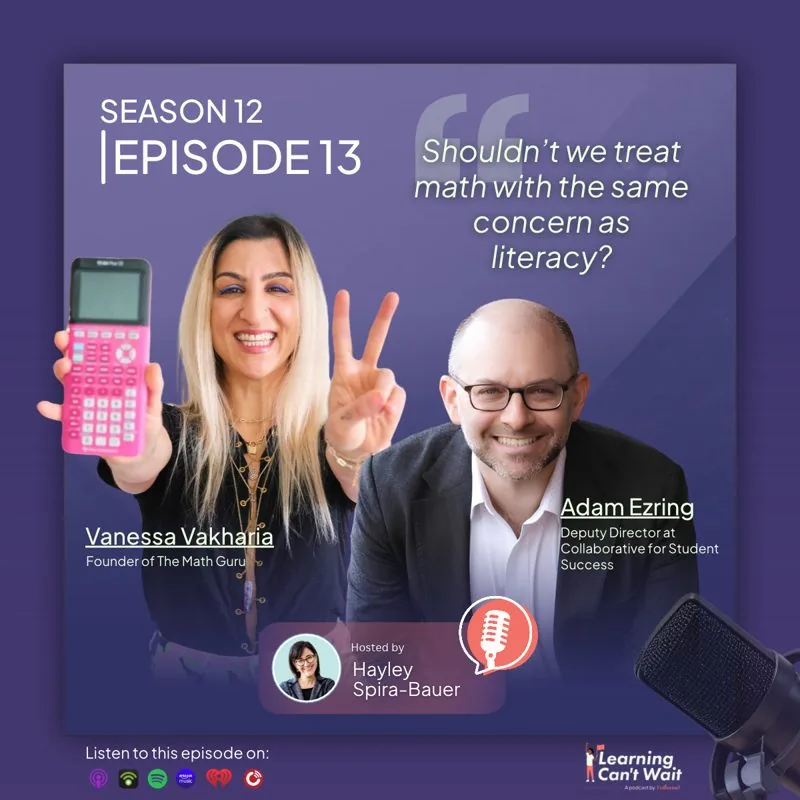 Vanessa Vakharia & Adam Ezring: Family Math, Math Confidence & Learning Through PlayOctober 13, 2026 · Vanessa Vakharia, Adam Ezring
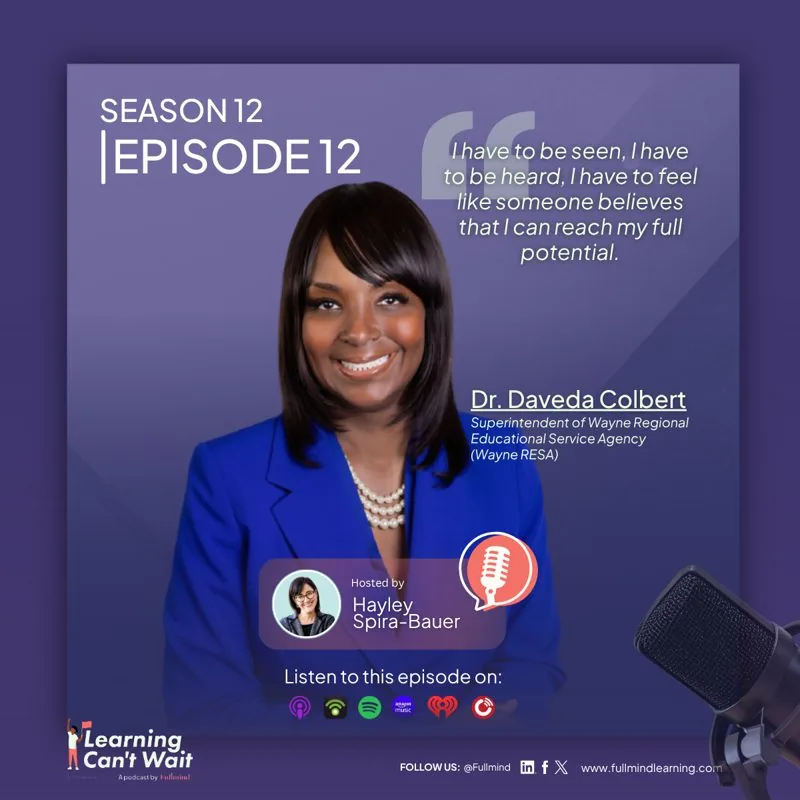 Dr. Daveda Colbert: Leadership, Belonging & ServiceOctober 6, 2026 · Dr. Daveda Colbert
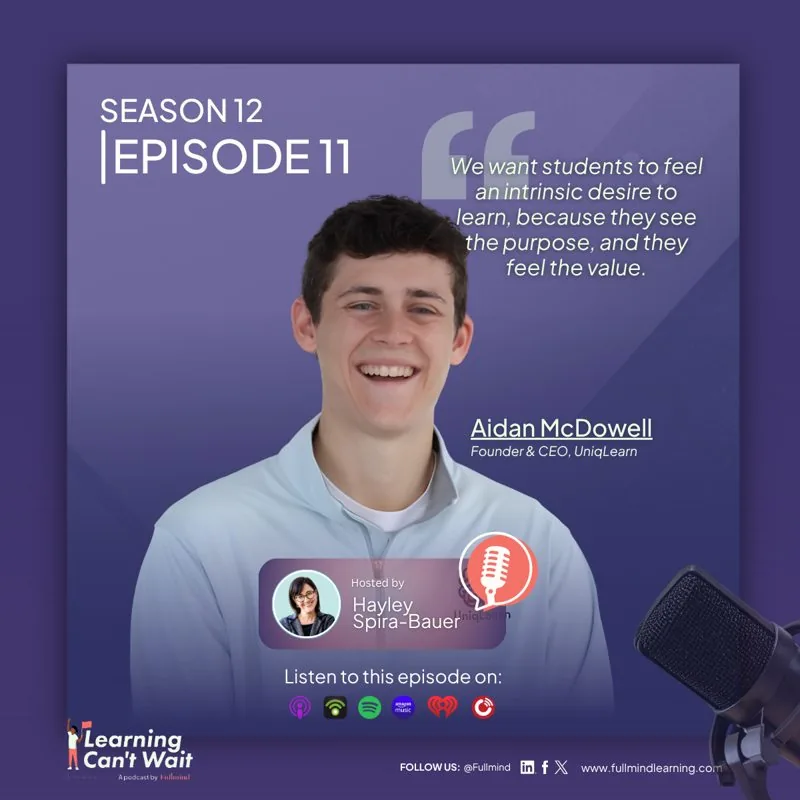 Aidan McDowell: Personalized learning, Student agency & Intrinsic motivationSeptember 29, 2026 · Aidan McDowell
For Education Leaders
Get proven strategies and expert analysis from the host of the Learning Can't Wait podcast, delivered straight to your inbox.































































How can we help? Let’s connect.
Tell us what you need. It takes about a minute, and you’ll see the next steps right away.
We’ll reach out within one business day
An education consultant talks through your students, schedule and goals.
Get a plan for your district
A plan built around your needs and budget.
Need support? Call 1 (888) 841-7840
Thanks! Our team will reach out within one business day to set up a time that works for you.
Need help sooner? Book a time now
Your one-pagers
Matched to what you told us. They download as one PDF.
Every child deserves the opportunity to access exceptional education.