
For Education Leaders
Get proven strategies and expert analysis from the host of the Learning Can't Wait podcast, delivered straight to your inbox.
SWD Services & IEP Fulfillment
Our virtual special education services give students with disabilities live, small-group instruction from special education–certified educators, aligned to each student's IEP goals, with progress reporting your team can document.
Wisconsin IEP Laws, Eligibility, and Compliance: What Every District Must Know

Ensuring compliance with special education laws is a legal requirement that impacts the educational outcomes and futures of students with disabilities. Wisconsin school districts must understand Individualized Education Program (IEP) laws, eligibility criteria, and compliance requirements to provide appropriate support.
Wisconsin IEP laws, eligibility, and compliance govern how districts identify, evaluate, and serve students with disabilities. Each step in the special education process, from initial referrals to transition planning, must adhere to federal and state regulations while maintaining a focus on providing Free and Appropriate Public Education (FAPE) for all eligible students.
This guide will equip Wisconsin school district administrators, special education directors, IEP team members, and educators with the knowledge to navigate these requirements. Whether you're new to special education or seeking to strengthen practices, understanding these laws is necessary for avoiding compliance issues and ensuring positive outcomes for students with disabilities. Fullmind provides certified virtual educators and customized learning solutions to help schools meet their IEP obligations through specialized SWD services and IEP fulfillment programs.
Overview of Wisconsin IEP Laws
Wisconsin's special education framework operates under federal and state regulations to protect the rights of students with disabilities. The primary federal law is the Individuals with Disabilities Education Act (IDEA), which establishes the requirements for identifying, evaluating, and serving students with disabilities nationwide.
Wisconsin has codified these requirements through Wisconsin Statutes Chapter 115, Subchapter V (Special Education) and Wisconsin Administrative Code PI 11 (Special Education). These state regulations provide implementation guidance while ensuring alignment with federal requirements, helping educators develop comprehensive IEP examples for students. Wisconsin's approach goes beyond minimum standards to emphasize excellence in special education services.
The purpose of these special education laws goes beyond legal compliance. They exist to ensure that all children with disabilities have access to FAPE emphasizing special education and related services to meet their unique needs and prepare them for further education, employment, and independent living. While requirements may vary by state, understanding New York IEP compliance requirements can provide valuable insight into how these federal mandates are implemented at the local level.
Wisconsin has consistently committed to inclusive practices. It encourages districts to serve students with disabilities in the least restrictive environment. Recent updates to special education regulations have emphasized data-driven decision making, evidence-based practices, and improved outcomes for students transitioning to post-secondary education and employment. These approaches align with similar initiatives seen in Alaska IEP laws and eligibility frameworks across different states.
IEP Eligibility Criteria in Wisconsin
In Wisconsin, determining eligibility for special education services follows a systematic process to identify students needing specialized instruction to access the general education curriculum. It begins with a comprehensive evaluation by a multidisciplinary team to determine if a student meets criteria under an established disability category.
Wisconsin recognizes the 13 disability categories under IDEA:
- Specific Learning Disability (SLD) - A disorder in one or more basic psychological processes involved in understanding or using language.
- Emotional Behavioral Disability (EBD) - A condition with behavioral or emotional responses significantly different from appropriate age, cultural, or ethnic norms.
- Intellectual Disability - Significantly subaverage intellectual functioning with concurrent deficits in adaptive behavior.
- Autism - A developmental disability affects verbal and nonverbal communication and social interaction.
- Speech or Language Impairment - A communication disorder affecting articulation, language, voice, or fluency.
- Hearing Impairment - A hearing impairment that adversely affects educational performance
- Visual Impairment - A vision impairment that adversely affects educational performance
- Deafness - A hearing impairment so severe that processing linguistic information through hearing is impaired
- Deaf-Blindness - Concomitant hearing and visual impairments causing severe communication and developmental needs
- Orthopedic Impairment - A severe orthopedic impairment that adversely affects educational performance.
- Traumatic Brain Injury (TBI) - An acquired brain injury caused by an external physical force.
- Other Health Impairment (OHI) - Limited strength, vitality, or alertness due to chronic or acute health problems.
- Developmental Delay - A delay in one or more development
The evaluation process involves several steps. These steps are: referral (from parents, teachers, or professionals), obtaining informed parental consent, conducting a comprehensive evaluation by a multidisciplinary team within 60 days of consent, and determining eligibility based on evaluation results and impact on educational performance. This ensures students needing special education services receive them, while no eligible student is overlooked.
IEP Development Process in Wisconsin
The IEP development process in Wisconsin follows a structured sequence to ensure comprehensive planning and appropriate service delivery. Understanding each step is necessary for compliance and positive student outcomes.
The process unfolds through seven phases:
- Referral: A student is referred for a special education evaluation by parents, teachers, or other school personnel concerned about the student's academic or functional performance.
- Evaluation: The student undergoes a comprehensive evaluation by qualified professionals using multiple assessment tools and strategies to gather relevant functional, developmental, and academic information.
- Eligibility Determination: The IEP team, including parents, reviews evaluation results and determines if the student meets criteria for special education services under a recognized disability category.
- IEP Meeting: The IEP team meets within 30 days of eligibility determination to develop the student's initial IEP, ensuring all required participants are present and engaged.
- IEP Development: The team develops a comprehensive IEP that includes all required components and addresses the student's unique needs identified through the evaluation process.
- IEP Implementation: Special education and related services start as specified in the IEP. General and special education teachers collaborating for proper implementation.
- IEP Review: The IEP is reviewed at least annually, with more frequent reviews as needed based on student progress or changing circumstances.
The IEP team includes the parent(s), at least one general education teacher, at least one special education teacher, a qualified Local Education Agency (LEA) representative, and an evaluator. Additional participants may include the student (if appropriate) and individuals with knowledge or expertise about the child.
IEP components include Present Levels of Academic Achievement and Functional Performance (PLAAFP) statements describing the student's abilities, measurable annual goals with specific criteria and timelines, descriptions of special education and related services, appropriate accommodations and modifications for instruction and assessment, explanations of the extent of non-participation with nondisabled peers in general education, and transition planning when the student reaches age 16 (or younger if determined appropriate).
IEP Compliance Requirements
Wisconsin school districts must adhere to comprehensive compliance requirements encompassing both procedural and substantive elements of special education law. These ensure students with disabilities receive appropriate services while protecting their legal rights.
State and federal compliance requirements include adherence to IDEA timelines and procedures, implementation of IEPs without unauthorized modifications, regular progress monitoring with data collection and analysis, annual IEP reviews assessing student progress and program effectiveness, comprehensive reevaluations every three years (or more frequently if needed), and documentation and record-keeping that withstand scrutiny during monitoring visits or dispute resolution.
Wisconsin has implemented compliance monitoring procedures. These procedures, including regular data collection through the Student Information System (SIS), periodic on-site visits by Wisconsin Department of Public Instruction (DPI) staff, focused monitoring based on specific indicators or complaints, and comprehensive compliance reviews for districts with noncompliance patterns. Districts must also participate in the state's Results-Driven Accountability (RDA) system, which emphasizes compliance and student outcomes.
Compliance monitoring and enforcement occur through multiple channels. The Wisconsin DPI systematically monitors special education programs, investigates formal complaints from parents or advocates, oversees due process hearings for unresolved disputes, and coordinates with the federal Office for Civil Rights (OCR) on discrimination complaints. Noncompliant districts may face corrective action requirements, technical assistance mandates, fiscal sanctions, or loss of federal funding.
Noncompliance consequences extend beyond regulatory sanctions to include potential legal liability, damage to district reputation, erosion of parent and community trust, and negative impacts on student outcomes. Proactive compliance efforts are more effective and less costly than reactive responses to violations.
Parental Rights and Involvement
Wisconsin special education law establishes comprehensive rights for parents to ensure meaningful participation in their child's special education journey. These rights reflect the principle that parents are partners in educational decision-making and advocates for their children's needs.
Core parental rights under Wisconsin IEP laws include:
- Right to participate in all IEP meetings and receive adequate notice of meeting times and locations
- Right to receive prior written notice of proposed changes to their child's identification, evaluation, educational placement, or FAPE provision.
- Right to provide informed consent before initial evaluations, reevaluations, and initial placement in special education
- Right to access and obtain copies of their child's educational records within reasonable timeframes.
- Right to request an independent educational evaluation (IEE) at public expense if they disagree with the district's evaluation.
- Right to resolve disputes through informal meetings, mediation, or formal due process procedures
- Right to keep their child in the current educational placement during dispute resolution (stay-put provision)
- Right to be accompanied by knowledgeable individuals during meetings
Districts must create environments where parents feel comfortable sharing information about their child's strengths, needs, interests, and goals to ensure effective parental participation. Parents should review evaluation reports and draft IEP documents before meetings, ask questions for clarification, and collaborate with team members to develop appropriate educational programs. Districts can support participation by providing documents in the parent's native language, scheduling meetings at convenient times, and offering training to help parents understand special education processes and their rights.
Evaluation and Reevaluation Procedures
Wisconsin's evaluation procedures ensure comprehensive assessment of students suspected of disabilities while protecting their rights. Initial evaluations must use multiple assessment tools and strategies, administered by qualified professionals, and be completed within specific timeframes to avoid service delays.
The evaluation process starts when a student is referred for special education services by parents, teachers, or school staff. After a referral, the district must obtain informed parental consent before evaluations. Parents must receive clear information about the proposed assessments, their use, and their rights. The evaluation must be completed within 60 school days of receiving consent, unless the parent and district agree to an alternative timeframe.
Comprehensive evaluations assess all areas of suspected disability using valid, non-discriminatory instruments. Evaluations must be conducted in the student's native language or communication mode unless feasible, and no single assessment tool may determine eligibility or educational programming. The evaluation team must include experts in the assessed areas and knowledge of the student's suspected disability category.
Reevaluations determine if students remain eligible for special education services and identify additional data for appropriate educational programming. Wisconsin requires reevaluations at least every three years, though they may occur more frequently if conditions warrant or if requested by parents or teachers. Before conducting a reevaluation, the IEP team must review existing evaluation data, including previous evaluations, information from parents, current classroom assessments and observations, and observations by teachers and related service providers.
Circumstances triggering more frequent reevaluations include significant changes in student performance, requests for changes in placement or services, transition to different educational settings, or new concerns about the student's needs. The reevaluation process follows similar procedures to initial evaluations but may be less comprehensive if existing data adequately addresses the questions.
Dispute Resolution and Legal Recourse
Wisconsin offers multiple avenues for resolving disagreements between parents and school districts regarding special education services. These options aim to address conflicts efficiently while preserving relationships and focusing on student needs.
When disagreements arise about IEP development, implementation, or services, the first step should be an informal discussion between parents and school personnel. Many concerns can be resolved through open communication, clarification of procedures, or minor adjustments to services or goals. Districts should encourage parents to raise concerns promptly and address them before they escalate into formal disputes.
If informal discussions don't resolve the disagreement, mediation offers a voluntary, confidential process where a neutral third party helps parents and districts reach acceptable solutions. Wisconsin's mediation system is free for parents and can be requested anytime. Sessions are conducted by trained mediators who understand special education law and can help explore solutions that meet student needs and address parental concerns.
Due process hearings are the most formal dispute resolution option when mediation fails or parties prefer a direct legal proceeding. Parents may request due process hearings when they believe their child's IDEA rights have been violated or disagree with the district's proposals or refusals regarding identification, evaluation, educational placement, or provision of FAPE. Impartial hearing officers conduct due process hearings, issuing legally binding decisions based on evidence from both parties.
Parents may file complaints with the Wisconsin DPI when they believe districts violated special education laws. State complaints focus on procedural violations and systemic issues rather than individual disagreements about services. Parents may file complaints with the Office for Civil Rights (OCR) when they believe their child has been discriminated against based on disability.
Transition Planning for Students
Wisconsin recognizes that successful transition from school to adult life requires early planning and collaboration among stakeholders. When students reach age 16, transition planning becomes mandatory in IEPs, though districts may start earlier if deemed appropriate by the IEP team.
Transition planning goals include preparing students for postsecondary education or training, developing competitive employment skills, and fostering independence in daily living. Effective transition planning is individualized, outcome-oriented, and coordinated across multiple life domains to prepare students for adult roles and responsibilities.
Transition plans must include measurable postsecondary goals based on age-appropriate assessments in education, training, employment, and independent living (if applicable). These goals must be updated annually and reflect the student's interests, preferences, strengths, and needs. The IEP must include transition services and activities to help students achieve their postsecondary goals, such as self-determination skills instruction, career exploration, work-based learning, and connections to adult service agencies.
Successful transition planning requires coordinating with outside agencies providing post-school services. This coordination should start well before the student's exit and may include vocational rehabilitation, developmental disabilities, mental health, postsecondary education, and employers. The student's preferences and interests should guide transition planning decisions, emphasizing self-advocacy and personal responsibility.
Wisconsin has established partnerships between education agencies and adult service providers to ensure smooth transitions for students with disabilities. Districts are encouraged to use person-centered planning approaches that engage students, families, and community partners in developing comprehensive transition plans that address adult life requirements.
IEP Resources and Support
Wisconsin families and educators have access to resources for effective IEP development, implementation, and compliance. These resources provide technical assistance, training, and advocacy support to ensure stakeholder participation in the special education process.
Resources include:
- Wisconsin Department of Public Instruction (DPI) provides guidance documents, training materials, compliance monitoring, and technical assistance through their Special Education Team (www.dpi.wi.gov/sped).
- Wisconsin Family Assistance Center for Education, Training & Support (WI FACETS) offers parent training, information services, and advocacy support to families of children with disabilities (www.wifacets.org).
- Disability Rights Wisconsin provides legal advocacy, protection and advocacy services, and information about rights and services for individuals with disabilities (www.disabilityrightswi.org)
- Wisconsin Special Education Mediation System (WSEMS) coordinates mediation services and provides neutral facilitators for resolving special education disputes (www.wsems.org).
- Local school district special education departments offer direct services, consultation, and support to students, families, and school personnel in their communities.
- Fullmind's specialized SWD services - Certified virtual educators can support IEP implementation through customized learning solutions, specialized instruction, and supplementary educational services tailored to individual student needs.
These resources ensure Wisconsin students with disabilities receive appropriate services and that their families have the support to advocate for their children's educational rights and needs.
Accommodations and Services
Wisconsin IEPs include accommodations and services for students with disabilities across different learning environments. Understanding these options helps IEP teams make informed decisions about appropriate support for individual students.
Instructional accommodations modify how students access curriculum content and demonstrate learning without changing the fundamental requirements. Common examples include extended time for assignments and tests (beneficial for students with processing speed deficits or attention difficulties), preferential seating to minimize distractions or improve access to instruction, assistive technology like text-to-speech software for students with reading disabilities, and graphic organizers for students with executive functioning challenges.
Testing accommodations ensure assessments measure student knowledge and skills, not the impact of disabilities. These may include extended time limits, separate testing environments to reduce distractions, reading test questions or directions aloud for students with reading disabilities, and using assistive technology. Accommodations should be based on documented needs and used regularly during instruction.
Related services encompass developmental, corrective, and supportive services to help students with disabilities benefit from special education. Speech-language therapy addresses communication disorders affecting education, occupational therapy develops fine motor skills and daily living abilities for school success, physical therapy supports mobility or gross motor challenges, and counseling aids students with emotional or behavioral needs affecting learning.
Supplementary aids and services enable students with disabilities to be educated with nondisabled students in general education environments to the maximum extent appropriate. Examples include paraprofessional support for students needing help with behavior management or task completion, adapted materials like large print books for students with visual impairments, and communication devices for students with speech or language disabilities.
Accommodations and services must be individualized based on evaluation data, student strengths and needs, and the educational environment. A student with ADHD might benefit from movement breaks and reduced distractions, while a student with autism might need social skills instruction and structured routines for successful inclusion.
FAQ: Additional Topics
Q: How do recent changes to Wisconsin IEP laws affect my district?
A: Wisconsin updates its special education guidance to reflect federal changes and best practices. Recent emphasis has been on evidence-based practices, improved post-secondary outcomes, and strengthened family engagement. Districts should monitor the Wisconsin DPI Special Education website for updates and participate in professional development to stay current with evolving requirements and practices.
Q: How are IEPs handled in Wisconsin’s private or charter schools?
A: Private schools accepting public funding must comply with the same IEP requirements as traditional public schools. However, private schools not receiving public funds are not required to provide special education services, though they cannot discriminate against students with disabilities in admissions. Charter schools authorized by school districts must provide special education services as required by law, while independent charter schools have varying obligations depending on their authorization and funding sources.
Q: What forms or documentation are required for IEP compliance in Wisconsin?
A: Wisconsin requires standardized forms for special education processes, including evaluation consent forms, eligibility determination documentation, IEP documents, and prior written notice templates. These forms are available on the Wisconsin DPI website and must be used to ensure consistency and compliance across districts. Districts should regularly verify they are using current versions of all required forms and maintaining proper documentation procedures.
Conclusion
Understanding and implementing Wisconsin IEP laws, eligibility, and compliance requirements is essential for students with disabilities to receive the education they deserve. Every step in the special education process, from initial referral to transition planning, requires attention to legal requirements, procedural safeguards, and individual student needs.
Robust compliance benefits extend beyond avoiding regulatory sanctions. When districts effectively implement special education laws, students with disabilities achieve better academic outcomes, develop greater independence, and transition successfully to post-secondary education and employment. Families feel supported and engaged as partners in their children's education, and school communities become more inclusive and supportive for all learners.
Wisconsin school districts should view compliance as an opportunity to demonstrate their commitment to educational equity and excellence. By utilizing the information, resources, and best practices in this guide, districts can strengthen their special education programs while ensuring positive outcomes for all students with disabilities.
Fullmind supports Wisconsin school districts in meeting IEP obligations through comprehensive special education services delivered by certified virtual educators. Our customized learning solutions and specialized SWD services help districts maintain compliance while providing tailored educational experiences. Contact us to learn how our expertise can support your district's special education goals and ensure every student receives the education they deserve.
Podcast
From the Learning Can’t Wait podcast
 Hosted by Hayley Spira-Bauer, Chief Academic Officer at Fullmind
Newest episodes
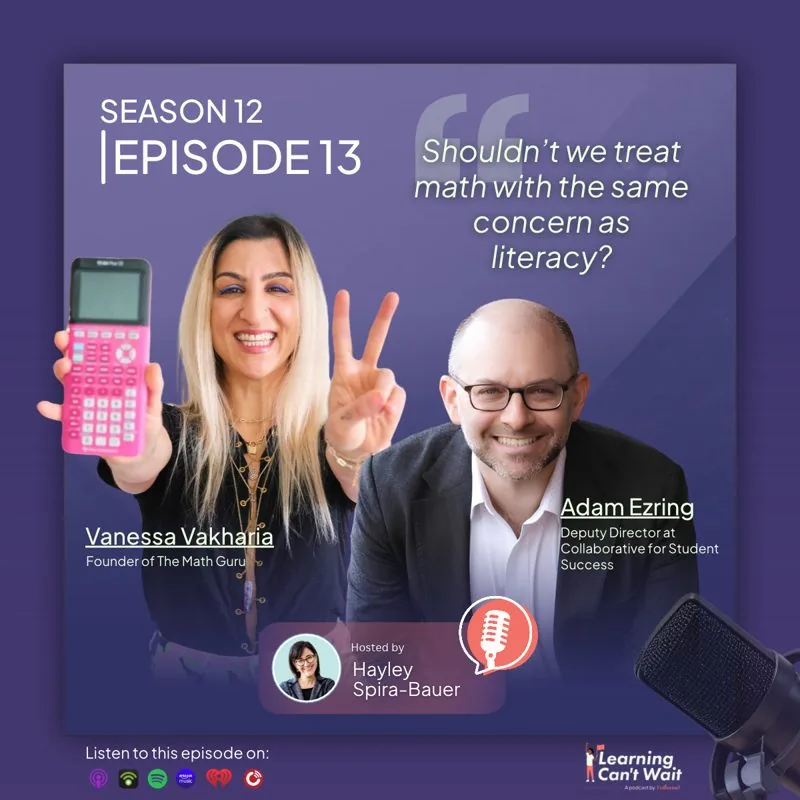 Vanessa Vakharia & Adam Ezring: Family Math, Math Confidence & Learning Through PlayOctober 13, 2026 · Vanessa Vakharia, Adam Ezring
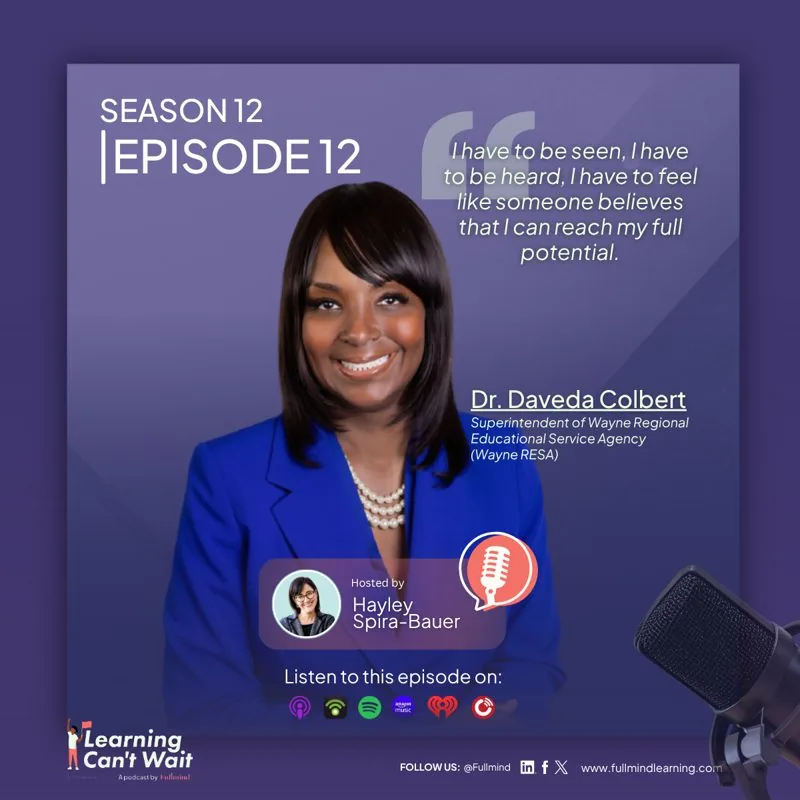 Dr. Daveda Colbert: Leadership, Belonging & ServiceOctober 6, 2026 · Dr. Daveda Colbert
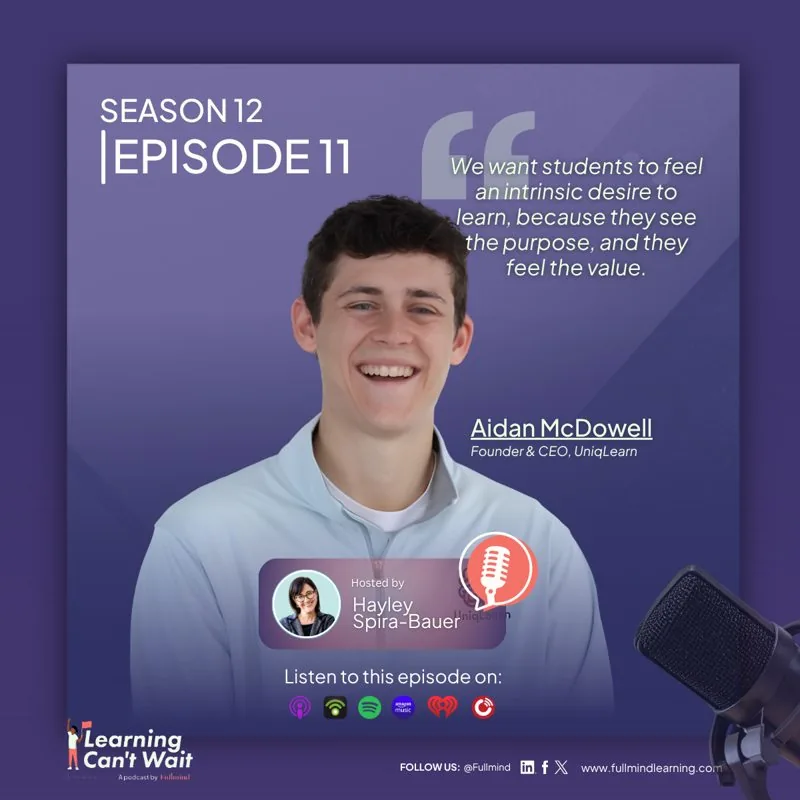 Aidan McDowell: Personalized learning, Student agency & Intrinsic motivationSeptember 29, 2026 · Aidan McDowell
Wisconsin on the podcast
Episodes with Wisconsin connections
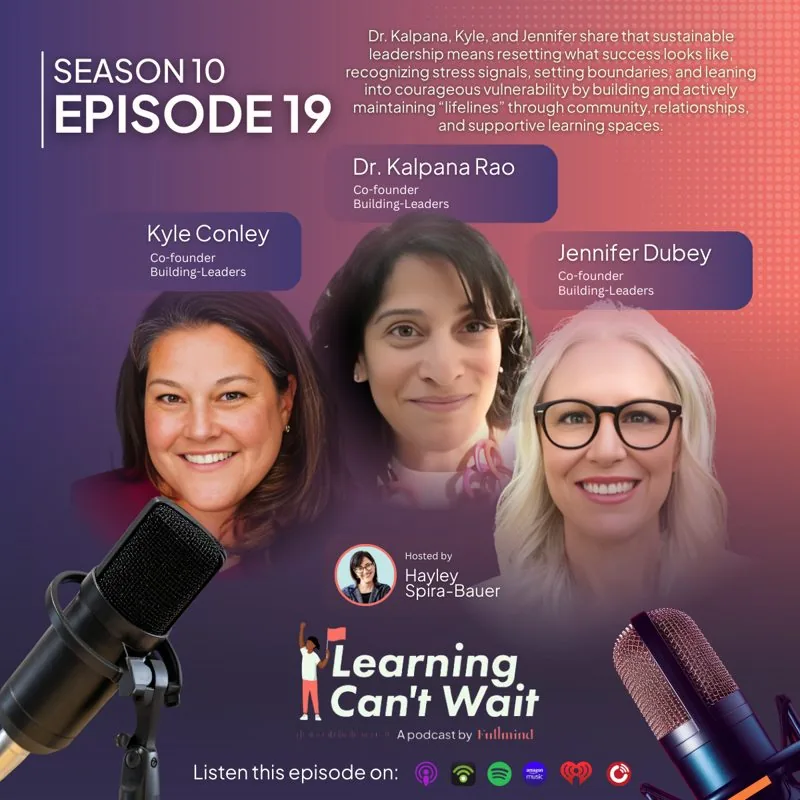 Dr. Kalpana Rao, Kyle Conley, and Jennifer Dubey: Lifelong learning and “lead learner” mindset, Psychological safety for leaders and staff & Global perspectives on schooling and contextFebruary 3, 2026 · Dr. Kalpana Rao, Kyle Conley, and Jennifer Dubey
 Doug McCurry: Leadership Lessons, Educational Challenges, Summer Learning Programs, High-Quality CurriculumApril 30, 2024 · Doug McCurry
For Education Leaders
Get proven strategies and expert analysis from the host of the Learning Can't Wait podcast, delivered straight to your inbox.







































































How can we help? Let’s connect.
Tell us what you need. It takes about a minute, and you’ll see the next steps right away.
We’ll reach out within one business day
An education consultant talks through your students, schedule and goals.
Get a plan for your district
A plan built around your needs and budget.
Need support? Call 1 (888) 841-7840
Thanks! Our team will reach out within one business day to set up a time that works for you.
Need help sooner? Book a time now
Your one-pagers
Matched to what you told us. They download as one PDF.
Every child deserves the opportunity to access exceptional education.