Connect with the Fullmind Team

New York IEP Laws: 2026 District Compliance
New York school districts must evaluate students with suspected disabilities, determine eligibility through the appropriate committee, and provide the services in each eligible student's individualized education program. The school-age initial evaluation generally has a 60-calendar-day deadline from parental consent; arranging the resulting programs and services generally has a separate 60-school-day deadline from that consent. Districts also have obligations for annual review, reevaluation, parent participation, transition planning, and transfers.
New York IEP Eligibility Requirements
The Committee on Special Education, or CSE, determines a school-age student's eligibility using evaluation results and information about educational needs. The decision connects the disability classification to the student's need for special education programs and services. Academic performance, functional skills, communication, behavior, social development, and physical development can inform that determination.
New York's special education definitions describe a student with a disability as a student identified under the applicable criteria who requires special services and programs. A medical diagnosis can provide evaluation evidence; the CSE makes the educational eligibility determination. Students can need special education while advancing from grade to grade.
Section 200.1 identifies 13 school-age disability classifications. The CSE applies the criteria for the relevant classification and determines the student's educational needs:
- Autism
- Deafness
- Deaf-blindness
- Emotional disability
- Hearing impairment
- Learning disability
- Intellectual disability
- Multiple disabilities
- Orthopedic impairment
- Other health impairment
- Speech or language impairment
- Traumatic brain injury
- Visual impairment, including blindness
The evaluation considers multiple sources, including parent input, teacher recommendations, assessments, and relevant developmental information. Eligibility rules exclude determinations in which the deciding factor is limited English proficiency or a lack of appropriate reading or mathematics instruction. Assessments must address disability-related needs and account for the student's language and communication access.
Preschool students use the Committee on Preschool Special Education, or CPSE, process and the state's preschool eligibility criteria. The CSE school-age classifications and service-arrangement procedures apply within their specified scope.
New York IEP Evaluation Deadlines
A parent can submit a written referral for an initial evaluation to the CSE chairperson or the building administrator. District designees and certain public agencies can also refer a student. School professionals and other authorized individuals may submit a request for referral, which has its own district response procedures. The district records receipt, provides the required notice, and seeks informed parental consent.
Under New York's evaluation and IEP procedures, the initial evaluation generally must be completed within 60 calendar days after the district receives consent. For a school-age student newly identified with a disability, the district generally must arrange appropriate programs and services within 60 school days after receiving that consent. Both clocks begin with consent, so the district plans assessment, committee action, and service arrangements together.
The evaluation includes appropriate assessments of suspected needs, parent information, a social history, observation, and other required components. It includes an individual psychological evaluation unless a school psychologist determines, after assessing a school-age student, that further evaluation is unnecessary. In that case, the psychologist prepares a written assessment report explaining the decision for CSE review. Staff document assessment results and the basis for eligibility, and provide the parent with the evaluation report and eligibility documentation.
The initial-evaluation timeline has defined exceptions. One concerns a transfer during the evaluation period: the receiving district must make sufficient progress toward prompt completion, and the parent and district must agree in writing to a specific completion date. Another concerns a parent repeatedly failing or refusing to make the student available. An evaluation for a suspected learning disability may have a mutually agreed written extension under the applicable provision.
Section 200.4 also specifies a different service-arrangement deadline for a recommendation involving an approved private-school placement: 30 school days after the board receives the recommendation. Keep the applicable trigger and exception in the student's timeline record, together with consent, assessment, meeting, notice, and service-start dates.
| Action | General deadline | Trigger or qualification |
|---|---|---|
| Initial evaluation | 60 calendar days | Receipt of parental consent; defined exceptions apply |
| Initial programs and services | 60 school days | Receipt of consent to evaluate a newly identified student |
| Programs after a referral for review | 60 school days | Referral for review of a student already identified with a disability |
| Approved private-school placement | 30 school days | Board receipt of the CSE recommendation; specific placement exception |
| IEP review | At least annually | Review progress and revise the IEP when appropriate |
| Reevaluation | At least every three years | Written parent-district agreement can establish that it is unnecessary |
New York Preschool IEP Procedures
New York's preschool special education procedures generally require the initial evaluation within 60 calendar days after consent. The CPSE must review the results and develop its recommendation within that same 60-calendar-day period. Preschool eligibility considers development and functional needs under the preschool criteria.
Preschool service arrangements follow the July, September, or January starting date selected for the approved program. When the recommendation occurs less than 30 school days before, or after, the selected starting date, services must begin as soon as possible after IEP development, within 30 school days of the recommendation and within 60 school days after consent to evaluate. The district records the selected start date and the rule applicable to the child's recommendation.
New York IEP Committee Responsibilities
The CSE brings evaluation findings, classroom experience, and family information into the eligibility and IEP decision. New York's committee membership rules assign these full-CSE roles:
- Parent: Contributes concerns, observations, and priorities for the student's education.
- Regular education teacher: Participates when the student is or may be in regular education.
- Special education teacher or provider: Contributes expertise in the student's special education needs.
- School psychologist: Participates in the full CSE's review of evaluation and educational information.
- District representative: Is qualified to provide or supervise special education, understands the general curriculum, and knows the district's resources.
- Evaluation interpreter: Explains the instructional implications of evaluation results; an otherwise qualified committee member can fill this role.
The student participates when appropriate. A qualified person may fill more than one designated role under the regulation. Committee composition follows the type of meeting and the full-CSE or subcommittee requirements.
Parents and the district can invite people with knowledge or special expertise about the student. A school physician participates when specifically requested in writing by the parent or a member of the school at least 72 hours before the meeting. An additional parent member participates when specifically requested in writing by the parent, student, or a committee member at least 72 hours before the meeting. The full CSE and a CSE subcommittee have different membership and authority requirements, so districts assign the appropriate committee to the student's decision.
The IEP uses New York's mandatory form and connects evaluation findings to instruction and services. Present levels address academic achievement, functional performance and learning characteristics, social development, physical development, and management needs. Annual goals specify evaluation criteria, procedures, and schedules, along with when parents receive progress reports.
Required IEP content includes the disability classification, measurable annual goals, special education and related services, supplementary aids and services, program modifications, supports for personnel, testing accommodations, and service frequency, duration, location, and projected start dates. The plan also documents participation with students without disabilities, recommended placement, and applicable transition and summer-service provisions. Preschool students and students taking the state alternate assessment require short-term objectives or benchmarks.
IEP Services and District Implementation
A free appropriate public education provides eligible students with special education and related services at public expense, in conformity with their IEP. The least restrictive environment requirement supports education with students without disabilities to the maximum extent appropriate. Placement follows individual needs and consideration of supplementary aids and services.
Services may include specially designed instruction, speech-language services, occupational or physical therapy, counseling, assistive technology, transportation, and an appropriate resource-room or classroom program. The committee selects the services and setting needed for the individual student. Summer services depend on the applicable student needs and criteria and must be documented when recommended.
Each responsible teacher and provider receives a paper or electronic IEP copy or authorized electronic access before implementation. Staff must know their specific responsibilities for services, accommodations, and modifications. Supplementary personnel need an opportunity to review the IEP and ongoing access; parents receive a copy at no cost.
Districts coordinate provider assignments, service schedules, accommodations, and progress-report dates. Service records identify what was delivered, by whom, and when. When a staffing or scheduling problem interrupts implementation, the district addresses the student's service needs and documents the response. The district retains its legal responsibilities when it uses an outside instructional provider.
Districts using virtual instruction must arrange the student's required supports, service schedule, and access to instruction according to the IEP.
Annual IEP Reviews and Reevaluations
The CSE reviews each IEP at least annually to determine whether the annual goals are being achieved. It considers current performance, evaluation information, parent concerns, student strengths, and academic, developmental, and functional needs. The committee revises the plan when appropriate, including to address a lack of expected progress or anticipated needs.
A reevaluation occurs when educational or related-service needs warrant it, or when a parent or teacher requests it. It generally occurs at least once every three years, with an exception when the parent and district agree in writing that it is unnecessary. Reevaluations generally occur no more than once a year unless the parent and the district representative agree otherwise.
As part of reevaluation, the team reviews existing information and identifies any additional data needed. When it determines that additional assessments are unnecessary, the district informs the parent of the determination, its reasons, and the parent's right to request an assessment. The annual IEP review and reevaluation are separate processes with different purposes and records.
IEP Parent Participation and Procedural Rights
Parents receive written CSE meeting notice at least five days before the meeting. A shorter notice period is allowed to meet Part 201 timelines or when the parent and district agree to a meeting within five days. The district schedules the meeting at a mutually agreed time and place and ensures the parent understands the proceedings, including arranging an interpreter when needed for language access or deafness. Parents can contribute outside evaluations, observations, work samples, and concerns about progress or services.
New York's parental safeguards and dispute procedures require prior written notice a reasonable time before the district proposes or refuses relevant action on identification, evaluation, placement, or the provision of a free appropriate public education. The notice describes the decision, reasons, evidence considered, and other options. It must be understandable and provided in the parent's native language or communication mode unless clearly infeasible.
Consent for initial evaluation and consent for the initial provision of special education are separate decisions. Parents can inspect and review relevant education records. A parent who disagrees with a district evaluation can request an independent educational evaluation at public expense; the district must provide it or initiate due process to defend its evaluation without unnecessary delay. The applicable evaluator criteria and hearing outcome affect public funding.
New York Special Education Dispute Options
Parents and districts can discuss a concern with the teacher, case manager, or committee and request a review of the student's program. Formal options also include mediation, a state complaint, and an impartial due process hearing. The appropriate procedure depends on the issue and the remedy sought.
- Mediation: resolve a disagreement by agreement
Mediation is voluntary, uses an impartial qualified mediator, and protects the confidentiality of mediation discussions. A signed resolution agreement is legally binding. Mediation preserves the parent's right to pursue a hearing and other procedural protections and can occur before a due process complaint is filed.
- State complaint: request an agency compliance decision
A signed state complaint identifies an alleged violation and supporting facts. It generally concerns a violation within the preceding year, and the complainant sends a copy to the district or public agency when filing with NYSED. NYSED generally issues a written decision within 60 calendar days, subject to permitted extensions, and can require corrective action or remedies for a denial of services.
- Due process: seek an impartial hearing
A due process complaint concerns identification, evaluation, educational placement, or a free appropriate public education. It initiates specified complaint requirements, applicable resolution procedures, and an impartial hearing. The parties can present evidence and receive a written decision. Informal discussions and mediation remain available alongside the complaint and hearing procedures.
New York IEP Transition Planning
New York requires transition content beginning with the first IEP in effect when the student turns 15, or earlier when appropriate, with annual updates. The plan includes measurable postsecondary goals based on age-appropriate assessments for education or training, employment, and independent living when appropriate. Courses of study, activities, and district or participating-agency responsibilities connect those goals to preparation for adult life.
Vocational assessment begins earlier: students age 12, and students first referred at age 12 or older, receive an assessment that includes school records, teacher assessments, and parent and student interviews about vocational skills, aptitudes, and interests. The district invites the student to a meeting considering postsecondary goals and transition services. When the student does not attend, it takes other steps to consider the student's preferences and interests.
The committee considers the student's strengths, preferences, and interests and discusses graduation requirements and progress toward a diploma with the parent. Activities can include instruction, community experiences, career preparation, and relevant adult-service connections. When an outside agency fails to provide agreed transition services, the district initiates a meeting to identify alternative strategies and revises the IEP if needed.
Parents receive written information about graduation requirements and diploma progress, including applicable appeals and superintendent-determination options. Before graduation with a local or Regents diploma, prior written notice explains that receipt of the diploma ends eligibility for a free appropriate public education. Skills and achievement and career development and occupational studies commencement credentials preserve continuing eligibility under the age and diploma conditions in Section 200.5; the district explains the student's applicable eligibility and exit requirements.
IEP Services After a District Transfer
A receiving district begins comparable services in consultation with the parent while completing the applicable IEP process. The student's same-school-year transfer determines the next decision:
| Transfer | Services during the transition | Receiving district's next step |
|---|---|---|
| Between New York districts | A free appropriate public education, including services comparable to the prior IEP, in consultation with the parent | Adopt the prior IEP or develop and implement a new IEP |
| From another state | Comparable services in consultation with the parent while New York procedures are completed | Determine whether an evaluation is necessary and develop a new IEP if appropriate under New York requirements |
The receiving district promptly seeks the student's records, and the prior school promptly responds. Staff coordinate the records request with the interim service schedule so the transfer record shows both the services provided and the committee's next decision.
New York IEP Compliance Checklist
A district's student record should connect each required decision to the notice, consent, evaluation, recommendation, and implementation evidence supporting it. The following seven controls address the school-age process:
- Record the referral and parental consent dates and calculate the applicable calendar-day and school-day deadlines.
- Document the assessments, eligibility determination, disability classification, and parent copies.
- Include required committee members and document parent participation and communication access.
- Connect present levels, annual goals, services, accommodations, and progress-report schedules in the IEP.
- Provide staff access to the plan and identify each person's implementation responsibilities.
- Track annual review, reevaluation, transition requirements, and transfer-service arrangements.
- Address implementation problems and preserve the records of notices, decisions, services, and corrective action.
New York IEP FAQs
What Happens When IEP Services Are Missed?
The district must address implementation and the student's resulting needs. A state complaint or hearing can lead to corrective action and an individualized remedy, including remediation of a denial of services. The remedy depends on the facts and applicable decision.
How Often Is a New York IEP Reviewed?
The committee reviews the IEP at least annually and revises it when appropriate. A parent, teacher, or administrator can refer a student for review when the program or placement may need to change.
What Language Support Must Parents Receive?
The district takes steps to ensure parents understand committee proceedings, including arranging an interpreter when necessary. Prior written notice must be understandable and provided in the parent's native language or communication mode unless clearly infeasible; additional measures apply when that language has no written form.
What Services Follow a New York District Transfer?
For a same-school-year transfer with an IEP in effect, the receiving district provides comparable services in consultation with the parent while completing the applicable adoption, evaluation, or new-IEP process. The requirements differ for transfers within New York and from another state.
Bottom Line
New York IEP compliance connects an individualized educational decision to services the district can deliver and document. The initial evaluation's 60-calendar-day clock and the separate school-age service-arrangement clock begin with parental consent. Preschool procedures, transfer requirements, and defined exceptions need their own timeline records. The CSE uses evaluation findings and parent participation to determine eligibility, write measurable goals, and specify the instruction, related services, accommodations, and supports each student needs.
District administration continues after the meeting. Assign responsible staff, provide access to the IEP, track service delivery and progress reports, and prepare annual reviews, reevaluations, and age-appropriate transition planning. Comparable services support students during a district transfer, while notice, consent, records access, and dispute procedures protect family participation. A workable compliance system keeps those decisions, deadlines, and delivery records together so staff can respond promptly when a student's program or access to services needs attention.
Podcast
From the Learning Can’t Wait podcast
 Hosted by Hayley Spira-Bauer, Chief Academic Officer at Fullmind
Newest episodes
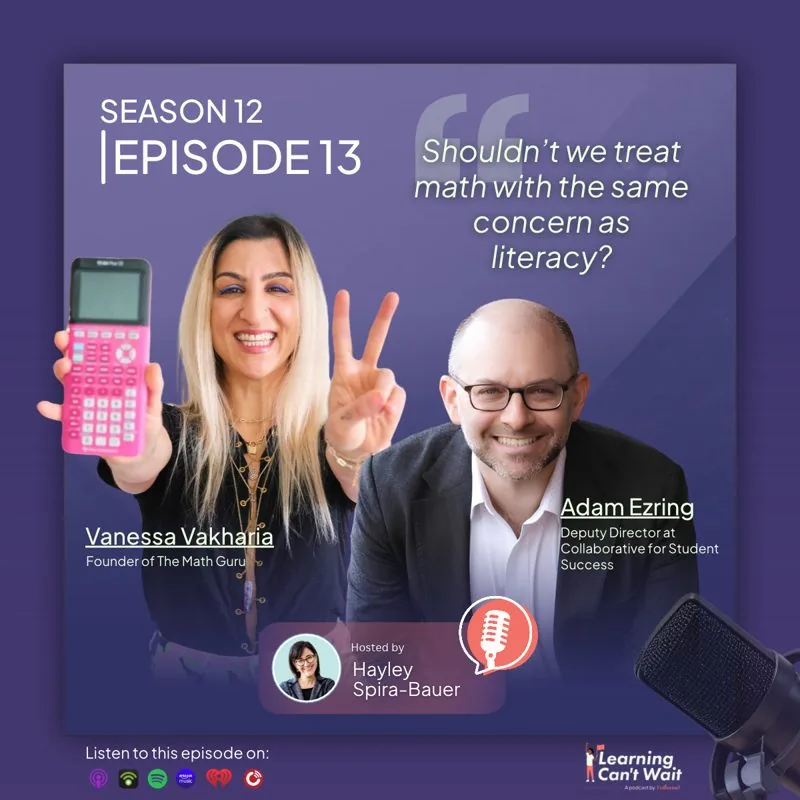 Vanessa Vakharia & Adam Ezring: Family Math, Math Confidence & Learning Through PlayOctober 13, 2026 · Vanessa Vakharia, Adam Ezring
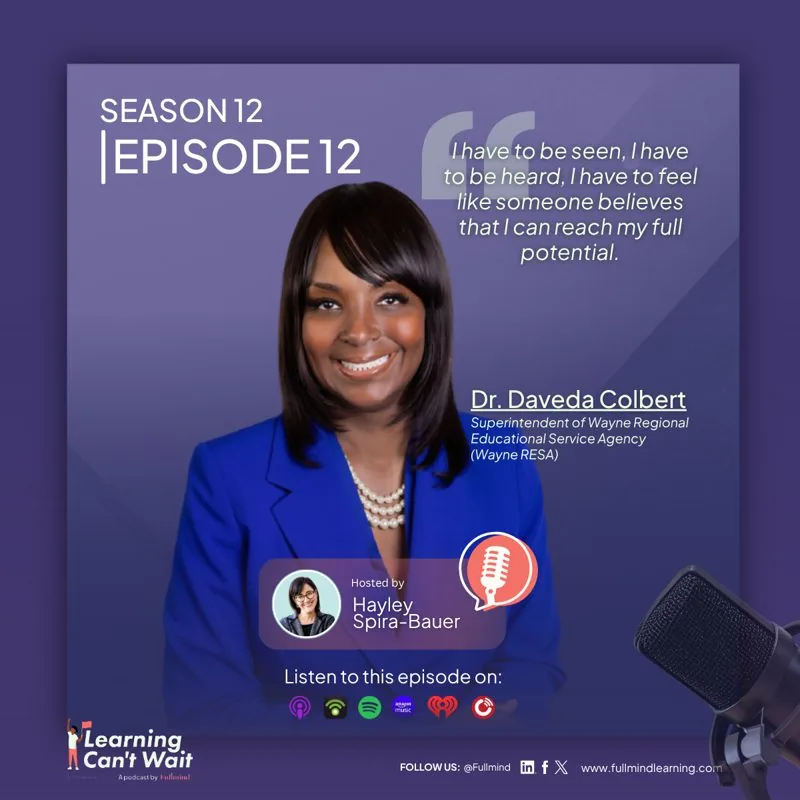 Dr. Daveda Colbert: Leadership, Belonging & ServiceOctober 6, 2026 · Dr. Daveda Colbert
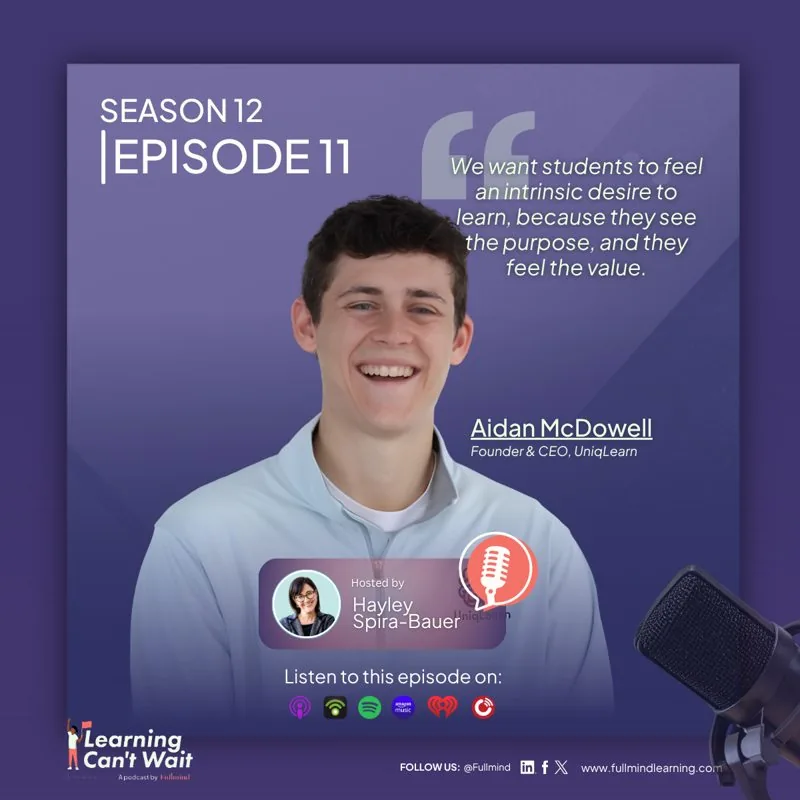 Aidan McDowell: Personalized learning, Student agency & Intrinsic motivationSeptember 29, 2026 · Aidan McDowell
New York on the podcast
Episodes with New York connections
 Jean-Claude Brizard: Digital Promise, Innovation in Education, AI in Education, Learning ScienceJanuary 2, 2024 · Jean-Claude Brizard
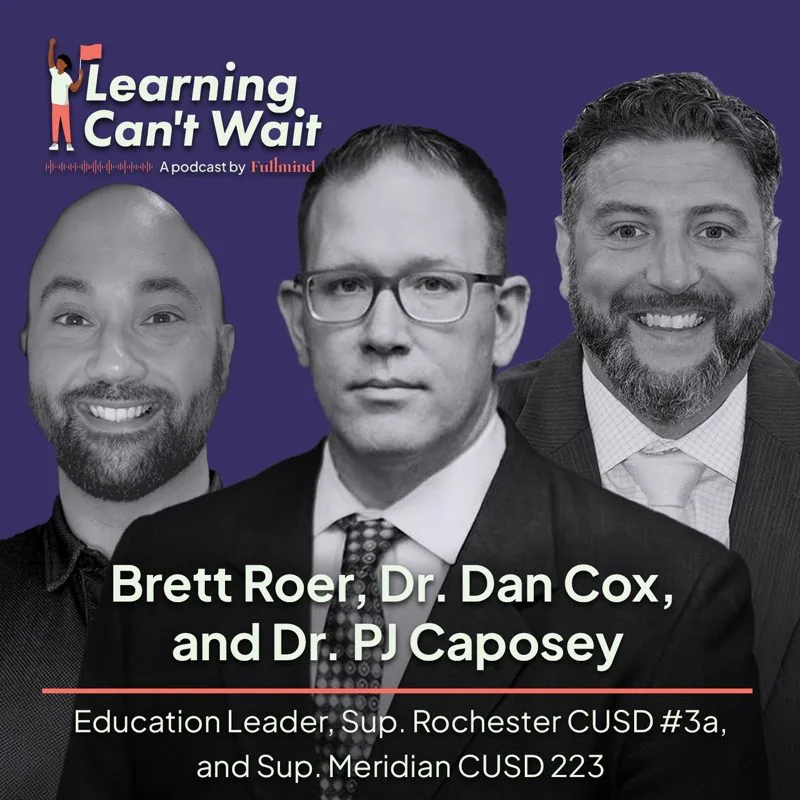 Brett Roer, Dr. PJ Caposey, Dr. Dan Cox: Growth, Fitness, Discipline, Leadership, Work-Life BalanceNovember 14, 2023 · Brett Roer, Dr. PJ Caposey, Dr. Dan Cox
 Heather Rubin: Cultural Responsiveness, ELL, Project-based Learning, Digital Age TeachingOctober 29, 2024 · Heather Rubin
For Education Leaders
Get proven strategies and expert analysis from the host of the Learning Can't Wait podcast, delivered straight to your inbox.

















































































How can we help? Let’s connect.
Tell us what you need. It takes about a minute, and you’ll see the next steps right away.
We’ll reach out within one business day
An education consultant talks through your students, schedule and goals.
Get a plan for your district
A plan built around your needs and budget.
Need support? Call 1 (888) 841-7840
Thanks! Our team will reach out within one business day to set up a time that works for you.
Need help sooner? Book a time now
Your one-pagers
Matched to what you told us. They download as one PDF.
Every child deserves the opportunity to access exceptional education.