Connect with the Fullmind Team

For Education Leaders
Get proven strategies and expert analysis from the host of the Learning Can't Wait podcast, delivered straight to your inbox.
SWD Services & IEP Fulfillment
Our virtual special education services give students with disabilities live, small-group instruction from special education–certified educators, aligned to each student's IEP goals, with progress reporting your team can document.
Alaska IEP Laws, Eligibility, and Compliance: For School Districts

Individualized Education Programs (IEPs) are essential for special education services, ensuring students with disabilities receive tailored educational opportunities. In Alaska, navigating the complex state and federal regulations governing IEP laws can be challenging for school districts, administrators, and families. The intersection of federal mandates under the Individuals with Disabilities Education Act (IDEA) and Alaska's requirements creates a framework that demands attention to detail and understanding.
This guide covers Alaska IEP laws, eligibility criteria, and compliance standards, offering insights for school districts and families in the special education process. We explore disability eligibility categories, the IEP development process, parental rights, compliance requirements, and available resources. Whether you're a special education director, administrator, teacher, or parent, this article will equip you to navigate Alaska's special education requirements and ensure students receive the necessary support to succeed.
Understanding the Legal Framework: Overview of IEP Laws in Alaska
All IEP services stem from the Individuals with Disabilities Education Act (IDEA), a federal law guaranteeing students with disabilities the right to a Free Appropriate Public Education (FAPE) in the Least Restrictive Environment (LRE). IDEA establishes the framework for special education services nationwide, outlining eligibility criteria, procedural safeguards, and requirements for individualized programming that addresses each student's unique needs.
Alaska's special education laws are in the Alaska Administrative Code Title 4, Chapter 52, which aligns with federal IDEA requirements. These state regulations provide guidance on implementation procedures, timelines, and protections for students with disabilities in Alaska schools, ensuring federal mandates are adapted to the state's unique characteristics.
Federal and state laws create a legal framework for special education services in Alaska, including requirements for Individualized Education Programs (IEPs). While state laws cannot contradict federal requirements, Alaska's regulations often provide more specific guidance. This dual-layer approach ensures consistent, high-quality services while allowing state-specific considerations like rural service delivery and cultural responsiveness.
Recent updates to Alaska's IEP laws focus on improving transition services, enhancing parent participation, and addressing challenges faced by rural communities. Given Alaska's remote geography, IEP accommodations in virtual learning have become increasingly important for serving students across the state's vast distances. The Alaska Department of Education & Early Development (EED) regularly updates guidance documents and provides professional development to ensure districts remain current with evolving requirements and best practices in special education.
Determining Eligibility: IEP Criteria in Alaska
To be eligible for an IEP, a student must have a qualifying disability that adversely affects their educational performance and demonstrate a need for special education and related services. A diagnosis alone isn't enough; the disability must impact the student's ability to access and benefit from the general education curriculum without specialized instruction and support.
Alaska recognizes 13 disability categories under IDEA and state regulations:
- Specific Learning Disability (SLD): A disorder in one or more psychological processes affecting the ability to understand or use language. It may manifest in imperfect ability to listen, think, speak, read, write, spell, or perform mathematical calculations.
- Emotional Disturbance (ED): A long-term condition and adversely affects educational performance, including inability to learn, build relationships, inappropriate behaviors or feelings, pervasive mood issues, or physical symptoms related to fears.
- Intellectual Disability (ID): Significantly below-average intellectual functioning and deficits in adaptive behavior during the developmental period that adversely affects educational performance.
- Autism Spectrum Disorder (ASD): A developmental disability affects verbal and nonverbal communication and social interaction. It is evident before age three, with repetitive activities and stereotyped movements that adversely affect educational performance.
- Speech or Language Impairment: Communication disorders like stuttering, impaired articulation, language impairment, or voice impairment that adversely affect educational performance.
- Visual Impairment (including Blindness): Impaired vision that, even with correction, adversely affects educational performance, including partial sight and blindness.
- Hearing Impairment (including Deafness): Impairment in hearing, whether permanent or fluctuating, that adversely affects educational performance but isn’t defined as deafness.
- Deaf-Blindness: Concomitant hearing and visual impairments causing severe communication and developmental needs that cannot be accommodated in programs for children with deafness or blindness.
- Orthopedic Impairment: Severe orthopedic impairment that adversely affects educational performance, including congenital anomalies, disease, or other causes like cerebral palsy or amputations.
- Traumatic Brain Injury (TBI): Acquired brain injury from external physical force resulting in total or partial functional disability or psychosocial impairment that adversely affects educational performance.
- Other Health Impairment (OHI): Limited strength, vitality, or alertness due to chronic or acute health problems that adversely affect educational performance.
- Multiple Disabilities: Concomitant impairments causing severe educational needs that can’t be accommodated in special education programs for one impairment.
- Developmental Delay: For students aged 3 to 9, significant delays in physical, cognitive, communication, social-emotional, or adaptive development that adversely affect educational performance.
Developmental Delay is limited to students aged 3 to 9 years and requires documentation of significant delays across developmental domains. Districts seeking qualified specialists for evaluations and services can benefit from virtual staffing solutions to ensure access to certified professionals, especially in rural areas.
Navigating the IEP Development Process in Alaska
The IEP development process in Alaska ensures comprehensive evaluation, collaborative planning, and individualized programming for students with disabilities. Understanding each step helps districts maintain compliance while providing effective services.
- Referral: The process begins when a student is referred for special education evaluation. Referrals can come from teachers, parents, administrators, or other professionals who suspect a disability affecting educational performance. Alaska requires districts to respond promptly and provide parents with written notice of proposed evaluations.
- Evaluation: A comprehensive evaluation must determine eligibility and educational needs. Alaska requires evaluations to be comprehensive, multidisciplinary, and conducted by qualified professionals. Assessments must examine all areas of suspected disability and consider cultural and linguistic factors. The evaluation must be completed within established timelines, typically 60 school days from parental consent.
- Eligibility Determination: The IEP team, including parents, reviews evaluation results to determine if the student meets eligibility criteria for special education services. The team must determine that the student has a qualifying disability that adversely affects educational performance, requiring special education services.
- IEP Meeting: An IEP meeting must be held within 30 days of the eligibility determination if eligible. Required participants include parents, general education teachers, special education teachers, administrators, and relevant service providers. The meeting must be scheduled at a convenient time and location, with proper notice to all participants.
- IEP Development: During the meeting, the team develops the IEP document, including present performance levels, annual goals, services, accommodations, and placement decisions. The IEP must be based on assessment data and address the student's needs while ensuring access to the general education curriculum.
- IEP Implementation: Once the IEP is finalized and signed, it must be implemented as written. All services, accommodations, and modifications specified in the document must be provided consistently. Teachers and service providers must be informed of their responsibilities and provided with copies of relevant IEP components.
- IEP Review: Annual reviews assess progress and revise the IEP. The IEP must also be reviewed with significant changes in the student's needs or circumstances. Three-year comprehensive re-evaluations ensure continued eligibility and services.
Districts can benefit from expert virtual IEP support to ensure qualified professionals are available for all aspects of the IEP process, particularly in areas where specialized staff are hard to recruit or retain.
Ensuring Compliance: Alaska IEP Requirements
IEP compliance involves adherence to both federal IDEA requirements and state regulations, ensuring students receive appropriate services while protecting their educational rights. Compliance involves systematic implementation of procedures, documentation, and service delivery that meet established standards and timelines.
The Alaska Department of Education & Early Development (EED) monitors IEP compliance through audits, data reviews, and focused monitoring. The EED examines district practices related to child find, evaluation, IEP development and implementation, and services in the least restrictive environment. Districts must maintain documentation and data systems to demonstrate compliance.
Alaska IEP compliance includes:
- Timeline Adherence: Strict compliance with evaluation timelines (60 school days), IEP meeting requirements (within 30 days of eligibility), and annual review schedules ensures students receive timely services and appropriate programming.
- Service Implementation: All services, accommodations, modifications, and supports in the IEP must be implemented as written. This includes ensuring qualified staff provide services and that the frequency, duration, and location match IEP specifications.
- Progress Monitoring Documentation: Districts must collect and maintain data demonstrating student progress toward IEP goals. This data must be systematically collected, analyzed, and used to inform instructional decisions and IEP revisions.
- Parent Notification Requirements: Proper notice must be provided to parents regarding IEP meetings, evaluation procedures, and proposed changes to services or placement. Notice must be in the parent's native language when feasible and provide sufficient detail for informed decision-making.
- Qualified Personnel: All special education and related services must be provided by certified and qualified staff. Districts must ensure personnel meet Alaska's certification requirements and have appropriate training to implement IEP services effectively.
Non-compliance can lead to corrective action plans, technical assistance requirements, and loss of federal funding. The EED collaborates with districts to address compliance issues through professional development, resource allocation, and improvement planning.
Empowering Parents: Rights and Involvement in the Alaska IEP Process
Parents play a crucial role in the IEP process and have significant legal rights under IDEA and Alaska law. Understanding these rights empowers parents to advocate for their children and ensures meaningful participation in educational decision-making.
In Alaska's IEP process, parental rights include:
- Right to Participate: Parents have the right to participate as equal members of the IEP team in all meetings and decisions regarding their child's education, including evaluation planning, eligibility determination, IEP development, and placement decisions.
- Right to Notice: Parents must receive written notice of all IEP meetings with enough advance notice to ensure attendance. Notice must include the purpose, time, location, and expected participants.
- Right to Consent: Parental consent is required for initial evaluations, initial provision of special education services, and re-evaluations. Parents can withdraw consent for services at any time, though districts must provide written notice of the consequences.
- Right to Records Access: Parents can examine all educational records related to their child, including evaluation reports, IEP documents, and progress monitoring data. Records must be provided promptly and in an accessible format.
- Right to Independent Evaluation: If parents disagree with the district's evaluation, they can request an Independent Educational Evaluation (IEE) at public expense. The district must either fund the independent evaluation or initiate a due process hearing to defend their evaluation.
- Right to Dispute Resolution: Parents can pursue various dispute resolution options, including informal meetings, mediation, state complaints, and due process hearings, if they disagree with any aspect of their child's special education program.
- Right to Progress Information: Parents must receive regular reports on their child's IEP goal progress, at least as frequently as general education reports.
The IEE process in Alaska requires specific procedures. When parents request an independent evaluation, districts must either agree to fund it or file for a due process hearing within a reasonable time. If the district's evaluation is upheld, parents can still obtain an independent evaluation at their own expense.
Resolving Conflicts: Dispute Resolution and Appeals in Alaska
Alaska offers multiple avenues for resolving disagreements between parents and school districts regarding special education services, ranging from informal collaboration to formal legal proceedings, allowing parties to choose the most appropriate method.
The dispute resolution process typically begins with informal meetings between parents and school personnel to discuss concerns and explore solutions. Many disagreements can be resolved through open communication, clarification of requirements, and collaborative problem-solving. Districts are encouraged to maintain open communication and address parent concerns promptly to prevent escalation.
Mediation provides a voluntary, confidential process involving a trained, neutral mediator who facilitates discussions between parents and districts. The Alaska Department of Education & Early Development maintains a roster of qualified mediators who understand special education law and can help parties reach acceptable agreements. Mediation is free and can occur anytime, even while other dispute resolution processes are pending.
Due Process Hearings offer a formal procedure before an impartial administrative law judge. Parents or districts can request these hearings when disputes can’t be resolved otherwise. The process includes formal procedures, evidence presentation, witness testimony, and legal representation options. Decisions can be appealed to state or federal court.
State Complaints involve filing formal complaints with the Alaska Department of Education & Early Development alleging special education law violations. The EED investigates complaints and issues written decisions within 60 days, including corrective actions for violations. This process addresses systemic issues and ensures statewide compliance with special education requirements.
Appeals of due process hearing decisions can be made to state court within specific timeframes. The court reviews the administrative record and can uphold, reverse, or modify the hearing officer's decision based on legal standards and evidence.
Future Planning: Transition Planning and Services
Transition planning is a crucial part of the IEP process, preparing students with disabilities for successful post-school outcomes like higher education, vocational training, competitive employment, and independent living. Alaska requires comprehensive transition planning that addresses individual goals and provides coordinated services for smooth transitions.
Transition planning must start by age 16, but Alaska encourages earlier initiation when appropriate. The process requires age-appropriate transition assessments that examine student interests, preferences, strengths, and needs. These assessments inform measurable post-secondary goals and guide service planning.
Effective transition planning components include:
- Age-Appropriate Transition Assessments: Comprehensive evaluations examining career interests, vocational aptitudes, independent living skills, and post-secondary education readiness. These assessments must be updated regularly to reflect changing student needs and goals.
- Measurable Post-Secondary Goals: Specific, observable outcomes in education/training, employment, and independent living that reflect the student's future vision and assessment data.
- Transition Services: Coordinated activities to help students achieve post-secondary goals, including instruction, related services, community experiences, employment development, and daily living skills training.
- Agency Coordination: Collaborate with adult service agencies, vocational rehabilitation services, developmental disabilities agencies, and community organizations to ensure seamless service continuation after high school.
Transition services include vocational education programs, job shadowing, internships, college preparation courses, independent living skills training, driver's education, and community-based instruction. Services should be individualized based on student goals and needs, with clear connections between current programming and desired post-school outcomes.
Alaska's geography and economy require creative transition planning, especially in rural communities with limited post-secondary options. Districts partner with distance education programs, regional training centers, and local employers for meaningful transition experiences. College and career readiness programs support students with disabilities preparing for post-secondary success.
Tailoring Instruction: Accommodations and Modifications
Accommodations and modifications ensure students with disabilities can access the general education curriculum and demonstrate their knowledge and skills effectively. It is important for IEP compliance and student success to understand the distinction between these interventions and implement them appropriately.
Accommodations change how a student learns, studies, or demonstrates knowledge without altering the curriculum content or expectations. These interventions remove barriers to learning while maintaining the same academic standards. Accommodations level the playing field by providing alternative methods for accessing information or expressing understanding.
Modifications change what a student learns by altering the content, expectations, or learning outcomes. These changes may involve reducing assignment complexity, adjusting grade-level expectations, or focusing on different learning objectives. Modifications are reserved for students with significant cognitive disabilities who require substantial curriculum alterations.
Common accommodations and modifications include:
- Presentation accommodations include large print materials, audio recordings, visual supports, and highlighted text.
- Presentation modifications include simplified vocabulary, reduced content complexity, and alternative materials at different reading levels.
- Response accommodations include a computer for writing, oral responses, alternative answer formats, and assistive technology.
- Response modifications include shortened assignments, alternative assessment formats, and different evaluation criteria.
- Accommodations include a quiet workspace, preferential seating, reduced distractions, and a separate testing room.
- Setting modifications include small group instruction, one-on-one support, and alternative learning environments.
- Timing and scheduling accommodations include extended time, frequent breaks, flexible scheduling, and untimed assessments.
- Timing and scheduling modifications include reduced workload, alternative assignment due dates, and modified daily schedule.
Accommodations and modifications must be individualized based on each student's needs, disabilities, and learning characteristics. The IEP team should consider assessment data, classroom observations, and input from teachers, parents, and the student when determining interventions. Regular review and adjustment ensure that accommodations and modifications remain effective as students develop.
Instructional accommodations should be available during state and district-wide assessments to accurately measure student achievement. Alaska follows federal guidelines for assessment accommodations while providing local implementation guidance.
Measuring Progress: Monitoring and Evaluation of IEPs
Crucial for effective IEP implementation is systematic progress monitoring, which ensures students advance toward their annual goals and services produce desired outcomes. Alaska requires comprehensive data collection, analysis, and reporting systems to inform instructional decisions and support continuous improvement.
Progress monitoring involves regular collection of objective data related to IEP goals using reliable and valid measurement procedures. Data must be collected frequently enough to detect changes in student performance and adjust instruction and services. The frequency and methods of data collection should be specified in the IEP and implemented consistently.
Effective progress monitoring systems use multiple data sources like curriculum-based measurements, work samples, observational data, and standardized assessments. Teachers and service providers must be trained in data collection procedures and equipped with appropriate tools. Data should be graphed and analyzed regularly to identify trends, patterns, and areas needing instructional modifications.
Parents must receive progress reports as frequently as general education reports, typically quarterly or at the end of each grading period. These reports should include specific information about progress toward annual goals, whether the student is expected to meet goals by the end of the IEP year, and any concerns about lack of progress. Progress reports should be written in clear, understandable language for parents to understand their child's educational development.
When students aren’t making adequate progress toward IEP goals, the team must examine potential causes and implement interventions. This may involve revising instructional strategies, adjusting services, modifying goals, or conducting assessments. If lack of progress persists despite interventions, the team may consider more intensive services, alternative programming, or comprehensive re-evaluation to examine changing needs.
Data from progress monitoring must inform IEP team decisions during annual reviews and revision meetings. Teams should examine progress data alongside other information to determine service effectiveness and make evidence-based decisions about programming. This cyclical process of planning, implementing, monitoring, and revising ensures IEPs remain responsive to student needs and promote meaningful educational outcomes.
Finding Support: Resources for Alaska Families
Alaska offers resources to support families navigating the special education system and advocating for their children's rights. These organizations provide information, training, advocacy support, and direct services to ensure students with disabilities receive appropriate educational opportunities.
Resources for Alaska families:
- Alaska Department of Education & Early Development (EED): The state education agency, Alaska Department of Education & Early Development (EED), provides policy guidance, technical assistance, and oversight of special education services. Their website contains current regulations, forms, guidance documents, and regional support contact information.
- Stone Soup Group: Alaska's Parent Training and Information Center, provides training, information, and support to families of children with disabilities. They offer workshops, individual consultations, and advocacy support to help parents understand their rights and navigate the special education system.
- Disability Law Center of Alaska: This organization provides legal advocacy, disability rights information, and representation for individuals with disabilities. They assist families with special education disputes and ensure compliance with federal and state laws.
- Special Education Service Agency (SESA): SESA provides direct services, technical assistance, and professional development to Alaska school districts. They offer specialized services in assistive technology, low-incidence disabilities, and rural service delivery models.
- Alaska Center for Resource Families: This organization supports families caring for children with special needs in the child welfare system. They provide training, respite services, and community resource connections.
These organizations collaborate to support Alaska families. They recognize the unique challenges in rural and remote communities. Many offer distance delivery methods, including webinars, phone consultations, and online resources to overcome geographical barriers.
FAQ
How do Alaska IEP laws account for cultural or linguistic diversity for Native Alaskan students?
Alaska IEP laws stress the importance of culturally responsive assessment and service delivery for Alaska Native students and other diverse populations. Evaluations must consider cultural and linguistic factors impacting performance, and assessment tools should minimize cultural bias. IEP teams must include individuals knowledgeable about the student's cultural background, and services should incorporate relevant materials and approaches. Alaska Native cultures and languages are recognized as assets, and special education services must respect and build upon these cultural foundations rather than viewing differences as deficits.
What unique challenges do rural or remote Alaskan communities face in IEP implementation, and how are they addressed?
Rural and remote Alaskan communities face challenges including limited access to specialized personnel, geographic isolation, weather-related travel restrictions, and small student populations that make services costly. Alaska addresses these challenges through itinerant service models, technology-based delivery, regional cooperatives sharing staff, and flexible scheduling to maximize specialist availability. The state provides funding considerations for rural districts and supports creative models like intensive service blocks during specialist visits and distance learning for students and professional development.
How is funding allocated for IEPs in Alaska, and what can families do if resources are limited?
Alaska uses federal IDEA funding, state special education funding, and local resources to support special education services. The state employs a student-based funding formula that provides weights for students with disabilities, recognizing the increased costs of specialized services. When families believe resources are inadequate, they can advocate through multiple channels including requesting IEP team meetings, contacting district administrators, filing state complaints if legal requirements aren’t met, and working with parent advocacy organizations. Funding limitations cannot deny appropriate services, and districts must provide the services specified in IEPs regardless of cost.
Conclusion
Understanding Alaska IEP laws eligibility and compliance requirements is necessary for ensuring students with disabilities receive the specialized education services they need to succeed academically and prepare for meaningful post-school outcomes. The interplay of federal IDEA requirements and Alaska-specific regulations creates a framework that protects student rights while providing flexibility for innovative service delivery approaches suited to Alaska's unique conditions.
Successful implementation of Alaska's special education laws requires ongoing collaboration between families, educators, administrators, and community partners to support students with disabilities. By focusing on individual needs, following procedures, and using available resources, Alaska's education community can ensure every student with a disability receives appropriate services in the least restrictive environment. For districts needing support, Fullmind provides live, certified teachers and customized learning solutions for schools, including virtual staffing and support for SWD services and IEP fulfillment, ensuring compliance while delivering quality educational services.
Podcast
From the Learning Can’t Wait podcast
 Hosted by Hayley Spira-Bauer, Chief Academic Officer at Fullmind
"They're so smart, they're so talented, they just need people to believe in them."
Related episodes
 Evan Abramson: Ed Tech Innovation, AI in Education, Building Trust in SchoolscaJanuary 28, 2025 · Evan Abramson
Alaska on the podcast
Episodes with Alaska connections
 Chad Aldeman: Teacher Shortage, Educator Retention, Read Not GuessSeptember 3, 2024 · Chad Aldeman
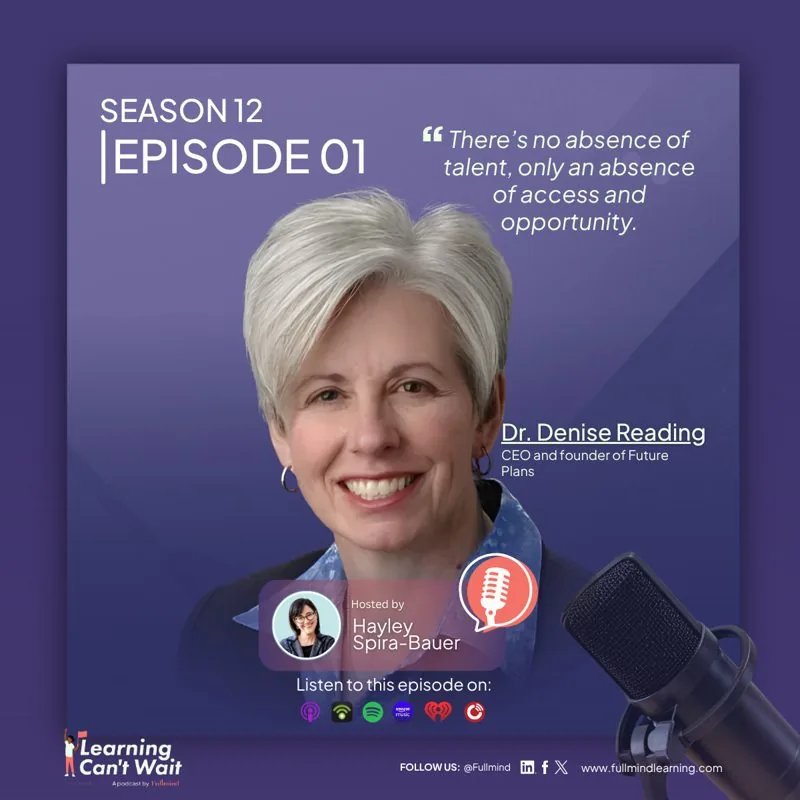 Dr. Denise Reading: Workforce Alignment, Rural Education Equity & Opportunity AccessJuly 7, 2026 · Dr. Denise Reading
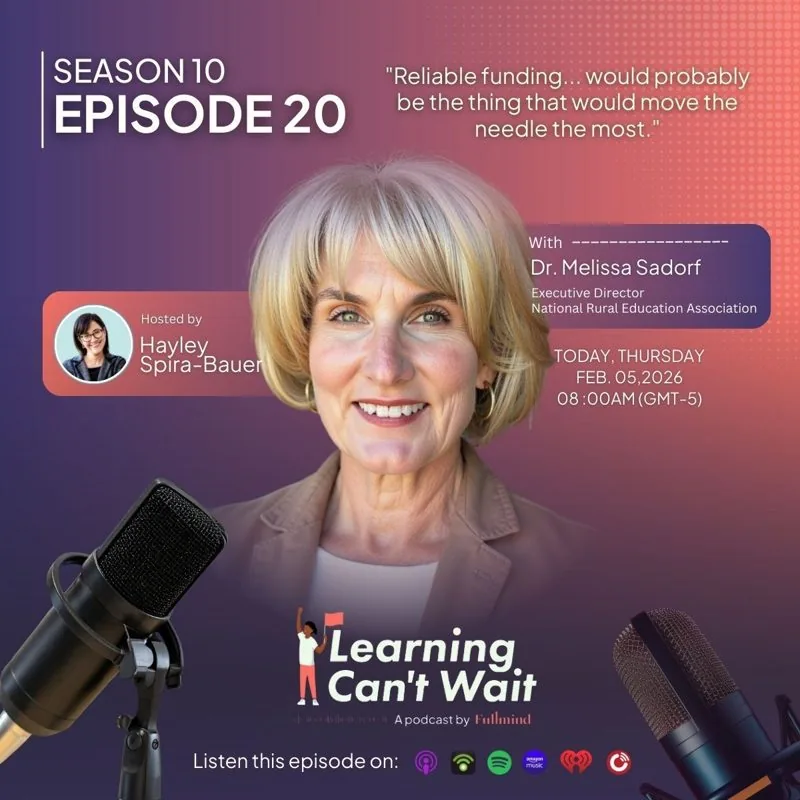 Dr. Melissa Sadorf: Rural education, Asset-based lens & Teacher retentionFebruary 5, 2026 · Dr. Melissa Sadorf
For Education Leaders
Get proven strategies and expert analysis from the host of the Learning Can't Wait podcast, delivered straight to your inbox.






































































How can we help? Let’s connect.
Tell us what you need. It takes about a minute, and you’ll see the next steps right away.
We’ll reach out within one business day
An education consultant talks through your students, schedule and goals.
Get a plan for your district
A plan built around your needs and budget.
Thanks! Our team will reach out within one business day to set up a time that works for you.
Need help sooner? Book a time now
Your one-pagers
Matched to what you told us. They download as one PDF.
Every child deserves the opportunity to access exceptional education.