Connect with the Fullmind Team

For Education Leaders
Get proven strategies and expert analysis from the host of the Learning Can't Wait podcast, delivered straight to your inbox.
LIVE Staffing
LIVE Staffing fills hard-to-staff roles with certified educators who teach live, synchronously, on your schedule and curriculum.
Metacognition Strategies: Learning How to Learn

Imagine a diligent student spending hours studying for a test, only to freeze up during the exam. Or a child tackling a challenging math problem, only to give up in frustration after a few minutes. These scenarios play out in classrooms daily, leaving educators and parents wondering how to help students become more effective, confident learners—a question that neuroscience research on learning is helping to answer.
The answer lies in metacognition strategies for students, teaching them not just what to learn, but how to learn. Metacognition is "thinking about your thinking." It's the awareness and understanding of one's thought processes and the ability to regulate them. The good news? This isn't about innate intelligence; it's about developing strategic awareness that any student can learn with guidance, especially when paired with fostering a growth mindset that embraces learning as a process.
In this guide, we explore the meaning of metacognition, its importance for student success, and practical, age-appropriate strategies for immediate implementation in your classroom or at home. By the end, you will have the tools to help your students become more independent, reflective, and powerful learners.
What is Metacognition?
Metacognition is like being the CEO of your brain. Just as a CEO doesn't handle every task but plans operations, monitors progress, and evaluates results, metacognition allows students to take control of their learning process. It's about stepping back from the immediate task to consider the bigger picture of learning.
This skill consists of two components that transform how students approach learning, working hand-in-hand with fostering a growth mindset. It isn't a singular ability:
- Metacognitive Knowledge (The "What"): This refers to what students know about themselves as learners, the tasks they face, and the strategies available. For example, a student might recognize they are a visual learner (self-knowledge), understand that writing an essay requires different skills than a multiple-choice test (task-knowledge), and know that creating concept maps helps them organize information (strategy-knowledge).
- Metacognitive Regulation (The "How"): This is the active management of learning using metacognitive knowledge. It is where self-regulated learning happens through the metacognitive cycle of planning before a task, monitoring during learning, and evaluating afterward. This regulation component transforms awareness into action.
Why Metacognition is a Game-Changer for K-12 Students
Understanding metacognition is important, and knowing its significance will motivate educators and students to prioritize these skills. The benefits of developing metacognitive abilities extend beyond a single classroom or test score, particularly when integrated with social emotional learning programs that also emphasize self-awareness and self-regulation.
- Boosts Academic Achievement: Students using metacognitive strategies consistently outperform others. Research from the Education Endowment Foundation shows teaching metacognition can advance student progress by an average of seven months, making it one of the most cost-effective educational interventions.
- Fosters Independence and Ownership: When students develop metacognitive skills, they shift from passive information recipients to active learning managers. They recognize confusion, identify needs, and take initiative to find solutions, building confidence, agency, and motivation.
- Builds Resilience and Problem-Solving Skills: Metacognition teaches students how to handle obstacles. Instead of giving up when faced with difficulty, metacognitive learners pause, assess the situation, and try alternative approaches. This resilience transfers across subjects and into life beyond school.
- Improves Self-Awareness: Through metacognitive awareness, students develop a realistic understanding of their strengths and challenges. This self-assessment allows them to leverage their strengths while developing strategies to address weaknesses.
Three-Step Metacognitive Cycle: Plan, Monitor, Evaluate
The metacognitive cycle provides a simple yet powerful framework for any learning task, whether it's reading a chapter, solving a math problem, or completing a project. Teaching students this cycle gives them a roadmap for approaching academic challenges.
Step 1: Plan (Before the Task)
This initial phase sets the stage for successful learning. It involves activating prior knowledge, establishing clear goals, and selecting appropriate strategies. Effective planning answers the crucial question: "How will I approach this?"
Guiding Questions for Students:
- What is my goal for this task?
- What do I know about this topic?
- How much time do I have, and how will I use it?
- What strategies should I use? Which one is best for this task?
Step 2: Monitor (During the Task)
Monitoring is about maintaining awareness while learning. It's the "in-the-moment" self-check that helps students assess their understanding and determine if their strategy is working. This phase addresses: "Is this working? Do I understand?"
Guiding Questions for Students:
- Am I on track to meet my goal?
- Does this make sense? What questions do I have?
- Should I slow down, speed up, or try a different approach?
- What's the most confusing part for me right now (the "muddiest point")?
Step 3: Evaluate
The evaluation phase involves reflection on the outcome and process. This is where the deepest learning occurs, as students analyze what worked, what didn't, and what to do differently next time. Effective evaluation answers: "How did I do, and what would I do differently?"
Guiding Questions for Students:
- Did I achieve my goal? How do I know?
- What worked well? What didn't?
- What mistakes did I make, and what can I learn from them?
- Next time I have a similar task, what will I do the same and what will I change?
12 Practical Metacognition Strategies for Students
Here are concrete learning strategies for students that can be implemented in any classroom or micro school setting. These approaches give students tools to engage with the metacognitive cycle and develop their capacity to learn independently.
Planning Strategies (Before Learning)
- K-W-L Charts: This graphic organizer has three columns: what I Know, what I Want to know, and what I Learned. Before a unit, students fill in the first two columns to activate prior knowledge and set learning goals. After the unit, they complete the third column.
- Goal Setting: Guide students to write specific, measurable, achievable, relevant, and time-bound (SMART) goals for a lesson or unit. For example, instead of "I want to understand fractions," a SMART goal might be "By Friday, I will add and subtract fractions with different denominators with at least 80% accuracy."
- Strategy Talk: Before a challenging task, have students brainstorm potential approaches and discuss the most effective ones. This primes them to think strategically and builds their repertoire of learning techniques.
- Previewing Text: Teach students to skim headings, bolded terms, images, captions, and summary questions before reading. This creates a mental framework and activates relevant prior knowledge.
Monitoring Strategies (During Learning)
- Think-Alouds: Model your thinking process by verbalizing your thoughts as you solve a problem or analyze a text. Then have students practice think-alouds in pairs. This makes invisible thought processes visible and provides a template for self-monitoring.
- The Muddiest Point: Periodically ask students to identify and write down the single concept or idea they are most confused about. This quick check-in helps them pinpoint confusion areas and gives you feedback on what needs clarification.
- Self-Questioning Checkpoints: Teach students to pause during independent work to ask themselves monitoring questions: "Do I understand what I've read? Am I still focused on my goal? Should I try a different approach?"
- Purposeful Highlighting: Teach a color-coded system to move beyond random highlighting. Use yellow for main ideas, pink for confusing parts, and blue for key vocabulary. This encourages active engagement with text rather than passive reading.
Evaluating Strategies (After Learning)
- Exam Wrappers: After returning a test, provide a reflection sheet for students to analyze their performance. Questions might include: "Which question types did I miss? How did I prepare? What will I do differently next time?"
- Reflective Journals: Have students maintain regular journal entries about their learning process. Prompts might include: "My biggest challenge this week was..." or "A strategy that helped me was..." This builds self-awareness over time.
- PMI (Plus, Minus, Interesting): After a project or unit, students create three columns to identify the positives, challenges, and interesting aspects of their learning experience. This balanced reflection framework prevents negative or superficial evaluations.
- Error Analysis: Instead of marking answers right or wrong, teach students to categorize their errors. Was it a calculation mistake, a concept misunderstanding, or a careless oversight? This helps them target their improvement efforts.
Adapting Metacognitive Strategies for Different Age Groups
Teaching metacognition effectively requires tailoring approaches to students' developmental stages. The core concepts remain consistent, but the language, complexity, and application should evolve as students mature.
For Elementary Students (Grades K-5)
Young learners benefit from concrete language, visual supports, and character-based approaches. Make metacognition tangible and playful for this age group.
Use metacognitive characters like "Planning Pete," "Monitoring Mia," or "Reflecting Rosa" to make the concepts memorable.
- Implement picture-based checklists for task completion
- Use "traffic light" self-assessments where students hold up red, yellow, or green cards to indicate their understanding.
- Introduce "think-pair-share" routines for students to reflect on their learning and share strategies with a partner.
For Middle School Students (Grades 6-8)
As students transition to adolescence, they can handle more formal reflection tools and connect metacognition to study habits and self-advocacy.
- Teach structured note-taking methods like Cornell Notes that include reflection components.
- Implement project planners that break long-term assignments into manageable steps with check-in points.
- Facilitate peer feedback sessions focused on processes rather than just the final product.
- Introduce personal goal-setting routines linked to quarterly grades or learning objectives.
For High School Students (Grades 9-12)
High school students benefit from approaches that emphasize autonomy and connect metacognition to future goals. These strategies prepare them for the independence required in college and careers.
- Guide students in developing personalized study systems based on their learning preferences and course demands.
- Implement in-depth error analysis on major assessments to identify pattern errors and knowledge gaps for effective test prep.
- Connect metacognitive practices to college and career readiness through authentic tasks.
- Teach time management and task prioritization as explicit metacognitive skills.
Creating a Metacognitive Culture
Creating a classroom where metacognition thrives requires intentional effort from educators. The most powerful approach is to regularly model your own metacognitive process. Think aloud as you solve problems, sharing moments of confusion and how you work through them. This normalizes the struggle in learning and demonstrates that even experts use metacognitive strategies.
Shift your feedback from products to process. Instead of saying "Good job" when a student succeeds, ask, "What strategy worked?" When a student struggles, instead of jumping to the correction, ask, "What's confusing you?" or "What's another approach?"
Creating a metacognitive classroom culture benefits all students, but some, especially those with executive function challenges or support for students with disabilities, thrive with focused guidance. Here, specialized support can make a difference. Fullmind partners with schools to provide certified virtual educators who deliver personalized instruction, helping students build self-awareness and dedicated, one-on-one guidance to succeed.
Conclusion
We've explored how metacognition strategies for students transform the learning experience by teaching the crucial skill of "learning how to learn." Through the Plan-Monitor-Evaluate cycle, students develop awareness of their thinking processes and gain tools to regulate them. The strategies discussed, from K-W-L charts to error analysis, provide practical ways to build these skills across grade levels.
Teaching metacognition empowers students beyond any classroom or subject. When we help students develop these skills, we equip them with tools for their education and adulthood. In a world with abundant information but scarce processing ability, metacognition is the most important gift we can give our students. With it, they'll have the capacity to be reflective, strategic, and independent learners for life.
Podcast
From the Learning Can’t Wait podcast
 Hosted by Hayley Spira-Bauer, Chief Academic Officer at Fullmind
Newest episodes
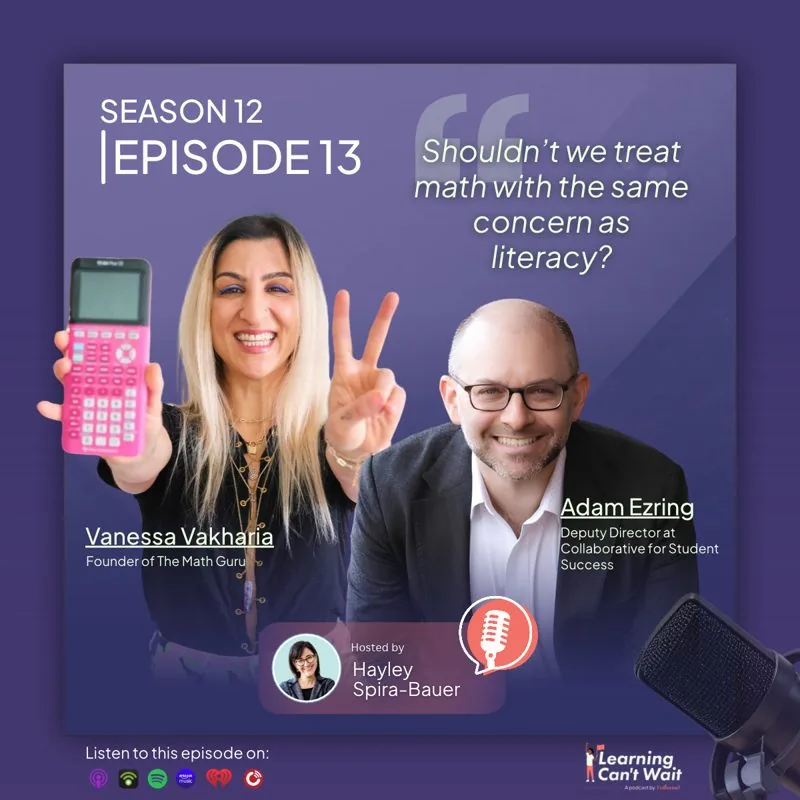 Vanessa Vakharia & Adam Ezring: Family Math, Math Confidence & Learning Through PlayOctober 13, 2026 · Vanessa Vakharia, Adam Ezring
 Dr. Daveda Colbert: Leadership, Belonging & ServiceOctober 6, 2026 · Dr. Daveda Colbert
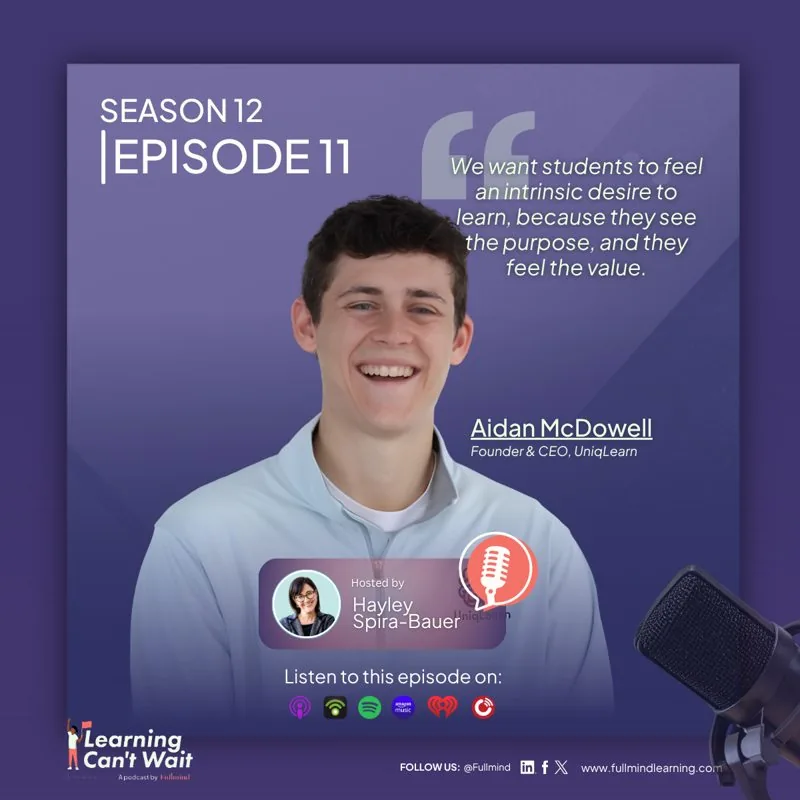 Aidan McDowell: Personalized learning, Student agency & Intrinsic motivationSeptember 29, 2026 · Aidan McDowell
For Education Leaders
Get proven strategies and expert analysis from the host of the Learning Can't Wait podcast, delivered straight to your inbox.















































































How can we help? Let’s connect.
Tell us what you need. It takes about a minute, and you’ll see the next steps right away.
We’ll reach out within one business day
An education consultant talks through your students, schedule and goals.
Get a plan for your district
A plan built around your needs and budget.
Need support? Call 1 (888) 841-7840
Thanks! Our team will reach out within one business day to set up a time that works for you.
Need help sooner? Book a time now
Your one-pagers
Matched to what you told us. They download as one PDF.
Every child deserves the opportunity to access exceptional education.