
For Education Leaders
Get proven strategies and expert analysis from the host of the Learning Can't Wait podcast, delivered straight to your inbox.
LIVE Staffing
LIVE Staffing fills hard-to-staff roles with certified educators who teach live, synchronously, on your schedule and curriculum.
Elevate K-12 Review: Services, Costs, Terms and Reviews

Elevate K-12 is now part of Fullmind. Together, we provide school districts with live, certified educators and instructional services that expand access to high-quality learning. Services include core and elective instruction, special education, supplemental instruction, and summer learning.
Want live, certified teachers who use your district’s curriculum? Talk to Fullmind—a trusted partner of schools in all 50 states. Our state-certified teachers use your district’s curriculum and integrate seamlessly into your classrooms. Schedule a free consultation today to see how we can support your students—no extra software required.
This article explains Elevate K-12’s services, teaching staff, implementation, and technology, as well as how its capabilities are strengthened as part of Fullmind.
Elevate K-12 Overview
Elevate K-12 is an e-learning platform that provides a number of live, online education services to school districts across the US. Products include core and elective instruction, special education teaching, supplemental instruction, and summer school classes. In this way, the company helps address the growing problem of teacher shortages and insufficient course diversity in public schools.
Shaily Baranwal founded Elevate K-12 in 2015 building on her experience as a former classroom teacher and launching two other companies including a chain of preschools for low-income students in rural areas of India. The company was headquartered in Chicago, IL, and is now part of Fullmind, which serves schools and districts in all 50 states. The Elevate K-12 goal is to enable high-quality, live teaching for every learner in the US in order to receive the education they need to find out and pursue their passion in life, competing with established services like the Wyzant tutoring platform.
Today, Elevate K-12’s live teaching is part of what Fullmind for schools offers districts nationwide.
Elevate K-12 Services
Elevate K-12 offers a number of services to school districts across the US. These include:
- Online instruction of core and elective courses for districts
- Special education teaching for districts
- Supplemental instruction for districts
- Summer school for districts
Following is a detailed description of the Elevate services available to districts:
Tier 1 LIVE
Elevate K-12 provides core and elective instruction services that help districts solve issues with hard-to-fill vacancies in core subjects and offer new learning opportunities to students through electives. LIVE Teachers are state-certified and provide live online instruction. Core and elective instruction is available for K-12 grade covering elementary school, middle school, and high school.
Elevate offers more than 80 LIVE courses including core, elective, and special ed in the following subject areas:
- ELA
- Math
- Social studies
- Science
- World languages including Spanish, French, and German
- STEM
- Career readiness
- Test prep
Tier 1 LIVE uses standardized curriculum which is aligned to CCSS, NGSS, and ACTFL as well as state-aligned in more than 30 US states. Moreover, the curriculum is approved by NCAA and accredited by WASC.
Available formats include full-year, live instruction, interim live instruction, and small group instruction.
Special Ed LIVE
Elevate provides special education LIVE teaching that helps address the severe special ed teacher shortage across the country. The Special Ed LIVE Classroom offers a solution for students with mild to moderate disabilities which comprises a LIVE certified US-based special education teacher, adapted state-aligned content, accommodation and modifications coverage, and data reporting. To bring optimal results, an Elevate K-12 Inclusive Learning Manager partners with districts to make sure that students’ needs and IEP requirements are met.
There are three different formats of Special Ed LIVE:
- Traditional Resource Pull Out: Using Special Ed LIVE as an additional source of grade level content to meet instructional minutes for IEPs and improve performance in general ed classes
- Core Instruction: Using Special Ed LIVE standards-aligned content as a core/credit course for students with EIPs who need a slower pace and additional support
- Alleviate Caseloads: Using Special Ed LIVE to alleviate caseloads for on-the-ground special education teachers so that they can focus on inclusion, individual intervention, progress monitoring, and IEPs
Elevate can deliver special ed instruction in two settings:
- Classroom set-up: Small groups of up to 12 students with IEPs are pulled out from general education classes 3-5 days/week to attend a class period in the Special Ed LIVE classroom.
- Cluster seating: Clusters of 2-4 students sit with their Special Ed LIVE teacher on a large screen at the front of class with an in-person Classroom Coach providing needed support.
Supplemental LIVE
Elevate K-12 Supplemental LIVE helps schools support students who could benefit from small-group instruction. This service can be used to fill learning gaps, support differentiation, and offer enrichment. Supplemental LIVE classes are taught by live, US-based, state-certified teachers who operate in a real classroom setting.
Small-group supplementation instruction helps with:
- Remediation: Supporting students who have fallen behind with 1-3 years to reach grade-level standards as part of an MTSS/RTI tiered support
- Reinforcement: Helping students who are at grade level but can benefit from increased depth of content to reinforce learning
- Enrichment: Offering opportunities to extend learning or accelerate knowledge in new areas like Coding, American Sign Language, Foreign Language, ACT/SAT prep, or others
Supplemental LIVE classes are conducted in small groups of no more than 20 students.
Summer School LIVE
Elevate K-12 Summer School Live offers a range of summer options to help students catch up, get ahead, or explore personal interests.
Summer class formats include:
- Reinforcement & Readiness: Supporting students in bridging the gap between one grade and the next to start the new school year prepared
- Acceleration: Providing advanced content to challenge ready students to get ahead of their grade level
- Enrichment: Offering enrichment classes, such as Coding, Cyber Security, Computer Science, Personal Finance, and French, to spark student interest
- ACT/SAT Prep: Delivering high-quality test preparation instruction to give students competitive edge on standardized tests
Summer School LIVE classes can be customized to meet the needs and interests of students, whether focusing on academics, enrichment, or a mix of the two.
Standard summer classes meet for one session of up to 60 minutes per day, 4 days/week. There are up to 35 students per class. Available options include 4-week, 5-week, and 6-week packages.
Elevate K-12 Staff
All Elevate K-12 LIVE teachers hold a US-state teaching certification. About 80% of them have Education degrees (B.A. in Education or M.Ed.), and many hold additional credentials for specialties such as bilingual learning or special education. Elevate K-12 teachers undergo a background check to guarantee student safety.
Moreover, the company provides extensive training in LIVE teaching that covers best practices for LIVE instruction, teaching techniques, and fluency in culturally responsive teaching practices. As part of research-based pedagogical practices, Elevate K-12 makes sure that teachers are fun as this improves results for students.
In addition, each teacher within the Elevate LIVE Network is paired with a dedicated Elevate Instructional Coach who provides feedback on a daily basis and offers ongoing individualized training and professional development throughout the year. LIVE teachers are open to participating in school and district professional development programs if any are implemented.
Elevate K-12 Costs
Elevate K-12 does not provide pricing information about any of the services that it provides on the company website. Interested school districts need to contact the company directly to discuss their needs and get a custom quote.
Elevate K-12 Terms
Interested schools and districts work with the Elevate K-12 Partnership Team to define the partnership and identify the required LIVE courses. A dedicated Regional Operations Manager is assigned to coordinate onboarding and implementation within each participating school. Completing all installations and preassessments typically takes a minimum of two weeks from the date of signing the contract. Elevate K-12 needs a lead time of at least two weeks to ensure that a certified teacher is assigned to LIVE classes.
Districts need to provide Classroom Coaches that work hand-in-hand with the LIVE Teachers to provide on-the-ground support. This role can be filled by paraprofessionals, long-term substitutes, international teachers, and other staff members.
In case a district hires an in-person teacher midway through the semester, Elevate K-12 aims to accommodate them in the educational process.
In terms of content, Elevate K-12 has the capacity to use licensed curriculum that’s already implemented by the district or school. However, customers report that LIVE Teachers generally use Elevate’s in-house content. Elevate’s LIVE curriculum is designed and written by the company’s in-house Academic Team in a way that aligns with national and state standards. Elevate partners with an independent third-party organization to audit LIVE courses for alignment in addition to working with Local Education Agencies to review and approve the curriculum. Districts choose which curriculum LIVE teachers use: Elevate’s own standards-aligned content or, when they want virtual sections to match the curriculum in their other classes, the licensed curriculum the district already has in place.
Elevate K-12 Software
LIVE learning uses the Elevate LIVE Classroom, which is a proprietary, web-based platform built for K-12 learning. The platform has features that promote student engagement and facilitate collaboration between students and teachers in a livestreaming, hybrid format.
In addition, Elevate K-12 partners with Otus in the creation of a platform for grading and assessments that integrates with the LIVE learning experience. Students complete graded assignments on Otus so that LIVE Teachers get immediate insights into progress and comprehension. Otus can be accessed via the Elevate LIVE Classroom platform and does not require a separate login. Classroom Coaches are trained to help students with login. Additionally, Elevate K-12 is piloting an integration with Single Sign On (SSO) that allows students to use their school or district login to access the Elevate K-12 software systems.
In terms of technology, schools need to provide:
- At least one large display per classroom
- Reliable wifi connection
- A laptop, tablet, or desktop per student
Meanwhile, Elevate K-12 supplies:
- Speakers
- Cameras
- Microphones
- Other necessary equipment
There is an option to record classroom sessions to share with students who are absent. In some cases, remote access can also be enabled to allow absent students to join classes from home.
LIVE Teachers, Classroom Coaches, and Program Coordinators are trained to troubleshoot common technology-related issues. In addition, live customer support is available 24/7.
Elevate K-12 Benefits
Elevate K-12 offers several benefits for schools and districts:
The main advantages of using Elevate K-12 include:
- State-certified teachers who receive additional training
- Ability to use available licensed curriculum or develop their own content
- Customizable services
- Special education focus
- 24/7 technical support
Elevate K-12 Availability
As part of Fullmind, Elevate K-12 services are available to schools and districts in all 50 states. The states where Elevate K-12 classes have been used most widely are:
- Illinois
- Texas
- South Carolina
- Georgia
- New Jersey
- Louisiana
Partner districts that have used Elevate K-12 most heavily include:
- Douglas County School System, GA
- Granville County Public Schools, NC
- Grand Rapids Public Schools, MI
- Aldine Independent School District, TX
Elevate K-12 and Fullmind
Elevate K-12 is now part of Fullmind. Together, we provide school districts with live, certified educators and instructional services that expand access to high-quality learning. Elevate K-12’s live online teaching experience now comes with Fullmind’s expanded instructional support and solutions designed around each district’s needs.
Learn more about the combined organization, its services, and district experience in our Fullmind review.
Podcast
From the Learning Can’t Wait podcast
 Hosted by Hayley Spira-Bauer, Chief Academic Officer at Fullmind
Newest episodes
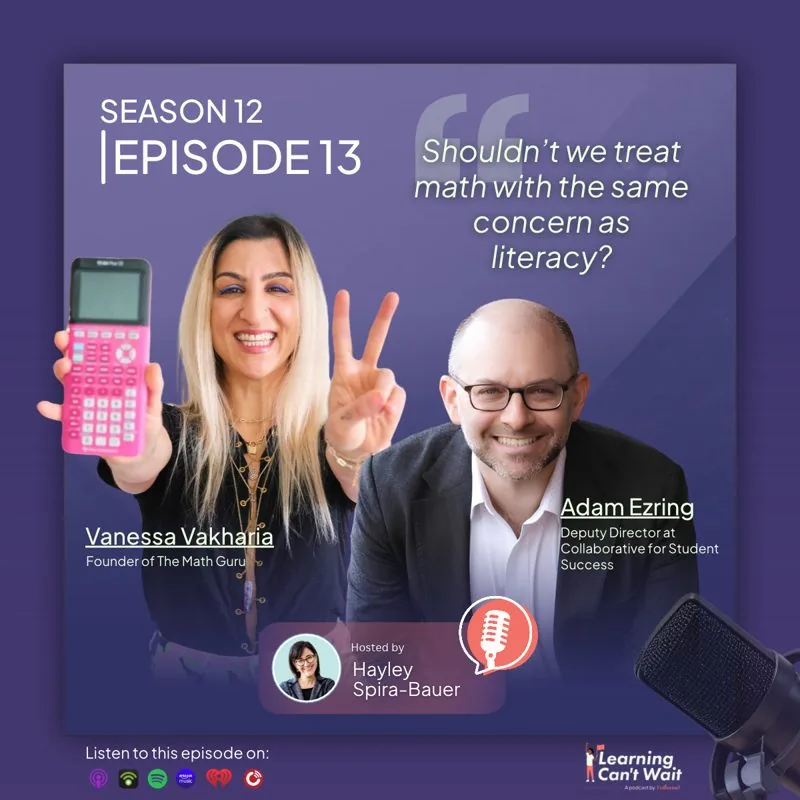 Vanessa Vakharia & Adam Ezring: Family Math, Math Confidence & Learning Through PlayOctober 13, 2026 · Vanessa Vakharia, Adam Ezring
 Dr. Daveda Colbert: Leadership, Belonging & ServiceOctober 6, 2026 · Dr. Daveda Colbert
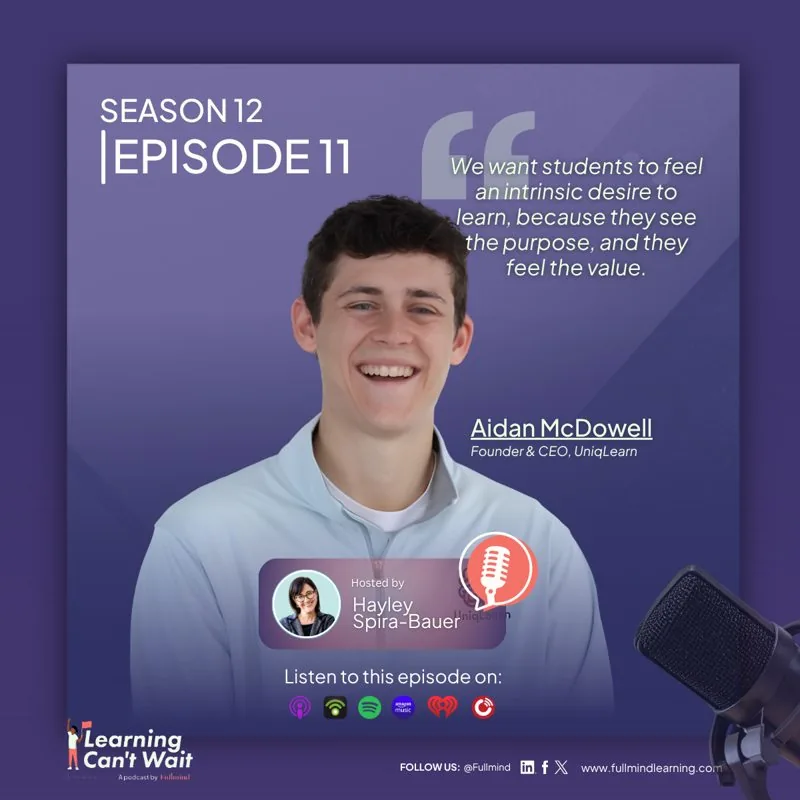 Aidan McDowell: Personalized learning, Student agency & Intrinsic motivationSeptember 29, 2026 · Aidan McDowell
For Education Leaders
Get proven strategies and expert analysis from the host of the Learning Can't Wait podcast, delivered straight to your inbox.







































































How can we help? Let’s connect.
Tell us what you need. It takes about a minute, and you’ll see the next steps right away.
We’ll reach out within one business day
An education consultant talks through your students, schedule and goals.
Get a plan for your district
A plan built around your needs and budget.
Need support? Call 1 (888) 841-7840
Thanks! Our team will reach out within one business day to set up a time that works for you.
Need help sooner? Book a time now
Your one-pagers
Matched to what you told us. They download as one PDF.
Every child deserves the opportunity to access exceptional education.