Connect with the Fullmind Team

For Education Leaders
Get proven strategies and expert analysis from the host of the Learning Can't Wait podcast, delivered straight to your inbox.
Career & Technical Education
Expand Career Pathways Without Staffing Barriers
- Certified CTE teachers with industry experience
- Live instruction aligned to your district’s programs
- Flexible access across schools and campuses
CTE Learning for All: Expanding Career Pathways with Live Teachers

Here's a pop quiz: when you hear "CTE," what comes to mind?
If you pictured a kid getting shuffled off to the automotive shop because regular class "wasn't working out" for them — I get it. That's the old story. It's the one a lot of us grew up with. But it's not the story anymore.
Today's CTE, Career and Technical Education, is one of the most exciting things happening in schools right now. It's kids graduating high school with a diploma and a credential that lets them walk straight into a job, an apprenticeship, or a college program. It's welding. It's nursing. It's cybersecurity. It's a kid in a small town discovering, at 16, exactly what they're good at and exactly how to get paid for it.
But there's a catch: qualified teachers with the necessary industry experience are hard to find.
The Waitlist Nobody Wants
Here's the picture playing out in career tech centers across the country right now: record interest, record enrollment, and waitlists at levels nobody's ever seen. Kids are lining up to get in. Programs simply don't have room for all of them.
Why the sudden surge? Partly, it's a reaction to something else entirely: AI anxiety. While everyone else is nervously wondering what artificial intelligence will do to the job market, CTE has quietly become the counter-story. Welding, electrical work, healthcare, HVAC — these are hands-on, human skills that aren't going anywhere. The New York Times recently pointed to electricians and HVAC techs as an emerging "millionaire class" of skilled tradespeople. A 60 Minutes segment on the U.S. shipbuilding shortage noted that shipyards would happily hire every single trained welder a CTE program could produce, and then some.
So the demand is there. The funding is there too, in more ways than districts often realize — CTE dollars typically break down to roughly 80% local budget, a meaningful federal slice through Perkins funding (which is famously "use it or lose it," so districts are highly motivated to spend it), plus additional state grants and, as of this year, new Workforce Pell Grant eligibility opening doors for adult learners too.
What's missing isn't interest, and it isn't money. It's teachers.
CTE teachers need something most academic teachers don't: real industry experience, on top of a teaching credential. Finding someone who has actually worked as an electrician, a nurse, or a welder — and wants to teach — in your specific town, right now, is genuinely hard. Multiply that shortage across thousands of districts, and you get exactly what we're seeing everywhere: packed waitlists and empty seats that should be full.
The Numbers Don't Lie
Here's the thing about CTE that doesn't get said enough: it's not just a nice-to-have alternative track. The outcomes are, frankly, better.
According to ACTE Online, students who concentrate in CTE graduate high school at a 96% rate — compared to the overall U.S. graduation rate of about 85%. That's an 11-point gap. Rigorous research from the CTE Research Network backs this up further: CTE improves high school outcomes overall, and it increases students' enrollment in two-year college programs without reducing their odds of eventually pursuing a four-year degree. Federal data shows CTE students complete more workforce-aligned postsecondary credentials, and CTE participation is linked to stronger employment outcomes after graduation.
There's also a mindset shift researchers are pointing to that's just as important as the stats. For a long time, American education treated "college for all" as the gold standard — a well-intentioned push that had an unintended side effect: it quietly signaled "trades for none." Career pathways got treated as the backup plan, the tier below the "real" path. But as one CTE leader we deeply respect puts it: nobody retires from college. Everybody retires from a career. College is a credential on the way to somewhere — and so is a CTE pathway. They're not competing tracks. They're both just... career education.
What "Real CTE" Actually Means
We've heard a phrase floating around the CTE world: "CTE light." It's not a compliment. It means recorded videos standing in for a teacher. A course a kid can technically enroll in but nobody's really teaching. Districts have tried it, and honestly, kids can tell the difference. One student put it about as plainly as it gets: a screen "is not a teacher."
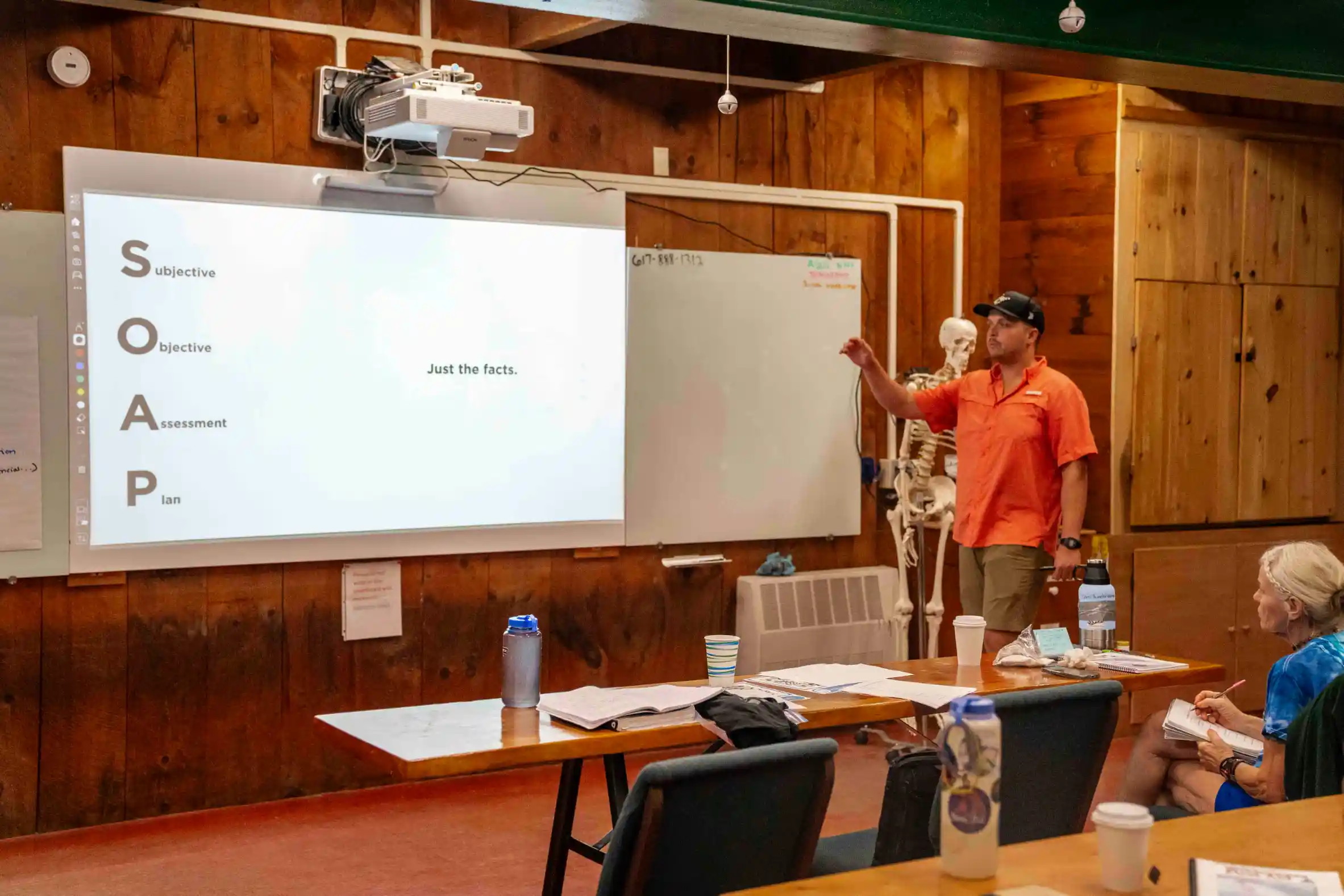
That's exactly the gap Fullmind is stepping into — and it's why we're so energized about this. Our model isn't curriculum-only, and it isn't a recording. It's a real, state-certified teacher, live, in the room (well, on the screen, in the room), teaching real content, building real relationships with real students. Real CTE, real teachers, real results.
We already know this works because we've been quietly doing it. We have supported staffing CTE teachers across districts nationwide. One notable story, through our partnership with Rural School Innovation Zone, students have been earning real academic credit for CTE coursework on the school bus — logging in on the ride to their welding class, making every mile of a long rural commute count toward their future. It's already happening.
"But CTE Has to Be Hands-On"
Fair objection. And here's the honest answer: yes, part of it does. Nobody's suggesting a virtual welding teacher should weld for a student through a screen while nobody supervises the sparks. That's a hard no, every time. A real, safety-trained adult needs to be in that room.
But here's what people forget: every single CTE pathway has a classroom half, not just a hands-on half. A nursing assistant still has to learn how the body works before they touch a patient. An OSHA safety certification — required across trades from construction to manufacturing — is earned at a desk, not on a job site. There is real pedagogy, real instruction, real teaching baked into every pathway that exists. That's the part we're built to deliver, and we do it in partnership with the hands-on instruction already happening locally — not instead of it.
Why This Matters More in Small Towns
Dr. Denise Reading, CEO of FuturePlans, shared recently on the Learning Can’t Wait Podcast: she grew up in one of the poorest corners of rural Alabama. Today, that same town is home to Walmart's distribution operations and a cluster of major employers — because CTE pathways got built there first. Kids got trained, kids got hired, businesses followed, and the whole town's fortunes turned.
Rural communities know that keeping kids close to home means giving them a real, local reason to stay — a credential, a pathway, a job waiting at the other end. One certified teacher, delivered virtually, can now reach students across three campuses that could never have justified a full-time hire on their own. Suddenly, a low-enrollment district isn't stuck choosing between "offer the pathway" and "find someone to teach it." They get to do both.
What Districts Are Actually Telling Us
We didn't just decide this was a good idea and run with it. Our partners have been asking for this exact kind of support for years — a real, credentialed teacher for their CTE programs, minus the impossible task of finding one locally. We've been testing and building out our answer to that ask, and more recently, we've partnered with Dr. Mark Covelle, Executive Director of MBIT and a national voice among CTE leaders, to make sure what we bring to districts is worthy of their time, attention, and trust, and actually solves the challenges keeping them up at night.
That's the real story here. There is no crowded market of live, credentialed, industry-experienced CTE teachers showing up for districts right now. Curriculum companies sell catalogs. Staffing companies mention CTE in passing. Nobody is standing up and saying, "this is deeply important to us, and we do it with real teachers." Fullmind is.
Where We Go From Here
This school year, Fullmind is proud to be the partner that finally says CTE out loud. Every kid deserves a qualified, credentialed, experienced teacher in front of them, whether they're in a city of a million people or a county with one stoplight.
That's what "CTE Learning for All" really means to us: a promise that geography and staffing shortages don't get to decide which students get a future-ready education and which ones don't.
The waitlist or empty classroom doesn't have to be the end of the story. We're just getting started.
Learn how Fullmind can help your district expand its CTE programs.
For Education Leaders
Get proven strategies and expert analysis from the host of the Learning Can't Wait podcast, delivered straight to your inbox.