Connect with the Fullmind Team

For Education Leaders
Get proven strategies and expert analysis from the host of the Learning Can't Wait podcast, delivered straight to your inbox.
Virtual Staffing
Fill Teacher Vacancies in Days
- State-certified experts averaging 15+ years experience
- Fully aligned to your curriculum & standards
- Scalable, cost-effective hybrid solutions
Data That Teaches Back: Lessons From Special Education
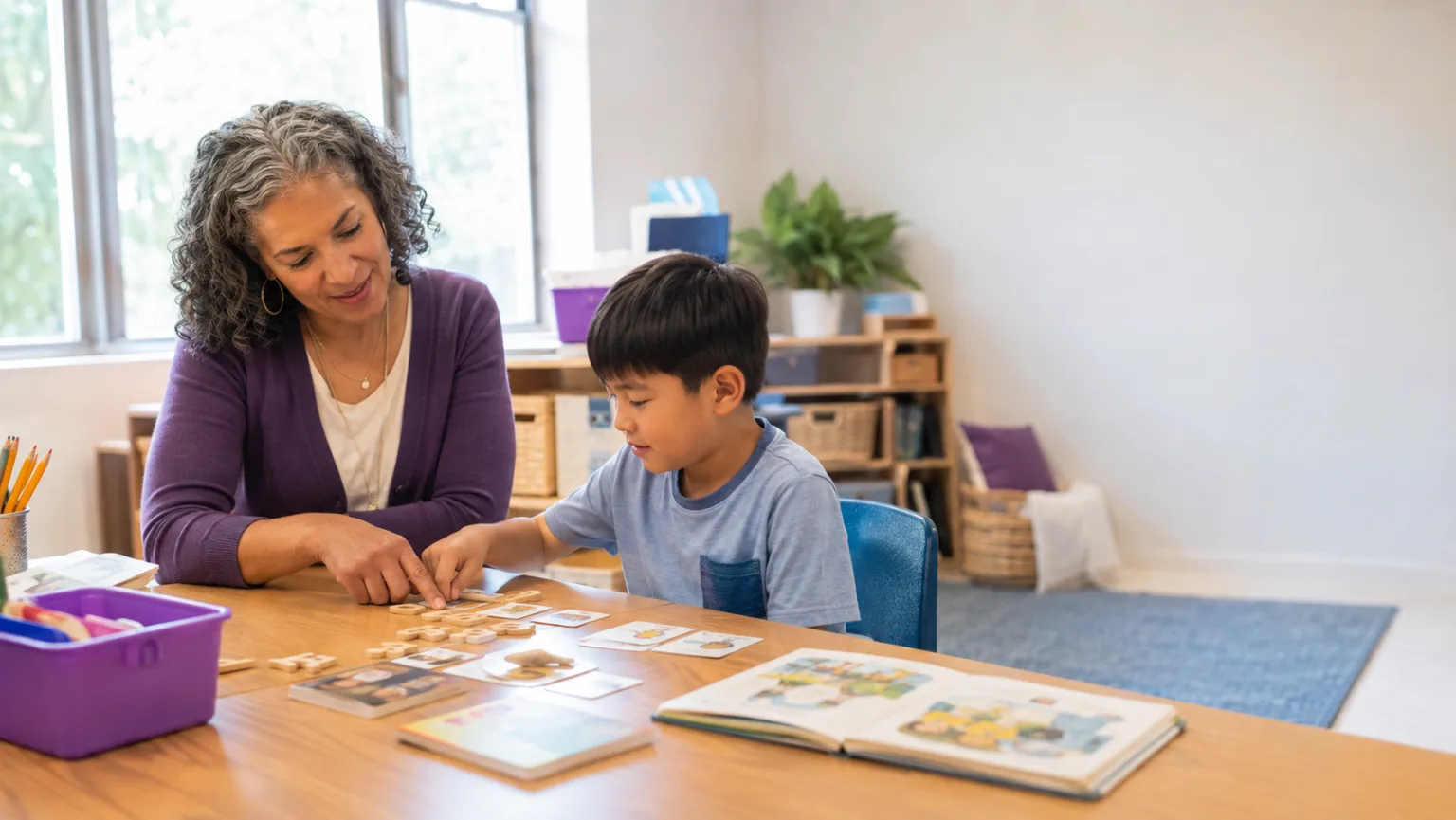
I spent my first 10 years as a teacher. Back then, I didn’t think much about when I collected data, only that I did. In my first year of teaching, my 32 sixth graders were assessed on class participation, teacher-made tests, and yearly standardized tests.
For the next 10 years, as a district administrator and principal, I spent days walking hallways, visiting classrooms, observing teachers, reviewing assessment data, and sitting in on IEP meetings. I reviewed IEPs. On paper, most looked measurable, and progress notes were present.
But in data meetings, I started noticing a pattern: a lot of that data was reconstructed. A teacher would jot a note days later, working from memory, trying to recall whether Jackson needed one prompt or three to complete a task on Tuesday. Multiply that by 20 students, five goals each, and a six-period day, and you get data that’s technically present but functionally soft—and not all that helpful or accurate.
Teachers are doing their best on behalf of students, but the system does not support meaningful, real-time data collection while they are juggling teaching, managing behavior, and hitting weekly IEP deadlines.
Technology today has helped me evolve my beliefs around progress monitoring. When I was in the classroom, timeliness and precision of data were hard to achieve. Now, progress monitoring is about more than compliance.
It’s the difference between instruction and services that truly help a child and instruction and services that might be impactful.
What Averaging Hides
When I retired from the district, I went back to teaching—my first love—this time as a special education teacher with my own caseload. That’s where I saw the cost of imprecise data up close.
Take a student I’ll call Molly. Her monthly progress summary showed slow, steady gains. It looked fine. But logged closer to the moment, the data told a different story: Molly struggled every morning and right after lunch, but was strong in Algebra all period. She made real gains with one paraprofessional but stalled with another. None of that showed up in the monthly average. And those were exactly the details that should have shaped her schedule and her support.
Or take the student who has one great six-and-a-half-hour day where behavior, effort, and learning all line up. Then everything falls apart the next day. Without close, dated data, a teacher may expect a student to perform at that high level consistently. With data, it might reveal a pattern: a change in sleep, meaningful instruction, extra recess, or a substitute paraprofessional.
Precise, close-to-the-moment data does something else, too: it protects teachers. When data collection lags, so does the evidence behind the decisions IEP teams make, leaving special educators defending goals and services with thin documentation. Good data isn’t just better for students. It’s cover for the adults responsible for them.
What I’d Tell My Former Administrator Self
Data collection should not be extra work layered on top of teaching. It’s supposed to be a byproduct of good teaching, captured in the moment. When it isn’t, teachers pay for it twice: once doing the work, and once reconstructing evidence of it later.
Special education runs on trust: trust that a goal reflects a real need, and that progress data reflects a child’s actual trajectory—not a teacher’s best recollection at 4:45 p.m. Timely, precise data is how that trust gets earned, one accurate observation at a time.
Better outcomes, lighter workloads, and effective IEP meetings that develop precise goals supporting each student’s needs all follow from accurate data collection.
That’s the standard I hold data to now, and why I worked with our engineers and product leads to design a state-of-the-art progress monitoring tool for Fullmind. We needed something that lets a teacher:
- Identify where students need extra support to reduce learning gaps.
- Adjust and adapt instruction to meet each student’s individualized and changing needs.
- Increase student engagement by celebrating success and encouraging students to keep learning.
- Easily download a progress monitoring report to prepare for IEP meetings.
I am thrilled to be part of a team that prioritizes this work. Explore Fullmind’s progress monitoring and IEP support.
For Education Leaders
Get proven strategies and expert analysis from the host of the Learning Can't Wait podcast, delivered straight to your inbox.