Connect with the Fullmind Team

For Education Leaders
Get proven strategies and expert analysis from the host of the Learning Can't Wait podcast, delivered straight to your inbox.
CTE Pathways
Offer online CTE courses without a qualified instructor in every building.
Arkansas Is Down 10,000 Students. "You Can't Always Just Reduce a Teacher." The Career Pathways Still Go First.
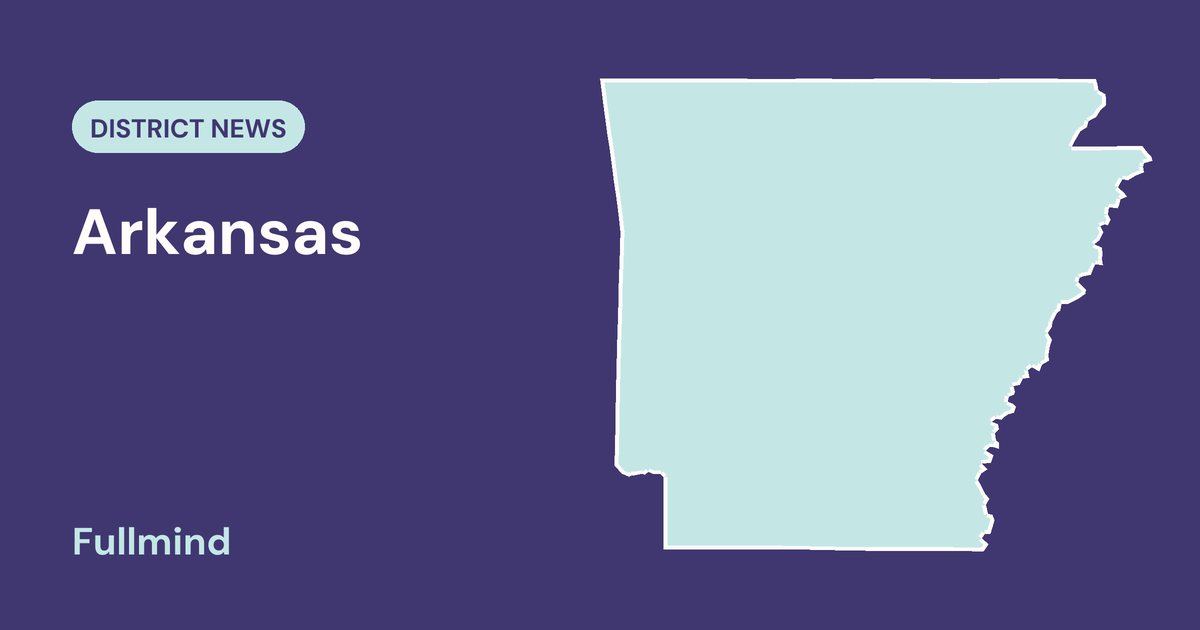
Arkansas public school enrollment has fallen to just over 465,000, its lowest in at least two decades, down nearly 10,000 students in three years, according to Arkansas Department of Education data reported by KUAF. Rogers alone is down almost 600 students since 2023. Superintendents cite housing costs, immigration enforcement and the state's Education Freedom Account program, which pays families about 90% of a public school's per-student funding to leave; the Bentonville superintendent said one neighboring district was shedding 42 to 45 teachers through attrition.
Rogers Superintendent Jeff Perry explained why the math does not work the way a board might hope. "A lot of folks would think, well, if you lost 100 students, you could reduce two or three teachers and that would kind of even out. But the problem is those students don't all go to the same school. They're not all in the same grade." The state's teacher association president added what happens instead: fewer teachers, combined classes, larger rooms.
Our view: Enrollment loss does not arrive as a tidy reduction in one grade; it arrives as a few students fewer in every section, which means the positions a district can actually eliminate are the single-section ones, and those are the orchestra, the second language and the career pathways that make families stay. Some of those courses need a shop and a building. Many need one certified instructor and a room with laptops, and those are one certified person away from staying on the schedule.
What happened
From KUAF's March 3 report:
- Statewide enrollment just over 465,000, the lowest in at least 20 years, down from above 475,000 in 2023; Rogers down nearly 600 since 2023; Bentonville up about 370.
- Causes named by superintendents: housing costs squeezing out families (about 60% of Rogers students qualify for free or reduced lunch), immigration enforcement reducing new enrollment in a district that is 52% Hispanic, and the EFA voucher program, which the state estimated at $277 million for 2025–26 before lawmakers added $32 million in January. About 19% of voucher recipients since 2023 moved from public schools.
- Districts receive roughly $8,000 per student; state law provides a partial, two-year buffer for declining enrollment. One neighboring district was reducing 42 to 45 teachers through attrition.
- Perry on why losses do not map to positions. The AEA president: fewer teachers means larger classes, not smaller ones.
Enrollment loss does not arrive as a tidy reduction in one grade; it arrives as a few students fewer in every section, which means the positions a district can actually eliminate are the single-section ones, and those are the orchestra, the second language and the career pathways that make families stay.
What it means for districts (analysis)
Everything above is attributable to the reporters' and the officials'. From here the interpretation is Fullmind's, and we will say where we stand.
Sort the pathways before the budget does. A district that separates shop-dependent from instructor-dependent pathways can protect, or even expand, the second group while deferring capital on the first.
Enrollment decline makes the catalog an enrollment strategy. Families choosing between a district school and a voucher are choosing partly on what is offered. A district losing students to vouchers that cuts the courses families chose accelerates the loss; one that keeps them has a reason for families to stay.
The single-section problem is the same one. In a district with fewer students, each career course is one section. Carrying it as a permanent position is expensive. Carrying it as variable capacity, scoped to a section and a semester, is the third option.
The shop is a building. The pathway is a person. Welding, automotive and construction need equipment and a bay. Business, IT, health-science fundamentals and education pathways need a certified instructor, and that instructor can teach a home high school's one section live.
Practical considerations for district leaders
- Build the pathway map: which career clusters can your students reach, and which require a shop versus a classroom.
- Split any CTE cut proposal into shop-dependent and instructor-dependent lines. Treat the first as capital, the second as staffing.
- Before cutting a pathway, name the alternative: dropped, combined, or delivered live by a certified instructor for one section. Tell families which.
- List every single-section course with fewer than 20 students, school by school; that is the inventory the next cut reaches.
- Give intervention a fixed schedule and a monthly progress report; blocks with evidence survive the next budget round.
Where Fullmind fits
A Rogers superintendent explained why losing students does not let a district simply drop a teacher: the students leave from different schools and grades. The same arithmetic applies in reverse to the courses a district wants to keep. A career pathway or an upper-level elective with one small section is exactly the kind of line Fullmind, now home to Elevate K-12, can carry live from a certified educator, with a facilitator in the room, for one section and one semester.
- CTE Pathways opens business, IT, health-science and other instructor-dependent clusters without a shop; Fullmind's rural CTE work with RSIZ is on the Impact & Research page as "Reimagining Rural Career Education."
- LIVE Staffing keeps the orchestra teacher's third section or the single physics class on the schedule after a round of attrition; in one partner district, the site reports, Fullmind students were 20% more likely to earn a C or better than peers.
- High Dosage Tutoring rebuilds intervention capacity when fewer teachers mean bigger classes; in a large southern district the site reports tutored students raised scores faster than their peers.
What this does not do is reverse enrollment loss or fund a district. It keeps the catalog intact while the count settles.
Run the numbers with us
If your district is cutting through attrition and worried about the pathways and electives that go with the retirements, send us the list of courses now carried by a single teacher. We will tell you which ones a live certified instructor can hold, at what cost per section, and which ones genuinely need the building. Schedule a consultation with Fullmind.
Sources: KUAF, "As Arkansas schools lose students, districts brace for cuts," March 3, 2026 (opened in full); Fullmind Impact & Research. Figures and quotes are the sources' own; the analysis section reflects Fullmind's interpretation.
Podcast
From the Learning Can’t Wait podcast
 Hosted by Hayley Spira-Bauer, Chief Academic Officer at Fullmind
Newest episodes
 Vanessa Vakharia & Adam Ezring: Family Math, Math Confidence & Learning Through PlayOctober 13, 2026 · Vanessa Vakharia, Adam Ezring
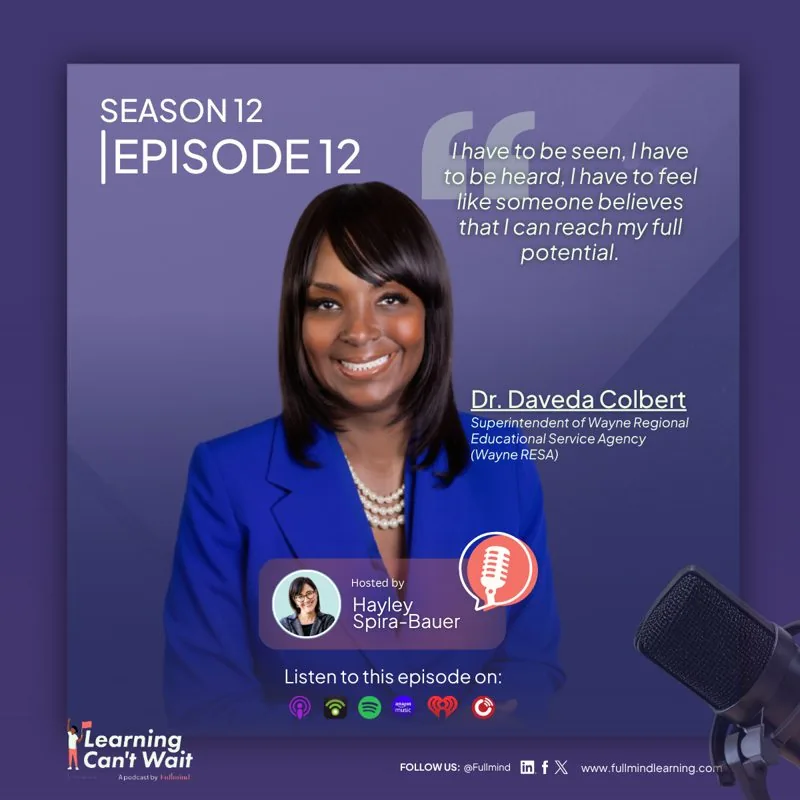 Dr. Daveda Colbert: Leadership, Belonging & ServiceOctober 6, 2026 · Dr. Daveda Colbert
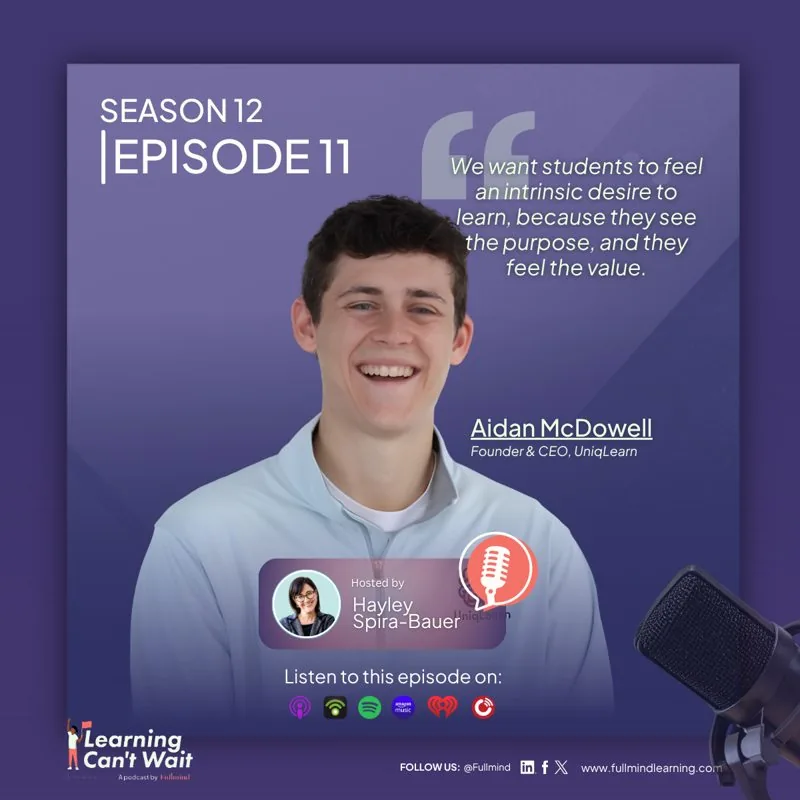 Aidan McDowell: Personalized learning, Student agency & Intrinsic motivationSeptember 29, 2026 · Aidan McDowell
For Education Leaders
Get proven strategies and expert analysis from the host of the Learning Can't Wait podcast, delivered straight to your inbox.



































































How can we help? Let’s connect.
Tell us what you need. It takes about a minute, and you’ll see the next steps right away.
We’ll reach out within one business day
An education consultant talks through your students, schedule and goals.
Get a plan for your district
A plan built around your needs and budget.
Need support? Call 1 (888) 841-7840
Thanks! Our team will reach out within one business day to set up a time that works for you.
Need help sooner? Book a time now
Your one-pagers
Matched to what you told us. They download as one PDF.
Every child deserves the opportunity to access exceptional education.