
For Education Leaders
Get proven strategies and expert analysis from the host of the Learning Can't Wait podcast, delivered straight to your inbox.
LIVE Staffing
LIVE Staffing fills hard-to-staff roles with certified educators who teach live, synchronously, on your schedule, with your curriculum or ours.
Nevada's Emergency Order Fixes Clark County's Budget. It Doesn't Fix the Schedule.

The Clark County School District announced it would cut $51.6 million from its operating budget this fall: $29.1 million from individual schools and $22.5 million from central administration through an across-the-board 2.5% reduction, according to FOX5. The cause was an enrollment drop of more than 10,400 students, larger than the district had projected, which under Nevada's headcount funding translated to more than $100 million in lost state revenue. The district had already cut about $50 million in the spring in anticipation of a smaller decline.
Ten days later, Governor Joe Lombardo signed an emergency regulation allowing districts losing funding to enrollment decline to be funded at the figures approved in the 2025 session, per The Nevada Independent. The district is separately seeking a 2027 bill to base fall budgets on the prior year's count or a three-year average, whichever is higher, so that mid-year cuts stop.
Our view: both moves are sensible, and neither reaches the classroom that was reorganized. An emergency order can restore a dollar figure. It cannot un-surplus a teacher who was moved, un-combine two sections that were merged, or restore an elective that was dropped when a school's budget was due on a Friday in September. Clark County's fall is the clearest demonstration in the country that enrollment risk is not a forecasting problem to be legislated away. It is a question of which part of a district's instructional capacity should be permanent and which part should be variable.
What happened
From district statements and Las Vegas reporting:
- Enrollment fell to 270,975 this August from 281,521 a year earlier and 297,833 in 2022, per district data reported by FOX5. The graduating senior class was 24,601; the incoming kindergarten class is 16,126. UNLV's economic research center notes below-average local birth rates and slower in-migration.
- The fall decline cost more than $100 million in state revenue, district officials said, on top of roughly $50 million in reductions made last spring, more than $20 million of that from central administration.
- Personnel costs ran higher than planned: after 10% raises across bargaining units over two years, the district kept more veteran teachers and hired 67% fewer first-year educators, raising the average salary used in school budgets. Licensed vacancies fell to 170 in August, a 98.92% fill rate; about 160 open licensed positions remain where surplused staff can be reassigned.
- Principals had until a Friday in mid-September to submit revised school budgets. Employees described being surplused from their schools and reassigned to open positions elsewhere (News 3, Sept 24).
- The governor's emergency regulation funds districts at previously approved figures while the state works on a long-term fix.
Both moves are sensible, and neither reaches the classroom that was reorganized.
What it means for districts (analysis)
Up to this point the words are the district's, the state's and reporters'. From here on they are ours, and we will commit to a view.
The order restores revenue, not decisions. By the time the regulation was signed, school budgets had been submitted and staff had been moved. Money arriving after the master schedule has been rebuilt does not rebuild it. The students who lost a section in September will see the benefit, if at all, in a January schedule change, which is its own disruption.
Prior-year funding moves the problem; it does not remove it. Funding on last year's count or a three-year average, as the district proposes, ends the September scramble. It also means a district losing 10,000 students a year is funded for students it does not have, until the average catches up. That is a bridge, and a reasonable one. It is not a plan for what the district's staffing looks like when the average catches up.
A 40,000-student decline is a capacity-model question. A district that commits every section to a permanent position each spring will reorganize schools every fall for the rest of the decade, order or no order. The alternative is to decide, campus by campus, which sections are core and permanent and which are the marginal layer, the single-section electives and intervention blocks that should be bought a semester at a time and expanded or contracted without surplusing anyone.
Honesty about what this does not fix. Variable capacity does not restore central-office positions or address birth rates. It addresses one thing: the courses and intervention blocks that disappear when a campus loses a position mid-year, because that is the layer a district can design to flex.
Practical considerations for district leaders
- Audit what the September reorganization actually changed at each school: sections combined, electives dropped, intervention blocks removed. That list, not the dollar figure, is the cost of the miss.
- Inventory the bubble courses: one section, under 20 students, by building.
- Separate the core schedule from the variable layer in the staffing plan itself, so the spring commitment of permanent positions matches the floor, not the hope.
- Give intervention a fixed schedule and a monthly progress report; blocks with evidence survive the next budget round.
- Treat the proposed three-year-average funding as the runway it is, and use the runway to change how capacity is bought, not just when it is counted.
Where Fullmind fits
Clark County is at a 98.92% fill rate with 170 licensed vacancies and about 160 open positions it hopes to fill with displaced staff. Fullmind, now home to Elevate K-12, is for the sections that do not resolve in that shuffle: a Nevada-certified educator teaches live on the school's bell schedule, with a facilitator in the room, for the semester, and the arrangement ends when the count settles.
- LIVE Staffing holds a single-section course through a mid-year cut without a surplus notice; in one partner district, 44.7% of Fullmind students earned a C or above, compared with 25.1% of their peers.
- High Dosage Tutoring keeps intervention on the schedule at a school that just lost $29 million in site budgets; Yuba City, California grew its program from 24 to 194 students in a year.
- Credit Recovery keeps seniors whose schedules changed in September on track for June, with a live teacher rather than a software license.
The union president called it "the surplus merry-go-round." A variable layer that expands and contracts with the count is how a district gets off it.
Run the numbers with us
Send us the sections at risk in your revised campus budgets. We will price each one three ways, facilitator included, and show which a live model would hold through the semester without a reassignment. Schedule a consultation with Fullmind.
Sources: FOX5 Las Vegas, September 14, 2026 (opened in full); News 3 (KSNV), September 24, 2026; The Nevada Independent (via Ely Times), September 30, 2026; Fullmind Impact & Research and Yuba City case study. Figures are the district's, the state's and reporters' own; the analysis section reflects Fullmind's interpretation.
Podcast
From the Learning Can’t Wait podcast
 Hosted by Hayley Spira-Bauer, Chief Academic Officer at Fullmind
Newest episodes
 Vanessa Vakharia & Adam Ezring: Family Math, Math Confidence & Learning Through PlayOctober 13, 2026 · Vanessa Vakharia, Adam Ezring
 Dr. Daveda Colbert: Leadership, Belonging & ServiceOctober 6, 2026 · Dr. Daveda Colbert
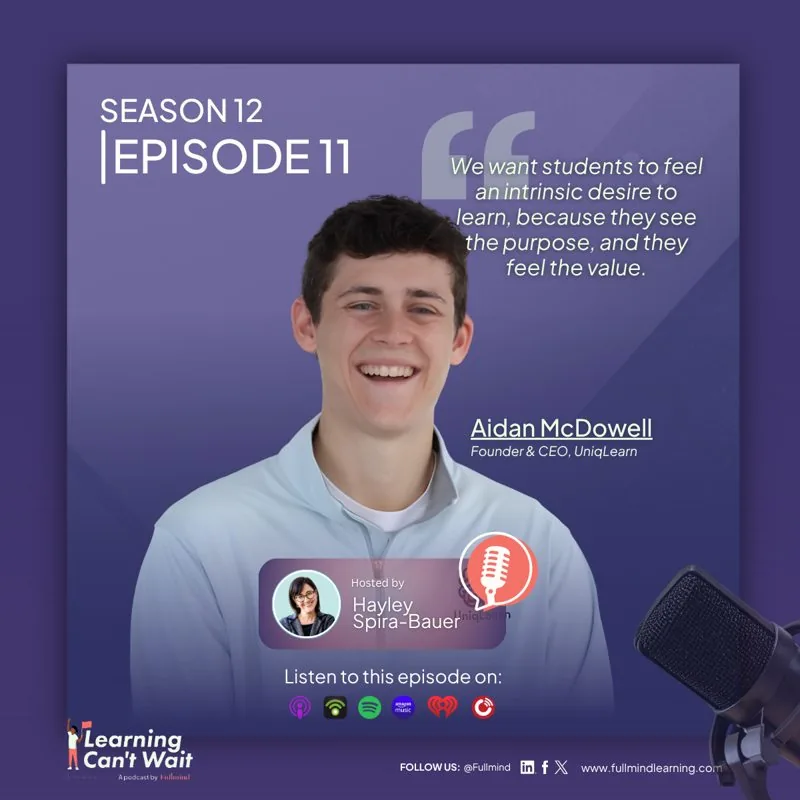 Aidan McDowell: Personalized learning, Student agency & Intrinsic motivationSeptember 29, 2026 · Aidan McDowell
For Education Leaders
Get proven strategies and expert analysis from the host of the Learning Can't Wait podcast, delivered straight to your inbox.






































































How can we help? Let’s connect.
Tell us what you need. It takes about a minute, and you’ll see the next steps right away.
We’ll reach out within one business day
An education consultant talks through your students, schedule and goals.
Get a plan for your district
A plan built around your needs and budget.
Need support? Call 1 (888) 841-7840
Thanks! We’ll confirm your meeting time by email within one business day.
Your one-pagers
Matched to what you told us. They download as one PDF.
Every child deserves the opportunity to access exceptional education.