
For Education Leaders
Get proven strategies and expert analysis from the host of the Learning Can't Wait podcast, delivered straight to your inbox.
SWD Services & IEP Fulfillment
Our virtual special education services give students with disabilities live, small-group instruction from special education–certified educators, aligned to each student's IEP goals, with progress reporting your team can document.
Knox County Added 1,300 Students With IEPs While Total Enrollment Fell. Its New Plan Moves Special Education Into General Classrooms. That Takes More Certified Adults, Not Fewer.

Knox County Schools released a five-year special education strategic plan in September. The Performance, Accountability, Collaboration and Transitions plan, P.A.C.T., aims to move the district away from compliance-driven, pull-out special education and toward services fully embedded in general education, according to WATE. The numbers behind it: over the last five school years, students with IEPs increased by more than 1,300 while total enrollment fell by 1,159. The district serves just under 12,000 students with special education services; 2025–26 is the pilot and planning year.
The plan follows years of pressure. A 2023 task force found systemic problems originating above the school level; a later outside report credited progress while noting "ongoing workload challenges for special education staff despite reduced vacancies."
Our view: Knox County is choosing the harder, better model, and the model has a cost the plan's language does not name. Pull-out special education concentrates students with one certified teacher. Inclusion distributes them across general classrooms, which means co-teaching, consultation and in-class support in many rooms at once. Done well, inclusion needs more certified special educators and related-service providers per student, not fewer, at the same time the IEP population is growing against a shrinking total.
What happened
- September: KCS released the P.A.C.T. five-year plan; 2025–26 is the pilot year. Goals include actionable IEPs driving year-over-year improvement, ELA growth on par with typically developing peers, and families as full partners.
- IEP counts rose by more than 1,300 over five years while total enrollment declined by 1,159; about 12,000 students receive special education services.
- Background: a 2023 task force with five recommendations adopted by board resolution; a 2025 outside report noting workload challenges despite reduced vacancies.
Knox County is choosing the harder, better model, and the model has a cost the plan's language does not name.
What it means for districts (analysis)
The reporting above is the district's and reporters'. What we make of it is ours, and we will state it plainly.
Inclusion multiplies the rooms a special educator must be in. One resource room becomes support across six general classrooms. The certified minutes required do not shrink; they spread. A plan that embeds special education without adding certified capacity asks general educators to carry what they are not licensed for.
Growth against decline is the hardest staffing curve. A district adding 1,300 IEPs while losing 1,159 students is funded on a falling count and obligated on a rising one. Every budget cycle tightens that vise.
Workload "despite reduced vacancies" is caseload. The outside report's phrasing is precise: filling positions did not relieve workload, because caseloads grew faster than hires. Retention follows caseload.
Pilot the staffing model, not just the service model. The pilot year is the moment to test how certified special education and related-service minutes reach six classrooms instead of one, including live, certified support delivered into general classrooms on the school's schedule where the district cannot hire enough co-teachers.
Practical considerations for district leaders
- Model the certified-minute requirement of the inclusion plan school by school: how many special educators and related-service providers does full embedding require at current caseloads?
- Put a number on the gap: undelivered IEP minutes per student per week for each open position.
- Separate the service-model change from the staffing plan in board reporting; the first is a philosophy, the second is a headcount.
- Where co-teachers cannot be hired, deliver certified support into the general classroom live, with the in-room teacher and aide as partners.
- Student-level decisions stay local: eligibility, IEP content, and communication with parents belong to district staff.
Where Fullmind fits
Knox County's plan moves special education into general classrooms, which multiplies the rooms a certified special educator must reach. Fullmind, now home to Elevate K-12, delivers certified special education support into those general-education settings live, on the school's schedule, with the classroom teacher and aide as partners, in the rooms the district cannot staff with a co-teacher.
- SWD Services & IEP Fulfillment supplies the certified minutes an inclusion model spreads across six classrooms. Special education instruction is delivered by state-certified special educators, whom Fullmind draws from more than 3,000 educators.
- Related Service Providers cover the speech-language, OT/PT, school psychology and counseling caseloads that grow with 1,300 more IEPs.
- LIVE Staffing backfills a general-education section when a certified teacher becomes a co-teacher; in one partner district, 44.7% of Fullmind students earned a C or above, compared with 25.1% of their peers.
Our published results cover live staffing, math growth and remote instruction so far, and special education results are in progress. Right now we can show the model, the certification, and the minutes delivered on the district's schedule. A pilot year is the right time to test how certified minutes reach six rooms instead of one, and this is a way to run that test.
Run the numbers with us
Send us one school's inclusion staffing plan: classrooms, caseloads, co-teachers you have and co-teachers you could not hire. We will show what certified live support into those rooms delivers per week and what it costs. Schedule a consultation with Fullmind.
Sources: WATE, "Knox County Schools unveils plan to improve special education," September 2026, and the KCS Special Education Strategic Plan; TN Firefly (task force and outside report coverage). Data are the sources' own; the opinion in the analysis section is Fullmind's.
Podcast
From the Learning Can’t Wait podcast
 Hosted by Hayley Spira-Bauer, Chief Academic Officer at Fullmind
Newest episodes
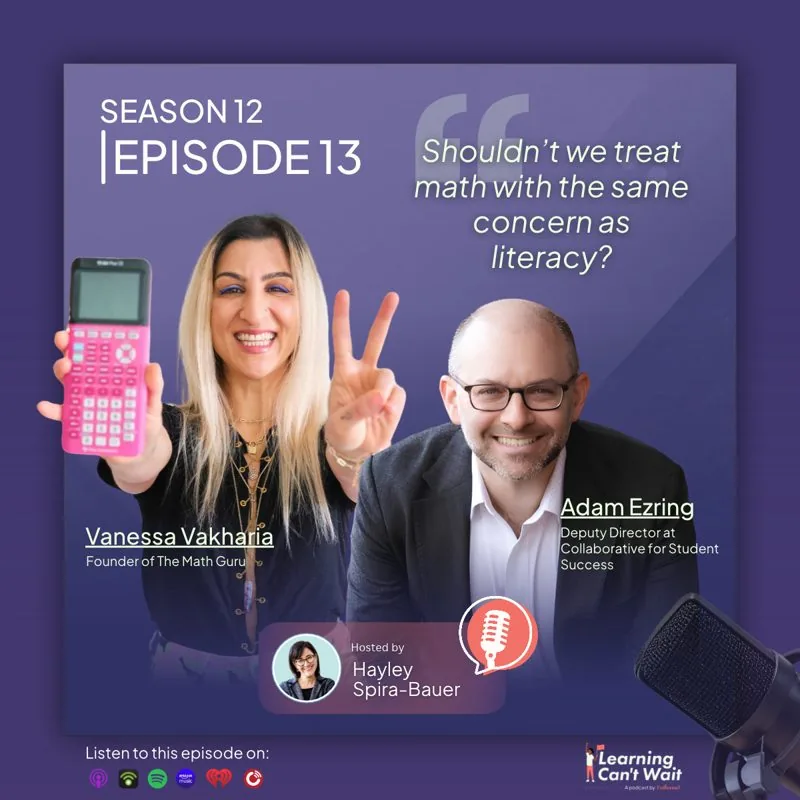 Vanessa Vakharia & Adam Ezring: Family Math, Math Confidence & Learning Through PlayOctober 13, 2026 · Vanessa Vakharia, Adam Ezring
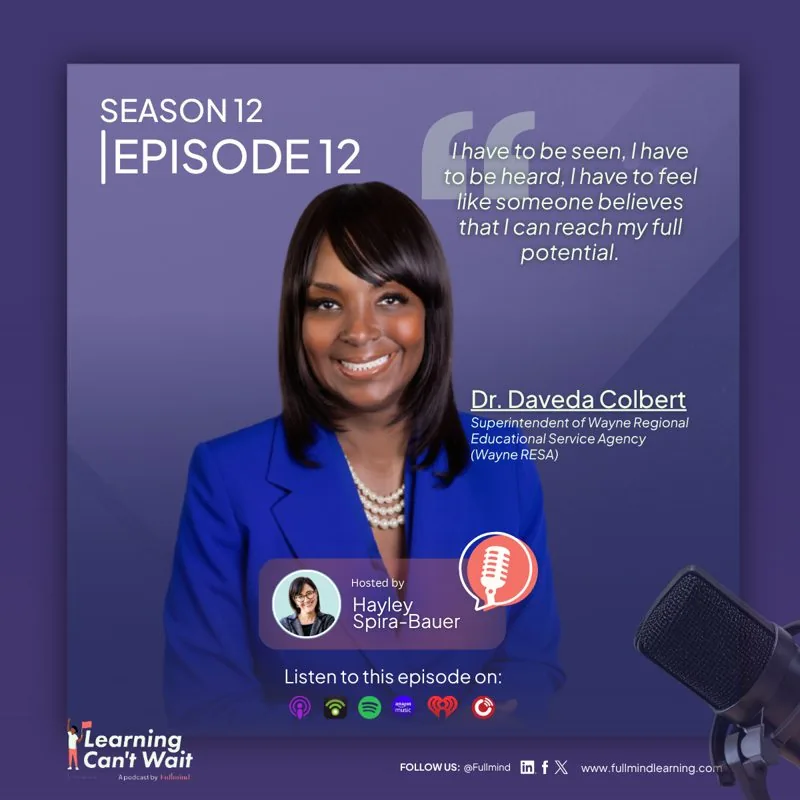 Dr. Daveda Colbert: Leadership, Belonging & ServiceOctober 6, 2026 · Dr. Daveda Colbert
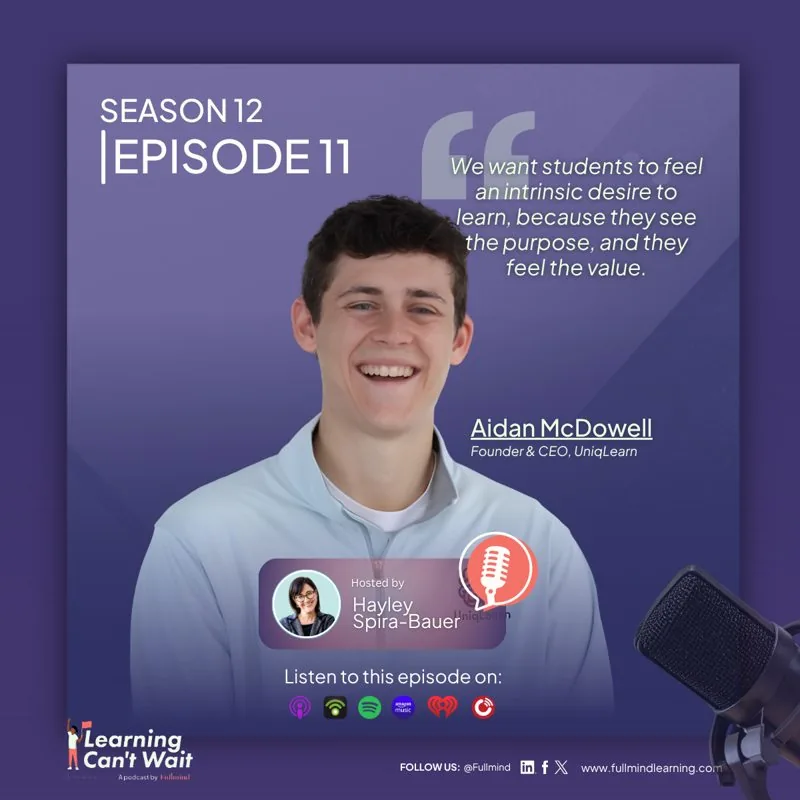 Aidan McDowell: Personalized learning, Student agency & Intrinsic motivationSeptember 29, 2026 · Aidan McDowell
For Education Leaders
Get proven strategies and expert analysis from the host of the Learning Can't Wait podcast, delivered straight to your inbox.




















































How can we help? Let’s connect.
Tell us what you need. It takes about a minute, and you’ll see the next steps right away.
We’ll reach out within one business day
An education consultant talks through your students, schedule and goals.
Get a plan for your district
A plan built around your needs and budget.
Need support? Call 1 (888) 841-7840
Thanks! We’ll confirm your meeting time by email within one business day.
Your one-pagers
Matched to what you told us. They download as one PDF.
Every child deserves the opportunity to access exceptional education.