
For Education Leaders
Get proven strategies and expert analysis from the host of the Learning Can't Wait podcast, delivered straight to your inbox.
LIVE Staffing
LIVE Staffing fills hard-to-staff roles with certified educators who teach live, synchronously, on your schedule, with your curriculum or ours.
Louisiana Added Staff While Losing Students. The State Wants $170 Million Back. Districts Should Know Which Positions Are Teaching and Which Are Not.

Louisiana's public school workforce grew about 6% over the past decade while enrollment fell about 7%, according to federal data cited by nola.com and summarized by Heartlander News. The governor has argued that non-instructional hiring has risen "at the detriment of our teachers" and called for a reduction of nearly $170 million in state school funding. St. Landry Parish, with nearly 12,000 students, faces a deficit of almost $8 million as families have fewer children, move away, or choose charters and homeschool. Statewide enrollment is down about 5% since 2020.
The same reporting notes the other side: the additional educators lowered class sizes, a priority for teachers and parents, and likely contributed to Louisiana's rebound from pandemic learning loss and recent reading gains. And the Learning Policy Institute's 2026 scan found Louisiana with the highest share of not-fully-certified teachers in the country, about 35%, roughly 17,131 positions.
Our view: the staffing-versus-enrollment argument is going to be settled at the Capitol in dollars, and districts should be ready with a better unit of analysis than headcount. The question is not whether Louisiana has too many adults. It is how many of them are certified and in front of students in the subject they are licensed for, and the answer, by the state's own numbers, is not enough. A district that can show its board and its legislators exactly which positions are instructional, which are certified, and which classrooms are covered by someone teaching out of field has a defense of the classroom layer that a headcount cannot provide.
What happened
- Federal data 2014–2024: Louisiana's school workforce up about 6%, enrollment down about 7% (nola.com, via Heartlander).
- The governor's position: non-instructional staffing has grown at teachers' expense; a proposed cut of nearly $170 million in state school funding.
- St. Landry Parish: nearly 12,000 students; deficit of almost $8 million; causes cited: fewer children, out-migration, charters, homeschool.
- Counterpoint in the same reporting: smaller classes and improved reading results followed the staffing growth.
- LPI 2026: about 35% of Louisiana teachers not fully certified for their assignments (~17,131), the highest share nationally; 736 reported vacancies in 2024–25.
The staffing-versus-enrollment argument is going to be settled at the Capitol in dollars, and districts should be ready with a better unit of analysis than headcount.
What it means for districts (analysis)
The reporting above is the state's, the reporters' and the researchers'. What we make of it is ours, and we will state it plainly.
Headcount is the wrong unit. A district can have more adults than a decade ago and fewer certified teachers in the right rooms. Louisiana's 35% figure says the second condition is common. A $170 million cut applied to headcount will hit the certified and the uncertified alike.
Protect the layer that moves outcomes. Louisiana's reading gains are real and recent. The positions that produced them are instructional and certified. A district should be able to name them and defend them line by line.
Out-of-field coverage is the hidden vacancy. A classroom staffed by a teacher without the license for the subject is counted as staffed. For students, especially those on IEPs, it is instruction not delivered as required.
Make the variable layer visible. The single-section courses and intervention blocks that a cut will reach can be carried a semester at a time by certified educators, so the district can absorb a funding reduction without reducing certified instruction.
Practical considerations for district leaders
- Classify every position: instructional or not; certified for assignment or not. Present that to the board before the Legislature acts.
- Count certified instructional hours per student in out-of-field sections; that is where outcomes slip.
- Identify every course that exists as one small section; those are the lines a budget reduction finds first.
- Measure the vacancy in minutes: for every student on an uncovered caseload, how many IEP minutes went undelivered this week.
- Put a certified educator on out-of-field and open sections now, with the in-room adult as facilitator.
Where Fullmind fits
Louisiana's argument is about headcount; the number that matters is certified instruction in the right room, and 35% of the state's teachers are not certified for theirs. Fullmind, now home to Elevate K-12, puts a certified teacher on the sections a district covers out of field, live, on the school's schedule, with the in-room adult as facilitator.
- LIVE Staffing covers a math, science or special education section assigned out of field; in one partner district, 44.7% of Fullmind students earned a C or above, compared with 25.1% of their peers.
- High Dosage Tutoring protects the intervention that produced Louisiana's reading gains; in a large southern district the site reports tutored Fullmind students raised scores faster than peers.
- SWD Services & IEP Fulfillment delivers IEP minutes where the special education room is staffed by a provisional assignment. Fullmind assigns state-certified special educators to this work, drawn from a network of more than 3,000 educators.
A $170 million debate will be settled in Baton Rouge. Whether a St. Landry classroom has a certified teacher in it this semester can be settled by the district.
Run the numbers with us
Send us your sections staffed out of certification, by school and subject. We will show how many certified instructional hours a live model adds per student and what it costs, so you have a classroom-level answer to a headcount-level argument. Schedule a consultation with Fullmind.
Sources: Heartlander News summarizing nola.com reporting, June 18, 2026; Learning Policy Institute 2026 scan; Fullmind Impact & Research. The cited outlets and agencies own the facts; Fullmind owns the argument in the analysis section.
Podcast
From the Learning Can’t Wait podcast
 Hosted by Hayley Spira-Bauer, Chief Academic Officer at Fullmind
Newest episodes
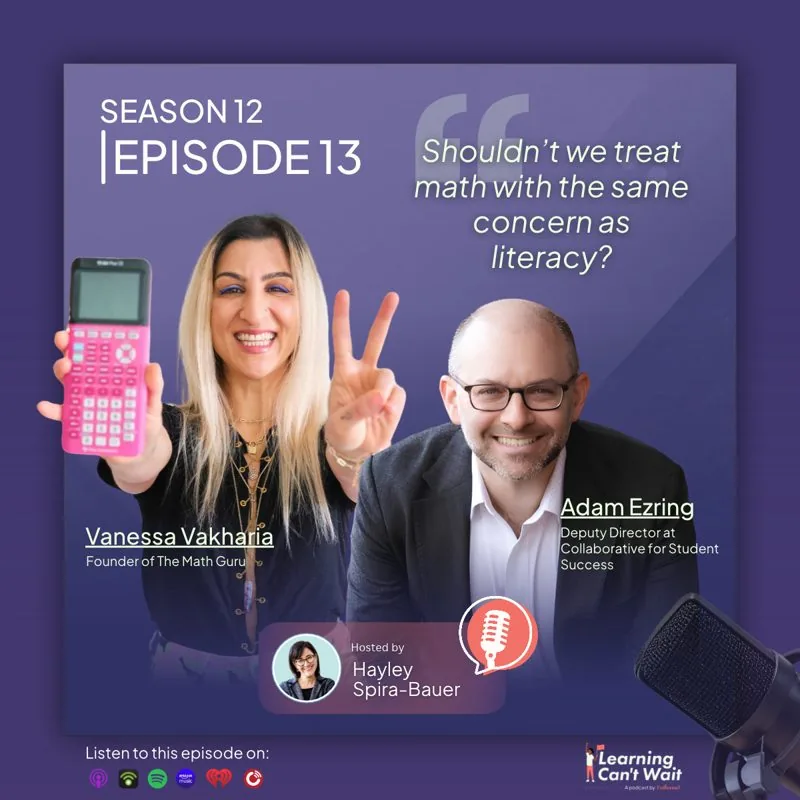 Vanessa Vakharia & Adam Ezring: Family Math, Math Confidence & Learning Through PlayOctober 13, 2026 · Vanessa Vakharia, Adam Ezring
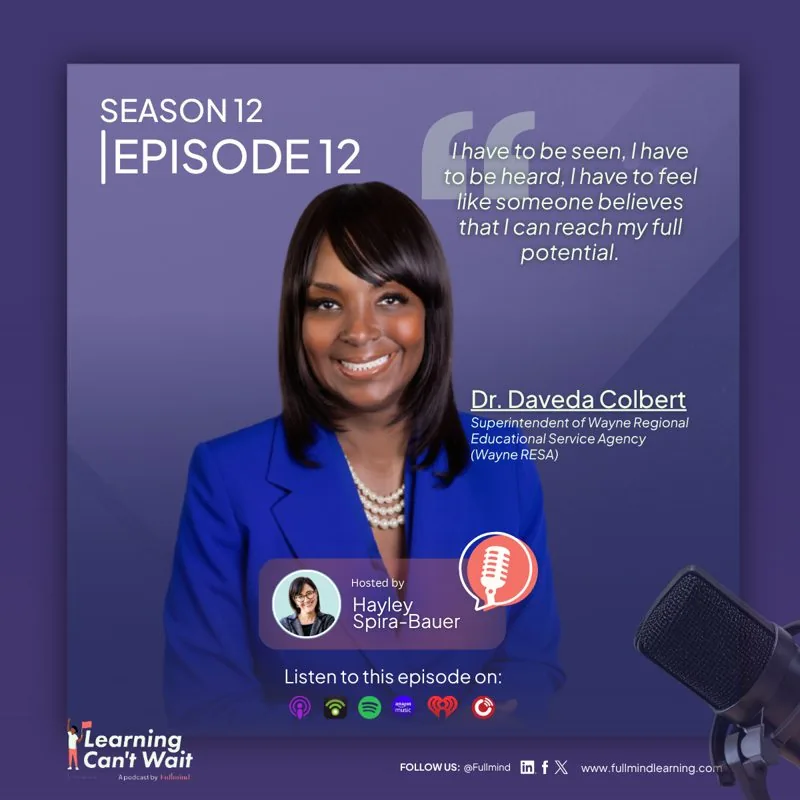 Dr. Daveda Colbert: Leadership, Belonging & ServiceOctober 6, 2026 · Dr. Daveda Colbert
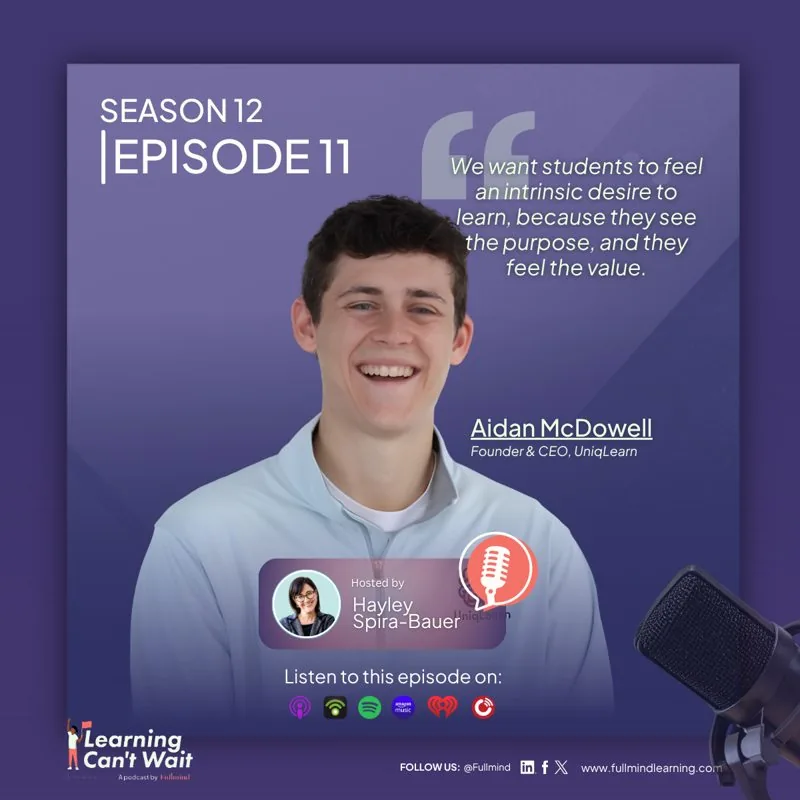 Aidan McDowell: Personalized learning, Student agency & Intrinsic motivationSeptember 29, 2026 · Aidan McDowell
For Education Leaders
Get proven strategies and expert analysis from the host of the Learning Can't Wait podcast, delivered straight to your inbox.



















































































How can we help? Let’s connect.
Tell us what you need. It takes about a minute, and you’ll see the next steps right away.
We’ll reach out within one business day
An education consultant talks through your students, schedule and goals.
Get a plan for your district
A plan built around your needs and budget.
Need support? Call 1 (888) 841-7840
Thanks! We’ll confirm your meeting time by email within one business day.
Your one-pagers
Matched to what you told us. They download as one PDF.
Every child deserves the opportunity to access exceptional education.