
For Education Leaders
Get proven strategies and expert analysis from the host of the Learning Can't Wait podcast, delivered straight to your inbox.
SWD Services & IEP Fulfillment
Our virtual special education services give students with disabilities live, small-group instruction from special education–certified educators, aligned to each student's IEP goals, with progress reporting your team can document.
Maine's Special Education Shortage Is Now Federal Paperwork. The Classroom in Aroostook County Is Still Open.
On September 2, the Maine Department of Education filed its annual Teacher Shortage Areas report for the 2026–27 school year. The designation is a federal requirement; it lets teachers working in a designated area qualify for student-loan deferment and for the service obligations attached to federal teaching grants. Among the PreK-12 areas Maine designated: Teacher of Students with Disabilities.
The context has been building for two years. The Legislature raised the minimum teacher salary toward $50,000 this spring, citing the shortage.
Our view: a shortage designation is the right administrative step and a weak instrument. It rewards special educators who already have a job with loan relief; it does not create a candidate for the district in Aroostook or Washington County that has posted the job since June. Maine's special education problem is a supply problem in a state where the supply is thin and the distances are long, and the districts paying the most for it are the ones sending students to private placements because they cannot staff the classroom that would keep them home.
What happened
- Maine DOE's 2026–27 shortage report, filed September 2, lists Teacher of Students with Disabilities among the state's designated PreK-12 shortage areas, making teachers in that area eligible for federal loan deferment and TEACH Grant obligation fulfillment.
- The Legislature's 2026 supplemental budget raised the minimum teacher salary toward $50,000.
A shortage designation is the right administrative step and a weak instrument.
What it means for districts (analysis)
The account above is the department's and reporters'. The position below is ours.
The designation describes the problem; it does not staff it. Loan relief changes the economics for teachers who are already in Maine classrooms. The district with an open position is waiting for an applicant, and the designation does not generate one.
Outplacement is the shadow price of the vacancy. A Maine district that cannot staff an in-district program pays private tuition instead, often six figures per student. The vacancy is not a saving; it is the reason the tuition line grows. Every certified special educator a district can put in front of its own students is a placement it does not have to buy.
Rural distance makes the supply problem permanent. Maine's special educators cluster where its population does. Districts three hours from Portland cannot recruit against it, and the salary floor, while right, narrows a gap it cannot close.
Deliver the certified teacher to the building. The answer for a district with a program, students and no applicant is live, certified special education instruction on the school's own schedule, with an ed tech in the room as facilitator. That keeps the student home, delivers the IEP minutes, and takes the private placement off the table.
Practical considerations for district leaders
- For every open special education position, count undelivered IEP minutes by student, weekly, and the private placements the vacancy is forcing.
- Put the tuition line and the vacancy list side by side in the board presentation; they explain each other.
- Put a certified special educator on the instruction now, with the ed tech as facilitator, while the posting stays open.
- Use the shortage designation in recruiting materials; it is a real benefit for the candidate who does apply.
- Retain eligibility, IEP team decisions and parent communication in district, regardless of how instruction is delivered.
Where Fullmind fits
A Maine district that cannot staff its own resource room buys a private placement instead. Fullmind, now home to Elevate K-12, puts the certified special educator in the district's own program, live, on its schedule, with an ed tech in the room, so the student stays home and the tuition line stops growing.
- SWD Services & IEP Fulfillment delivers the in-district program a district has the students for but not the staff. Instruction is delivered by a state-certified special educator, one of more than 3,000 educators Fullmind draws from.
- Related Service Providers put speech-language, OT/PT, school psychology and counseling on the schedule in Aroostook or Washington County without a three-hour commute.
- LIVE Staffing covers the core sections a 12-teacher faculty is stretching across; Fullmind's remote Alaska brief found 5.5 points of test-score gain per additional instructional hour.
The results we have published so far are in live staffing, math growth and remote instruction; special education results are still in progress. What we can point to today is the model, the certification, and the minutes delivered on the district's schedule. In Maine the comparison that matters is the one Meriden, Connecticut published: in-district delivery against outplacement.
Run the numbers with us
Send us one student you are paying private tuition for and the in-district caseload you could serve with one more certified teacher. We will put the placement cost next to a live certified model for the year and tell you plainly which is cheaper. Schedule a consultation with Fullmind.
Sources: Maine Department of Education, Teacher Shortage Areas 2026–2027, September 2, 2026; Maine Senate release on the 2026 supplemental budget, April 21, 2026. Everything quantitative is as the sources reported it; the analysis reflects Fullmind's position.
Related: For Remote Districts, the Question Isn't Virtual or In-Person. It's Hours.
Podcast
From the Learning Can’t Wait podcast
 Hosted by Hayley Spira-Bauer, Chief Academic Officer at Fullmind
Newest episodes
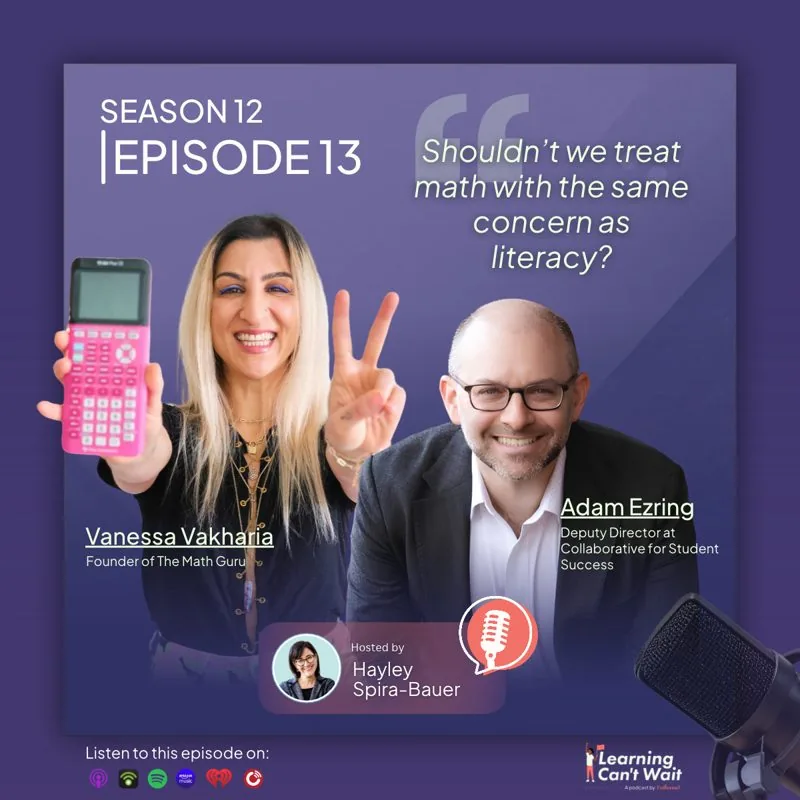 Vanessa Vakharia & Adam Ezring: Family Math, Math Confidence & Learning Through PlayOctober 13, 2026 · Vanessa Vakharia, Adam Ezring
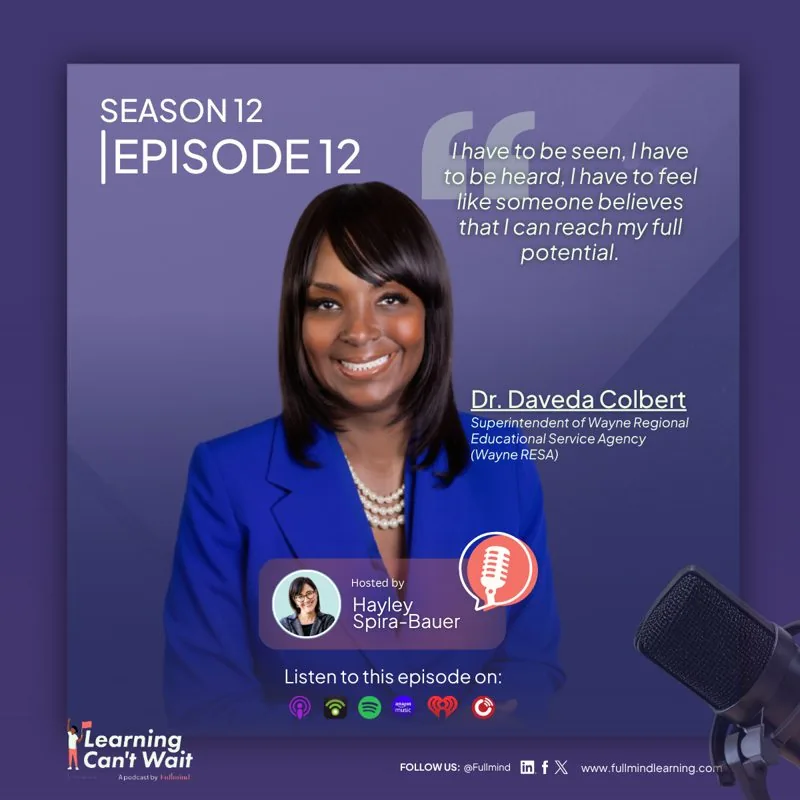 Dr. Daveda Colbert: Leadership, Belonging & ServiceOctober 6, 2026 · Dr. Daveda Colbert
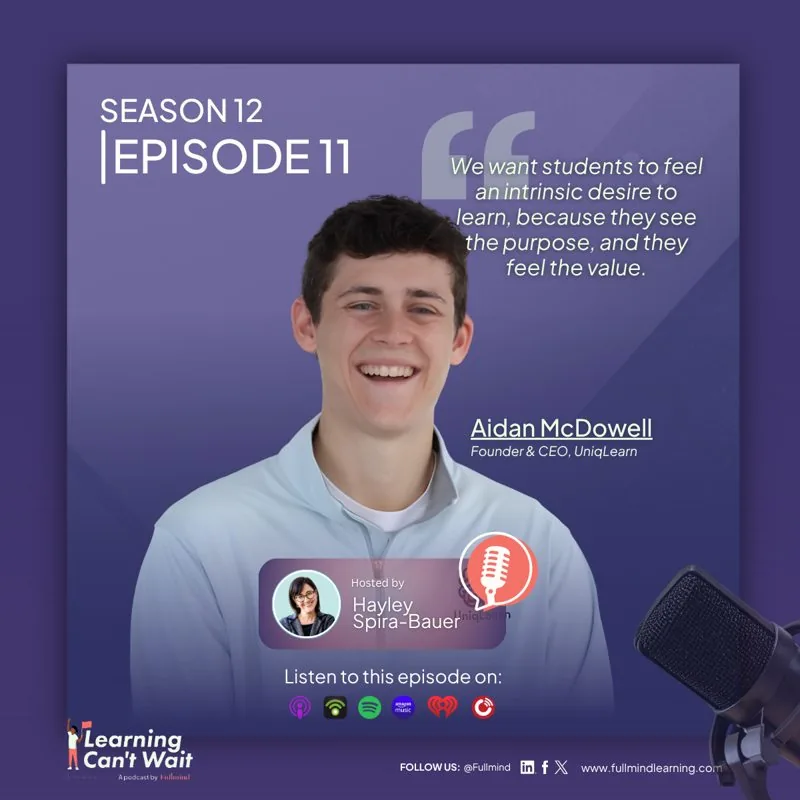 Aidan McDowell: Personalized learning, Student agency & Intrinsic motivationSeptember 29, 2026 · Aidan McDowell
For Education Leaders
Get proven strategies and expert analysis from the host of the Learning Can't Wait podcast, delivered straight to your inbox.
























































How can we help? Let’s connect.
Tell us what you need. It takes about a minute, and you’ll see the next steps right away.
We’ll reach out within one business day
An education consultant talks through your students, schedule and goals.
Get a plan for your district
A plan built around your needs and budget.
Need support? Call 1 (888) 841-7840
Thanks! We’ll confirm your meeting time by email within one business day.
Your one-pagers
Matched to what you told us. They download as one PDF.
Every child deserves the opportunity to access exceptional education.