
For Education Leaders
Get proven strategies and expert analysis from the host of the Learning Can't Wait podcast, delivered straight to your inbox.
SWD Services & IEP Fulfillment
Our virtual special education services give students with disabilities live, small-group instruction from special education–certified educators, aligned to each student's IEP goals, with progress reporting your team can document.
Oklahoma Fills Classrooms With Emergency Certificates. The State's Own Data Says 59% of Those Teachers Are Gone in Four Years.

Oklahoma's Office of Educational Quality and Accountability published a workforce analysis this year that quantifies what a decade of emergency certification has done to the state's teaching force. From 2016 to 2025–26, the share of Oklahoma teachers holding a standard certificate fell from 92.8% to 87.8%, while provisional and emergency certificates rose from 7.2% to 12.2% of the workforce, according to OEQA. At the start of 2025–26, fewer than half of first-year teachers, 45.5%, entered with a standard certificate. Another 453 adjunct teachers were in classrooms, 247 of them in pre-K through elementary.
Then the persistence numbers. After the first year, 90% of standard-certified teachers in the cohort remained, versus 80% of emergency-certified. By year four: 65% of standard-certified teachers, 51% of provisionally certified, and 41% of emergency-certified.
One more fact from the state school boards association's surveys: special education teaching positions are the hardest to fill, many districts have reported special education vacancies for multiple years, and special education teachers are not eligible for emergency certification.
Our view: Oklahoma's emergency certificate is a treadmill, and the state's own numbers describe the speed. A district that fills a room with an emergency-certified teacher has a 41% chance of still having that teacher in four years, which means it will fill the same room two or three times by the time a standard-certified hire would have reached tenure. And in the one category where the treadmill is not even available, special education, the vacancy simply stays open. For the students on those caseloads, the question is not which certificate is in the room; it is whether any certified instruction is reaching them.
What happened
- OEQA (2026): standard-certificate share down from 92.8% to 87.8% since 2016; provisional/emergency up to 12.2%; 45.5% of first-year teachers in 2025–26 held a standard certificate; 453 adjuncts; four-year persistence 65% (standard), 51% (provisional), 41% (emergency).
- KTUL (January 2026): about 11% of Oklahoma educators hold emergency certifications; a state legislator proposed funding mentoring for them through SB 1432 and the University of Oklahoma's FAST program.
- OSSBA surveys: special education is the hardest position to fill, with multi-year vacancies common; special education teachers cannot be emergency certified; districts have eliminated hundreds of positions and raised class sizes to cope in prior years.
- LPI 2026: Oklahoma does not publish a vacancy count; 11,163 teachers not fully certified, about one in four.
Oklahoma's emergency certificate is a treadmill, and the state's own numbers describe the speed.
What it means for districts (analysis)
Nothing above is Fullmind's claim; it is the state's and reporters'. What follows is, and we stand behind it.
Emergency certification buys one year at a time. The persistence curve means the room is refilled, retrained and re-mentored on a cycle the district does not control. Each turnover is a semester of a new adult learning the job.
Special education has no emergency valve. The treadmill at least covers a general-education room. A special education caseload with no licensed applicant stays uncovered, and the IEP minutes accrue as compensatory obligation.
One in four out of field is the real vacancy rate. With no published vacancy count, 11,163 not fully certified is the best measure of how much certified instruction Oklahoma students are not getting.
Put certified instruction in the room by a route that persists. A certified educator delivering live on the school's schedule, with the emergency-certified teacher or adjunct as the in-room facilitator, gives students certified instruction now and gives the emergency hire a mentor in the room every day.
Practical considerations for district leaders
- Count certified instructional hours per student by section, not certificates per building. That number tracks outcomes.
- For every special education position open past sixty days, count undelivered IEP minutes by student, weekly; emergency certification is not an option here.
- Model the four-year refill cost of each emergency hire against a certified live model with the emergency hire as facilitator.
- Keep mentoring emergency-certified teachers; persistence rises with support. Pair it with certified instruction in the room.
- No outside model should touch eligibility, IEP team authority or the parent relationship; those stay with the district.
Where Fullmind fits
Oklahoma's special education rooms cannot use the emergency certificate that fills every other room, and 59% of emergency-certified teachers are gone within four years. Fullmind, now home to Elevate K-12, puts a certified teacher in both kinds of room by a route that persists: live instruction on the school's schedule, with the emergency-certified teacher or adjunct in the room as facilitator and daily mentor-in-practice.
- SWD Services & IEP Fulfillment covers the special education caseload no emergency certificate can. Each special education teacher Fullmind assigns is state-certified in special education, drawn from more than 3,000 educators.
- LIVE Staffing pairs a certified educator with an emergency hire in a core section; in one partner district, 44.7% of Fullmind students earned a C or above, compared with 25.1% of their peers.
- High Dosage Tutoring rebuilds intervention in districts that raised class sizes to cope; in a large southern district the site reports tutored students outpaced peers' score growth.
To date, Fullmind's published results are in live staffing, math growth and remote instruction; special education results are in progress. The model, the certification, and the minutes delivered on the district's schedule are what we can show today. The treadmill refills a room every few years; this keeps certified instruction in it between refills.
Run the numbers with us
Send us your special education caseloads without a licensed teacher and the core sections on their second emergency hire. We will show what a certified live model delivers per week in each and what it costs against the refill cycle. Schedule a consultation with Fullmind.
Sources: Oklahoma Office of Educational Quality and Accountability, "Understanding Oklahoma's Teacher Workforce: Entry Pathways and Workforce Trends" (2026); KTUL, January 29, 2026; Oklahoma State School Boards Association surveys; Learning Policy Institute 2026 scan. Facts are attributed to the sources above; the interpretation in the analysis section belongs to Fullmind.
Podcast
From the Learning Can’t Wait podcast
 Hosted by Hayley Spira-Bauer, Chief Academic Officer at Fullmind
Newest episodes
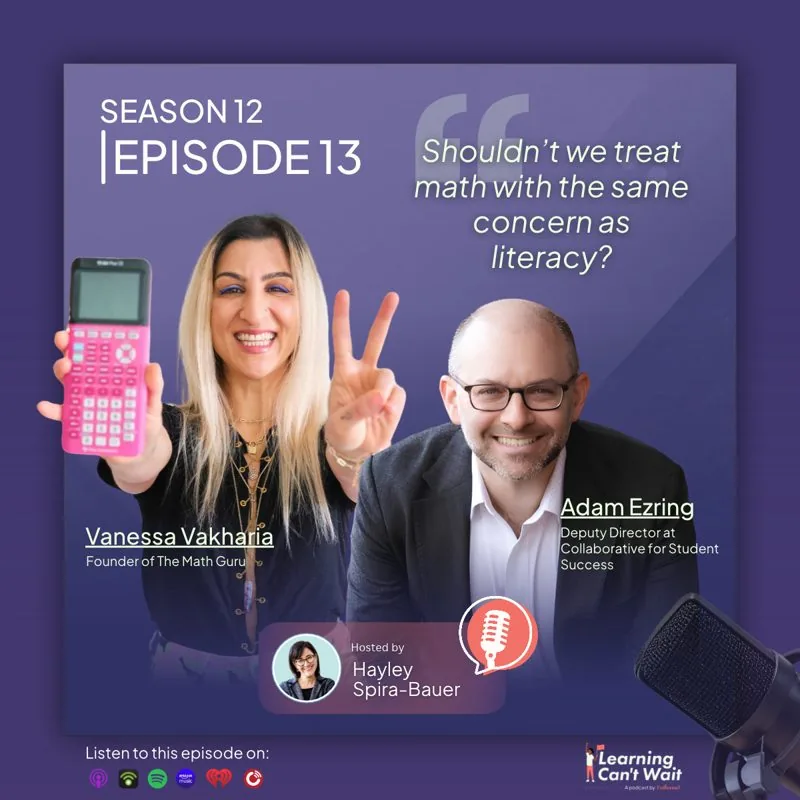 Vanessa Vakharia & Adam Ezring: Family Math, Math Confidence & Learning Through PlayOctober 13, 2026 · Vanessa Vakharia, Adam Ezring
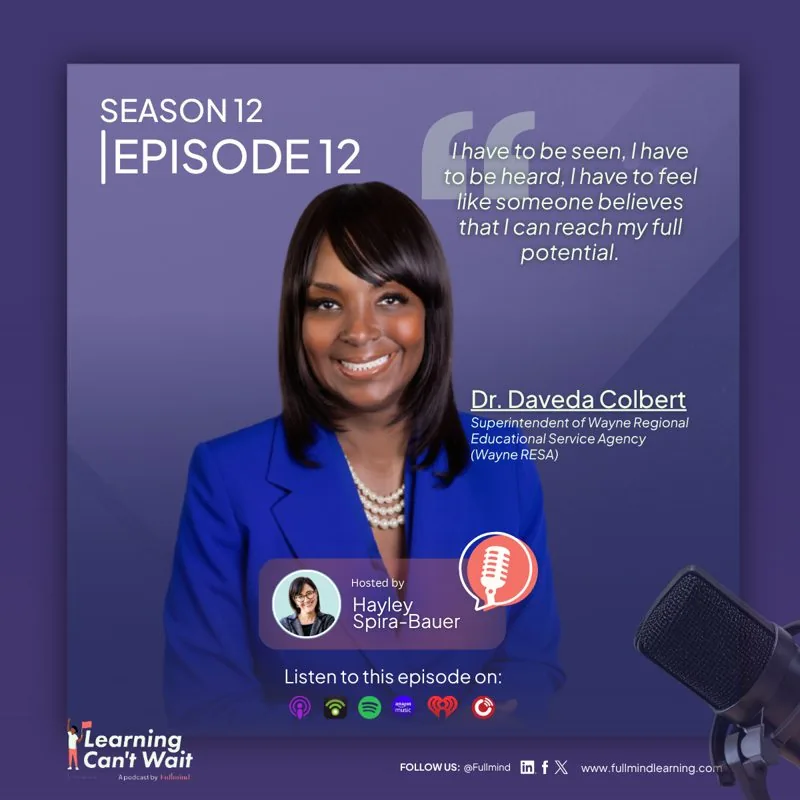 Dr. Daveda Colbert: Leadership, Belonging & ServiceOctober 6, 2026 · Dr. Daveda Colbert
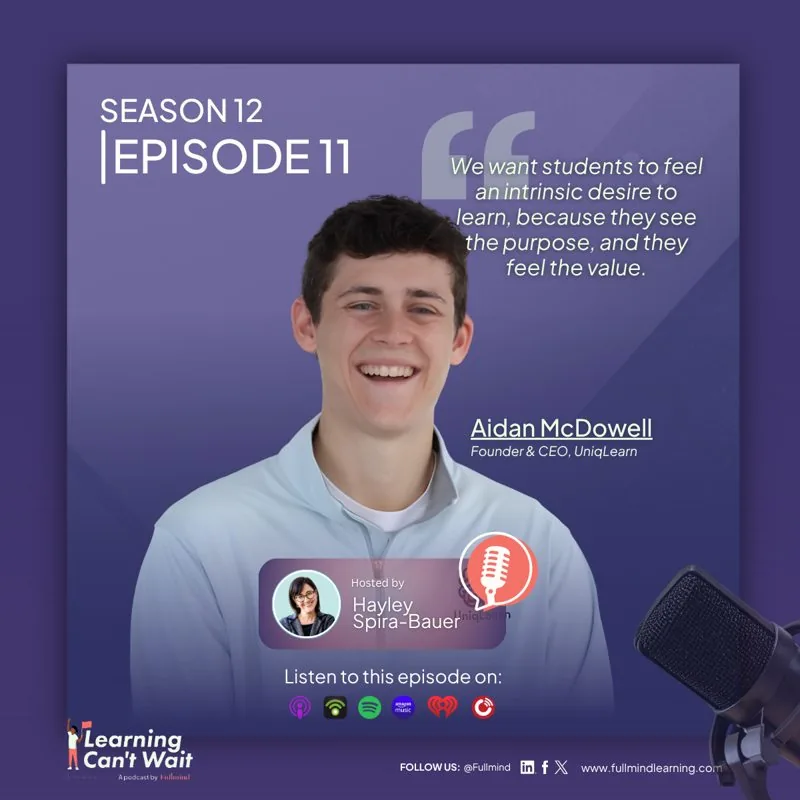 Aidan McDowell: Personalized learning, Student agency & Intrinsic motivationSeptember 29, 2026 · Aidan McDowell
For Education Leaders
Get proven strategies and expert analysis from the host of the Learning Can't Wait podcast, delivered straight to your inbox.





































































How can we help? Let’s connect.
Tell us what you need. It takes about a minute, and you’ll see the next steps right away.
We’ll reach out within one business day
An education consultant talks through your students, schedule and goals.
Get a plan for your district
A plan built around your needs and budget.
Need support? Call 1 (888) 841-7840
Thanks! We’ll confirm your meeting time by email within one business day.
Your one-pagers
Matched to what you told us. They download as one PDF.
Every child deserves the opportunity to access exceptional education.