
For Education Leaders
Get proven strategies and expert analysis from the host of the Learning Can't Wait podcast, delivered straight to your inbox.
High Dosage Tutoring
Fullmind's high-dosage tutoring means frequent small-group sessions with the same certified tutor, built into the school day.
How to Teach Decoding to Older Struggling Readers

Older struggling readers learn to decode the same way younger readers do: through explicit, systematic instruction in how sounds, spellings and word parts work, aimed at the long, multisyllabic words they meet in grade-level text. What makes it work in grades 4 through 8 is dosage: short, frequent small-group sessions with a trained teacher, protected on the schedule, not a pull-out that happens when time allows.
That second part is where most schools get stuck. The science of reading push of the last decade has mostly been a K-3 effort, and training, materials and state policy have followed. A student who missed foundational decoding in 2nd grade and is now in 6th grade often has no one whose job it is to teach it.
Our view: the conversation about older readers keeps landing on curriculum, as if the right program were the whole answer. Programs matter. But what decides whether a 6th grader catches up is whether they get enough minutes of the right instruction from someone trained to give it. A strong program delivered once every other week is close to no program at all.
What happened
On October 21, K-12 Dive published an explainer on where the science of reading movement stands. It noted that only 31% of 4th graders scored proficient on the 2024 NAEP reading test, and that in an April Fordham Institute survey of 1,244 K-3 teachers, only about half said their reading instruction reflects the science of reading. It also flagged a second gap: implementation and teacher support have centered on the early grades, even though older struggling readers need decoding instruction too, and their teachers may never have been trained to provide it.
The conversation about older readers keeps landing on curriculum, as if the right program were the whole answer.
What it means for teachers
The gap is built into the system, not into the teacher. A 2024 RAND survey, reported by K-12 Dive, found that 92% of K-1 teachers had included phonics in at least three of their last five lessons, compared with 61% of grade 2-5 teachers and 25% of grade 6-8 teachers. A separate RAND and AERDF study found that 40% of grade 3-8 teachers held misconceptions about how students develop word-reading skills. That says more about how teachers were prepared than about the teachers themselves. Most upper-grade teachers were trained to teach literature and content, and training dollars have gone to the early grades.
Big-word decoding is its own skill. An older struggling reader usually knows letter sounds. What they can't do reliably is break a word like "photosynthesis" or "unconstitutional" into parts they can read and understand. Researchers at AERDF have argued that early phonics skills don't automatically carry over to the more complex words of upper-grade texts, so older students need direct instruction in syllable patterns and word parts such as prefixes, suffixes and roots.
Comprehension work won't fix a decoding problem. The AERDF and ETS research, drawing on assessment data from more than 167,000 students, describes a decoding threshold. Students below it struggle to comprehend grade-level text, and comprehension instruction alone is unlikely to move them. A student who spends all their energy getting through the words has little left for meaning, so placing them in a comprehension strategy group treats the wrong problem.
Dosage decides whether intervention is real. Intervention scheduled "when time allows" tends not to happen. Assemblies, testing windows and absences eat it. Short sessions several times a week, at fixed times, with the same small group, give a student enough practice to make decoding automatic instead of effortful.
Older students notice when material feels babyish. A 13-year-old will check out of a first-grade decodable book. Practicing on vocabulary from their own science and social studies classes keeps the work age-appropriate and pays off the same day in another class.
What to do now
- Screen for decoding, not just comprehension. For any student below benchmark in reading, add a quick check of word reading, such as an oral reading fluency probe or a multisyllabic word list. If accuracy is low, the problem is decoding, and the intervention should be too.
- Teach big words explicitly. Spend a few minutes each session on syllable division and the most common prefixes, suffixes and roots, then apply them right away to words from this week's content-area reading.
- Go short and frequent. Several 20- to 30-minute sessions a week, in a group of three or four, will do more than one long weekly block. Put the sessions on the master schedule so they can't be quietly bumped.
- Keep the materials age-appropriate. Use decodable or controlled texts written for older readers, along with content-area passages, rather than primary-grade books.
- Recheck every few weeks and move students on. Track word-reading accuracy and fluency regularly. When a student crosses the threshold, shift their time toward fluency and comprehension, and make room for the next student who needs the group.
If you've never been trained in upper-grade decoding instruction, say so to your literacy lead. Based on the research above, you are far from alone, and naming the gap is how training budgets start to move.
Where Fullmind fits
Fullmind's High Dosage Tutoring brings live, certified educators to small groups of students several times a week, aligned to the school's own curriculum, so a school can give older readers protected intervention minutes without pulling its own teachers away from their classes.
In one Utah district, Fullmind provided small-group reading and math tutoring to students in grades 4 through 8, twice a week for a total of 60 minutes, over 14 weeks. Participating students exceeded expected reading growth by 72% and raised Lexile scores by an average of 58 points from winter to spring, according to Fullmind's DIA District research brief. That program wasn't built as a decoding intervention, so we read it as evidence that consistent, scheduled minutes move reading outcomes, not as proof of a specific method.
Bring this to your intervention team
If you teach older students who are stuck on the words, share this with your literacy lead or principal. District teams can talk with Fullmind about what a scheduled small-group model would look like for their grades 4 to 8 readers, and where it would and wouldn't fit.
Bottom line
Older struggling readers can still learn to decode, and most of what works is already known. The hard part is giving them enough minutes of explicit, age-appropriate instruction from someone trained to deliver it. Find the students, protect the time, and check whether it's working.
Sources: K-12 Dive, "Inside the science of reading approach to literacy instruction," October 21, 2026 (reporting NAEP 2024 and Fordham Institute, April 2026); K-12 Dive, "Older struggling readers can benefit from explicit decoding instruction," October 30, 2024 (reporting RAND, April 2024, and AERDF and ETS, October 2024); RAND and AERDF, grade 3-8 teacher knowledge study, August 2024; Fullmind, DIA District research brief (2022-23 school year). Figures are the researchers' own; the analysis reflects Fullmind's interpretation.
Podcast
From the Learning Can’t Wait podcast
 Hosted by Hayley Spira-Bauer, Chief Academic Officer at Fullmind
Newest episodes
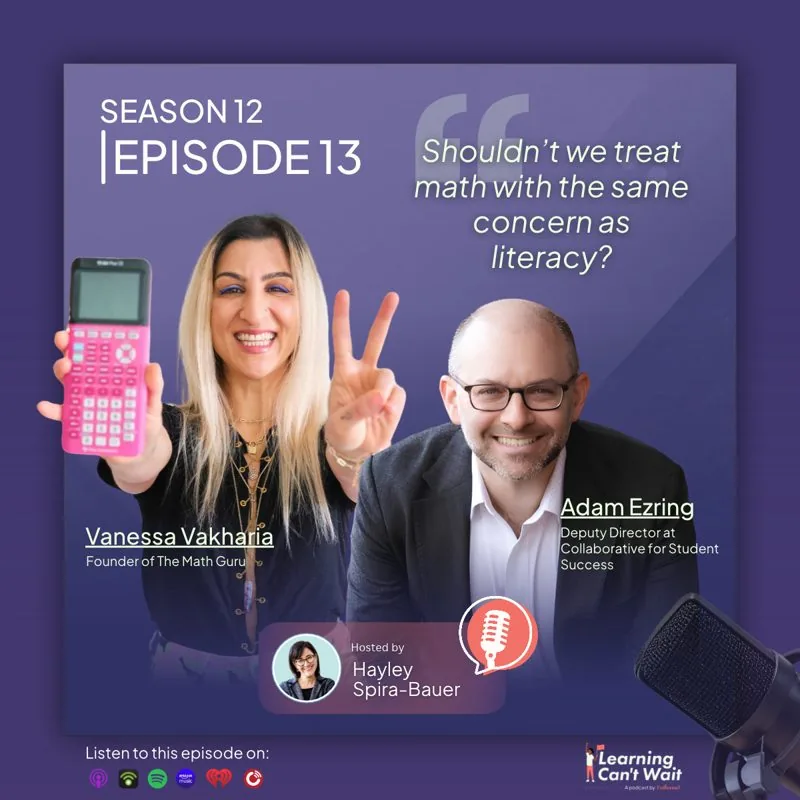 Vanessa Vakharia & Adam Ezring: Family Math, Math Confidence & Learning Through PlayOctober 13, 2026 · Vanessa Vakharia, Adam Ezring
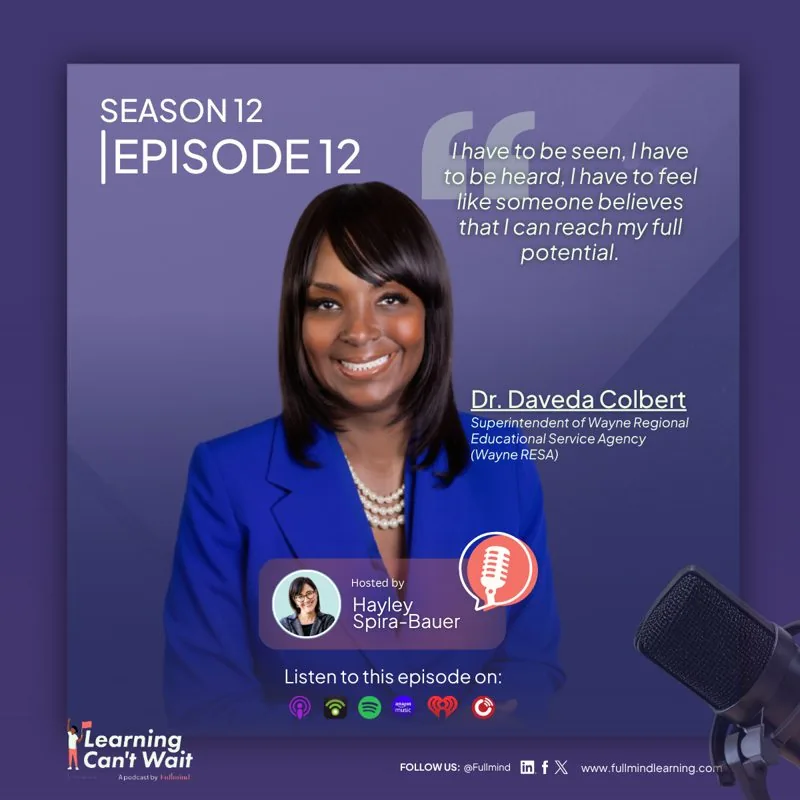 Dr. Daveda Colbert: Leadership, Belonging & ServiceOctober 6, 2026 · Dr. Daveda Colbert
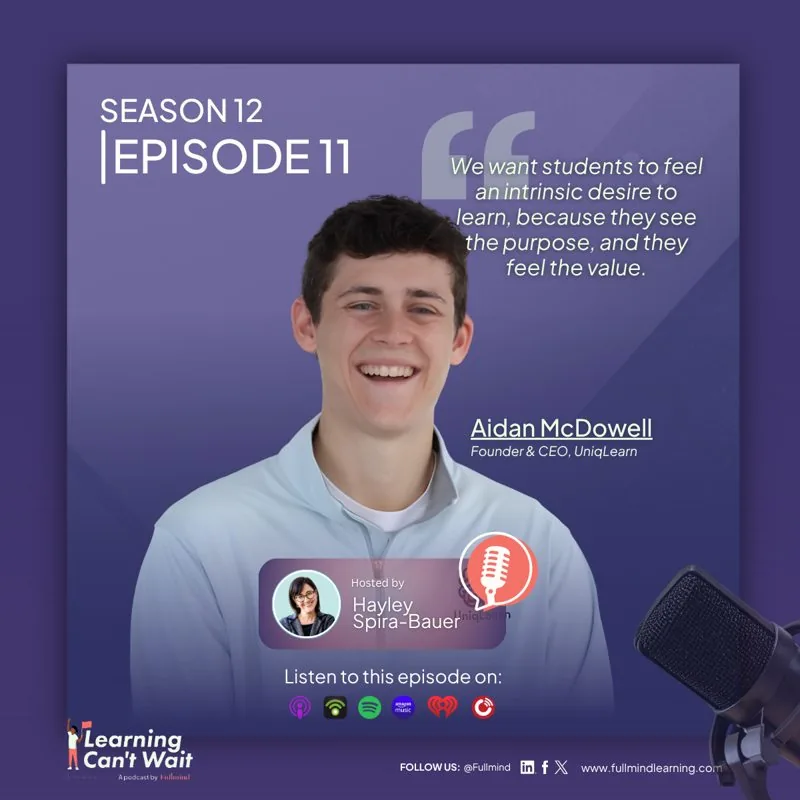 Aidan McDowell: Personalized learning, Student agency & Intrinsic motivationSeptember 29, 2026 · Aidan McDowell
For Education Leaders
Get proven strategies and expert analysis from the host of the Learning Can't Wait podcast, delivered straight to your inbox.
































































How can we help? Let’s connect.
Tell us what you need. It takes about a minute, and you’ll see the next steps right away.
We’ll reach out within one business day
An education consultant talks through your students, schedule and goals.
Get a plan for your district
A plan built around your needs and budget.
Need support? Call 1 (888) 841-7840
Thanks! We’ll confirm your meeting time by email within one business day.
Your one-pagers
Matched to what you told us. They download as one PDF.
Every child deserves the opportunity to access exceptional education.