
For Education Leaders
Get proven strategies and expert analysis from the host of the Learning Can't Wait podcast, delivered straight to your inbox.
LIVE Staffing
LIVE Staffing fills hard-to-staff roles with certified educators who teach live, synchronously, on your schedule, with your curriculum or ours.
Vermont's Act 170 Puts 119 Districts Into 18 Merger Committees and Superintendents on One-Year Contracts. The Course Catalog Can't Wait for the Map.
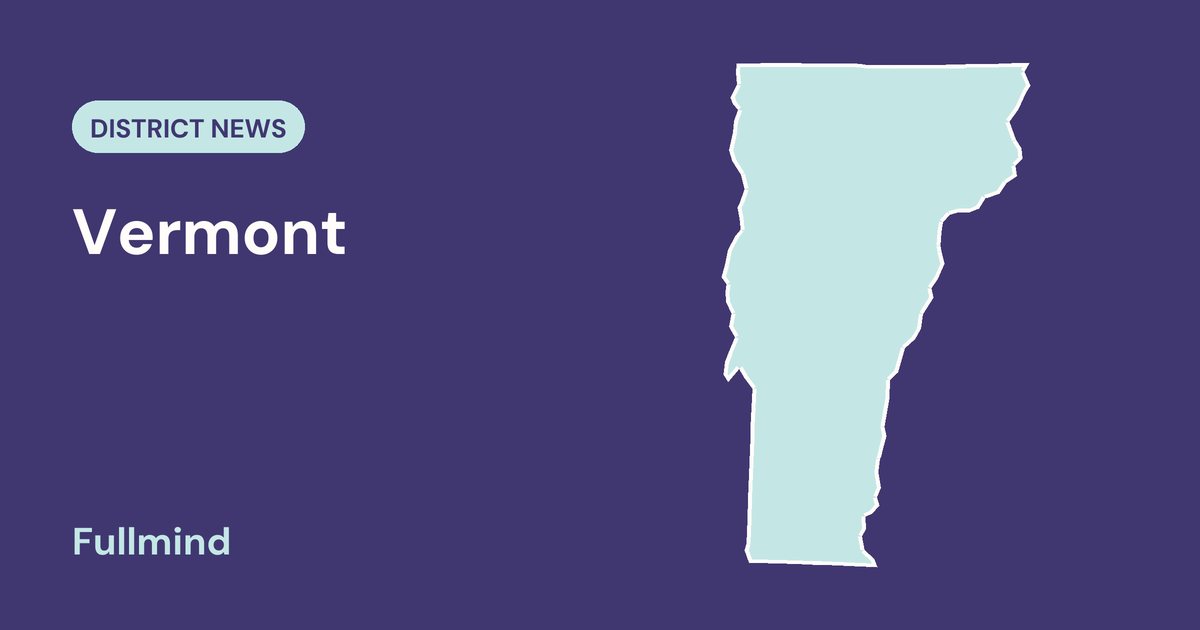
Vermont's school governance is being redrawn in real time. Under Act 170, the state's education transformation law, 119 school districts have been assigned to 18 merger-study committees, down from the 20 the law contemplated, after 13 districts asked to change groups, according to a September 21 update from the government-affairs practice at Downs Rachlin Martin. Facilitators were due September 1, board representatives September 15, and committees must be meeting by October 15. Harwood voted to leave its Central Vermont grouping and seek talks with Mount Mansfield and Champlain Valley.
The Agency of Education, meanwhile, has directed districts filling superintendent vacancies to use only one-year interim contracts, citing the uncertainty the consolidation process creates. And participants in the new regional structures have begun asking whether consolidation will actually save money.
Our view: Vermont is doing the structural work most rural states only talk about, and the state is right that no district should lock in a five-year superintendent while the map is in motion. But the same logic now applies, unintentionally, to every other decision in a small Vermont school. A principal in a 300-student district cannot know in October whether her district will exist in its current form in 2028, which makes it hard to commit a permanent position to the second language or the physics section for 2027–28. The risk of a consolidation year is not that courses get cut; it is that no one is positioned to add or protect them. The catalog needs a way to hold steady while the governance moves.
What happened
From the September 21 and August 31 updates:
- Act 170 merger-study assignments were revised September 18: 119 districts in 18 committees. The lead facilitator's approach has been to approve district requests unless they conflict with the statute.
- The Agency of Education restricted superintendent hiring to one-year interim contracts during the consolidation process.
- CESA participants have raised questions about whether the new regional structures will save money.
Vermont is doing the structural work most rural states only talk about, and the state is right that no district should lock in a five-year superintendent while the map is in motion.
What it means for districts (analysis)
The account above is the state's, the law firm's and reporters'. The position below is ours.
Uncertainty freezes the schedule. When leadership is interim and the district boundary is under study, the rational move for a board is to make no permanent commitments. That protects the budget and quietly shrinks the catalog, because single-section courses that lose a teacher during the study period do not get replaced.
Consolidation redistributes specialists; it does not create them. Merging four small districts into one region pools the same shortage of special educators and the same provisional licenses. The access problem for a student in a 200-student school is the same the day after the merger.
Courses can be carried on the merger's timeline. A live, certified educator delivering one section for one semester, scoped to the school rather than the district, is a commitment that survives a boundary change. It is the form of capacity a one-year-contract environment can actually use.
Honesty about what this does not fix. Variable capacity does not settle the map or decide whether consolidation saves money. It keeps the physics section running while those questions are answered.
Practical considerations for district leaders
- Pull the schedule for every course that runs one section with a small roster; that list is where reductions land.
- For each, decide whether it will be carried as a permanent position after the merger or as variable capacity until the structure settles.
- Measure the vacancy in minutes: for every student on an uncovered caseload, how many IEP minutes went undelivered this week.
- Document intervention: fixed times, attendance, progress data. Evidence is what keeps it off the next list.
- Ask the merger committee to inventory specialist and single-section access across the proposed region, so consolidation's promise can be checked.
Where Fullmind fits
Vermont has told districts to hire superintendents one year at a time while 119 districts sort into 18 merger committees. Fullmind, now home to Elevate K-12, is capacity scoped the same way: a Vermont-certified educator teaches a single-section course live, by the school and the semester, with a facilitator in the room, under a commitment that survives any boundary change.
- LIVE Staffing keeps the physics section or the second language running in a 300-student school through the study period; Fullmind's remote Alaska brief found 5.5 points of test-score gain per additional instructional hour.
- High Dosage Tutoring holds intervention on a schedule while governance moves; Yuba City, California scaled its program from 24 to 194 students in one year.
- SWD Services & IEP Fulfillment delivers IEP minutes for a special education position a district holds open until the merger settles. Fullmind fills special education instruction with state-certified special educators, drawn from more than 3,000 educators.
Consolidation will redraw the map. This keeps the catalog whole while it is drawn.
Run the numbers with us
If your district is in a merger-study committee and deferring commitments, send us the single-section course list by school. We will show which a live model would hold through the transition and what each costs for a semester. Schedule a consultation with Fullmind.
Sources: Downs Rachlin Martin, Vermont School Consolidation Progress Updates, September 21 and August 31, 2026; Fullmind Impact & Research. Everything quantitative is as the sources reported it; the analysis reflects Fullmind's position.
Podcast
From the Learning Can’t Wait podcast
 Hosted by Hayley Spira-Bauer, Chief Academic Officer at Fullmind
Newest episodes
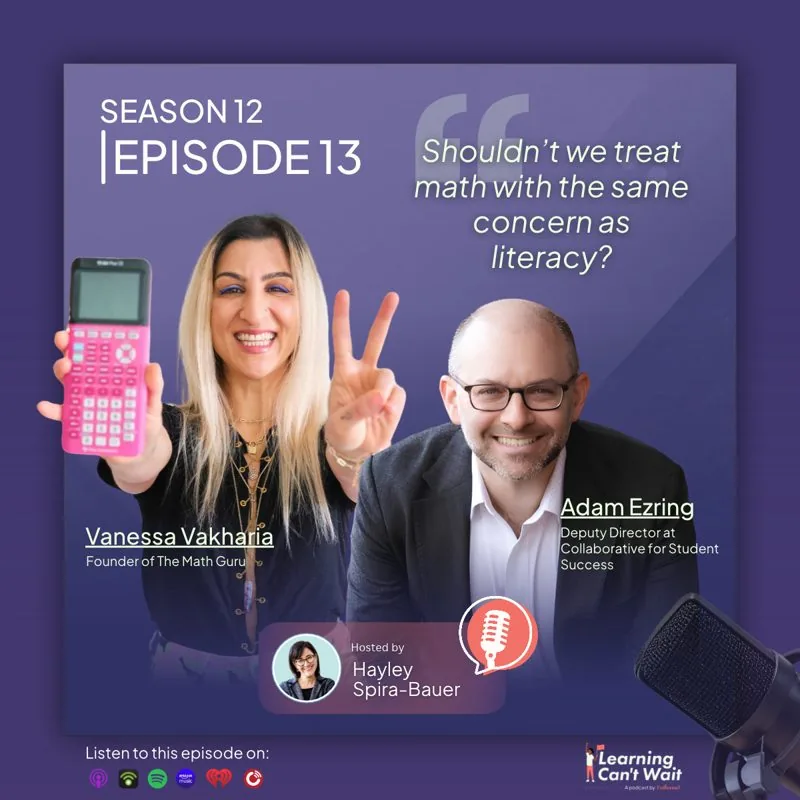 Vanessa Vakharia & Adam Ezring: Family Math, Math Confidence & Learning Through PlayOctober 13, 2026 · Vanessa Vakharia, Adam Ezring
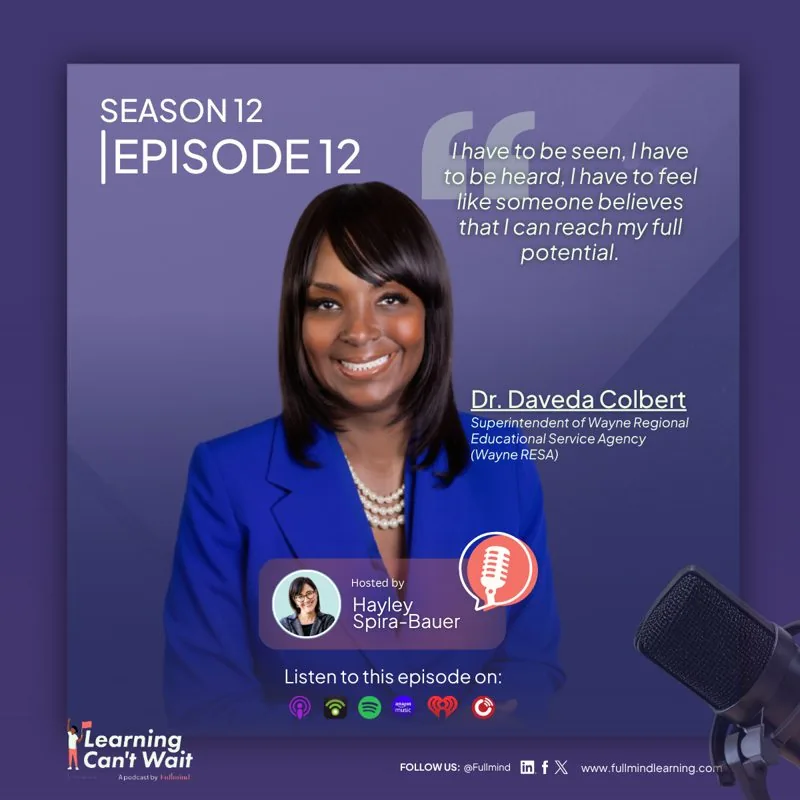 Dr. Daveda Colbert: Leadership, Belonging & ServiceOctober 6, 2026 · Dr. Daveda Colbert
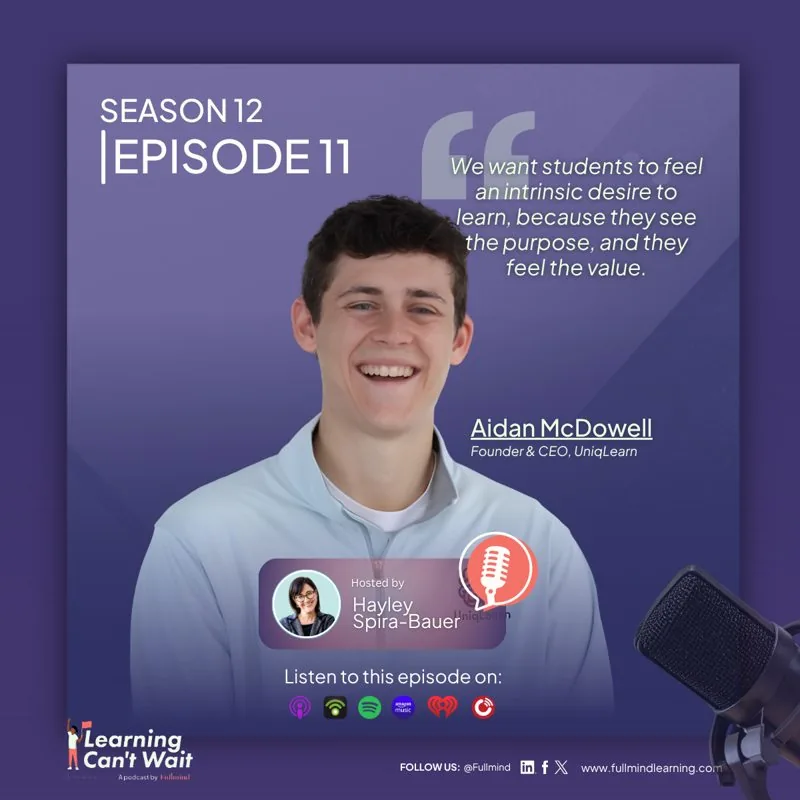 Aidan McDowell: Personalized learning, Student agency & Intrinsic motivationSeptember 29, 2026 · Aidan McDowell
For Education Leaders
Get proven strategies and expert analysis from the host of the Learning Can't Wait podcast, delivered straight to your inbox.








































































How can we help? Let’s connect.
Tell us what you need. It takes about a minute, and you’ll see the next steps right away.
We’ll reach out within one business day
An education consultant talks through your students, schedule and goals.
Get a plan for your district
A plan built around your needs and budget.
Need support? Call 1 (888) 841-7840
Thanks! We’ll confirm your meeting time by email within one business day.
Your one-pagers
Matched to what you told us. They download as one PDF.
Every child deserves the opportunity to access exceptional education.