Connect with the Fullmind Team

For Education Leaders
Get proven strategies and expert analysis from the host of the Learning Can't Wait podcast, delivered straight to your inbox.
LIVE Staffing
LIVE Staffing fills hard-to-staff roles with certified educators who teach live, synchronously, on your schedule and curriculum.
Alabama's Virtual-School Review Found No Caseload Limits. Write Them Into the Contract.
For three consecutive months, the Alabama State Board of Education has been asking hard questions about the state's virtual public schools. On September 10, the Alabama State Department of Education brought the board a review of those schools, and ABC 33/40 reported what it found: state law prevents the department from limiting how many students a virtual teacher carries, some teachers work for several vendors at once, and funding follows enrollment rather than results. On September 30, the Alabama Reflector reported board members' concern over state report-card grades at specific virtual schools.
Our view, and we say this as a company that delivers live virtual instruction: the board is asking the right questions, and the answer is not in Montgomery. State Superintendent Eric Mackey said it plainly: local boards own these schools, contracting with a vendor does not transfer responsibility, and local boards can set caseload limits through their own policies or contracts. So the district contract is where oversight lives. Every Alabama district that buys virtual instruction, from anyone, should be able to answer four questions from the contract itself: who teaches, how many students they carry, what curriculum they teach, and what data the district sees. If a provider will not put those in writing, that is the answer.
What happened
From ABC 33/40's September 11 report on the September 10 state board meeting, and the Alabama Reflector's September 30 reporting:
- The state review found that Alabama law prevents the State Board and ALSDE from limiting virtual teacher caseloads. Mackey told the board a teacher "could have 250 kids," or as many as a local board allows. Local boards can set limits through policy or contract.
- The review found some teachers working for multiple vendors or virtual schools at the same time. Mackey said that is not illegal but complicates oversight. Virtual teachers must still hold Alabama certification and pass background checks.
- Board President Pro Tem Allen Long cited data in the review comparing roughly 80% proficiency at Baldwin County Virtual School with 5.5% at a Limestone County virtual school, and asked how the legislature could call that an efficient use of funds. Mackey explained that state funding is tied to enrollment, not performance.
- Because Alabama funds districts by enrollment, virtual students generate some of the same funding as in-person students, and Mackey said some districts like large virtual enrollments because the money can support brick-and-mortar schools. A standalone virtual school's report-card grade is also folded into the district's grade.
- Board member Tracie West said the review expanded her concerns beyond test scores to how vendor-employed teachers are supervised and whether virtual curricula align with Alabama standards; she stressed her concerns do not apply to every virtual school. Mackey said repeatedly the review is not an effort to close virtual schools.
- The Reflector reported that two virtual schools received a D on the state report card, and a third received a C. West said vendor contracts "could be tightened up" to serve students.
ALSDE is preparing a public version of the review with protected student data removed, and agreed to examine student transfers and whether performance correlates with particular vendors. Nothing has been enacted; this is a review and a discussion.
The board is asking the right questions, and the answer is not in Montgomery.
What it means for districts (analysis)
The facts above are the state's and the reporters'. What follows is our reading, and we will take a position.
The oversight gap is a contract gap. The state has told districts in plain terms that it cannot cap caseloads and does not audit vendor contracts itself, and that local boards own the outcome. That is not a reason to avoid virtual instruction. It is a reason to write the contract the state cannot write for you. A caseload cap, a named roster of Alabama-certified educators, a curriculum-alignment clause and a data-access clause belong in every agreement.
"Virtual" is not one model, and the district's grade will not distinguish them. A full-time virtual school with a vendor-employed teacher serving hundreds of students on a self-paced platform is a different thing from a live, scheduled class taught to a roster of 25 with a district facilitator in the room. Both are called virtual. Only the contract and the data tell them apart, and the district's report card will carry the result either way.
Enrollment funding rewards scale; districts should buy outcomes instead. When revenue follows headcount, the incentive runs toward bigger virtual rosters. A district that scopes virtual capacity to a defined need, one course, one cohort, one semester, and measures it against a baseline has turned the incentive around.
The flashlight is on. Mackey said three months of board discussion have already made districts pay more attention. A public version of the review is coming, and the legislature will see a version too. Districts that can show their virtual contracts already answer the board's questions will be in a strong position when the next question comes from a parent, a reporter or a lawmaker.
"The online dashboard for checking attendance is really valuable, especially when communicating with parents. Having virtual options has been key for many students. Instead of falling behind, they can stay on track with the curriculum even when they can't be physically present. When they return to regular classes, they have that foundation and won't be a year behind."
Practical considerations for district leaders
- Pull every virtual-instruction contract and check it against four questions: who teaches (certification, employer, exclusivity), how many students each educator carries, which curriculum and standards are taught, and what attendance and progress data the district receives and how often.
- Set a caseload cap in policy. The state cannot; the board can. Put a number on it.
- Require a district-side owner. Someone on district staff should supervise the virtual program the way a principal supervises a building, with the authority to review rosters, observe instruction and pull data.
- Separate the use cases. Students who need a full-time virtual option for family or health reasons are a different population from a course the district cannot staff or an intervention block it cannot fill. Contract and measure them separately.
- Ask what the district grade would be without the virtual school. Mackey said he would want to know that as a board member. Knowing the answer before the public version of the review lands is better than learning it from the review.
Where Fullmind fits
Fullmind delivers live instruction with state-certified educators on the district's own schedule and curriculum, and it is built to answer the four questions above in writing. Elevate K-12 is now part of Fullmind.
- LIVE Staffing places a live, Alabama-certified educator in a specific course on the campus bell schedule, with an in-person classroom facilitator employed by the district. The roster is the class roster; the district sees attendance and progress; the curriculum is the district's.
- High Dosage Tutoring runs scheduled small-group sessions aligned to the district's curriculum, with attendance, session notes and assessment data available to the district. In Yuba City, California, the program grew from 24 to 194 students in a year, with tutored ELA students gaining an average of 16 iReady points against 10.63 for non-participants and math students 8 against 7.93, a program comparison published with the district, not a causal study.
We are a virtual provider, and we think the board's scrutiny is good for the field. Put the four questions in the contract and hold every provider to them, including us.
Run the numbers with us
If your district is reviewing its virtual contracts, bring us one course or one cohort and the oversight terms you want. We will show you how we would meet each one, what data you would see and when, and tell you plainly where a live model fits and where it does not. Schedule a consultation with Fullmind.
Bottom line
Alabama's own review found that the state cannot cap virtual teacher caseloads, that some virtual teachers work for several vendors at once, and that funding follows enrollment rather than results. The State Superintendent placed responsibility for virtual schools with the local boards that run them.
The limits are real: the review's data has not been made public, nothing has been enacted, and a gap in proficiency between two schools does not show what caused it or which delivery model works. The decision it informs is local: before renewing any virtual-instruction contract, a board should confirm that the contract states who teaches, how many students each teacher carries, which curriculum is taught and what data the district receives.
Sources: ABC 33/40 (WBMA), "'These children are slipping away from us': Ala. virtual school review raises new concerns," September 11, 2026; Alabama Reflector, "Alabama State Board of Education members raise concerns over virtual school performance," September 30, 2026; Fullmind, Yuba City tutoring case study. Figures and quotations are the state's and the reporters' own; the analysis section reflects Fullmind's interpretation.
Podcast
From the Learning Can’t Wait podcast
 Hosted by Hayley Spira-Bauer, Chief Academic Officer at Fullmind
Newest episodes
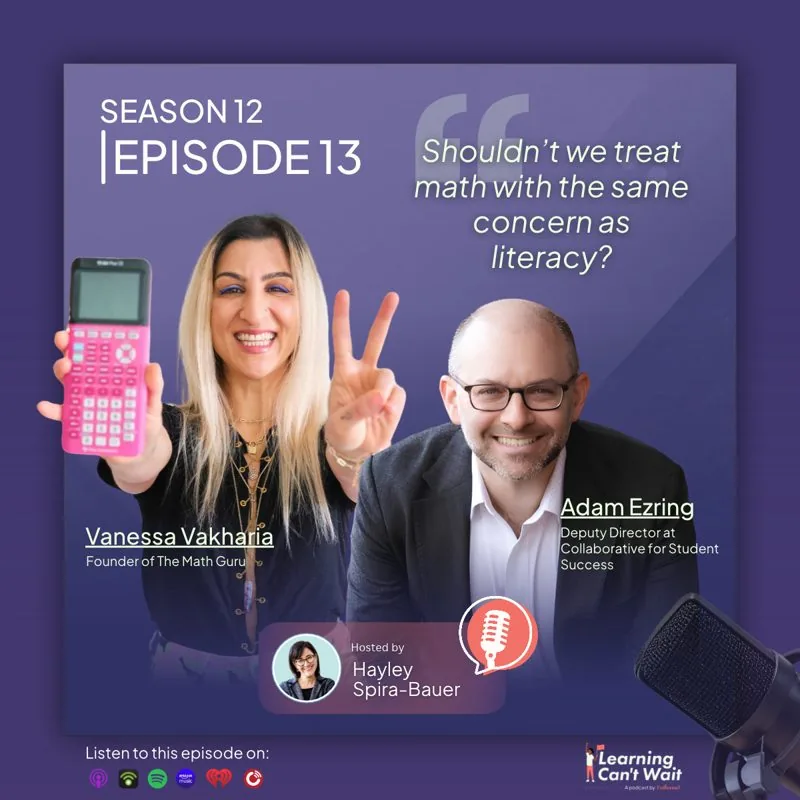 Vanessa Vakharia & Adam Ezring: Family Math, Math Confidence & Learning Through PlayOctober 13, 2026 · Vanessa Vakharia, Adam Ezring
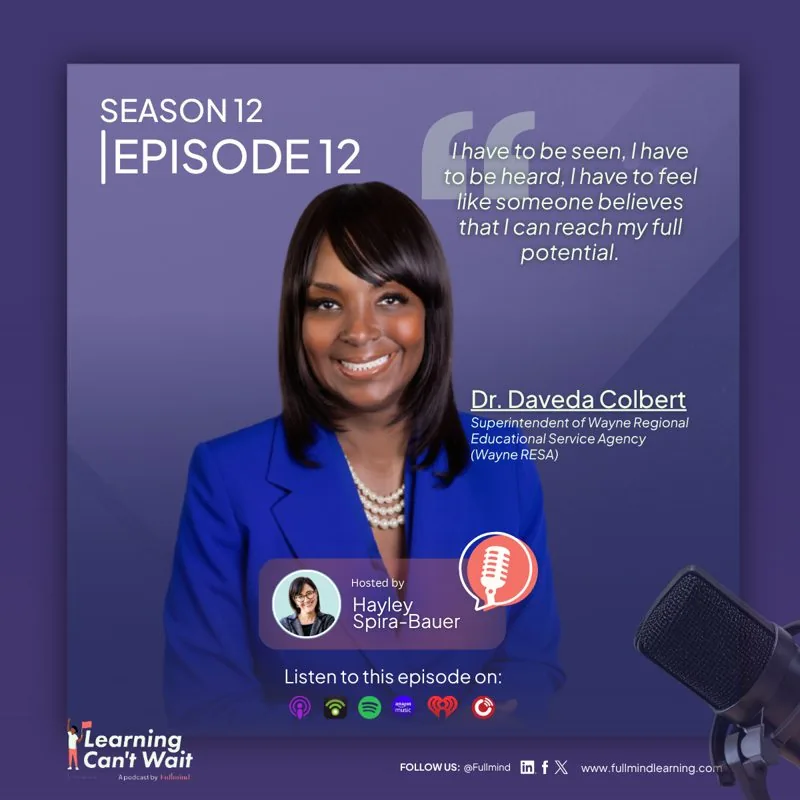 Dr. Daveda Colbert: Leadership, Belonging & ServiceOctober 6, 2026 · Dr. Daveda Colbert
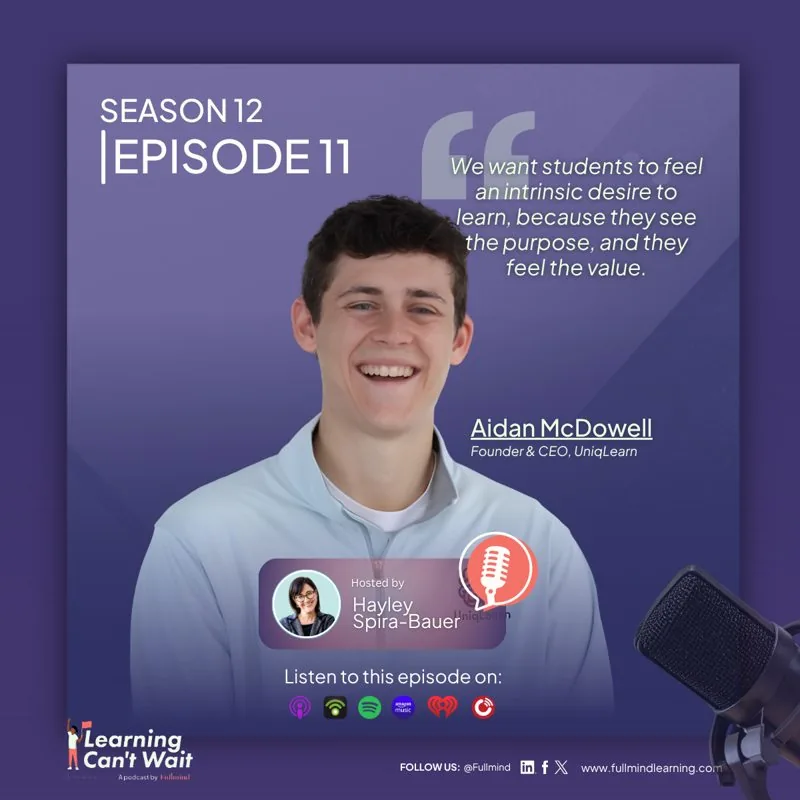 Aidan McDowell: Personalized learning, Student agency & Intrinsic motivationSeptember 29, 2026 · Aidan McDowell
Alabama on the podcast
Episodes with Alabama connections
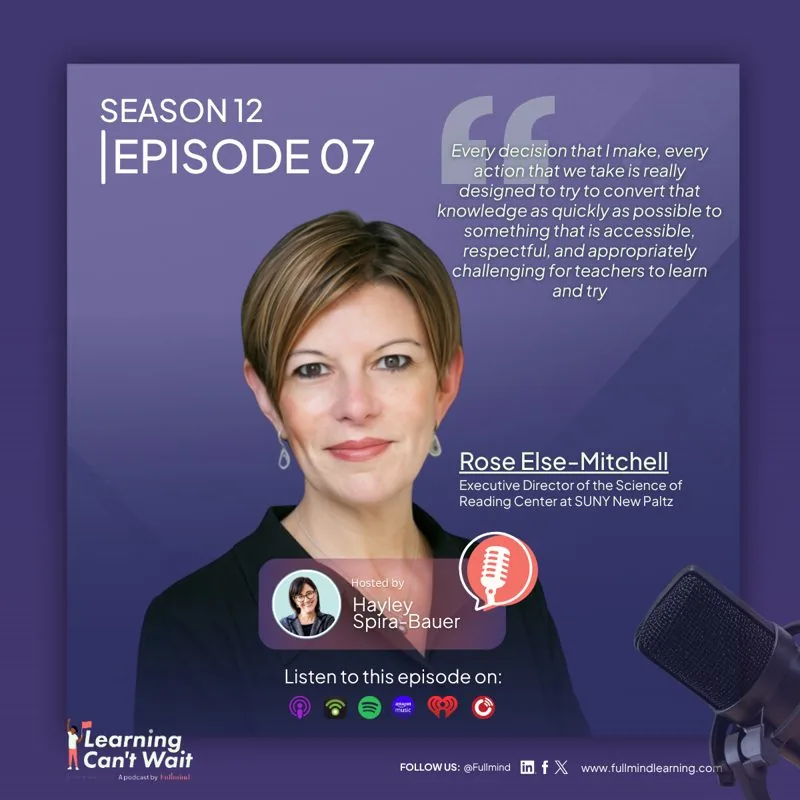 Rose Else-Mitchell: Science of Reading, Implementation Science & Literacy InstructionAugust 18, 2026 · Rose Else-Mitchell
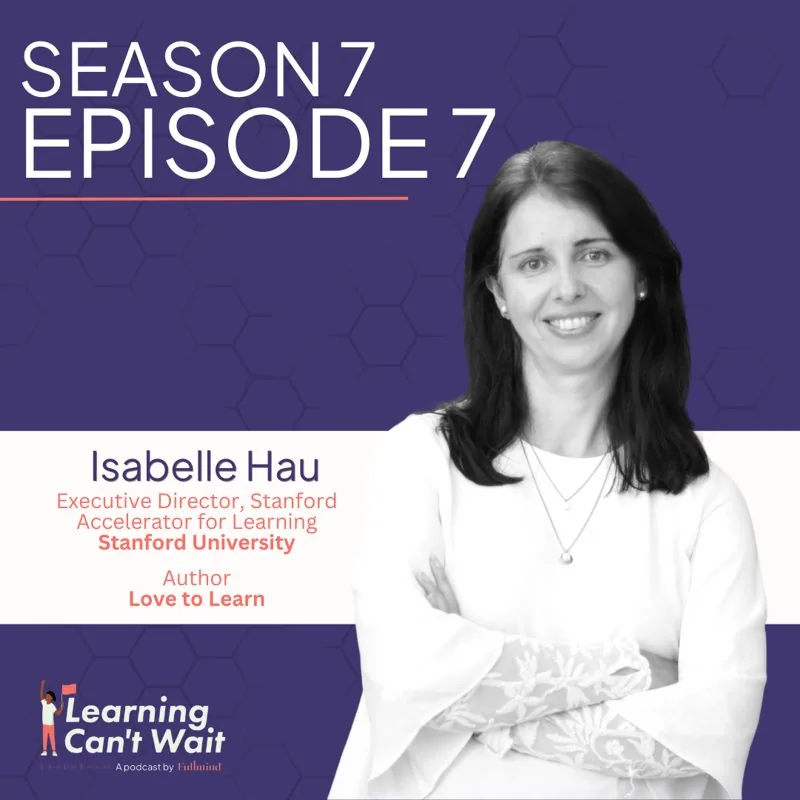 Isabelle Hau: Love to Learn, AI in Education, Play in EducationFebruary 18, 2025 · Isabelle Hau
For Education Leaders
Get proven strategies and expert analysis from the host of the Learning Can't Wait podcast, delivered straight to your inbox.




































































How can we help? Let’s connect.
Tell us what you need. It takes about a minute, and you’ll see the next steps right away.
Meet an education consultant
Talk through your students, schedule and goals.
Get a proposal for your district
A plan built around your needs and budget.
Prefer to call? 210-617-3009
Thanks! Pick a time that works
A 30-minute call with an education consultant. Your details are already filled in.
Your one-pagers
Matched to what you told us. They download as one PDF.
Every child deserves the opportunity to access exceptional education.