
For Education Leaders
Get proven strategies and expert analysis from the host of the Learning Can't Wait podcast, delivered straight to your inbox.
LIVE Staffing
LIVE Staffing fills hard-to-staff roles with certified educators who teach live, synchronously, on your schedule and curriculum.
How to Reduce Teacher Vacancies: Maryland's 73% Drop
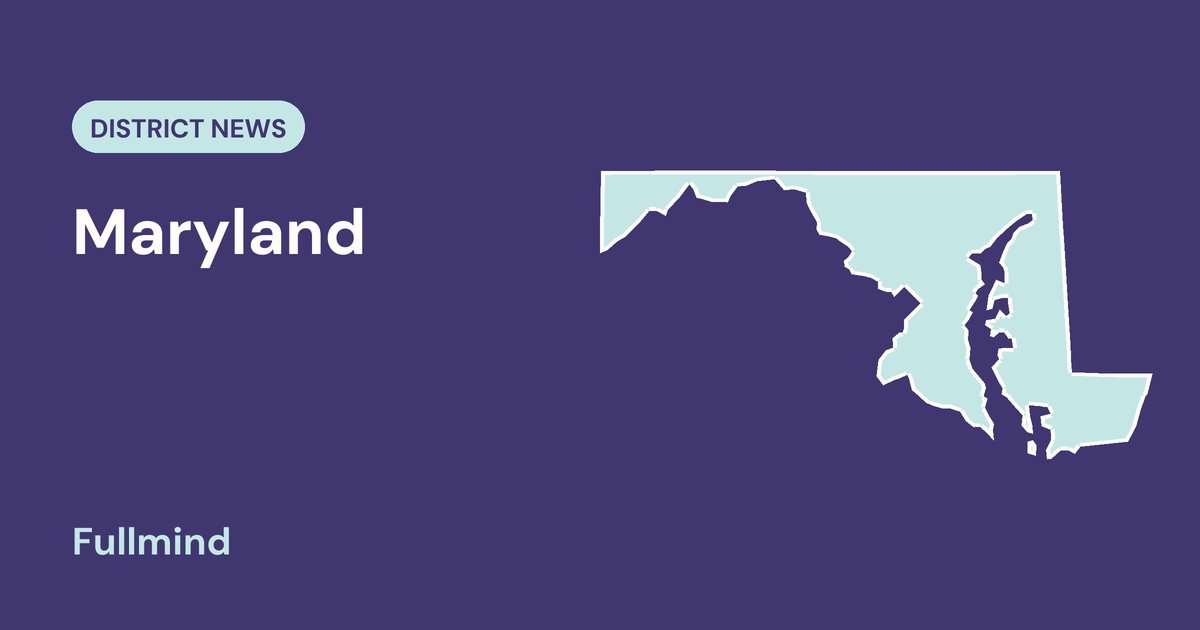
Districts reduce teacher vacancies with the same few levers Maryland used: competitive pay, grow-your-own programs that turn current staff into licensed teachers, and recruitment built in partnership with the state and the union. Those levers take years to pay off, so the districts that get this right also have a deliberate plan for the classrooms that are still empty this semester.
Maryland just showed how much the long game can deliver. But a statewide number is an average, and averages are where the hardest-to-fill classrooms hide.
Our view: the lesson from Maryland is not that vacancies are solved. It's that vacancies respond to steady, multi-year investment, and that every pipeline has a lag. What a district does with its remaining openings during that lag decides what this year's students actually get.
What happened
On October 19, the Maryland governor's office announced that the state's teacher vacancies fell 73.3% over four years, from 2,145 in the 2022-23 school year to 572 this year. The state credited salary increases, grow-your-own programs, and recruitment and retention work with school systems and labor partners. In Anne Arundel County, vacancies fell from 283 in 2022 to 16 on the first day of school this year.
The state also pointed to new pipeline work: a registered teaching apprenticeship whose first cohort started this year in Caroline, Charles, Dorchester, Washington and Worcester counties, and $33.7 million in Grow Your Own Educators grants to 16 districts.
The lesson from Maryland is not that vacancies are solved.
What it means for districts
The strategies are repeatable. None of Maryland's levers is a one-time trick. Pay, paths for paraprofessionals and career changers, apprenticeships and recruiting partnerships are all things a district can start or join. Several, like a grow-your-own pathway for the paraprofessionals already in your buildings, can begin at the district level.
Culture counts alongside cash. Anne Arundel's superintendent, Dr. Mark Bedell, credited compensation and training, but also a culture where every teacher feels a sense of belonging. Retention is the other half of vacancy math: every teacher who stays is an opening you don't have to fill again next August.
572 is not zero, and the mix matters. The release breaks out only one category: elementary vacancies, which fell 63.3% between the 2024-25 and 2025-26 school years. If elementary openings are closing fastest, the ones left are more likely to sit in secondary subjects, special education and other specialist roles. The release doesn't say, so that's the first question for any district HR team reading it.
Statewide progress can hide local gaps. Earlier this month, Somerset County's superintendent told WBFF "There's no special education employees to hire," and noted that qualified teachers can earn more in the neighboring county. A rural district competing with a better-paying neighbor has a problem that statewide gains don't fix on their own.
Pipelines have lag. An apprentice who starts this year, or a paraprofessional working toward a license, fills a classroom later, not now. The students in that classroom this year still need a certified teacher.
What to do now
- Break your vacancy count down. Report openings by certification area and by school, not as one total. A district with ten vacancies, eight of them in special education and secondary math, has a different problem than the number suggests.
- Match each pipeline to a gap and a date. For every type of opening, write down which program is expected to fill it (grow-your-own, apprenticeship, university partnership, recruitment) and when. The time between today and that date is your coverage plan.
- Benchmark pay against your real competitor. Compare salaries with the district your candidates would otherwise choose, not the state average.
- Make retention measurable. Track who leaves, from which schools, and why. Protect mentoring and planning time for first- and second-year teachers, who are the easiest to lose.
- Cover the remaining gaps on purpose. For openings no pipeline will fill this year, choose coverage that puts a certified teacher in front of students, and set a date to revisit it. Rotating long-term substitutes should be a decision, not a default.
Where Fullmind fits
For the openings a district can't fill locally yet, Fullmind's LIVE Staffing provides live, state-certified teachers who teach the course on the school's own schedule. In Colleton County School District in South Carolina, 44.7% of students in courses taught through Fullmind's virtual staffing earned a C or above, compared with 25.1% of their non-Fullmind peers, according to Fullmind's case study. Fullmind educators average more than 15.5 years of classroom experience and come from all 50 states.
We see this as a bridge, not a replacement. When your pipeline produces a strong local hire, that's the better outcome, and the plan should say so. Maryland districts can see how Fullmind works in the state on our Maryland page.
Map your gaps with us
Send us your vacancy list by certification area and school. We'll show you which openings a live certified teacher could cover this semester, which ones are better left to your pipeline, and tell you plainly where it fits and where it doesn't. Schedule a consultation with Fullmind.
Bottom line
Maryland's numbers show that teacher vacancies respond to steady investment in pay, pathways and culture, and that work is worth copying. Just don't let the long game leave this year's students waiting: count your remaining gaps precisely and cover them on purpose.
Sources: Office of Governor Wes Moore, press release, October 19, 2026; WBFF Spotlight on Maryland, October 3, 2026; Fullmind, Colleton County School District case study. Figures are the state's and the reporter's own; the analysis reflects Fullmind's interpretation.
Podcast
From the Learning Can’t Wait podcast
 Hosted by Hayley Spira-Bauer, Chief Academic Officer at Fullmind
Newest episodes
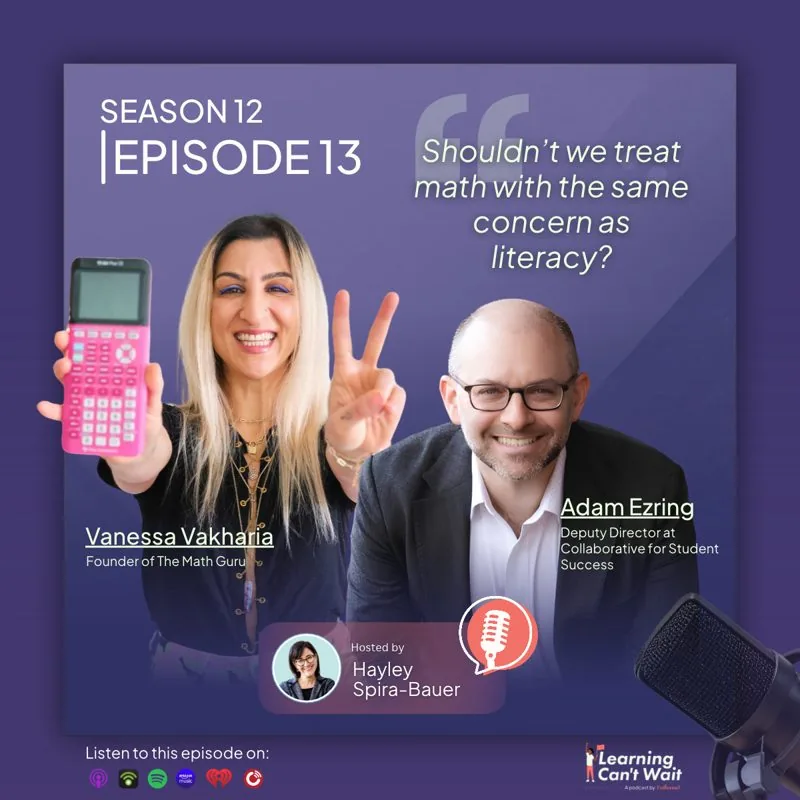 Vanessa Vakharia & Adam Ezring: Family Math, Math Confidence & Learning Through PlayOctober 13, 2026 · Vanessa Vakharia, Adam Ezring
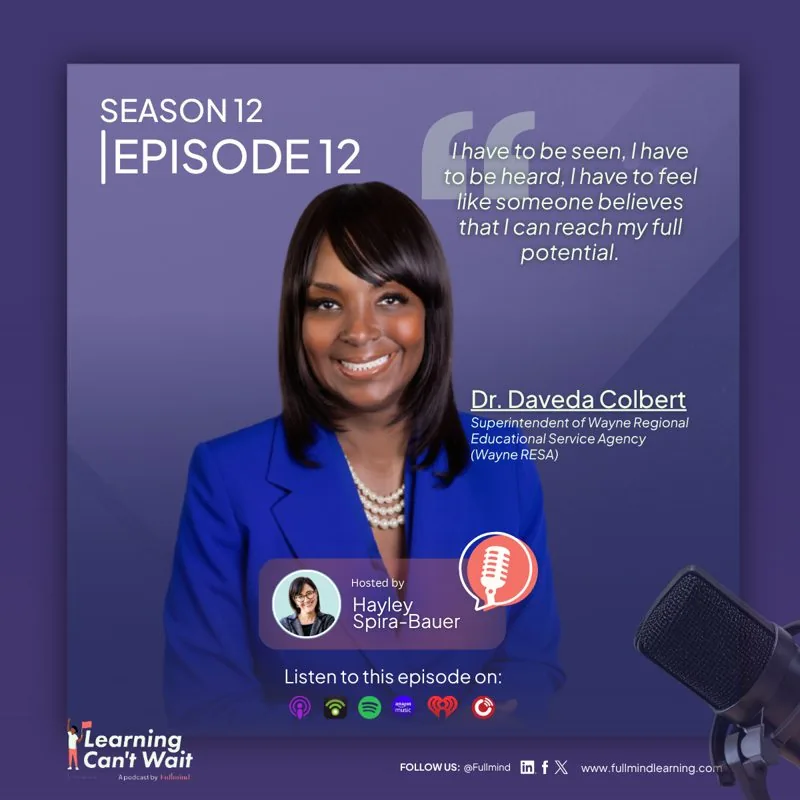 Dr. Daveda Colbert: Leadership, Belonging & ServiceOctober 6, 2026 · Dr. Daveda Colbert
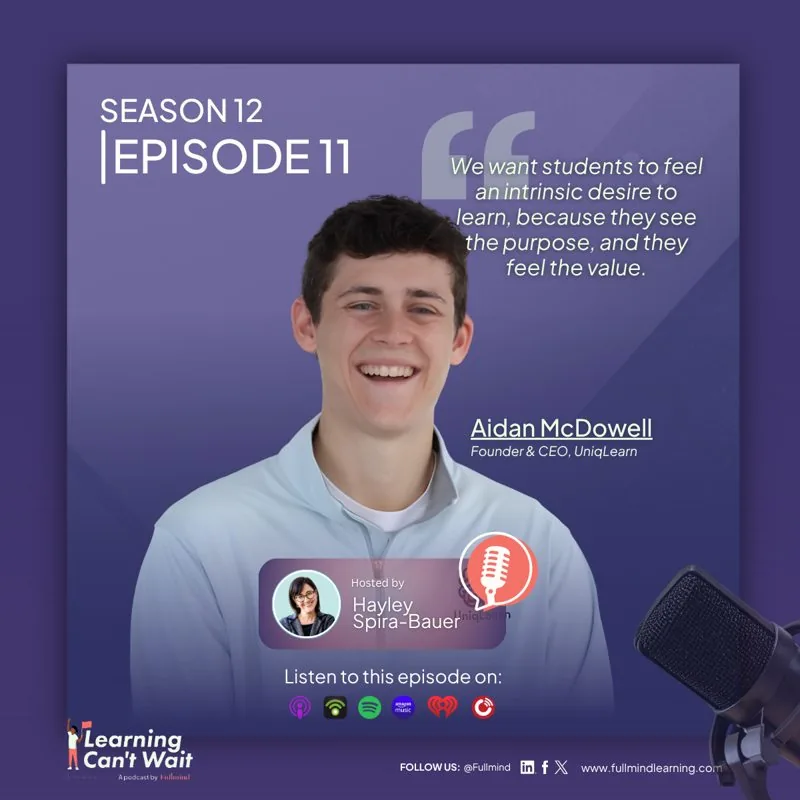 Aidan McDowell: Personalized learning, Student agency & Intrinsic motivationSeptember 29, 2026 · Aidan McDowell
For Education Leaders
Get proven strategies and expert analysis from the host of the Learning Can't Wait podcast, delivered straight to your inbox.


























































How can we help? Let’s connect.
Tell us what you need. It takes about a minute, and you’ll see the next steps right away.
We’ll reach out within one business day
An education consultant talks through your students, schedule and goals.
Get a plan for your district
A plan built around your needs and budget.
Need support? Call 1 (888) 841-7840
Thanks! We’ll confirm your meeting time by email within one business day.
Your one-pagers
Matched to what you told us. They download as one PDF.
Every child deserves the opportunity to access exceptional education.