Connect with the Fullmind Team

For Education Leaders
Get proven strategies and expert analysis from the host of the Learning Can't Wait podcast, delivered straight to your inbox.
LIVE Staffing
LIVE Staffing fills hard-to-staff roles with certified educators who teach live, synchronously, on your schedule and curriculum.
Minnesota's School Fund Amendment Is Worth $33 a Student. The Deficit Is Structural.

Minnesota voters will decide two kinds of school questions. One is a constitutional amendment, backed by a bipartisan group of lawmakers, that would let schools draw a 4.5% return from the $2.3 billion Permanent School Fund instead of the current 2.5%, without raising anyone's taxes. The other is more than 60 local referendums for operating costs, buildings and maintenance, according to MPR News.
The amendment would add about $33 per pupil. In Minneapolis that is roughly $900,000; in Duluth, about $280,000 against a $12 million deficit. "It's better than a drop in the bucket," Duluth Superintendent John Magas told MPR, and in the same breath: "it will not solve our structural deficit issues." If the amendment passes and Duluth's referendum fails, the district faces another $12 million in cuts over two years, after three straight years of cutting. Ely moved to a four-day week. Minneapolis is proposing to close more than a dozen schools. Carlton and Wrenshall voted to combine.
"It's about the math of school funding in Minnesota," Magas said. "Across the state, almost every district is in a very similar situation as Duluth."
Our view: he is describing a structural problem, and both ballot measures are revenue answers to it. They are worth passing on their merits; a no-tax amendment that frees money already sitting in a fund is hard to argue against. But a district that has cut three years running and faces a fourth is not short $33 a student. It is carrying a cost structure, mostly permanent positions committed each spring, that no longer matches the students who show up in August. Revenue buys time. The structural fix is in which part of the schedule is permanent and which part flexes.
What happened
From MPR's October 7 reporting:
- The Permanent School Fund, built on timber and mining lease revenue from trust land, is about $2.3 billion and growing roughly 8% a year; districts currently receive only interest and dividends, about 2.5% of value. The amendment would allow a 4.5% distribution with no tax change. A blank ballot counts as a no.
- The measure would yield about $33 per pupil: roughly $900,000 for Minneapolis and $280,000 for Duluth.
- More than 60 districts have referendums on the ballot for operating, capital or bond purposes.
- Duluth has cut three years in a row; the superintendent froze his own contractual raise; a failed referendum means $12 million more in cuts over two years. Ely reduced in-school time to four days. Minneapolis is proposing more than a dozen closures. Carlton and Wrenshall are consolidating.
- The Association of Metropolitan School Districts supports the amendment but warned voters not to confuse it with the operating referendums, which it called far larger in importance.
He is describing a structural problem, and both ballot measures are revenue answers to it.
What it means for districts (analysis)
The reporter's and the officials' described what happened. We will describe what we think districts should do about it.
$33 a student is real money and the wrong unit. The amendment is worth passing. It also demonstrates the problem: Minnesota's districts are solving multi-million-dollar structural gaps one modest revenue stream at a time. The structural gap is a mismatch between permanent payroll and variable enrollment, and no single revenue measure closes it.
Four cuts in four years means the easy cuts are gone. A district in Duluth's position has already taken the central-office and non-instructional reductions. The fourth round reaches the schedule: the single-section elective, the second language, the intervention block. Those are the cuts families notice and the ones that accelerate enrollment loss.
A four-day week is a capacity decision made for lack of a better one. Ely's move reduces cost by reducing time. It is a legitimate response, and it is also what happens when a district has no way to carry marginal instruction as a variable cost. The alternative is to keep the five days and make the marginal layer flex.
The referendum result should set the staffing model, not just the budget. If Duluth's referendum passes, the district has two years to change how it buys capacity before the next cliff. If it fails, the district needs a plan that keeps courses on the schedule while positions come off the payroll. Either way, the plan is the same: core in permanent positions, the marginal layer scoped to a course and a semester.
Practical considerations for district leaders
- Vote the amendment on its merits and budget it at $33 a student. Do not let it stand in for the operating referendum in a board presentation.
- List every single-section course with fewer than 20 students, school by school; that is the inventory the next cut reaches.
- Separate the core schedule from the variable layer in the 2027–28 staffing plan, so permanent positions match the floor.
- Schedule intervention like a course and report on it like one; that is its best defense when the budget returns.
- If the referendum fails, tell families within a week what happens to each at-risk course under the new budget. Silence is what moves enrollment.
Where Fullmind fits
A $33-per-student amendment and a $12 million Duluth deficit are not the same conversation, and Fullmind, now home to Elevate K-12, is useful only in the second one. For a district moving to a four-day week or closing buildings, it is a way to keep the single-section courses and intervention blocks on the schedule: a Minnesota-certified educator live, by the section and the semester, with a facilitator in the room.
- LIVE Staffing holds a one-section course through a deficit year; in one partner district, Fullmind students were 20% more likely to receive a C or above.
- High Dosage Tutoring restores intervention capacity a four-day schedule compresses; Yuba City, California grew its program from 24 to 194 students in one year.
- SWD Services & IEP Fulfillment delivers IEP minutes where a district's special education cross-subsidy has become an open position. Fullmind's special education teachers are state-certified special educators, selected from more than 3,000 educators.
None of this is a vote recommendation on the amendment, and it does not fix a structural deficit. It keeps the catalog whole while Minnesota decides how to pay for it.
Run the numbers with us
If your district is carrying a structural deficit and looking at the schedule next, send us the single-section courses by school. We will cost each one three ways and show which a live model would hold through the next budget cycle. Schedule a consultation with Fullmind.
Sources: MPR News, "Minnesota school funding is on the November ballot," October 7, 2026; Fullmind Impact & Research and Yuba City case study. Figures are the officials' and reporter's own; the analysis section reflects Fullmind's interpretation.
Related: When a School Referendum Fails, the First Cuts Are the Courses Students Chose
Podcast
From the Learning Can’t Wait podcast
 Hosted by Hayley Spira-Bauer, Chief Academic Officer at Fullmind
Newest episodes
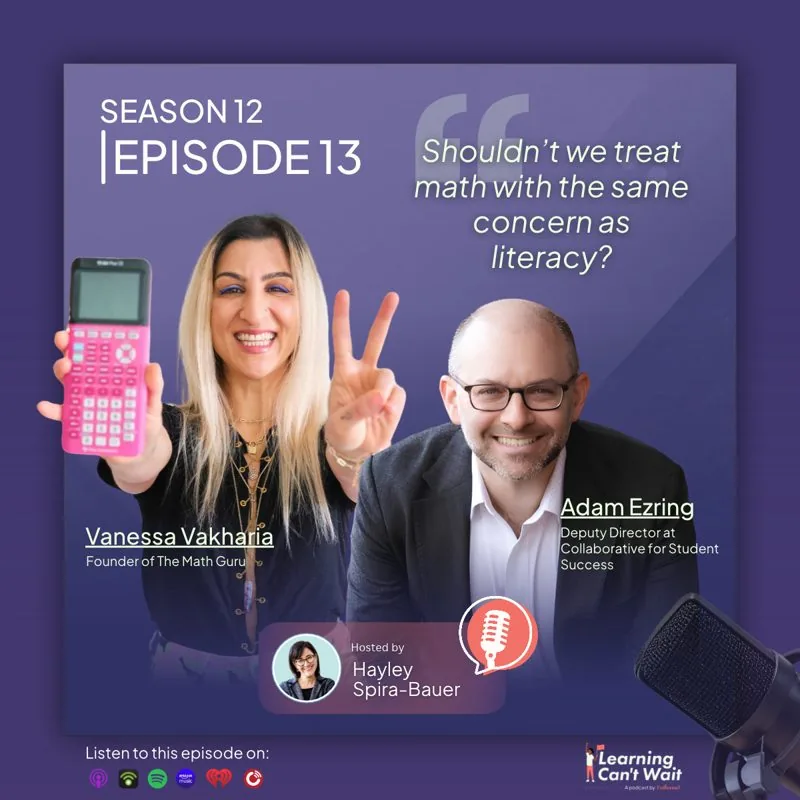 Vanessa Vakharia & Adam Ezring: Family Math, Math Confidence & Learning Through PlayOctober 13, 2026 · Vanessa Vakharia, Adam Ezring
 Dr. Daveda Colbert: Leadership, Belonging & ServiceOctober 6, 2026 · Dr. Daveda Colbert
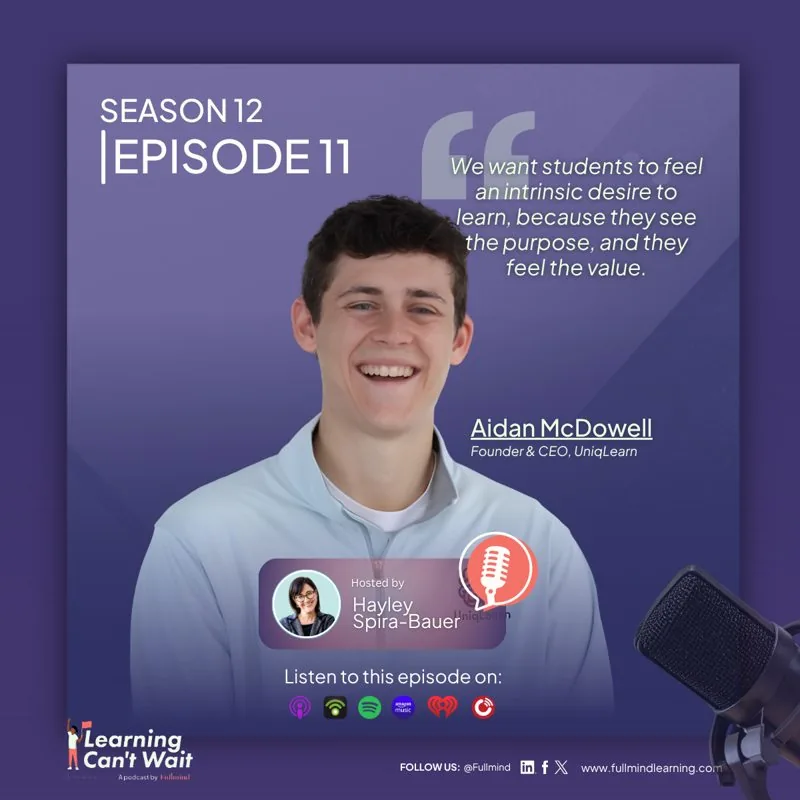 Aidan McDowell: Personalized learning, Student agency & Intrinsic motivationSeptember 29, 2026 · Aidan McDowell
For Education Leaders
Get proven strategies and expert analysis from the host of the Learning Can't Wait podcast, delivered straight to your inbox.










































































How can we help? Let’s connect.
Tell us what you need. It takes about a minute, and you’ll see the next steps right away.
We’ll reach out within one business day
An education consultant talks through your students, schedule and goals.
Get a plan for your district
A plan built around your needs and budget.
Need support? Call 1 (888) 841-7840
Thanks! Our team will reach out within one business day to set up a time that works for you.
Need help sooner? Book a time now
Your one-pagers
Matched to what you told us. They download as one PDF.
Every child deserves the opportunity to access exceptional education.