
For Education Leaders
Get proven strategies and expert analysis from the host of the Learning Can't Wait podcast, delivered straight to your inbox.
LIVE Staffing
LIVE Staffing fills hard-to-staff roles with certified educators who teach live, synchronously, on your schedule, with your curriculum or ours.
New York Left $36 Million in Teacher-Shortage Grants Unawarded.

On September 10, State Comptroller Thomas DiNapoli released an audit of how the State Education Department uses the money New York sets aside for teacher shortages. Of $191 million allocated to four grant programs from July 2019 through August 2025, $155 million was awarded and $118.9 million, 62%, was actually spent. About $36 million was never awarded at all.
The reason is not complicated. In the 2022–26 Teachers of Tomorrow cycle, a program built to help districts fill hard-to-staff subjects, 27 of 609 eligible districts applied, 4%. Auditors surveyed 692 districts outside New York City; of 210 non-participating respondents, 190 said they were unaware the programs existed. New York expects to need 180,000 new teachers in the next decade. Large urban and rural districts report severe shortages in science, special education and career and technical education.
SED disputed parts of the audit, citing the pandemic and procurement rules, while agreeing to improve metrics and outreach.
Our view: the audit describes a solvable problem and a slower one. The solvable problem is awareness: a district that has never applied for a Teachers of Tomorrow grant should apply, and the comptroller has made the case for SED to tell them how. The slower problem is that every one of these programs funds recruitment, certification and retention, which produce teachers in years. The special education vacancy a Capital Region family described to a reporter this week, a one-to-one aide shortage keeping a third-grader home for five days, is a problem measured in days. Districts need both answers, and most budgets fund only the first.
What happened
From the comptroller's release and audit:
- $191 million allocated to four teacher-shortage grant programs, July 2019 to August 2025; $155 million awarded; $118.9 million (62%) spent; about $36 million unawarded.
- Teachers of Tomorrow, 2022–26 cycle: 27 of 609 eligible districts applied.
- Survey of 692 districts (excluding NYC), 244 responses: 86% had not participated; of 210 non-participants, 190 (90%) were unaware of the programs and 164 wanted more information. Rural districts cited lower salaries and limited housing as recruitment barriers but were largely unaware of grants that could support recruitment.
- Auditors found SED lacked performance metrics to show whether the grants improved recruitment, retention or certification. Recommendations: stronger monitoring, better communication to districts, sharing outcomes with decision-makers, and performance metrics.
- SED generally disagreed with the findings, citing the pandemic, staffing shortages, statutory limits and procurement rules, while agreeing to strengthen metrics, expand workforce dashboards and increase outreach.
- Separately, a parent told CBS6 (Oct 7) his son had missed five days of school because the district could not staff the one-to-one aide his IEP requires; the district said it was actively recruiting.
The audit describes a solvable problem and a slower one.
What it means for districts (analysis)
The numbers above are the comptroller's and the reporter's' to defend. The reading below is ours to defend.
Apply. The money is real and most districts have not asked. A 4% application rate for a hard-to-fill-subject grant is the clearest finding in the audit. Before a district concludes it cannot afford to recruit for special education or science, its business office should know what the state has already set aside.
Grants fund the pipeline. The IEP is due this semester. Every program in the audit funds recruitment, residency, certification or retention. None of them puts a certified special educator in a classroom in October. The family's five days are the gap between the policy timeline and the student's timeline, and the district's statement, that it is actively recruiting, is true and insufficient at the same time.
Rural districts are hit twice. The audit found rural districts least aware of the grants and most constrained by pay and housing. They are also the districts least able to recruit locally at all, which makes them the natural case for live, certified instruction delivered to the home school while a grant-funded pipeline builds.
Measure what the state cannot. The audit's second finding is that SED could not show whether the grants work. Districts can do better at their own scale: count certified instructional hours delivered per student in each vacant position, weekly. That is the number that moves outcomes and the one a hearing officer will eventually ask for.
Practical considerations for district leaders
- Ask the business office which of the four shortage-grant programs the district has applied for since 2019. If the answer is none, that is the first action item.
- For every special education and science position open past sixty days, count undelivered service minutes or instructional hours by student, weekly.
- Present grant-funded recruiting and this-semester coverage as two plans, not one. One is multi-year and grant-funded; the other is this semester and owed.
- Put a certified educator on the instruction now, with the paraprofessional or long-term substitute as the in-room facilitator, while recruitment continues.
- Eligibility, IEP team decisions and parent contact do not leave the district under any staffing arrangement.
Where Fullmind fits
The comptroller found $36 million in shortage grants unspent while a family's child sat home for five days without a teacher. Fullmind, now home to Elevate K-12, is a direct answer to the second fact: a New York-certified educator teaches the uncovered section live, on the school's schedule, with a facilitator in the room, starting in days rather than hiring cycles.
- LIVE Staffing covers science, special education and CTE sections, the shortage areas the comptroller named; in one partner district, 44.7% of Fullmind students earned a C or above, compared with 25.1% of their peers.
- High Dosage Tutoring is Fullmind's own New York result: students at King Center Charter School in Buffalo "exceeded expected growth in math by 38.5% after one semester with Fullmind."
- SWD Services & IEP Fulfillment covers special education caseloads, the category Fullmind's GST BOCES and Elmira partnerships touch. Fullmind staffs special education instruction with state-certified special educators from a pool of more than 3,000 educators.
A grant that is not applied for does not reach a classroom. A section that is covered does.
Run the numbers with us
If a student in your district is home because a section has no teacher, send us the section and the schedule. We will show how fast a certified live teacher can take it and what it costs for the semester. Schedule a consultation with Fullmind.
Sources: Office of the New York State Comptroller, "DiNapoli: Better Oversight and Monitoring Needed to Address Teacher Shortages," September 10, 2026; CBS6 Albany, October 7, 2026; Fullmind Impact & Research and Services pages. Figures are the comptroller's and the reporter's own; the analysis section reflects Fullmind's interpretation.
Related: The Most Expensive Vacancy in the Building Is the Math One
Podcast
From the Learning Can’t Wait podcast
 Hosted by Hayley Spira-Bauer, Chief Academic Officer at Fullmind
Newest episodes
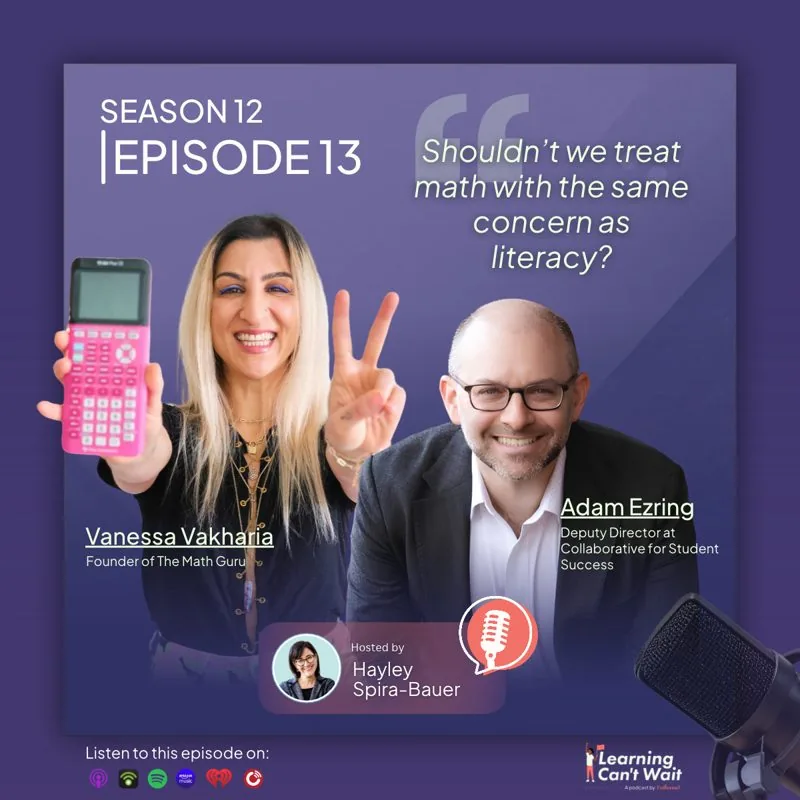 Vanessa Vakharia & Adam Ezring: Family Math, Math Confidence & Learning Through PlayOctober 13, 2026 · Vanessa Vakharia, Adam Ezring
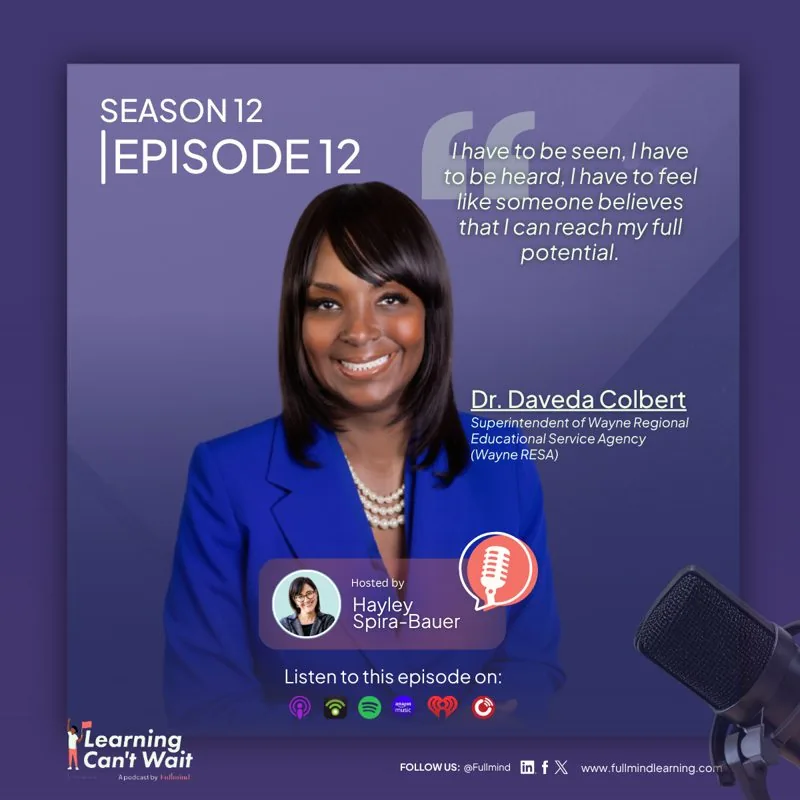 Dr. Daveda Colbert: Leadership, Belonging & ServiceOctober 6, 2026 · Dr. Daveda Colbert
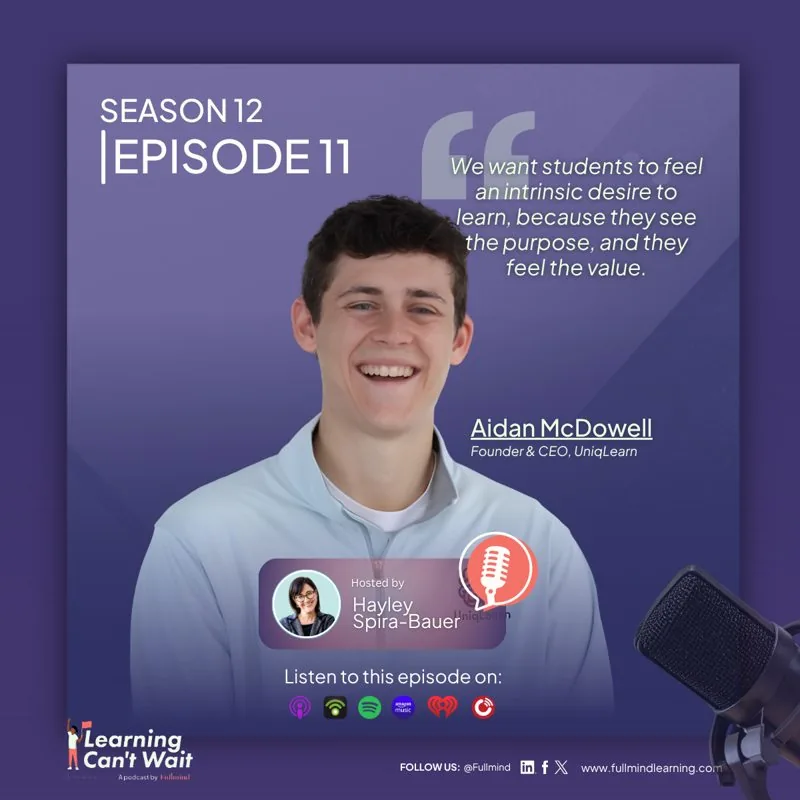 Aidan McDowell: Personalized learning, Student agency & Intrinsic motivationSeptember 29, 2026 · Aidan McDowell
For Education Leaders
Get proven strategies and expert analysis from the host of the Learning Can't Wait podcast, delivered straight to your inbox.




















































How can we help? Let’s connect.
Tell us what you need. It takes about a minute, and you’ll see the next steps right away.
We’ll reach out within one business day
An education consultant talks through your students, schedule and goals.
Get a plan for your district
A plan built around your needs and budget.
Need support? Call 1 (888) 841-7840
Thanks! We’ll confirm your meeting time by email within one business day.
Your one-pagers
Matched to what you told us. They download as one PDF.
Every child deserves the opportunity to access exceptional education.