Connect with the Fullmind Team

For Education Leaders
Get proven strategies and expert analysis from the host of the Learning Can't Wait podcast, delivered straight to your inbox.
LIVE Staffing
LIVE Staffing fills hard-to-staff roles with certified educators who teach live, synchronously, on your schedule and curriculum.
The Most Expensive Vacancy in the Building Is the Math One
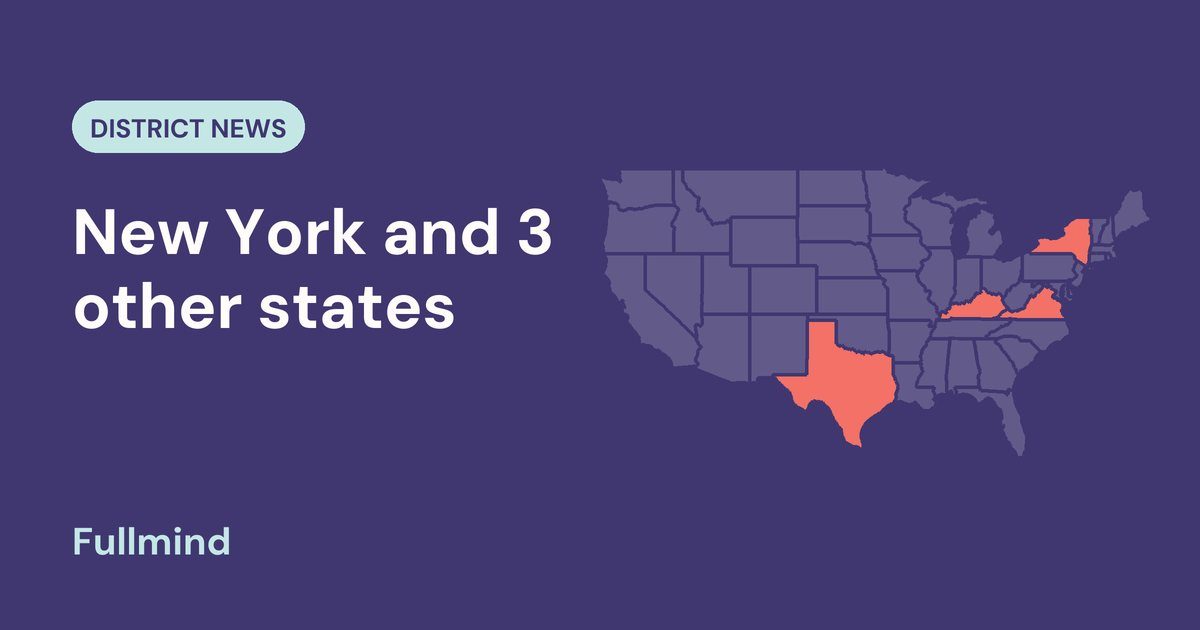
On September 10, New York's State Comptroller released an audit finding that the State Education Department had left about $36 million in teacher-shortage grant funding unawarded over six years, and that only 4% of eligible districts applied for one program built for districts with teacher or subject-area shortages. The state expects to need 180,000 new teachers in the next decade. Large urban and rural districts, the audit says, report severe shortages in science, special education and career and technical education.
The national picture is the same shape. The Learning Policy Institute's 2026 update counts at least 425,412 teaching positions either unfilled or filled by someone not fully certified for the assignment, about one in eight nationally.
Our view: every vacancy costs something, but a math vacancy compounds. Math is sequential; a semester lost in Algebra I is not recovered by a strong teacher in Geometry, because Geometry assumes Algebra I. Math is also where, in our experience, districts often triage with a long-term substitute and a software license, on the theory that the problems have answer keys. And math is where the evidence for live, scheduled instruction is clearest, including in Fullmind's own published results. A district that can only fix one vacancy this semester should fix the math one.
What happened
- New York (Comptroller's audit, Sept 10): $191 million allocated to four teacher-shortage grant programs from 2019 to 2025; $155 million awarded; $118.9 million (62%) spent. In the 2022–26 Teachers of Tomorrow cycle, 27 of 609 eligible districts applied. Of 210 non-participating districts surveyed, 190 said they were unaware the programs existed. SED generally disagreed with the findings, citing the pandemic, staffing shortages, statutory limits and procurement rules, while agreeing to improve metrics and outreach.
- National (LPI, July 2026): 425,412 positions unfilled or out of field; 37,569 reported vacancies from the states that publish a count, plus nearly 388,000 not-fully-certified teachers.
- Kentucky (WDRB+WAVE, Sept 25): Jefferson County had 314 unfilled substitute assignments on a single day; one substitute described being in her second year covering the same classroom because the school could not hire a permanent teacher.
- Texas (Texas Tribune, Sept 23): Houston ISD's September leveling cuts, after enrollment came in an estimated 6,000 students below projection, reached programs and staff at individual campuses.
- Virginia (The Legacy, Oct 7): Henrico cut instructional vacancies from 176 to 107, about 40%, between August 2025 and September 2026, and one elementary school that had 60% of its teachers certified in summer 2025 had 95% of positions covered by certified teachers in September, a reminder that the gap can close when a district treats it as a project.
Every vacancy costs something, but a math vacancy compounds.
What it means for districts (analysis)
The facts above are the auditors', researchers' and reporters'. What follows is our reading, and we will take a position.
Sequence makes math vacancies compound. A student who misses a real teacher in Algebra I arrives in Geometry a year behind and in Algebra II two years behind. No other core subject chains this tightly. The cost of the vacancy is paid for three years, not one.
The substitute-plus-software model is weakest exactly where it is used most. Districts reach for it in math because math looks self-checking. But a long-term substitute without a math certification cannot diagnose why a student's procedure is wrong, and software does not reteach. The result is attendance without instruction.
The money is often already there. New York's audit is a case study in a solvable problem: funds appropriated, districts unaware. Before a district concludes it cannot afford a certified math educator, it should know what its state has already set aside for hard-to-fill subjects.
Live, scheduled instruction is the intervention with the clearest math evidence. Fullmind's published results are strongest in math: a Buffalo charter school whose students "exceeded expected growth in math by 38.5% after one semester"; Columbus Community School District, whose GEAR UP pilot produced measurable growth for students consistently testing below grade level; and Yuba City, where tutored math students grew 8 points against 7.93 for non-participants, a small difference we would rather state than hide.
"With the teacher shortage, Fullmind has been invaluable for our schools. Students are enjoying the rigorous lessons, particularly in algebra."
Practical considerations for district leaders
- Rank vacancies by downstream cost, not by how long they have been open. Algebra I and middle-school math go first.
- Audit the state's shortage-grant programs before the budget conversation. Ask the business office which hard-to-fill-subject grants the district has applied for in the last three years.
- If a math section is on a long-term substitute, put a certified educator on the instruction and let the substitute become the in-room facilitator. That keeps the adult students know and adds the one thing the room is missing.
- Schedule intervention for the cohort that lost a semester, with a baseline and a progress check, so the recovery is visible by spring.
- Measure hours of certified instruction per student in the vacant section, not just whether the room was covered.
Where Fullmind fits
Fullmind puts a live, state-certified educator on the math section a district cannot staff, on the campus bell schedule, with a district facilitator in the room. Elevate K-12 is now part of Fullmind.
- LIVE Staffing covers the course for the semester or the year. In a district using Fullmind Virtual Staffing, the site reports, "Fullmind students were 20% more likely to receive a 'C' or above compared to Non-Fullmind students." Students at King Center Charter School in Buffalo "exceeded expected growth in math by 38.5% after one semester with Fullmind."
- High Dosage Tutoring restores the ground a cohort lost during a vacancy, on a schedule, with attendance and progress reporting. Columbus Community School District's GEAR UP pilot produced "Measurable Math Growth" for students testing below grade level; Yuba City scaled tutoring from 24 to 194 students in a year.
None of this replaces a hired math teacher, and we would not suggest it should. It replaces the semester in which nobody certified was teaching the course.
Run the numbers with us
If your district has a math section on a long-term substitute, send us the course, the grade and the number of students. We will show you what a live certified model delivers in hours per week, what the facilitator does, and tell you plainly whether it fits. Schedule a consultation with Fullmind.
Bottom line
New York's audit found shortage-grant money left unawarded and most surveyed non-participating districts unaware the programs existed, and the Learning Policy Institute counts about one in eight U.S. teaching positions as unfilled or held by a teacher not fully certified for the assignment.
Neither figure is broken down by subject, and neither measures what a lost semester of Algebra I costs students later; that argument is our reading, not a finding. The decision it informs is how a district ranks its open positions this semester: check which state shortage grants it qualifies for, then put certified instruction first in the sequential math courses, where a vacancy carries into the next year.
Sources: Office of the New York State Comptroller, "DiNapoli: Better Oversight and Monitoring Needed to Address Teacher Shortages," September 10, 2026; Learning Policy Institute, State Teacher Shortages 2026 Update, July 2026; WDRB+WAVE, September 25, 2026; The Texas Tribune, September 23, 2026; The Legacy Newspaper, October 7, 2026; Fullmind Impact & Research (King Center, Columbus, Yuba City). Figures are the sources' own; the analysis section reflects Fullmind's interpretation.
Related:
Podcast
From the Learning Can’t Wait podcast
 Hosted by Hayley Spira-Bauer, Chief Academic Officer at Fullmind
Related episodes
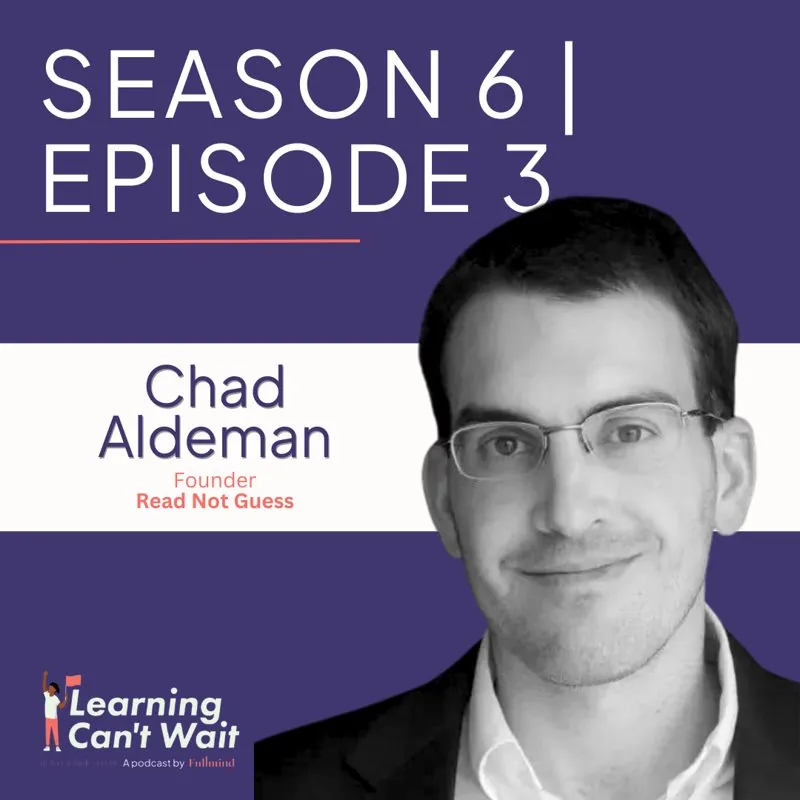 Chad Aldeman: Teacher Shortage, Educator Retention, Read Not GuessSeptember 3, 2024 · Chad Aldeman
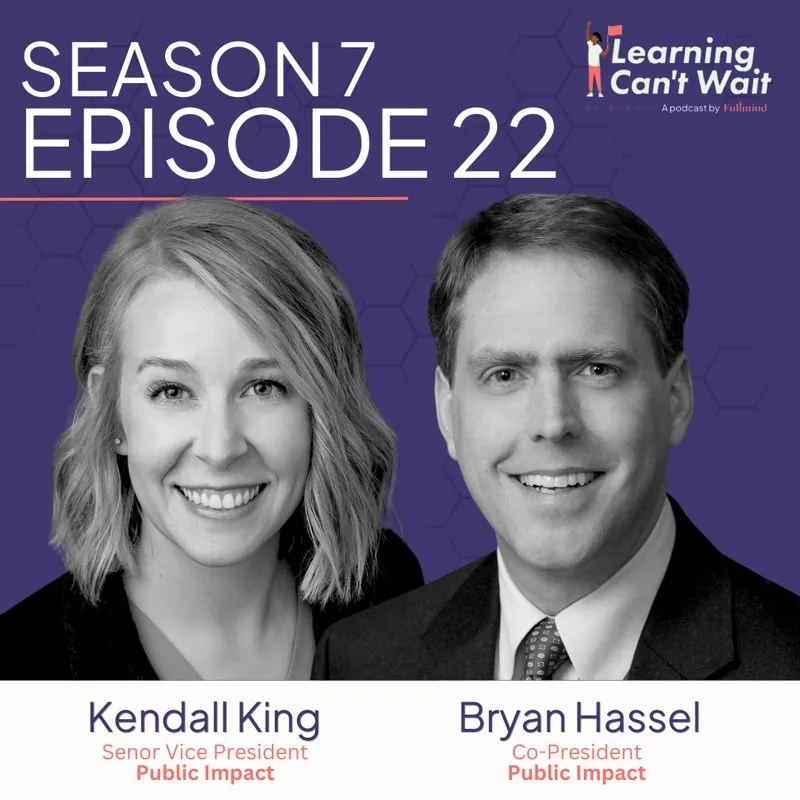 Bryan Hassel + Kendall King: Public Impact, Opportunity Culture, Multi-classroom LeadershipApril 15, 2025 · Bryan Hassel, Kendall King
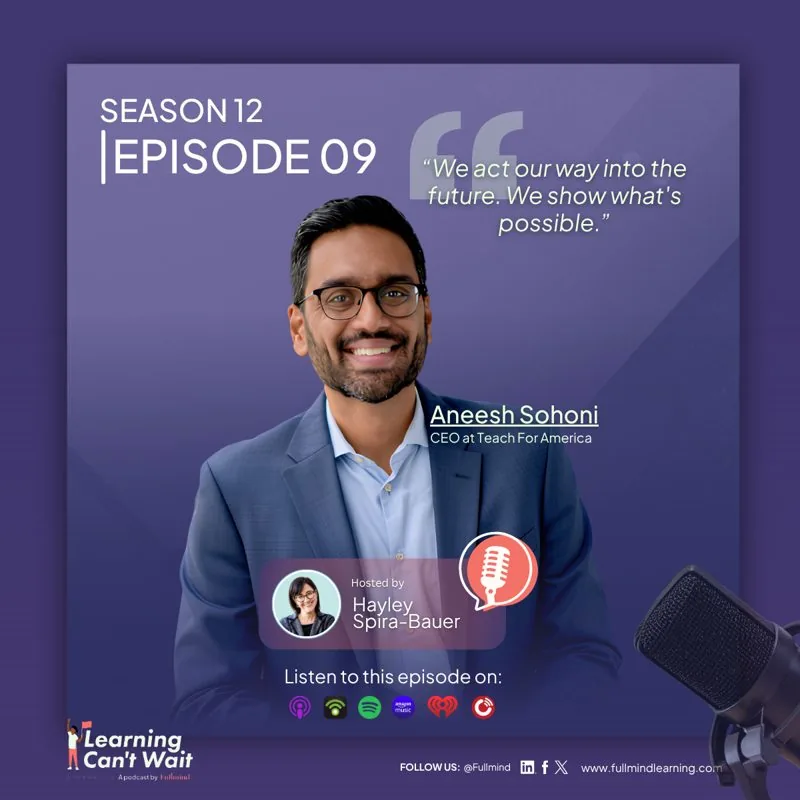 Aneesh Sohoni: Leadership, Opportunity and CommunitySeptember 8, 2026 · Aneesh Sohoni
For Education Leaders
Get proven strategies and expert analysis from the host of the Learning Can't Wait podcast, delivered straight to your inbox.




































































How can we help? Let’s connect.
Tell us what you need. It takes about a minute, and you’ll see the next steps right away.
Meet an education consultant
Talk through your students, schedule and goals.
Get a proposal for your district
A plan built around your needs and budget.
Prefer to call? 210-617-3009
Thanks! Pick a time that works
A 30-minute call with an education consultant. Your details are already filled in.
Your one-pagers
Matched to what you told us. They download as one PDF.
Every child deserves the opportunity to access exceptional education.