Connect with the Fullmind Team

For Education Leaders
Get proven strategies and expert analysis from the host of the Learning Can't Wait podcast, delivered straight to your inbox.
LIVE Staffing
LIVE Staffing fills hard-to-staff roles with certified educators who teach live, synchronously, on your schedule and curriculum.
A Substitute Incentive Is a Vacancy Strategy. JCPS Just Showed What Happens When It Goes.

On Friday, September 25, 2026, Jefferson County Public Schools had 314 substitute assignments it could not fill. Substitute teachers had organized a one-day "blackout" to protest pay cuts, and WDRB+WAVE reported the count alongside the district's comparison: on a similar day in 2025, 225 assignments went unfilled.
The protest got the coverage. The number underneath it deserves more attention. On a comparable day a year earlier, before any protest, Kentucky's largest district already had 225 assignments uncovered. And at least one of its classrooms has not had a permanent teacher for over a year.
Our view: a substitute incentive is not a pay policy. It is a vacancy strategy, and when a district cuts it to balance the budget, the vacancies do not go away. They just get harder to cover. JCPS is the clearest example this fall, but any district that leans on long-term substitutes to carry unfilled rooms should read its own budget the same way.
What happened
From WDRB+WAVE's reporting and JCPS's own statements:
- JCPS is working down a $188 million budget deficit. Its tentative 2026–27 budget, approved in May, carried $115.7 million in reductions, according to Spectrum News 1.
- Long-term substitutes previously earned a 50% daily pay increase after 20 consecutive days in the same assignment. That incentive was cut to 25% this year. Reports differ on whether a separate $1,000 payment to long-term substitutes continues this year. The district expects the changes to save about $4 million.
- Substitutes were notified by email on July 29, days before the school year began. Base daily pay runs $155 to $195 depending on education and experience; some long-term subs say they are losing about $900 a month.
- JCPS also now requires long-term substitutes to hold a bachelor's degree.
- A substitute at Engelhard Elementary told the station she is in her second year in the same classroom because administrators have not found a permanent teacher.
JCPS spokesperson Barnard Baker said staffing figures "continue to change as assignments are accepted" and that the district would evaluate final numbers later. The board took up the working budget the same week. The Courier Journal reported that members accepted it at a September 22 meeting, three days before the blackout, and approved it at a special called meeting on September 28, a vote WDRB+WAVE also reported. The $115 million in cuts stood, the budget still shows a $51.5 million adjusted deficit, and the Courier Journal reported it still awaits final approval by the Kentucky Board of Education. Interim CFO Tom Aberli told the board to expect 2027 to be $20 million to $30 million worse. The FY 2026–27 Working Budget itself sets aside $4,000,000 for long-term substitute incentive pay, down from $8,500,000 in the FY 2025–26 Working Budget ($7,777,000 in that year's January draft), alongside a separate $4,600,000 for substitutes covering vacant teacher positions.
A substitute incentive is not a pay policy.
What it means for districts (analysis)
The facts above are JCPS's. What follows is our reading, and we will take a position.
The incentive was doing a job the budget never named. A 50% premium after 20 days is not a perk; it is the mechanism that keeps one adult in one unfilled classroom for months. Cut it, and the district has not reduced its need for long-term coverage by a dollar. It has only reduced the supply of people willing to provide it. The classroom still needs a teacher on Monday.
The bachelor's requirement makes it worse, not better. Requiring a degree for long-term subs raises the quality floor, which is reasonable. But a substitute with a bachelor's degree, as one substitute told WDRB+WAVE, has other options that pay more than a first-year teacher. Raising requirements while cutting pay narrows the pool from both ends.
$4 million is the wrong number to anchor on. The savings are real. The cost that does not appear on the same page is a semester of patchwork coverage in a core subject: repeated handoffs, pacing that resets with each new adult, grading that backs up, and students who need intervention in the spring that would not have been needed with one consistent teacher. Districts rarely put that cost next to the savings because it is hard to count. It is still paid.
This is not a JCPS problem. JCPS is visible because it is large and because its substitutes organized. The pattern, a district balancing the budget on the staffing layer that covers vacancies, is common wherever teacher pipelines are thin, and the district's own forecast says the pressure gets worse next year, not better.
"Fullmind isn't just filling a vacancy - it's providing a way forward. It accelerates learning and offers a different approach that helps students master their skills and competencies, preparing them for life after high school."
Practical considerations for district leaders
- Count the rooms, not the assignments. How many classrooms in your district have been on a long-term substitute since the first day of school? That number, by subject and building, is your vacancy exposure.
- Treat substitute incentives as part of the vacancy budget. If an incentive is on the cut list, ask what replaces it for the rooms that depend on it.
- Separate the daily absence problem from the sustained vacancy problem. Daily subs cover sick days. They are the wrong tool for a classroom with no teacher, and using them that way is where the instructional cost accumulates.
- Put a full delivered cost on each option: long-term sub with incentive, rotating daily subs, administrator coverage, or a live certified educator with a facilitator. Include the intervention you will need later if coverage is inconsistent.
- Plan for the exits. At least one JCPS long-term substitute said publicly that she would have to walk away if the pay is not restored. If your district is making similar changes, assume some of your long-term subs will too, and know which rooms that affects.
Where Fullmind fits
Fullmind places live, state-certified educators in classrooms a district cannot fill, for as long as the gap lasts. Elevate K-12 is now part of Fullmind.
- LIVE Staffing pairs a live, Kentucky-certified educator who works on the district's bell schedule and curriculum with an in-person classroom facilitator. It is scoped to one course, one building, and one duration, so a district can cover a sustained vacancy or an extended leave without converting it into a permanent position.
- SWD Services & IEP Fulfillment provide certified special education instruction and IEP support when the unfilled room is a SPED classroom.
- High Dosage Tutoring helps students who lost ground during a stretch of inconsistent coverage catch up on a schedule.
None of this replaces a district's substitute pool, and we would not suggest it should. Daily absences still need daily subs. But a classroom that has been on a substitute since August is a vacancy, not an absence, and it deserves a teacher. The most expensive option is the one JCPS is living with: a certified-teacher workload at substitute pay, held together by an incentive that just got cut.
Run the numbers with us
If your district has rooms that have been on a long-term sub since the first day of school, bring us the list. We will put a full delivered cost next to each option for one assignment, facilitator included, and tell you plainly whether a live certified educator pencils out. Schedule a consultation with Fullmind.
Bottom line
JCPS cut its long-term substitute incentive from 50% to 25% to save about $4 million, and on the day substitutes stayed home, 314 assignments went unfilled, against 225 on a comparable day a year earlier. The data has limits. One day's count during a protest is not a trend, the district says its figures were still changing, and nothing published so far shows how many classrooms have gone without a permanent teacher since August, or whether long-term substitutes are actually leaving.
The decision it informs is narrow and immediate: before any substitute incentive goes on a cut list, count the rooms that depend on long-term coverage, by subject and building, and decide what will cover each one if those substitutes go.
Sources: WDRB+WAVE, "'We have to take action': JCPS substitute teachers stage 'blackout' over pay cuts," September 25, 2026; WDRB+WAVE, "JCPS board approves budget with $115M in cuts, still faces deficit," September 28, 2026; Louisville Courier Journal, "JCPS board approves working budget with $51.5M deficit. What to know," September 23, 2026, updated after the September 28 vote; Spectrum News 1, August 9 and May 13, 2026; JCPS Draft Budget Details, January 14, 2026; JCPS FY 2025–26 Working Budget, September 2025; JCPS FY 2026–27 Working Budget, September 2026. Figures are the district's and reporters' own; the analysis section reflects Fullmind's interpretation.
Related:
Podcast
From the Learning Can’t Wait podcast
 Hosted by Hayley Spira-Bauer, Chief Academic Officer at Fullmind
Related episodes
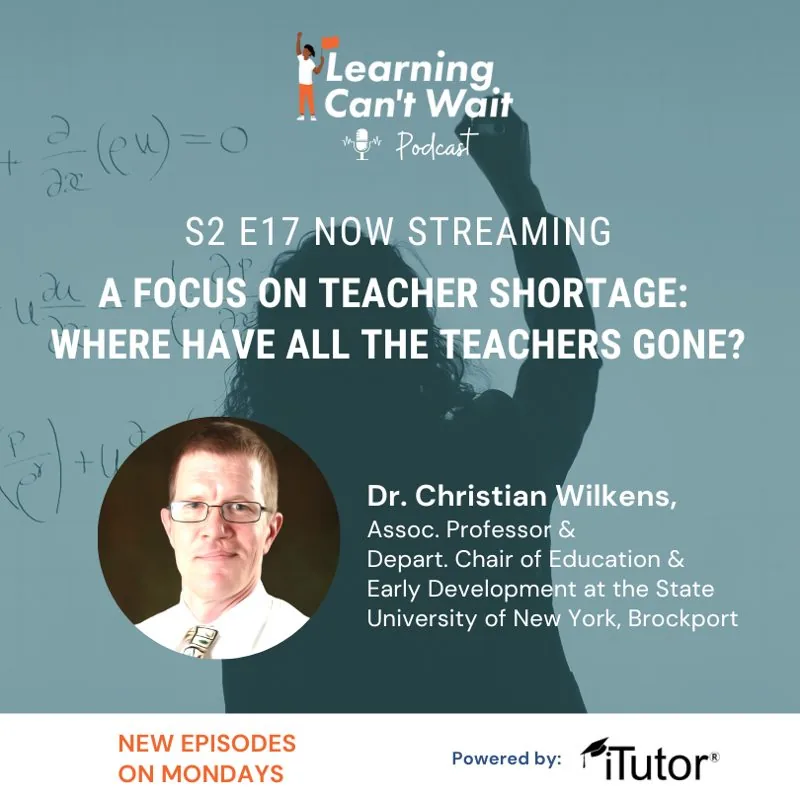 Christian P. Wilkens: Teacher Shortage, Education Inequality, Education Workforce, DiversityJanuary 17, 2023 · Christian P. Wilkens
 Ellen Sherratt: Education Policy, Teacher Shortage, Teacher Salaries, Teacher Salary ProjectApril 3, 2023 · Ellen Sherratt
 Doug McCurry: Leadership Lessons, Educational Challenges, Summer Learning Programs, High-Quality CurriculumApril 30, 2024 · Doug McCurry
Kentucky on the podcast
Episodes with Kentucky connections
 Jean-Claude Brizard: Digital Promise, Innovation in Education, AI in Education, Learning ScienceJanuary 2, 2024 · Jean-Claude Brizard
For Education Leaders
Get proven strategies and expert analysis from the host of the Learning Can't Wait podcast, delivered straight to your inbox.






















































How can we help? Let’s connect.
Tell us what you need. It takes about a minute, and you’ll see the next steps right away.
Meet an education consultant
Talk through your students, schedule and goals.
Get a proposal for your district
A plan built around your needs and budget.
Prefer to call? 210-617-3009
Thanks! Pick a time that works
A 30-minute call with an education consultant. Your details are already filled in.
Your one-pagers
Matched to what you told us. They download as one PDF.
Every child deserves the opportunity to access exceptional education.