Connect with the Fullmind Team

For Education Leaders
Get proven strategies and expert analysis from the host of the Learning Can't Wait podcast, delivered straight to your inbox.
LIVE Staffing
LIVE Staffing fills hard-to-staff roles with certified educators who teach live, synchronously, on your schedule and curriculum.
Districts Keep Missing Their Enrollment Forecasts. The Fix Isn't a Better Forecast.
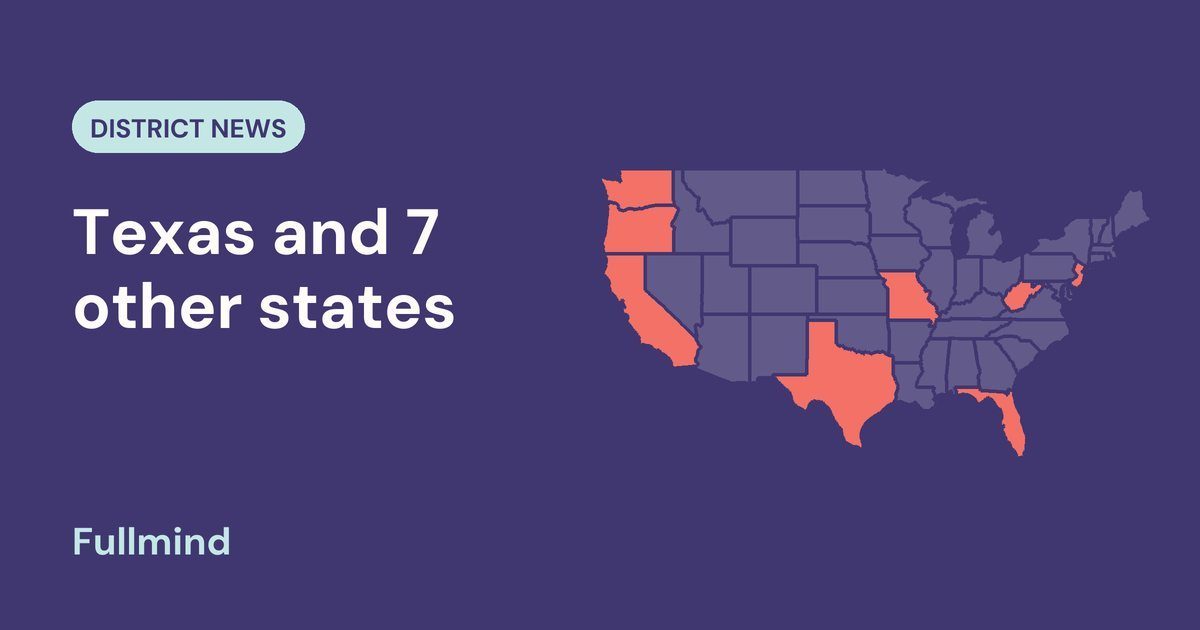
Houston ISD built its 2026–27 budget on losing 4,000 students. By late September the district was telling campuses to cut staff and spending, because early counts showed it had lost about 10,000, according to the Texas Tribune. The Tribune also found something more useful than the gap itself: HISD's actual enrollment had come in below projection by an average of 1,700 students in each of the three previous years.
Houston is the clearest case this fall. It is not an unusual one. A West Virginia county lost 240 students and is looking at roughly 30 positions.
Our view: when a district misses its projection by about the same margin three years running, the problem is not the spreadsheet. It is a structural mismatch between how districts buy instruction (permanent positions, committed in spring) and how students arrive (variably, in August). The districts that come through this cycle intact will be the ones that decide which part of their instructional capacity should be permanent, and which part should be bought a course, a cohort or a semester at a time.
What happened
From reporting and district statements in the last five weeks:
- Houston ISD (Texas Tribune, Sept 23): spring budget assumed a 4,000-student loss; reported loss about 10,000; three-year average miss of 1,700; enrollment losses had already cost the district about $190 million before this round. Campus letters obtained by the Tribune described a $500,000 shortfall at one high school affecting choir and debate, and an assistant principal and librarian reassigned at a middle school. Official counts are due to the state in October.
- Randolph County, West Virginia (WDTV, Oct 8): enrollment down about 240, state funding down about $2 million, equivalent to roughly 30 positions; a shortfall above $3 million possible in fiscal 2028.
- Washington and Oregon (OPB, Sept 20; NBC16, Sept 3): districts opened the year with fewer staff; one district is down about 50 positions; Eugene's deficit approached $50 million, with layoffs and a school closure.
- Missouri: North Kansas City Schools is planning about $16 million in recurring reductions by 2027–28 after state funding shortfalls (district budget page, Sept 30).
When a district misses its projection by about the same margin three years running, the problem is not the spreadsheet.
What it means for districts (analysis)
The facts above are the districts' and reporters'. What follows is our reading, and we will take a position.
The miss has a direction, and that is the tell. Forecasting error should be random. A district that overshoots its enrollment projection three years in a row is not unlucky; it is using a planning model that assumes students who are leaving will stay. The honest response is not a tighter model. It is a budget that stops treating every section as a permanent hire.
A September leveling is a schedule problem wearing a budget costume. The shortfall gets resolved on paper. The master schedule does not. When a campus loses a position in late September, the section that disappears is the one that could not justify a full-time teacher on its own: the 18-student elective, the single section of a language, the advanced course that only runs in a strong year. Students are reshuffled, and the course is gone until next fall, if then.
Intervention goes first because nothing requires it. Core classes have ratios. Special education has IEPs. Tutoring and intervention blocks have neither, so they are the easiest line to zero out, and they were serving the students furthest behind.
Variable capacity is not fewer teachers. The core schedule belongs in permanent positions, staffed by the district's own faculty. The marginal layer, the bubble sections and intervention blocks, can be carried as a variable cost: scoped to one course, one cohort, one semester, and paid for only while it runs. That is how a district stops losing courses to the gap between its forecast and its enrollment, without over-hiring for students who may not come.
"The flexibility was a major selling point for our principals - not having to commit for a full year was crucial. As a parent whose son has two Fullmind educators, I've seen firsthand how they pace the learning, listen to students, and show genuine care about content mastery. This has been his best start to a school year yet."
Practical considerations for district leaders
- Track projection error, not just enrollment. Three years of misses in the same direction is a planning-model finding; treat it as one.
- Build the bubble list now: every course with one section and fewer than 20 students, by campus. That is the inventory a leveling cut will come from.
- Separate the core from the variable layer in the budget itself, so the spring staffing plan commits permanent positions only to the core.
- Protect intervention with a schedule and a report. A block with a calendar, attendance and progress data survives a budget review better than an informal pull-out.
- Have a scoped option ready before the count date, so when the numbers settle you can act in a week rather than a semester.
Where Fullmind fits
Fullmind supplies the variable layer: live, state-certified educators who teach on the district's own schedule and curriculum, scoped to a course, a cohort or a semester, with an in-person district facilitator in the room. Elevate K-12 is now part of Fullmind.
- LIVE Staffing keeps a bubble course on the master schedule for one section and one semester, without a permanent position behind it. In a district using Fullmind Virtual Staffing, the site reports, "Fullmind students were 20% more likely to receive a 'C' or above compared to Non-Fullmind students."
- High Dosage Tutoring restores intervention capacity on a schedule. Yuba City, California grew its program from 24 to 194 students in one year, which is the variable-capacity argument in a single number; tutored ELA students gained an average of 16 iReady points against 10.63 for non-participants, in a comparison the district published with Fullmind.
- Credit Recovery keeps students whose schedules changed mid-year on track to graduate, with live instruction rather than a software license.
None of this replaces a district's faculty, and we would not suggest it should. It is a way to stop the forecasting miss from becoming a course that disappears.
Run the numbers with us
If your district is reconciling fall enrollment against its spring projection, send us the bubble list. We will put a full delivered cost next to each option, facilitator included, and tell you plainly where variable capacity pencils out and where it does not. Schedule a consultation with Fullmind.
Bottom line
When enrollment comes in below projection in the same direction year after year, as it did in Houston ISD by an average of 1,700 students in each of three years, the correction arrives in September, after positions are committed and the master schedule is set. The limits are real. Houston's fall figures are early counts until the October state submission, the other districts here faced different mixes of enrollment loss and state funding pressure, and none of this reporting counts which courses or intervention blocks were actually lost; that part is our reading.
The decision it informs is the spring staffing plan: which sections get permanent positions, and which are carried as scoped capacity that can be adjusted once fall enrollment is known.
Sources: The Texas Tribune (via KPRC), September 23, 2026; WDTV, October 8, 2026; OPB, September 20, 2026; NBC16, September 3, 2026; North Kansas City Schools budget-reduction page, September 30, 2026; Fullmind Impact & Research and Yuba City case study. Figures are the districts' and reporters' own; the analysis section reflects Fullmind's interpretation.
Related:
- When a School Referendum Fails, the First Cuts Are the Courses Students Chose
- A Substitute Incentive Is a Vacancy Strategy. JCPS Just Showed What Happens When It Goes.
- North Kansas City Has 18 Months to Cut $16 Million. That's the Good News.
- The Most Expensive Vacancy in the Building Is the Math One
- Washington Cut Positions by Not Filling Them. The Course Those Positions Taught Still Needs a Teacher.
- In a 3,100-Student District, 30 Positions Is Not a Line Item. It's the Course Catalog.
Podcast
From the Learning Can’t Wait podcast
 Hosted by Hayley Spira-Bauer, Chief Academic Officer at Fullmind
Newest episodes
 Vanessa Vakharia & Adam Ezring: Family Math, Math Confidence & Learning Through PlayOctober 13, 2026 · Vanessa Vakharia, Adam Ezring
 Dr. Daveda Colbert: Leadership, Belonging & ServiceOctober 6, 2026 · Dr. Daveda Colbert
 Aidan McDowell: Personalized learning, Student agency & Intrinsic motivationSeptember 29, 2026 · Aidan McDowell
For Education Leaders
Get proven strategies and expert analysis from the host of the Learning Can't Wait podcast, delivered straight to your inbox.














































































How can we help? Let’s connect.
Tell us what you need. It takes about a minute, and you’ll see the next steps right away.
Meet an education consultant
Talk through your students, schedule and goals.
Get a proposal for your district
A plan built around your needs and budget.
Prefer to call? 210-617-3009
Thanks! Pick a time that works
A 30-minute call with an education consultant. Your details are already filled in.
Your one-pagers
Matched to what you told us. They download as one PDF.
Every child deserves the opportunity to access exceptional education.