
For Education Leaders
Get proven strategies and expert analysis from the host of the Learning Can't Wait podcast, delivered straight to your inbox.
LIVE Staffing
LIVE Staffing fills hard-to-staff roles with certified educators who teach live, synchronously, on your schedule, with your curriculum or ours.
Bethel Closed Two Schools Early and Calls Itself "Pretty Strong." Eugene 4J's Deficit Hit $50 Million. Timing Was the Difference.

Four Oregon districts opened this school year carrying recurring deficits driven by declining enrollment and the State School Fund's per-student formula, according to NBC16. Bethel's is $1.8 million. Corvallis is at about $4 million. Springfield's is more than double Corvallis's. Eugene 4J's projected deficit started near $30 million and grew to nearly $50 million by spring, when a second round of layoffs drew family backlash; the district has since addressed more than half of it through layoffs, program changes and a school closure.
Bethel took a different path. "We were one of the first districts in the state to go through a school closure and consolidation process," Superintendent Kraig Sproles said. The district closed Clear Lake first and Shasta Middle School second. "Financially we're pretty strong coming into this school year."
Our view: Bethel and Eugene 4J are neighbors facing the same enrollment arithmetic, and the difference between a $1.8 million deficit and a $50 million one is largely when each district changed its cost structure. That is a lesson about timing, and it has a second half. Closing buildings is the one-time move. The recurring move, the one that determines whether a district has to cut again in two years, is how it staffs the courses that survive consolidation. A district that gets the timing right on buildings and leaves every section in a permanent position is a district that will be back at the budget committee in 2028.
What happened
From NBC16's September 3 report:
- Eugene 4J and Springfield laid off teachers. Eugene 4J's deficit grew from about $30 million to nearly $50 million this spring; the district has addressed more than half through layoffs, program changes and closing a school. A former financial director filed a legal claim in June alleging negligent spending; the district's 2027–28 budget approval was paused.
- Bethel closed Clear Lake and Shasta Middle School and now carries a $1.8 million recurring deficit. Corvallis closed schools and carries about $4 million; its superintendent said consolidation "put us in a better position for the long haul."
- Superintendents attributed the strain to enrollment decline and the State School Fund's enrollment-based formula. Eugene 4J's superintendent said state funding "continues to lag behind what we ideally would need."
- District leaders said their focus going forward is rebuilding enrollment, tracking spending, and setting financial and academic goals.
Bethel and Eugene 4J are neighbors facing the same enrollment arithmetic, and the difference between a $1.8 million deficit and a $50 million one is largely when each district changed its cost structure.
What it means for districts (analysis)
That is what the superintendents' and the reporter's put on the record. Here is what we think it means.
Early action buys a smaller cut, not a permanent fix. Consolidation addresses buildings once; the enrollment trend addresses the schedule every year. The district that closed early has earned time, and the question is what it does with it.
A $50 million spring is a schedule problem by the time it arrives. When a deficit grows by $20 million between winter and spring, the second round of cuts reaches instruction, because the non-instructional reductions went in the first round.
The recurring layer is the one to redesign. After consolidation, every district on this list still has single-section courses, intervention blocks and electives that a full position cannot justify. Those are the lines that get cut in the next round. Carrying them as variable capacity, scoped to a course and a semester, is the move that keeps a district from returning to the budget committee with the same list.
Enrollment recovery runs through the catalog. All four districts say they want to rebuild enrollment. Families choose schools partly on what is offered. A district that cuts the second language and the advanced science section to close a deficit has made its enrollment problem worse. Keeping those courses on the schedule through a live model is an enrollment strategy as much as a staffing one.
Practical considerations for district leaders
- If you have closed buildings, use the time you bought. Build the bubble list now: every course with one section and fewer than 20 students, by school.
- Sort the list into core (permanent positions) and variable (scoped by course and semester). Make that split explicit in the 2027–28 staffing plan.
- For each at-risk course, price three paths with all costs in: keep the position, cut the course, or deliver it live with a facilitator.
- An intervention block that produces a report is harder to cut than one that does not; schedule it and measure it.
- Tell families what the catalog will look like under the plan. Silence about courses is what moves enrollment.
Where Fullmind fits
Bethel moved early and carries $1.8 million; Eugene 4J waited and carried $50 million. Both still have single-section courses a full position cannot justify. Fullmind, now home to Elevate K-12, is the recurring layer after the one-time consolidation: an Oregon-certified educator teaches those sections live, by the semester, on the school's schedule, with a facilitator in the room.
- LIVE Staffing keeps the second language or the advanced science section a closure would otherwise end; in one partner district, 44.7% of Fullmind students earned a C or above, compared with 25.1% of their peers.
- High Dosage Tutoring protects intervention through a layoff year; Yuba City, California grew its program from 24 to 194 students in a year and published the growth comparison with Fullmind.
- Credit Recovery keeps students whose schedules changed in a consolidation on track to graduate, with a live teacher.
Districts that closed buildings early bought time. This is what to do with it so the next budget committee meeting is not about the same courses.
Run the numbers with us
If your district has consolidated and still shows a recurring deficit, send us the single-section course list for 2027–28. We will price each one three ways and show which a live model would hold without a permanent position. Schedule a consultation with Fullmind.
Sources: NBC16 (KMTR), "Oregon school districts cut costs amid budget deficits, layoffs and program changes," September 3, 2026; Fullmind Impact & Research and Yuba City case study. Figures are the superintendents' and reporter's own; the analysis section reflects Fullmind's interpretation.
Related: Districts Keep Missing Their Enrollment Forecasts. The Fix Isn't a Better Forecast.
Podcast
From the Learning Can’t Wait podcast
 Hosted by Hayley Spira-Bauer, Chief Academic Officer at Fullmind
Newest episodes
 Vanessa Vakharia & Adam Ezring: Family Math, Math Confidence & Learning Through PlayOctober 13, 2026 · Vanessa Vakharia, Adam Ezring
 Dr. Daveda Colbert: Leadership, Belonging & ServiceOctober 6, 2026 · Dr. Daveda Colbert
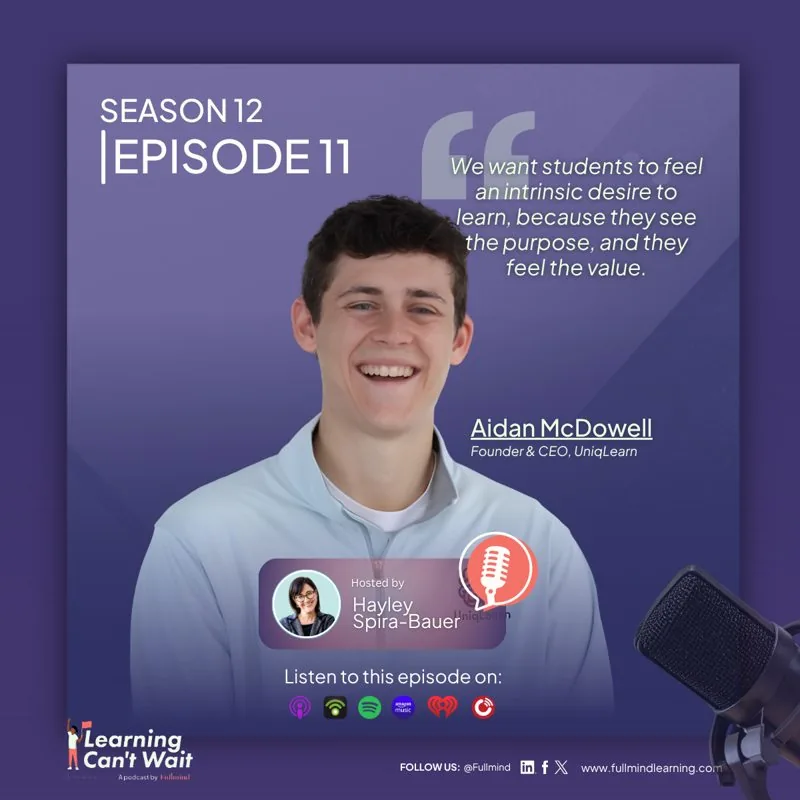 Aidan McDowell: Personalized learning, Student agency & Intrinsic motivationSeptember 29, 2026 · Aidan McDowell
For Education Leaders
Get proven strategies and expert analysis from the host of the Learning Can't Wait podcast, delivered straight to your inbox.



























































How can we help? Let’s connect.
Tell us what you need. It takes about a minute, and you’ll see the next steps right away.
We’ll reach out within one business day
An education consultant talks through your students, schedule and goals.
Get a plan for your district
A plan built around your needs and budget.
Need support? Call 1 (888) 841-7840
Thanks! We’ll confirm your meeting time by email within one business day.
Your one-pagers
Matched to what you told us. They download as one PDF.
Every child deserves the opportunity to access exceptional education.