Connect with the Fullmind Team

For Education Leaders
Get proven strategies and expert analysis from the host of the Learning Can't Wait podcast, delivered straight to your inbox.
CTE Pathways
Offer online CTE courses without a qualified instructor in every building.
The Career Pathways With the Least Access Are the Ones That Don't Need a Shop
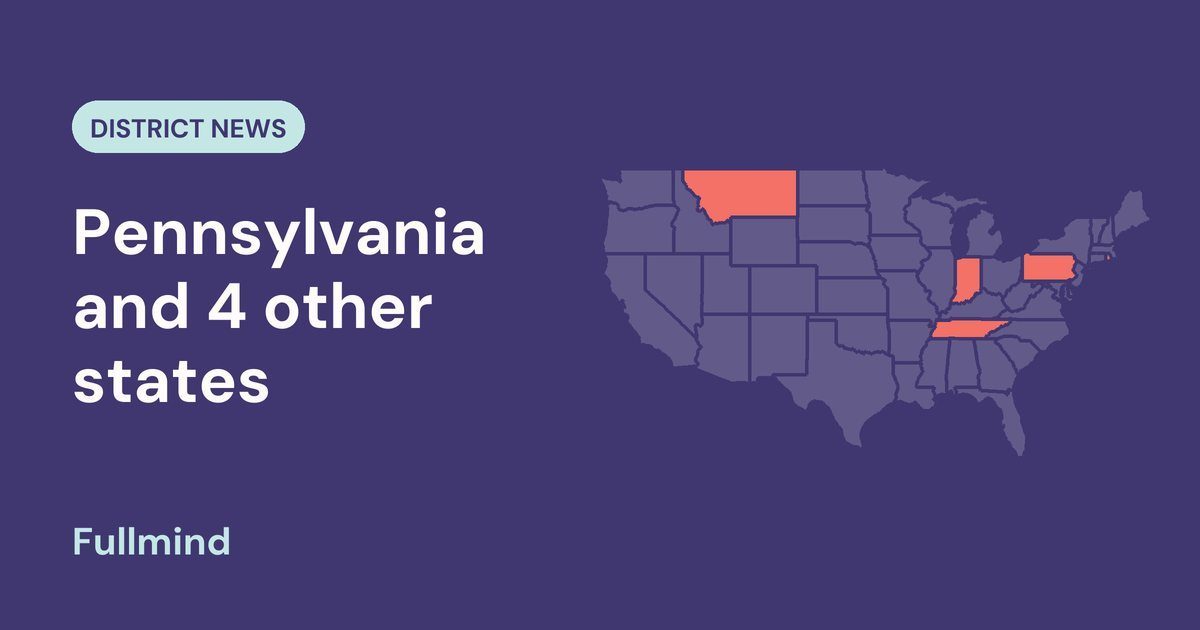
In March, Pennsylvania's Legislative Budget and Finance Committee published a detailed look at career and technical education access. The report found 7,343 students on CTE waitlists at responding providers, up 150.6% since 2019–20, with Architecture and Construction alone accounting for 1,750. It also found that the state's secondary CTE instructor count fell 19.5% between 2019–20 and 2022–23 while participation rose 7.1%, and that one in ten responding providers had eliminated a program because it could not find an instructor.
The finding we think matters most is quieter. The report mapped which career clusters students can actually reach from their home district. For Architecture and Construction, Health Science and Transportation, nearly every district has a program within reach. For three clusters, at least 80% of districts have none: Business, Management and Administration (421 of 500 districts, 339,264 high school students without access), Education and Training (400 districts, 324,296 students), and Marketing, Sales and Service (414 districts, 313,248 students). STEM is close behind, with 347 districts and 263,561 students lacking a program.
Our view: the pathways with the worst access are the ones that need an instructor and a laptop, not a welding bay. Pennsylvania's report is honest that physical capacity drives most waitlists for shop-based programs; 97% of providers with waitlists said so. But the access deserts are in clusters where there is no shop to build. A district that cannot offer a business, education, marketing or STEM pathway is not short on square footage. It is short on one certified person, and for those clusters a live certified instructor can open the pathway this semester.
What happened
- Pennsylvania (LBFC report, March 2026): 128 providers responded; 67 had waitlists totaling 7,343 students. Among providers reporting instructor shortages, 86.2% cited salary and 79.3% cited the certification process. Secondary CTE instructors fell from 4,110 to 3,310. Nationally, 28 states reported secondary CTE instructor shortages to the U.S. Department of Education in 2023–24. The committee recommended waitlist reporting, facility grants, tiered subsidies for in-demand clusters, and a shorter path to permanent certification.
- Montana (Northern Broadcasting, Aug 27): career and technical education was reported among the hardest positions to fill, and the state superintendent said rural and reservation schools are typically hit hardest.
- Indiana (district announcement): one district's published list of programs at risk if its referendum fails includes engineering, biomedical, robotics, construction, journalism, manufacturing, business, finance, criminal justice, culinary, welding, nursing and EMT courses, plus professional certifications and internships.
- Rhode Island (Council on Elementary and Secondary Education minutes, Mar 31): the Council approved criteria that let teachers who already hold a Rhode Island certificate meet the CTE certificate's occupational-experience requirement through industry experience, professional learning or technical-college coursework.
- Nationally, TNTP wrote in August that district leaders are "forced to delay or scale back new pathways" because they cannot find qualified instructors (TNTP).
The pathways with the worst access are the ones that need an instructor and a laptop, not a welding bay.
What it means for districts (analysis)
The facts above belong to the legislature, the states and the reporters. What follows is our reading, and we will take a position.
Sort pathways by what they actually require. Welding needs a shop, ventilation, equipment and an instructor. Accounting, marketing, education and training, cybersecurity and most STEM pathways need a certified instructor, a curriculum, and a room with devices. Districts that treat all CTE as a capital project are postponing the pathways they could open now.
The instructor is the binding constraint where the room exists. Pennsylvania's 19.5% instructor decline against 7.1% participation growth is the arithmetic behind every waitlist that is not about square footage. Shorter certification routes, like the criteria Rhode Island approved and the path Pennsylvania's committee proposes, are the right policy. They take years to produce teachers. The course catalog for 2027–28 is being built this fall.
Expansion promises outrun pipelines. Indiana's referendum list shows the pattern: under budget pressure, career courses are on the cut list. A pathway announced without an instructor behind it is a brochure.
Rural districts have the most to gain. Three Pennsylvania counties have no CTE program within their borders; their high schools are a 34- to 52-minute drive from the center that serves them. The non-shop clusters can be delivered in the home high school by a live instructor with industry experience, which is how a 200-student district offers a business pathway at all.
"not every school has to be everything for every student."
Practical considerations for district leaders
- Run Pennsylvania's access map for your own district: for each career cluster your state recognizes (Pennsylvania's list has 14), can a student reach a program without leaving the county?
- Split the gaps into shop-dependent and instructor-dependent. Fund the first through capital planning. Staff the second this year.
- Check your state's CTE certification routes for industry professionals; several states now have an alternative pathway.
- Before announcing a new pathway, name the instructor. If there is none, decide whether the pathway launches with a live certified instructor or waits a hiring cycle, and say which.
- Report waitlists by program even if your state does not require it. Pennsylvania's department could not give the legislature waitlist counts because it does not collect them.
Where Fullmind fits
Fullmind delivers career and technical pathways in the instructor-dependent clusters with live, certified educators who hold industry experience, teaching on the district's bell schedule with a district facilitator in the room. Elevate K-12 is now part of Fullmind.
- CTE Pathways supports programs across the 14 Career Clusters of Advance CTE's modernized national framework (a different grouping from Pennsylvania's state clusters), including Management & Entrepreneurship, Marketing & Sales, Education, Financial Services and Digital Technology, taught live by state-certified educators who bring relevant professional experience within the career pathway they teach. Fullmind's work with RSIZ on rural career education is on the Impact & Research page as "Reimagining Rural Career Education."
- LIVE Staffing covers the academic and elective sections that sit next to a pathway, so a small school can run the full sequence. In a district using Fullmind Virtual Staffing, the site reports, "Fullmind students were 20% more likely to receive a 'C' or above compared to Non-Fullmind students."
This does not build a shop or replace a district's own CTE faculty. It opens the pathways that only ever needed a teacher.
Run the numbers with us
If your district has a career cluster it cannot offer, tell us which one and how many students asked for it. We will tell you plainly whether it is a pathway a live certified instructor can open this semester, or one that needs a building first. Schedule a consultation with Fullmind.
Bottom line
Pennsylvania's legislative study found that most of the state's districts have no business, education and training, or marketing program within reach, with STEM close behind, while secondary CTE instructors fell 19.5% as participation grew. The pathways with the widest gaps are the ones that need a teacher more than a building.
The limits matter: the waitlist figures come from a survey of responding providers, not a statewide count, and access was measured by programs available to each district, not by how many students want them. Nor does the report show that an instructor alone would close every gap. The decision it informs is how a district plans next year's pathways: sort each missing cluster by whether it needs a shop or a certified instructor, and staff the instructor-dependent ones first.
Sources: Pennsylvania Legislative Budget and Finance Committee, "Barriers to Career and Technical Education," March 2026; Northern Broadcasting, August 27, 2026; Noblesville Schools announcement; Rhode Island Council on Elementary and Secondary Education minutes, March 31, 2026; TNTP, August 2026; Fullmind Impact & Research. Figures are the sources' own; the analysis section reflects Fullmind's interpretation.
Related:
Podcast
From the Learning Can’t Wait podcast
 Hosted by Hayley Spira-Bauer, Chief Academic Officer at Fullmind
Newest episodes
 Vanessa Vakharia & Adam Ezring: Family Math, Math Confidence & Learning Through PlayOctober 13, 2026 · Vanessa Vakharia, Adam Ezring
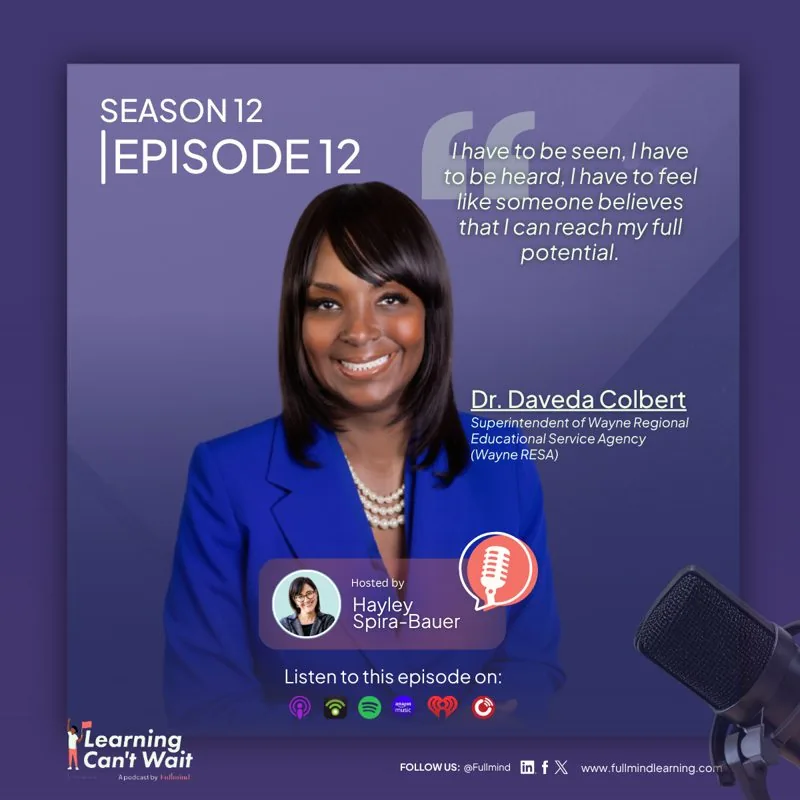 Dr. Daveda Colbert: Leadership, Belonging & ServiceOctober 6, 2026 · Dr. Daveda Colbert
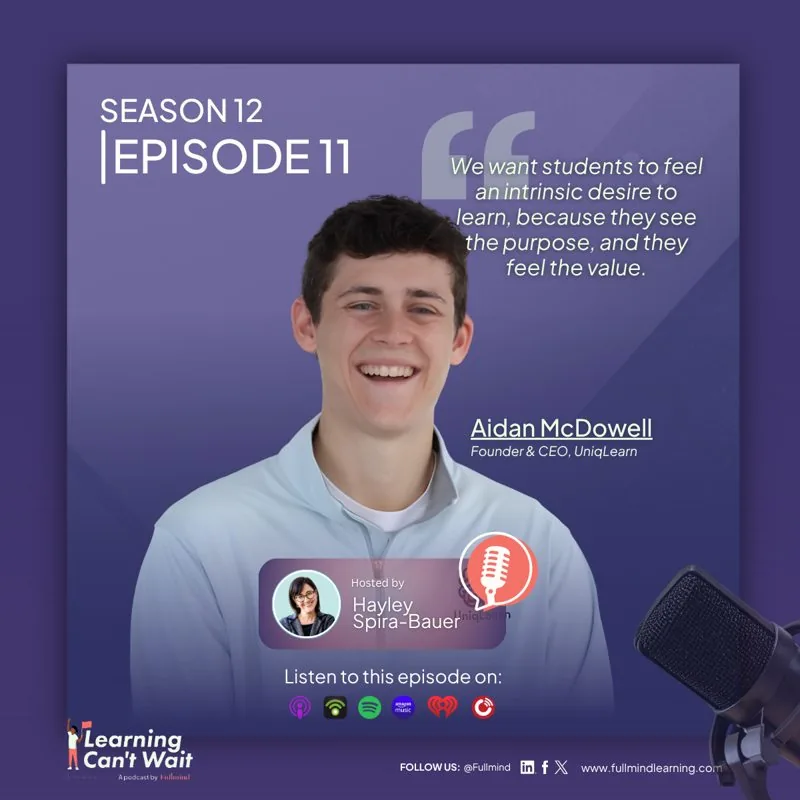 Aidan McDowell: Personalized learning, Student agency & Intrinsic motivationSeptember 29, 2026 · Aidan McDowell
For Education Leaders
Get proven strategies and expert analysis from the host of the Learning Can't Wait podcast, delivered straight to your inbox.






































































How can we help? Let’s connect.
Tell us what you need. It takes about a minute, and you’ll see the next steps right away.
Meet an education consultant
Talk through your students, schedule and goals.
Get a proposal for your district
A plan built around your needs and budget.
Prefer to call? 210-617-3009
Thanks! Pick a time that works
A 30-minute call with an education consultant. Your details are already filled in.
Your one-pagers
Matched to what you told us. They download as one PDF.
Every child deserves the opportunity to access exceptional education.