Connect with the Fullmind Team

For Education Leaders
Get proven strategies and expert analysis from the host of the Learning Can't Wait podcast, delivered straight to your inbox.
LIVE Staffing
LIVE Staffing fills hard-to-staff roles with certified educators who teach live, synchronously, on your schedule and curriculum.
Franklin County Cut 40 Positions and Kept Most Programs. The Superintendents Say It Isn't Sustainable. They're Right.
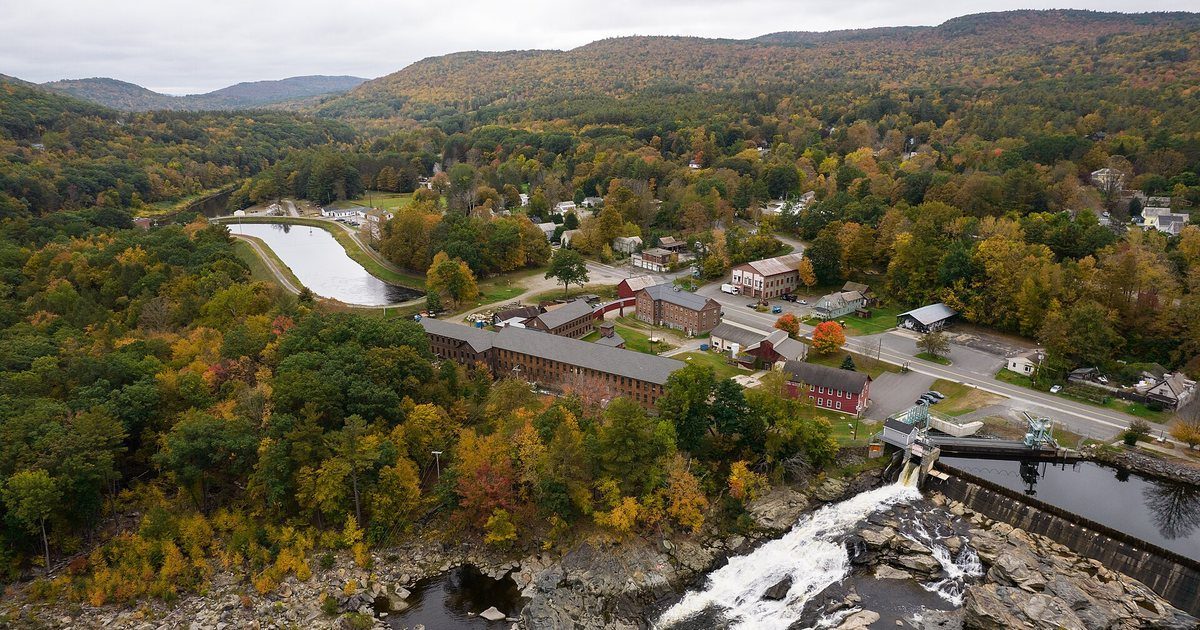
The Greenfield Recorder tallied the staffing changes across Franklin County's public school districts for fiscal 2027 and found more than 40 fewer educators, administrators and staff than a year ago, driven by operating costs, salaries and health insurance outpacing revenue and state aid, according to its September 30 report. Mohawk Trail cut 21.5 positions. Frontier cut seven, including a special education teacher and the librarian. Deerfield Elementary lost a sixth-grade teacher, a special education teacher, a reading interventionist and a part-time PE teacher. Franklin County Technical School lost its librarian, a carpentry instructor and two paraprofessionals, and its CAD program with the retiring instructor. Hawlemont is still looking for a speech-language pathologist.
What is striking is how little programming was lost. Franklin Tech's principal described an "all-hands-on-deck approach" in which cross-certified teachers backfill periods and "people will step up and take that section." Mohawk Trail's superintendent said teachers "will pick up the slack and add work that was formerly done by other folks." Pioneer's superintendent, who protected every frontline position by cutting a senior administrator, said of running on an administrative shoestring: "it's not sustainable."
Our view: Franklin County's districts did something admirable and temporary. They absorbed a year of cuts through goodwill, cross-certification and sixth preps, and they say so themselves. That model has one more year in it at most, because the people picking up sections are the same people a second round will cut, and the courses that survived on "an extra section here or there" are the ones with one teacher and a small roster. The honest planning assumption for FY28 is that goodwill is spent, and the courses it carried need a different way to stay on the schedule.
What happened
From the Recorder's district-by-district tally:
- Mohawk Trail: 21.5 positions cut (five teachers, five paraprofessionals, an administrator, a secretary, plus vacancies eliminated); clubs and athletics kept only because member towns passed the budget and avoided an interim one-twelfth budget.
- Frontier/Union 38: seven positions cut including a special education teacher, a part-time school adjustment counselor and the librarian; Deerfield Elementary lost a SPED teacher and a reading interventionist; Sunderland combined two kindergarten and two fourth-grade classes and avoided losing art, music, library and a math interventionist only through an $800,000 override voters approved in May.
- Franklin County Technical School: four student-facing positions lost, including a carpentry instructor whose CAD program is not continuing; a fifth special education teacher was hired because IEP counts rose and a health-insurance change left room.
- Gill-Montague: 17 positions eliminated, adjusted or reassigned in a restructuring touching special education, music, reading and math intervention, library, EL support, health and theater; PE teachers covering health.
- Erving Union 28: four student-facing positions at one school, two of them vacancies left unfilled. Hawlemont: hours cut equal to 2.2 positions; still seeking a speech-language pathologist. Mahar: one teaching position absorbed by others. Greenfield: used $2.7 million in revolving funds to hold level service and had 20 open positions including a school psychologist and a Spanish teacher. Pioneer: cut its director of teaching and learning; "an administrative shoestring."
Franklin County's districts did something admirable and temporary.
What it means for districts (analysis)
Those facts come from the districts and reporters. The argument that follows comes from Fullmind.
Cross-certification is a one-year bridge. A PE teacher covering health, a carpentry teacher's CAD course ending with his retirement, six teachers changing grade levels in one school: these are how programs survived FY27. Each is a teacher doing a job that was someone else's. The second year, there is no one left to pick up.
Interventionists and special educators were among the cuts, and they have small rosters. Deerfield's reading interventionist and SPED teacher, Frontier's SPED teacher, Gill-Montague's reading and math intervention: these are the positions with the fewest students per salary and the most mandated minutes per student. The saving is real; the IEP minutes and the reading gaps do not go away.
Small districts lose courses, not ratios. When Franklin Tech lost one instructor, it lost CAD for every program that used it. In a small regional district, each position can be a course.
Hold the course without the position. The sections now being carried by a cross-certified colleague, the intervention block that lost its interventionist, and the SPED caseload redistributed to a remaining teacher can each be delivered live by a certified educator on the school's schedule, with a paraprofessional as facilitator, at a fraction of a position. That is what keeps FY28 from cutting the same courses twice.
Practical considerations for district leaders
- List every section currently covered by a cross-certified or out-of-field colleague. That list is the FY28 risk, and the board should see it now.
- Keep a running count of IEP minutes owed but not delivered, per student, for each special education vacancy.
- Compare the full delivered cost of keeping the position, dropping the course, and delivering it live with a facilitator in the room.
- For related-service vacancies like Hawlemont's SLP, schedule live delivery now; those minutes are mandated.
- Plan FY28 on the assumption that health insurance and salaries rise again and goodwill does not.
Where Fullmind fits
Franklin County kept its programs this year because teachers wore many hats: a PE teacher covering health, a carpentry retirement taking CAD with it, six Sunderland teachers changing grades. Fullmind lets the hats come off: a certified educator teaches the orphaned section live, a paraprofessional facilitates, and the colleague who picked it up goes back to her own load. Elevate K-12 is now part of Fullmind.
- LIVE Staffing carries the section a cross-certified colleague is covering as a sixth prep; one partner district saw Fullmind students 20% more likely to earn a C or better.
- CTE Pathways can bring back an instructor-dependent course like CAD; Fullmind's rural CTE work with RSIZ is on the Impact & Research page.
- SWD Services & IEP Fulfillment and Related Service Providers cover the Deerfield special education position and the Hawlemont speech-language search. Fullmind assigns state-certified special educators to this work, drawn from a network of more than 3,000 educators.
- High Dosage Tutoring restores a reading interventionist's block on a schedule; Yuba City, California grew from 24 to 194 tutored students in a year.
The Pioneer superintendent said it: goodwill is not sustainable. This is a way to let it rest before FY28 asks for it again.
Run the numbers with us
List the sections your district is covering this year through cross-certification, extra preps or reassignment. We will show which a live certified model would take back, at what cost per section, and which your own faculty should keep. Schedule a consultation with Fullmind.
Bottom line
Franklin County's districts cut more than 40 positions for FY27 and kept most programs running by asking the staff who remained to cover the gaps: cross-certified teachers taking extra sections, PE teachers covering health, colleagues absorbing work others used to do. The Recorder's tally shows where the positions went. It does not show what that coverage costs teachers over a second year, whether every mandated special education minute is being delivered, or what FY28 budgets will look like.
The decision it informs is the FY28 budget: which sections now carried by an out-of-field or overextended colleague a district will staff, drop or deliver another way, and whether it makes that call before the next round of cuts rather than after.
Sources: Greenfield Recorder, "'It's not sustainable': A look at school staffing after FY27 budget cuts," September 30, 2026; Greenfield Recorder, "Sunderland election results 2026," May 2, 2026; Massachusetts DESE, 603 CMR 41.05 (regional school district budgets); Fullmind Impact & Research and Yuba City case study. Figures and quotes are the districts' own as reported; the analysis section reflects Fullmind's interpretation.
Podcast
From the Learning Can’t Wait podcast
 Hosted by Hayley Spira-Bauer, Chief Academic Officer at Fullmind
"children were learning to read in spite of me, not because of me, and that was because I was woefully unprepared to teach reading."
Related episodes
 Paige Pullen: Science of reading, Three Sciences Framework & Explicit, systematic instructionDecember 11, 2025 · Paige Pullen
 Doug McCurry: Leadership Lessons, Educational Challenges, Summer Learning Programs, High-Quality CurriculumApril 30, 2024 · Doug McCurry
 Matt Giovanniello: Digital Transformation, Leadership & Organizational ChangeNovember 20, 2025 · Matt Giovanniello
Massachusetts on the podcast
Episodes with Massachusetts connections
 Dr. Peter Tragos + Beverly Leon: Civics Education, Social Media, Civil DiscourseOctober 8, 2024 · Dr. Peter Tragos, Beverly Leon
 Chad Aldeman: Teacher Shortage, Educator Retention, Read Not GuessSeptember 3, 2024 · Chad Aldeman
 Aneesh Sohoni: Leadership, Opportunity and CommunitySeptember 8, 2026 · Aneesh Sohoni
For Education Leaders
Get proven strategies and expert analysis from the host of the Learning Can't Wait podcast, delivered straight to your inbox.






























































How can we help? Let’s connect.
Tell us what you need. It takes about a minute, and you’ll see the next steps right away.
Meet an education consultant
Talk through your students, schedule and goals.
Get a proposal for your district
A plan built around your needs and budget.
Prefer to call? 210-617-3009
Thanks! Pick a time that works
A 30-minute call with an education consultant. Your details are already filled in.
Your one-pagers
Matched to what you told us. They download as one PDF.
Every child deserves the opportunity to access exceptional education.