Connect with the Fullmind Team

For Education Leaders
Get proven strategies and expert analysis from the host of the Learning Can't Wait podcast, delivered straight to your inbox.
SWD Services & IEP Fulfillment
Our virtual special education services give students with disabilities live, small-group instruction from special education–certified educators, aligned to each student's IEP goals, with progress reporting your team can document.
Meriden Is Betting on In-District Special Education. The Math Says It's Right.
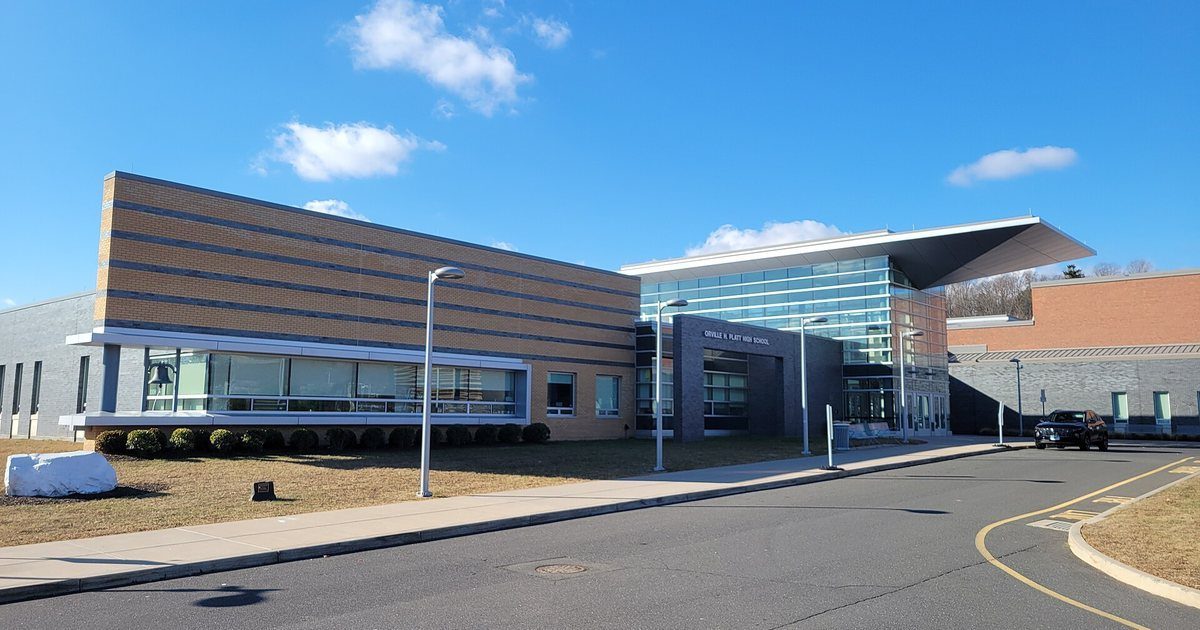
Meriden Public Schools is asking for more special education classrooms, and the district's own budget explains why. According to CT Insider reporting at the end of September 2026, enrollment in Meriden's in-district STARS program for students with autism and auditory processing disabilities has kept climbing, and the district now needs another classroom at Hanover Elementary School to serve 12 more students. Assistant Superintendent Michael Grove told the outlet that the in-district option is more affordable than outplacement.
Here is our view: most districts treat outplacement as the safe choice, and it is usually the expensive one. Meriden has been publishing the math for years, and the gap is wide enough that the real risk is not building capacity. The harder question, and the one this article is about, is what a district does when it agrees with Meriden but cannot hire the people to do it.
What happened
Four facts from the CT Insider reporting:
- Districtwide enrollment in Meriden has risen by 352 students since the 2025–26 school year, with the sharpest growth in the STARS special education program.
- The district is proposing six new positions for 2026–27, three of them in special education, to open an additional STARS classroom at Hanover Elementary for 12 students.
- The Board Finance Committee's proposal would use $200,000 to hire a teacher at Hanover and two applied behavior analysts. Assistant Superintendent Michael Grove told CT Insider that outplacing those 12 students could cost about $1.5 million, based on an average outplacement tuition of $162,622.
- The Board of Education already approved $422,000 in June 2025 to fund two additional STARS classrooms at Nathan Hale Elementary.
Superintendent Mark Benigni described the programs to CT Insider as costly ones that require "significant staffing and resources," while crediting the Board Finance Committee for recommending the positions.
What Meriden's budget shows
Meriden's 2025–26 Budget Overview, a public document, lays out the comparison in unusual detail. These are the district's own figures, not estimates:
- Special education tuition for outplaced students was budgeted at $11,299,797 for 2025–26, an increase of $1,842,317 (19.5%) in a single year. Tuition was the second-largest driver of the district's entire budget increase, behind only salaries.
- The ten most expensive outplaced students cost the district $1,963,886 combined, between $170,323 and $233,896 each once transportation is included.
- For students in the STARS program, the district reports an average in-house cost of $27,258 per student. The average outplacement tuition for a student with the same disability is $153,000. After Connecticut's excess cost reimbursement of $34,265, the district would still pay $118,735 per outplaced student.
- For the 22 additional students STARS absorbed in 2024–25, the district calculates savings of $2,012,494 compared with outplacing them.
STARS enrollment has grown from 39 students in 2015–16 to 154 in 2024–25, and that year 21.5% of Meriden's 8,707 students had disabilities.
The pattern is not unique to Meriden. A brief from UConn's Center for Education Policy Analysis, Research, and Evaluation, published in February 2026, found that Connecticut educates 6.3% of its students with disabilities in separate schools, the second-highest share in the country. The brief cites tuition ranging from about $24,000 to $219,000 per student in one district, transportation averaging roughly $25,000 per student per year, and Meriden's $1.2 million in 2024–25 staffing for its specialized autism and behavioral programs, which saved more than $2 million in avoided placements. Its recommendation: invest proactively in district programming so outplacement is reserved for the students who truly need it.
Most districts treat outplacement as the safe choice, and it is usually the expensive one.
What it means for districts (analysis)
The facts above are Meriden's. What follows is our reading, and we will take a position.
The constraint is usually staff, not will. Meriden's model works because the district can hire certified special education teachers, paraprofessionals, behavior technicians and related service providers. Its budget lists 86.4 teachers of pupils with disabilities, 176 special education paraprofessionals, 36 behavior technicians, 15 school psychologists and 14.4 speech-language pathologists. Many districts, especially smaller and rural ones, cannot recruit at that scale. For them, the in-district option is not cheaper if the positions stay vacant and services go undelivered.
Outplacement costs are unpredictable; staffing costs are not. The UConn brief notes that total outplacement spending swings with each year's population of high-need students, which makes it hard to budget. Meriden's 19.5% one-year tuition increase is an example. A staffed program is a known cost that can be planned, and it keeps excess cost reimbursement from being the only lever a district controls.
Every month a classroom sits unstaffed has a price. A single outplacement at Meriden's average costs the district $118,735 a year after reimbursement, roughly $9,900 a month. If a new classroom is approved but cannot be staffed by the start of the year, students either wait for services or move out of district, and the savings the board counted on do not materialize.
Practical considerations for district leaders
- Run the per-student comparison with your own numbers: in-district program cost, average outplacement tuition for the same disability category, transportation, and your state's reimbursement rate. Meriden's booklet is a usable template.
- Separate the capacity decision from the staffing decision. Approving a classroom and filling it are different problems with different timelines.
- Plan for the certification gap. If the vacancy is for a certified special education teacher, a speech-language pathologist, or a school psychologist, ask how services will be delivered while the posting is open.
- Keep decisions local. Whatever delivery model you use, IEP decisions, parent communication and compliance should stay with district staff.
- Watch the leading indicator. Rising enrollment in a specific program, as in Meriden's STARS, signals a capacity decision one to two years ahead of the budget line.
Where Fullmind fits
Fullmind helps districts add special education capacity when the local hiring market cannot. Live, state-certified educators work on the district's schedule and curriculum, with district staff retaining every student-specific decision. Elevate K-12 is now part of Fullmind.
- SWD Services & IEP Fulfillment provide live, certified special education instruction and IEP support for students who need specialized small-group settings, so a district can serve students in their own school while recruiting continues.
- Related Service Providers cover speech-language pathology, occupational and physical therapy, school psychology, social work and counseling when those caseloads, not classroom instruction, are the constraint.
- LIVE Staffing pairs a live certified educator with an in-person classroom facilitator for a sustained vacancy or extended leave.
None of these replace a district's own program, and we would not suggest they should. They are a bridge: a way to open the classroom on day one, serve students at home, and keep the savings real while the district builds the program Meriden has shown is worth building. Approving the classroom and waiting a year to staff it is the one option that costs more than either.
Run the numbers with us
If your district is weighing an in-district program against outplacement, or has approved positions it cannot fill, bring us your numbers. We will build the per-student comparison with your special education and finance leaders and tell you plainly whether a bridge model pencils out, including when it does not. Schedule a consultation with Fullmind.
Bottom line
Meriden's own budget makes the case in plain numbers. An in-house STARS seat cost an average of $27,258, against $118,735 for a comparable outplacement after state reimbursement, and the UConn brief reaches the same conclusion for Connecticut as a whole. The limits matter. These are budget-document estimates for one program and one disability profile, they say nothing about student outcomes in either setting, and they assume a district can recruit the staff Meriden employs.
The decision they inform is narrow and near-term. Before approving or deferring a new in-district classroom, a board should price its own per-student comparison, then confirm separately that it can staff the room by the first day of school.
Sources: CT Insider, "Meriden schools seek additional staff as enrollment grows, especially in special ed program," September 2026; Meriden Public Schools, 2025–26 Budget Overview; UConn Neag School CEPARE, "An Analysis of Special Education Outplacement in Connecticut," rapid research brief dated December 2025, published February 9, 2026. Figures are the districts' and researchers' own; the analysis section reflects Fullmind's interpretation.
Related:
Podcast
From the Learning Can’t Wait podcast
 Hosted by Hayley Spira-Bauer, Chief Academic Officer at Fullmind
"If we can't yet be the source of answers, let's be the source of more questions"
Related episodes
 Jeff Livingston: School Funding, Equity in Education, Rural Education, E-Rate FundingApril 3, 2025 · Jeff Livingston
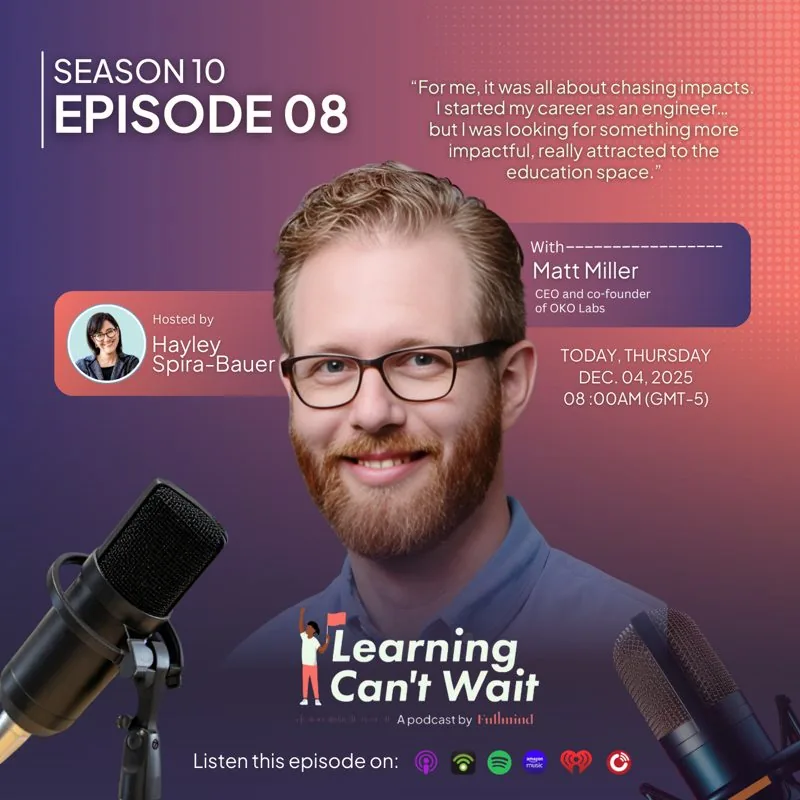 Matt Miller: Collaboration, Small group learning & EdTech innovationDecember 4, 2025 · Matt Miller
 Dr. Kelsey Young: Curriculum Associates, Post-Pandemic Student Performance, Targeted InterventionsOctober 15, 2024 · Dr. Kelsey Young
Connecticut on the podcast
Episodes with Connecticut connections
 Chad Aldeman: Teacher Shortage, Educator Retention, Read Not GuessSeptember 3, 2024 · Chad Aldeman
 Doug McCurry: Leadership Lessons, Educational Challenges, Summer Learning Programs, High-Quality CurriculumApril 30, 2024 · Doug McCurry
For Education Leaders
Get proven strategies and expert analysis from the host of the Learning Can't Wait podcast, delivered straight to your inbox.














































































How can we help? Let’s connect.
Tell us what you need. It takes about a minute, and you’ll see the next steps right away.
Meet an education consultant
Talk through your students, schedule and goals.
Get a proposal for your district
A plan built around your needs and budget.
Prefer to call? 210-617-3009
Thanks! Pick a time that works
A 30-minute call with an education consultant. Your details are already filled in.
Your one-pagers
Matched to what you told us. They download as one PDF.
Every child deserves the opportunity to access exceptional education.