Connect with the Fullmind Team

For Education Leaders
Get proven strategies and expert analysis from the host of the Learning Can't Wait podcast, delivered straight to your inbox.
SWD Services & IEP Fulfillment
Our virtual special education services give students with disabilities live, small-group instruction from special education–certified educators, aligned to each student's IEP goals, with progress reporting your team can document.
North Carolina Will Rebuild Its School Funding Formula by 2027. Students With Disabilities Need Services This Year.
On September 28, a panel of superintendents and finance officers told North Carolina's Blue Ribbon Commission on Public Education how the state's position-based funding actually works in a district office. Tony Messer, chief financial officer of Alamance-Burlington Schools, gave the example that traveled: his district used every classroom-teacher position the state allotted and still had about $600,000 left in the allotment, because the state funds each position at the average salary and his teachers earn less than average. The rules would not let him move it. According to NC Newsline, he said the money could have covered costs such as exceptional children's services.
Our view: the formula will change, and it will not change in time. The Carolina Journal reports the new state budget funds a work group to design a per-student formula, with a report due to lawmakers by July 15, 2027. That is the right project. But a district with an IEP caseload it cannot staff this fall is not waiting on a 2027 report. The practical question for exceptional children directors is how to deliver required services now, inside the funding routes that already exist, while Raleigh rebuilds the system around them.
What happened
From the Carolina Journal's September 30 account of the September 28 commission meeting, and NC Newsline's reporting the same day:
- North Carolina funds teachers, principals and most licensed staff by position rather than by dollar, under the Department of Public Instruction's allotment policy manual. Finance officers described routinely assigning employees to whichever budget the state will pay for, and recoding staff with every resignation and hire.
- Messer told the commission Alamance-Burlington used all of its allotted teacher positions and still had about $600,000 it could not spend or move. He said the dollars are already in the budget and "not being spent by a lot of school districts." NC Newsline reported he said the money could have helped cover exceptional children's services.
- Rep. David Willis, who chairs the House Education K-12 Committee and sits on the commission in a non-voting role, said the model is "broken" and called for a rebuild rather than more flexibility layered on a formula that "obviously isn't working."
- The 2026 budget act (Section 8.22 of S.L. 2026-41) sets aside $300,000 for a work group to plan the move to a weighted, per-student formula, with a three-year transition strategy due to the Joint Legislative Education Oversight Committee by July 15, 2027. The commission meets October 19 to begin drafting recommendations on school operations.
- Earlier this year, WUNC reported Alamance-Burlington ranks 109th of 116 North Carolina districts in total per-pupil funding and faced a local funding gap heading into the fiscal year.
Nothing has changed yet in the position-based allotment rules. The panel was testimony; the work group's report is nine months away; any legislative change would follow that.
The formula will change, and it will not change in time.
What it means for districts (analysis)
The facts above are the finance officers' and the reporters'. What follows is our reading, and we will take a position.
The stranded dollars and the unmet need sit in the same building. Messer's example is the whole problem in one sentence: a district with money it cannot spend and exceptional children's services it cannot fully staff. Position-based allotments assume a district's needs arrive in the shape of positions. Special education needs arrive in the shape of service minutes, evaluations and caseloads, and a vacant EC position does not deliver any of them.
A vacant position is a compliance exposure, not a savings. When a certified EC teacher or a speech-language pathologist cannot be hired, the allotment stays unspent and the IEP minutes go undelivered. The district carries the risk of missed services and compensatory claims while the state carries the cash. No one planned it that way, and it is where many districts are.
Flexibility will arrive, slowly, and with strings. Willis made clear he does not want more flexibility on top of the current formula; he wants a rebuild. The law asks for a three-year transition strategy by July 2027, and a budget would have to act on it after that. Districts should plan on the current rules through at least one more full school year.
The fix available now is to buy services, not positions. A district that cannot fill a position can still deliver the service through a contracted, licensed provider under the funding routes its finance office confirms are eligible. That is not a workaround of the allotment system; it is how EC services are already purchased in many districts. The discipline is to scope it to a confirmed need, with the EC director and the finance officer in the same meeting.
Practical considerations for district leaders
- Put the EC director and the CFO in one room with two lists: unfilled EC and related-service positions by discipline, and the funding routes that can lawfully purchase contracted services. The overlap is the plan.
- Count service minutes, not positions. The question is which IEP services are at risk of going undelivered this semester, by discipline and by school.
- Confirm eligibility before scoping. Which funds can pay for contracted instruction, case management or therapy is a finance and compliance question; settle it first.
- Keep decisions local. Whatever delivery model is used, eligibility, IEP decisions, parent communication and compliance stay with district staff.
- Document the gap for the commission. The Blue Ribbon Commission meets October 19 and the funding work group reports next July. A district that can show exactly how allotment rules left EC services unstaffed is giving them the evidence they asked for.
Where Fullmind fits
Fullmind helps districts deliver special education and related services when the position cannot be filled, with live, state-certified educators and licensed providers working on the district's schedule and under the district's IEP decisions. Elevate K-12 is now part of Fullmind.
- SWD Services & IEP Fulfillment provides live, North Carolina-certified special education instruction and IEP support for students who need specialized small-group settings, scoped to a program or a school while the district recruits.
- Related Service Providers cover speech-language pathology, occupational and physical therapy, school psychology, social work and counseling when the constraint is a caseload rather than a classroom.
- Case Management supports IEP writing, meetings and documentation when the paperwork load is what is keeping services from being delivered on time.
None of this replaces a district's EC department, and we would not suggest it should. It is a way to deliver the service minutes an IEP requires while the position stays posted and the formula gets rebuilt.
Run the numbers with us
If your exceptional children department has positions it cannot fill and services it cannot delay, bring us the discipline, the student count and the funding route your finance office has confirmed. We will show you what a contracted service would cover, what stays local, and tell you plainly where it fits and where it does not. Schedule a consultation with Fullmind.
Bottom line
North Carolina's position-based allotments can leave money stranded in one line while required services go unstaffed in another, and the formula meant to fix that is still being designed: the work group's transition strategy is due July 15, 2027. The limits are real. Messer's $600,000 is one district's account given in testimony, not a statewide audit, and neither news account reports how many districts carry similar balances or how much of the gap involves exceptional children's services.
The decision it informs belongs to this school year. An EC director and a finance officer should list unfilled EC and related-service positions next to the funding routes that can lawfully buy those services, and decide which IEP minutes to cover now rather than after the formula changes.
Sources: Carolina Journal, "NC House education chair: School funding model is 'broken'," September 30, 2026; NC Newsline, "NC school finance officials call for more flexibility in funding rules," September 30, 2026; WUNC, "Alamance County's proposed budget falls short of school district needs," May 28, 2026; NC General Assembly Legislative Analysis Division, "Education – 2026" summary of S.L. 2026-41 (Senate Bill 257), Sec. 8.22. Figures and quotations are the officials' and the reporters' own; the analysis section reflects Fullmind's interpretation. Carolina Journal is published by the John Locke Foundation, which advocates for a per-student formula; its factual account of the meeting is corroborated by NC Newsline.
Related:
Podcast
From the Learning Can’t Wait podcast
 Hosted by Hayley Spira-Bauer, Chief Academic Officer at Fullmind
Newest episodes
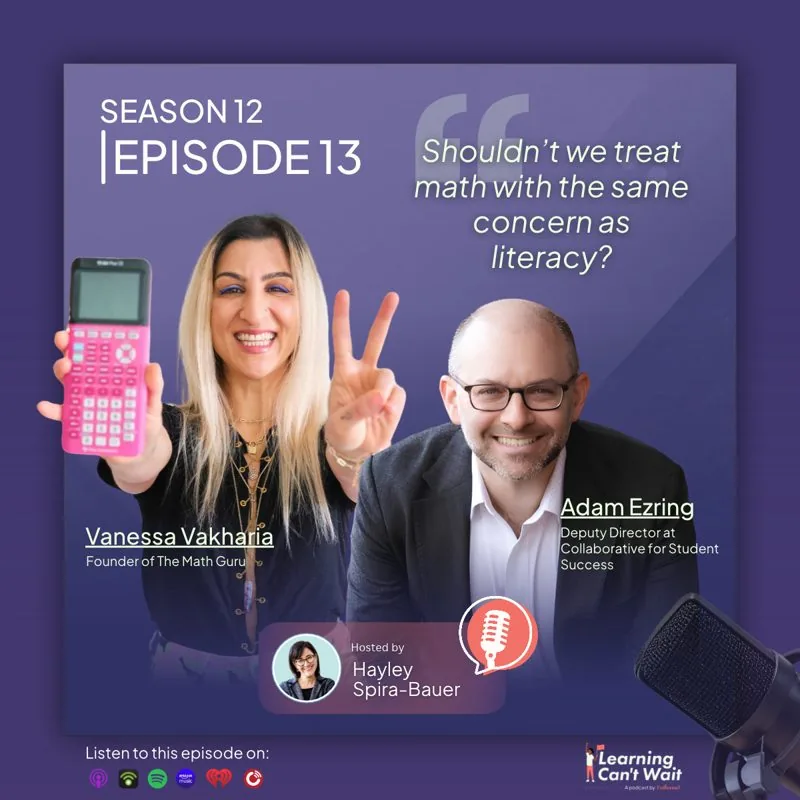 Vanessa Vakharia & Adam Ezring: Family Math, Math Confidence & Learning Through PlayOctober 13, 2026 · Vanessa Vakharia, Adam Ezring
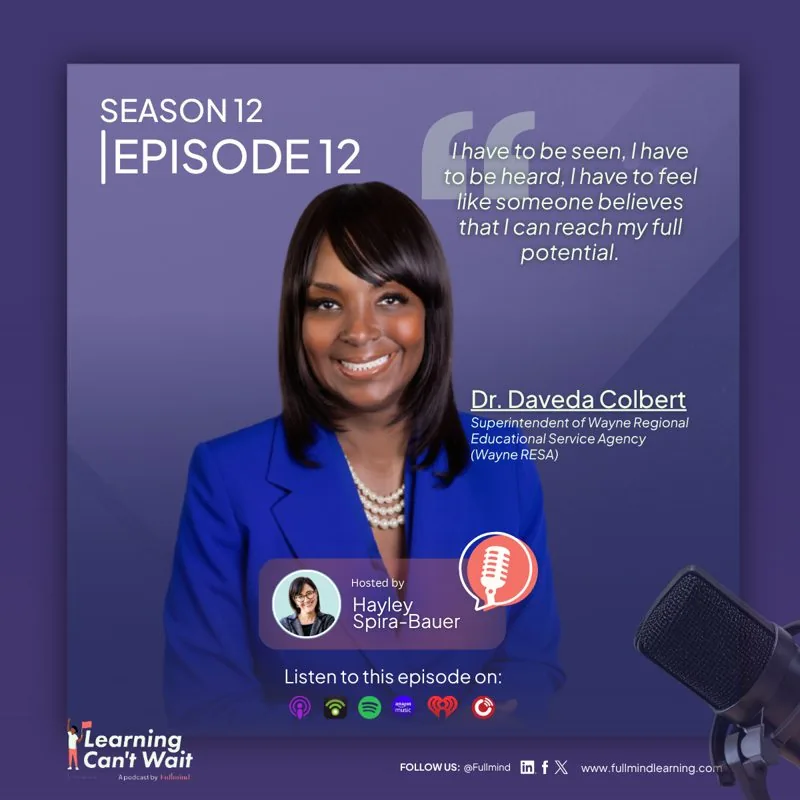 Dr. Daveda Colbert: Leadership, Belonging & ServiceOctober 6, 2026 · Dr. Daveda Colbert
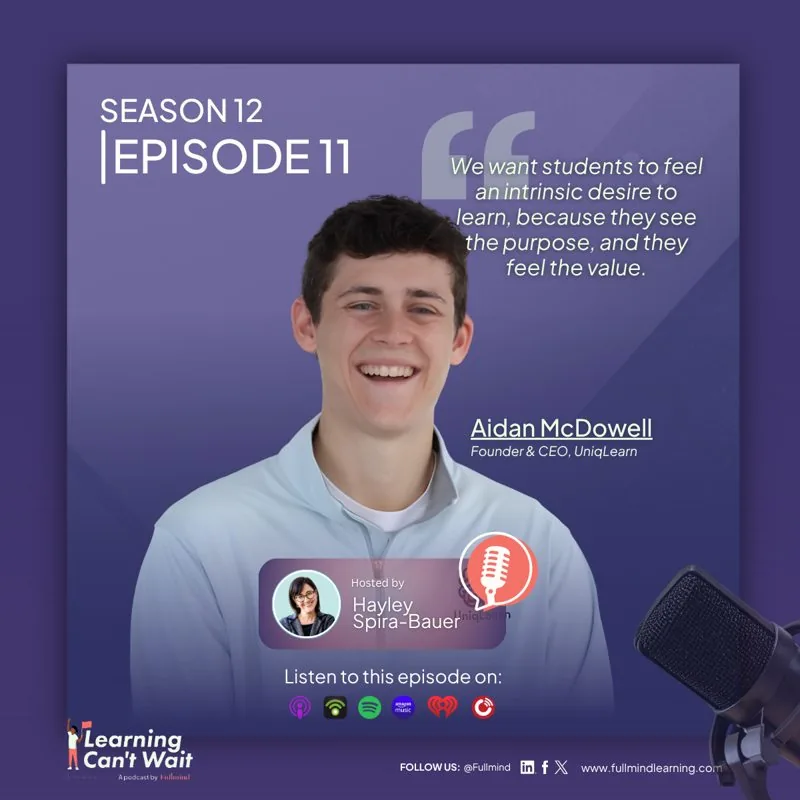 Aidan McDowell: Personalized learning, Student agency & Intrinsic motivationSeptember 29, 2026 · Aidan McDowell
North Carolina on the podcast
Episodes with North Carolina connections
 Aneesh Sohoni: Leadership, Opportunity and CommunitySeptember 8, 2026 · Aneesh Sohoni
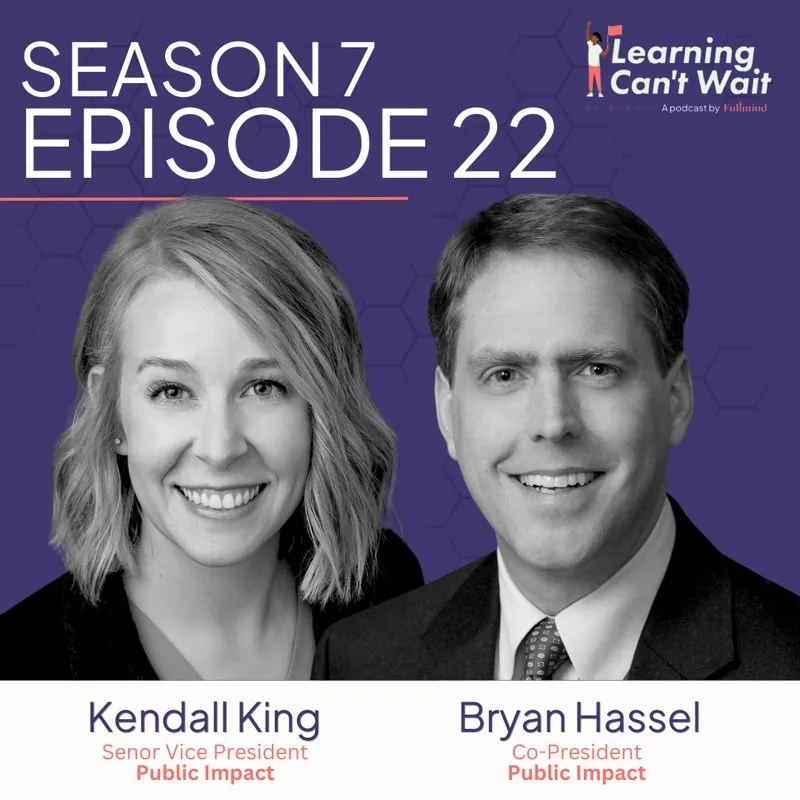 Bryan Hassel + Kendall King: Public Impact, Opportunity Culture, Multi-classroom LeadershipApril 15, 2025 · Bryan Hassel, Kendall King
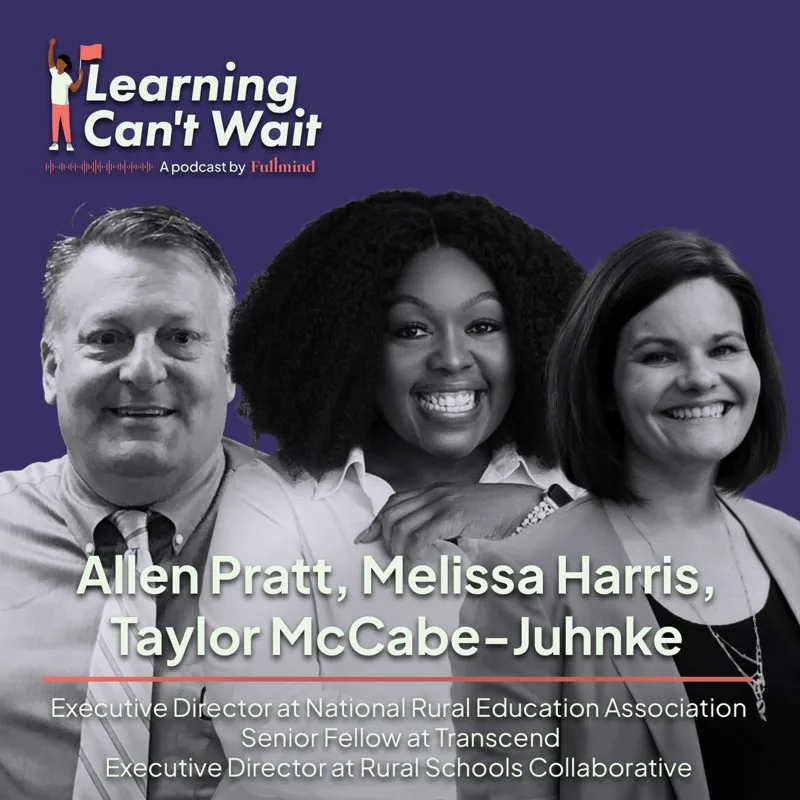 Melissa Harris, Allen Pratt, Taylor McCabe-Juhnke: Rural Education, Innovation, CollaborationMay 28, 2024 · Melissa Harris, Allen Pratt, Taylor McCabe-Juhnke
For Education Leaders
Get proven strategies and expert analysis from the host of the Learning Can't Wait podcast, delivered straight to your inbox.


















































































How can we help? Let’s connect.
Tell us what you need. It takes about a minute, and you’ll see the next steps right away.
Meet an education consultant
Talk through your students, schedule and goals.
Get a proposal for your district
A plan built around your needs and budget.
Prefer to call? 210-617-3009
Thanks! Pick a time that works
A 30-minute call with an education consultant. Your details are already filled in.
Your one-pagers
Matched to what you told us. They download as one PDF.
Every child deserves the opportunity to access exceptional education.