Connect with the Fullmind Team

For Education Leaders
Get proven strategies and expert analysis from the host of the Learning Can't Wait podcast, delivered straight to your inbox.
SWD Services & IEP Fulfillment
Our virtual special education services give students with disabilities live, small-group instruction from special education–certified educators, aligned to each student's IEP goals, with progress reporting your team can document.
Special Education's Local Bill: When the State Underpays, the District's Answer Is a Vacancy
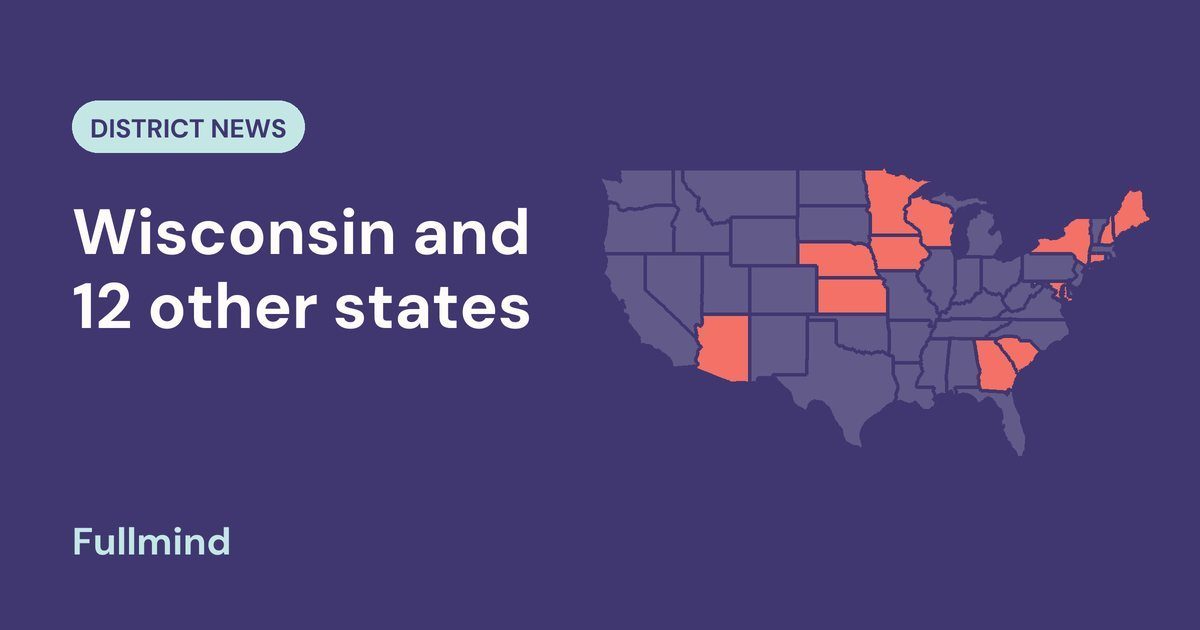
Green Bay's school board votes on its 2026–27 budget on October 26. The budget assumes the state of Wisconsin will reimburse 38% of special education costs, even though the state committed to 45%, because 38% is what the district actually received last year. To cover the difference, the budget moves $33.3 million from the general fund into the special education fund, according to FOX 11.
That transfer has a name in school finance research. Bellwether calls it the "local responsibility": whatever a district spends on special education beyond the dedicated federal and state money it receives. Across 5,694 districts in 24 states, Bellwether's analysis put the total at $24.1 billion, an average of $8,160 per student identified for special education, and found that 71% of districts carry a larger local share for special education than for everything else they do. Federal IDEA funding, authorized at up to 40% of the national average per-pupil expenditure for each student served, has never reached that level; the brief puts it at less than 13% of the cost.
Our view: the special education funding gap and the special education staffing gap are the same gap, seen from two offices. The CFO sees a transfer from the general fund. The special education director sees a position that has been posted since June. They are the same $118,000, and the second version is more expensive, because an unfilled special education position is not a savings. It is service minutes the district still owes, with the compliance exposure attached and none of the instruction delivered.
What happened
From state agencies, district budgets and reporting:
- Wisconsin: Green Bay budgets for 38% reimbursement against a 45% commitment and transfers $33.3 million to cover special education, per FOX 11 (Oct 8). Statewide, the 2025–27 state budget was estimated to raise reimbursement to 42% in 2025–26 and 45% in 2026–27, but costs grew faster than projected: the state paid an interim 35% and a final 38.39% for 2025–26, per the Legislative Fiscal Bureau and DPI.
- Connecticut: Meriden's published budget shows in-district special education (its STARS program) at $27,258 per student against $118,735 net per outplaced student after state reimbursement, and $2 million saved on 22 students by building capacity instead of placing out (Meriden 2025–26 Budget Overview).
- Staffing: Iowa's DOE lists special education first among 2026–27 shortage areas (184 positions); Kansas reports 361 special education vacancies and won a $4.5 million federal apprenticeship grant, per KCTV5; Georgia surveyed more than 2,600 special education teachers.
The special education funding gap and the special education staffing gap are the same gap, seen from two offices.
What it means for districts (analysis)
The facts above belong to the states, districts and researchers. What follows is our reading, and we will take a position.
Underfunding is paid in positions. When Green Bay's reimbursement comes in seven points below the promise, the general fund fills the hole. The special education position that goes unfilled, or the related-service contract that goes unsigned, is the mechanism by which the state's shortfall becomes the district's shortfall. Green Bay's transfer is the visible version; the quieter version is a resource room with a paraprofessional and no teacher.
A vacancy is a liability, not a line-item saving. Every IEP minute the district cannot deliver is still owed. Compensatory services, due-process exposure and state monitoring do not pause for a hiring freeze. Bellwether's finding that districts carrying a disproportionate local share receive less dedicated state special education money per pupil, and spend more local money, describes exactly the districts most likely to leave the position open.
Capacity is cheaper than outplacement, if it can be staffed. Meriden's math is the counter-example: $27,258 in-house against $118,735 net out of district. The brief we would add to Meriden's is that the model only works if the classroom opens with a certified teacher in it. Approving the room and leaving it unstaffed produces the worst of both: the cost of the program and the outcomes of the vacancy.
Grants fix the pipeline in three years; the IEP is due this semester. Districts need both a pipeline strategy and a this-semester strategy, and most budgets only fund the first.
"a sort of startup ethos of move fast and break things is moving too fast and breaking the most vulnerable."
Practical considerations for district leaders
- Reconcile the two offices' numbers. Put the general-fund transfer next to the list of open special education positions and related-service contracts; they should explain each other.
- Count undelivered minutes, by student, weekly. That is the number that turns a vacancy into a liability.
- Run Meriden's comparison with your own figures: in-district cost per student, outplacement tuition for the same disability category, transportation, and your state's reimbursement rate.
- Separate the capacity decision from the staffing decision. A classroom approved for August needs a certified teacher assigned by June, or a bridge plan for the gap.
- Keep decisions local under any delivery model: eligibility, IEP team decisions and parent communication stay with district staff.
Where Fullmind fits
Fullmind delivers live, certified special education instruction and related services to districts that have the program and the students but not the staff. Elevate K-12 is now part of Fullmind.
- SWD Services & IEP Fulfillment provides live, certified special education instruction and IEP support in small-group settings, so an approved classroom can open on time while recruiting continues.
- Related Service Providers deliver speech-language, occupational and physical therapy, school psychology, social work and counseling minutes when those caseloads are the constraint.
Our published results so far are in live staffing, math growth and remote instruction; special education results are in progress. What we can show today is the model, the certification, and the minutes delivered on the district's schedule.
Run the numbers with us
If your district has a special education position open past the sixty-day mark, or an approved classroom with no teacher assigned, send us the caseload and the service minutes owed. We will show you what a certified live model would deliver this semester, what stays with your team, and tell you plainly whether it fits. Schedule a consultation with Fullmind.
Bottom line
Districts pay a large share of special education themselves: Bellwether put the local responsibility at $8,160 per identified student, and Green Bay is moving $33.3 million from its general fund to cover what Wisconsin does not reimburse. The limits matter. Bellwether's figures are FY20 data from 24 states, and none of these sources measures how much of the local bill goes unspent because positions stay open; the link between underfunding and vacancies is our reading.
The decision it informs is budget reconciliation: put the general-fund transfer next to the list of open special education positions and related-service contracts, and count each vacancy as minutes owed, not money saved.
Sources: FOX 11 Green Bay, October 8, 2026; Wisconsin Legislative Fiscal Bureau, "2025-26 Estimated Special Education Proration Rate," November 20, 2025; Wisconsin DPI, Special Education Aid Proration Rates; Bellwether, "Who Pays for Special Education?" (October 2024; FY20 data); Meriden Public Schools 2025–26 Budget Overview; Iowa DOE Teacher Shortage Areas 2026–27; KCTV5, October 1, 2026; GaDOE Insights, October 2026; 20 U.S.C. § 1411. Figures are the sources' own; the analysis section reflects Fullmind's interpretation.
Related:
- Meriden Is Betting on In-District Special Education. The Math Says It's Right.
- North Carolina Will Rebuild Its School Funding Formula by 2027. Students With Disabilities Need Services This Year.
- For Remote Districts, the Question Isn't Virtual or In-Person. It's Hours.
- Georgia Asked 2,600 Special Education Teachers What's Hard. They Said Workload and Paperwork. Both Are Caseload Math.
Podcast
From the Learning Can’t Wait podcast
 Hosted by Hayley Spira-Bauer, Chief Academic Officer at Fullmind
Related episodes
 Dr. Melissa Sadorf: Rural education, Asset-based lens & Teacher retentionFebruary 5, 2026 · Dr. Melissa Sadorf
 Ellen Sherratt: Education Policy, Teacher Shortage, Teacher Salaries, Teacher Salary ProjectApril 3, 2023 · Ellen Sherratt
 Chad Aldeman: Teacher Shortage, Educator Retention, Read Not GuessSeptember 3, 2024 · Chad Aldeman
For Education Leaders
Get proven strategies and expert analysis from the host of the Learning Can't Wait podcast, delivered straight to your inbox.

















































How can we help? Let’s connect.
Tell us what you need. It takes about a minute, and you’ll see the next steps right away.
Meet an education consultant
Talk through your students, schedule and goals.
Get a proposal for your district
A plan built around your needs and budget.
Prefer to call? 210-617-3009
Thanks! Pick a time that works
A 30-minute call with an education consultant. Your details are already filled in.
Your one-pagers
Matched to what you told us. They download as one PDF.
Every child deserves the opportunity to access exceptional education.