Connect with the Fullmind Team

For Education Leaders
Get proven strategies and expert analysis from the host of the Learning Can't Wait podcast, delivered straight to your inbox.
LIVE Staffing
LIVE Staffing fills hard-to-staff roles with certified educators who teach live, synchronously, on your schedule and curriculum.
North Kansas City Has 18 Months to Cut $16 Million. That's the Good News.
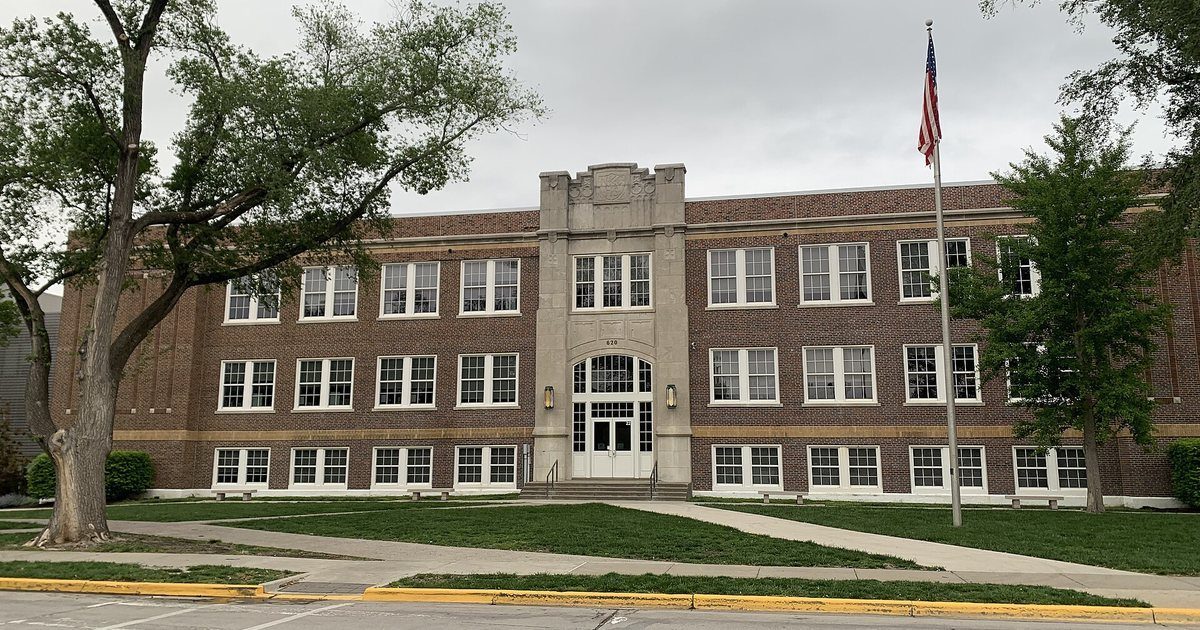
North Kansas City Schools has told its community it must cut roughly $16 million in recurring spending beginning with the 2027–28 school year. The district's own budget-reduction page lays out the arithmetic: a $5.6 million state funding shortfall at the end of fiscal 2026, plus a projected $11 million loss for 2027–28. Five community roundtables ran from September 29 through October 12, and the district has promised a phased approach rather than a single round of cuts.
Our view: most districts meet a shortfall this size in the spring, with weeks to act and no good options. North Kansas City has a year and a half. That is a rare advantage, and the way to use it is to decide now which instruction the district will protect at any cost, and which capacity it can afford to carry differently. If that decision is left to the budget calendar, the budget calendar will make it, and it will make it in the classroom, because that is where the money is.
What happened
From the district's published materials and local reporting:
- NKC Schools ended fiscal 2026 with a $5.6 million state funding shortfall and projects an additional $11 million loss for 2027–28, for a recurring reduction target of about $16 million. The district operates 35 schools serving about 21,800 students on an annual budget of roughly $380 million, so the target is about 4% of operations, according to KCTV.
- By October 1, the district had identified $3.2 million in savings by scaling back district-level spending and leaving some administrative and support roles vacant, without touching any teaching position. That leaves nearly $13 million to find. The district has ruled out closing schools.
- The pressure is statewide. On September 15, the Missouri State Board of Education voted to keep its fiscal 2028 foundation formula request at the fiscal 2027 level rather than the education department's recommendation for full funding, about $270 million less than the formula requires, according to the department's meeting recap and KSHB. The legislature will not act on that budget until the spring 2027 session.
- About 80% of the district's budget pays for employee salaries and benefits, according to KCTV and KSHB.
The district has not announced specific program or position cuts. Its September 30 update described savings identified so far and the criteria guiding its review of programs and practices.
Most districts meet a shortfall this size in the spring, with weeks to act and no good options.
What it means for districts (analysis)
The facts above are the district's and the reporters'. What follows is our reading, and we will take a position.
The easy $3 million is gone. The hard $13 million is in people. When four-fifths of a budget is salaries and benefits, a cut of this size cannot be absorbed by transportation routes and device refresh cycles alone. The district has done the responsible first step, trimming central office and holding vacancies. The next step reaches staffing, whether anyone says so yet.
The sections most at risk are the ones that cost a full position and serve the fewest students. A single-section advanced course, a low-enrollment world language, an intervention block without a mandated ratio: each is a full FTE carrying twenty students or fewer. These are the first lines a finance office circles, and the ones families notice last, until the course is gone.
18 months is enough time to change how capacity is bought, not just how much. A district with a year and a half can decide that its core schedule stays permanent while the marginal section and the intervention block become variable, scoped to one course or one cohort for one semester, paid only while needed. That is a different kind of cut: it keeps the course and removes the fixed cost.
Waiting for the legislature is not a plan. The spring 2027 session will settle the formula number, and it may come in better than feared. But the district's reductions take effect that fall, and the planning work has to be done by then regardless. The useful move is to have a scoped option ready for every course on the bubble, so that when Jefferson City decides, the district can act in weeks.
"The master schedule represents how all school-based staff are interacting with students."
Practical considerations for district leaders
- Build the bubble list now: every course or section that runs with one teacher and fewer than 20 students, by building. That is the inventory the next $13 million will come from.
- Decide, publicly, what the district will always staff with a permanent position. Naming the protected core is the single most reassuring thing a district can tell families during a cut.
- Put a full delivered cost on each remaining option: keep the position, combine sections, drop the course, or run it with a live certified educator and a facilitator. Include the student-services cost of dropped courses: credit recovery, schedule changes, transfers.
- Protect intervention with a schedule and a report. A tutoring block with a fixed calendar, attendance and progress data survives a budget review better than an informal pull-out, because it can show what it did.
- Use the phased timeline to pilot. Run one course or one cohort on a variable model in 2026–27 so the comparison is real data, not a projection, when the board votes.
Where Fullmind fits
Fullmind gives districts instructional capacity they can scope to a course, a cohort or a semester, delivered by live, state-certified educators on the district's own schedule and curriculum. Elevate K-12 is now part of Fullmind.
- LIVE Staffing keeps a bubble course on the master schedule: a live, Missouri-certified educator teaches the section on the building's bell schedule with an in-person classroom facilitator, for one section and one semester, without a permanent position behind it.
- High Dosage Tutoring restores intervention capacity on a schedule, aligned to the district's curriculum, with the attendance and progress reporting a board wants to see before it funds anything in a lean year.
Neither replaces a district's own faculty, and we would not suggest it should. The core belongs to North Kansas City's teachers. The variable layer is where a district can stop trading courses for dollars.
Run the numbers with us
If your district is working through a multi-year reduction, send us your bubble list. We will put a full delivered cost next to each option, facilitator included, and tell you plainly where variable capacity pencils out, including where it does not. Schedule a consultation with Fullmind.
Bottom line
North Kansas City's numbers point one way. With about 80% of its budget in salaries and benefits, and nearly $13 million still to find after the first $3.2 million in savings, the remaining reductions are hard to make without reaching staffing. The limits are real: the district has not named any program or position cuts, and the state formula number will not be settled until the spring 2027 legislative session, so the final size of the gap is not yet known.
The decision this informs is one the district can make now, before the board votes on cuts: which instruction it will always staff with permanent positions, and which low-enrollment sections and intervention blocks it will plan to carry another way.
Sources: North Kansas City Schools, Budget Reduction Process page and In the Know updates of September 4, 16 and 30, 2026; KCTV, "NKC Schools faces $16 million budget gap as community meetings continue," October 1, 2026; KSHB, "North Kansas City Schools face $16 million budget shortfall amid state funding cuts," October 2026; Missouri Department of Elementary and Secondary Education, "September Meeting Recap: State Board of Education," September 16, 2026. Figures are the district's and reporters' own; the analysis section reflects Fullmind's interpretation.
Related: Districts Keep Missing Their Enrollment Forecasts. The Fix Isn't a Better Forecast.
Podcast
From the Learning Can’t Wait podcast
 Hosted by Hayley Spira-Bauer, Chief Academic Officer at Fullmind
Related episodes
 Dr. Kelsey Young: Curriculum Associates, Post-Pandemic Student Performance, Targeted InterventionsOctober 15, 2024 · Dr. Kelsey Young
 Matt Miller: Collaboration, Small group learning & EdTech innovationDecember 4, 2025 · Matt Miller
Kansas on the podcast
Episodes with Kansas connections
 Melissa Harris, Allen Pratt, Taylor McCabe-Juhnke: Rural Education, Innovation, CollaborationMay 28, 2024 · Melissa Harris, Allen Pratt, Taylor McCabe-Juhnke
For Education Leaders
Get proven strategies and expert analysis from the host of the Learning Can't Wait podcast, delivered straight to your inbox.












































































How can we help? Let’s connect.
Tell us what you need. It takes about a minute, and you’ll see the next steps right away.
Meet an education consultant
Talk through your students, schedule and goals.
Get a proposal for your district
A plan built around your needs and budget.
Prefer to call? 210-617-3009
Thanks! Pick a time that works
A 30-minute call with an education consultant. Your details are already filled in.
Your one-pagers
Matched to what you told us. They download as one PDF.
Every child deserves the opportunity to access exceptional education.