Connect with the Fullmind Team

For Education Leaders
Get proven strategies and expert analysis from the host of the Learning Can't Wait podcast, delivered straight to your inbox.
LIVE Staffing
LIVE Staffing fills hard-to-staff roles with certified educators who teach live, synchronously, on your schedule and curriculum.
For Remote Districts, the Question Isn't Virtual or In-Person. It's Hours.
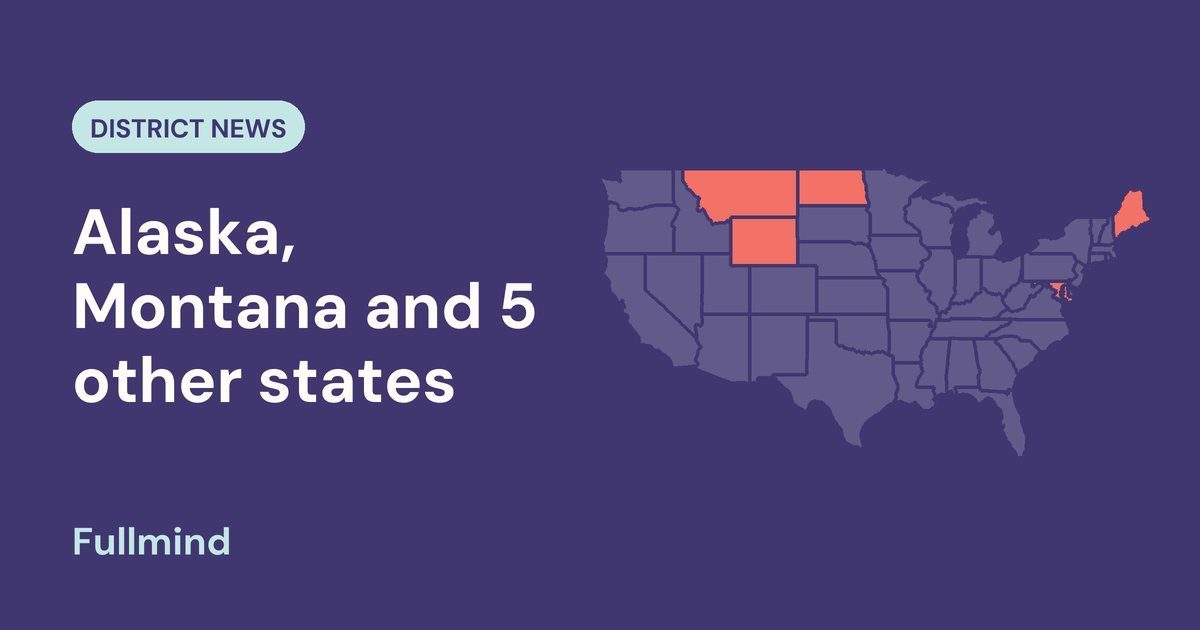
In March, Alaska's school administrators told a joint session of the Legislature's education committees that some schools in the state now have no resident special education teacher at all. Instead, itinerant staff fly or commute between sites to supervise and train paraprofessionals, and districts pay what one director called a "vacancy tax" for contract staff, according to Alaska First Media. Nearly 200 special education positions were vacant statewide; the number of students with disabilities had grown 14% since 2021.
That is the extreme end of a pattern that runs through every state with a map that is mostly empty space. Montana's Superintendent of Public Instruction said in August that rural and reservation schools are the most affected by the shortage, with career and technical education, special education and school psychology the hardest positions to fill. Maine listed Teacher of Students with Disabilities as a 2026–27 shortage area in September. A Maryland Eastern Shore district told a reporter this month that "there's no special education employees to hire." Hawaii's education department is seeking $17 million a year for mandated special education-related services.
Our view: remote districts have spent a decade arguing about delivery model, virtual versus in-person, as if the choice itself were the variable. It is not. The variable that moves student outcomes is how many hours of live, certified instruction each student gets, and whether those hours happen on a schedule the school controls. A building with a body in it and no certified teacher is not the in-person option. It is zero hours.
What happened
From state officials, legislative testimony and local reporting:
- Alaska (legislative testimony, March 30; reported by Alaska First Media, April 8): nearly 200 vacant SPED positions; some schools with no resident SPED teacher; districts hiring contract staff at higher cost; 14% growth in students with disabilities since 2021; researchers estimated turnover costs about $27,000 per teacher.
- Montana (Northern Broadcasting, Aug 27): rural and reservation schools hit hardest; CTE, SPED and school psychology hardest to fill; a proposal discussed by the state's School Funding Interim Commission would make funding available when a student with extensive special education needs enrolls mid-year.
- Maine (Maine DOE, Sept 2): the 2026–27 shortage areas the state submitted to the U.S. Department of Education for designation include Teacher of Students with Disabilities.
- Maryland (WBFF, Oct 3): Somerset County Superintendent David Bromwell on special education hiring: "There's no special education employees to hire."
- Hawaii (Star-Advertiser, Oct 9): HIDOE seeks $80.6 million more for fiscal 2028–29, including $17 million in each year of its request for mandated special education-related services.
- North Dakota (Grand Forks Herald, Oct 5): DPI and lawmakers propose a bill that could give educators bonuses of around $3,400, funded from Common Schools Trust earnings, to recruit and retain teachers.
Remote districts have spent a decade arguing about delivery model, virtual versus in-person, as if the choice itself were the variable.
What it means for districts (analysis)
The facts above belong to the states and reporters. What follows is our reading, and we will take a position.
A paraprofessional with a flight schedule is not a staffing model. It is a compliance strategy that works until the first IEP review. Alaska's testimony describes the end state of relying on itinerant supervision: services nominally delivered, instruction thin, and the cost higher than a salary would have been.
Count hours, not positions. A remote district that cannot fill a position should stop asking whether it can hire and start asking how many hours of live, certified instruction each student on an IEP received last week. That number is auditable, it is the frequency and duration an IEP already specifies, and it is the number that moves outcomes.
Dosage is the evidence. The best study in Fullmind's own library is from a remote Alaska district, and its finding is not about delivery model. It is about hours: each additional hour of Fullmind instruction was associated with a 5.5-point average increase on test scores. The implication for a rural superintendent is practical: schedule the hours, protect them, and measure them.
Bonuses recruit; schedules retain students' progress. North Dakota's bonus proposal and Alaska's "vacancy tax" are both about the adult supply. They are worth doing. They do not help the student in a reservation school this semester whose IEP minutes are being delivered by a paraprofessional supervised from another site.
"Fullmind has been our saving grace. Seeing the teachers interact with our students virtually is remarkably similar to having someone in the classroom. The process has been collaborative and seamless - when I submit requests, I get responses within hours. It's been everything we needed."
Practical considerations for district leaders
- For every school without a resident certified teacher in a shortage area, list the students affected and the hours of live, certified instruction they received in the last two weeks. If the answer is zero, that is the emergency, not the vacancy.
- Put a schedule on it. Live instruction at fixed times, on the school's bell schedule, with the paraprofessional in the room as facilitator rather than substitute.
- Keep decisions local. Eligibility, IEP decisions and parent communication stay with district staff; the live educator delivers the instruction and the data.
- Compare the full delivered cost of contract itinerant staff against scheduled live instruction, including travel and the compliance exposure of undelivered minutes.
- Use mid-year funding where it exists, or push for it, as a proposal before Montana's School Funding Interim Commission would, to start services the month a high-need student enrolls rather than the next budget year.
Where Fullmind fits
Fullmind delivers scheduled live instruction from state-certified educators to schools that cannot hire locally, with a district facilitator in the room and the district keeping every student-specific decision. Elevate K-12 is now part of Fullmind.
- LIVE Staffing covers a core or elective course in a school with no certified teacher for it, on the school's bell schedule. Fullmind's published brief on a remote Alaska district found that "each additional hour of Fullmind instruction was associated with a 5.5 point average increase on test scores."
- SWD Services & IEP Fulfillment provides live, certified special education instruction and IEP support where there is no resident special education teacher.
- Related Service Providers deliver speech-language, OT/PT, school psychology, social work and counseling minutes to schools that cannot recruit those disciplines at all.
We would not suggest this replaces a resident teacher when one can be hired. It replaces zero hours.
Run the numbers with us
If your district has a school with no certified teacher in a shortage area, send us the school, the subject and the number of students. We will show you what a scheduled live model would deliver in hours per week, what stays local, and tell you plainly where it fits and where it does not. Schedule a consultation with Fullmind.
Bottom line
From Alaska to Maine, officials describe the same shortage in different forms, and Alaska's testimony shows where it ends: schools with no resident special education teacher, served by staff supervised from other sites at a premium. The limits are clear. The evidence here is testimony, shortage lists and budget requests, not counts of the instructional hours students actually received, and the dosage finding cited above comes from one district and shows an association, not proof that hours alone caused the gains.
The decision it informs is immediate. For each school without a certified teacher in a shortage area, a district should count the live, certified hours each affected student received in the last two weeks, then schedule fixed hours before it debates a staffing model.
Sources: Alaska First Media, April 8, 2026 (reporting March 30 legislative testimony); Northern Broadcasting, August 27, 2026; Maine DOE Teacher Shortage Areas 2026–27, September 2, 2026; WBFF Spotlight on Maryland, October 3, 2026; Honolulu Star-Advertiser, October 9, 2026; Grand Forks Herald, October 5, 2026; Fullmind Impact & Research, Alaska research brief. Figures are the states' and reporters' own; the analysis section reflects Fullmind's interpretation.
Related:
- Meriden Is Betting on In-District Special Education. The Math Says It's Right.
- North Carolina Will Rebuild Its School Funding Formula by 2027. Students With Disabilities Need Services This Year.
- Special Education's Local Bill: When the State Underpays, the District's Answer Is a Vacancy
- The Career Pathways With the Least Access Are the Ones That Don't Need a Shop
Podcast
From the Learning Can’t Wait podcast
 Hosted by Hayley Spira-Bauer, Chief Academic Officer at Fullmind
Related episodes
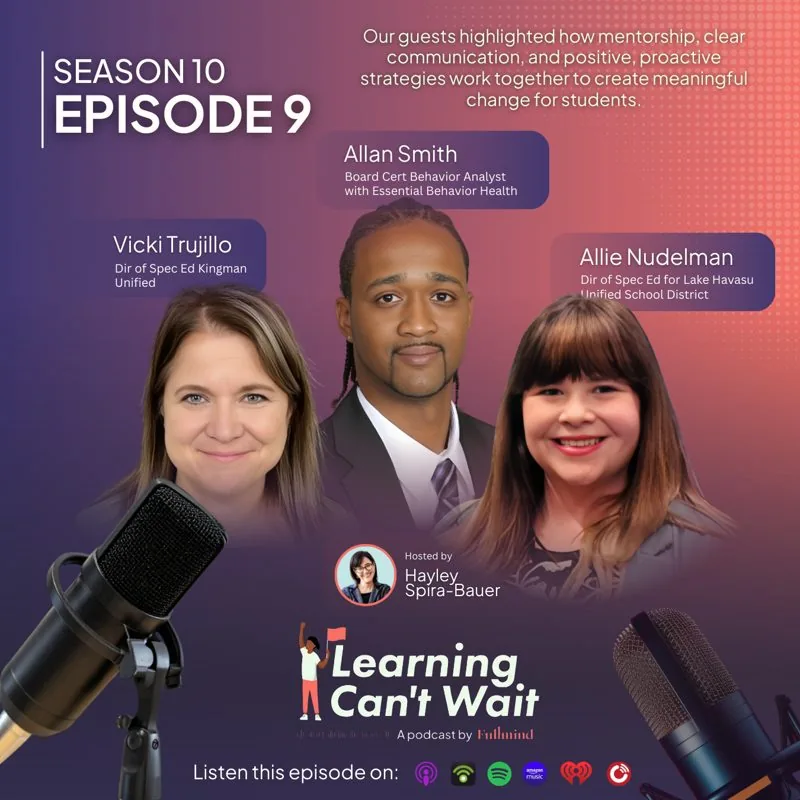 Allie Nudelman, Vicki Trujillo & Allan Smith: Behavior support capacity-building, Relationships and positive reinforcement & Data-driven, trauma-aware practiceDecember 9, 2025 · Allie Nudelman, Vicki Trujillo, Allan Smith
 Jeff Livingston: School Funding, Equity in Education, Rural Education, E-Rate FundingApril 3, 2025 · Jeff Livingston
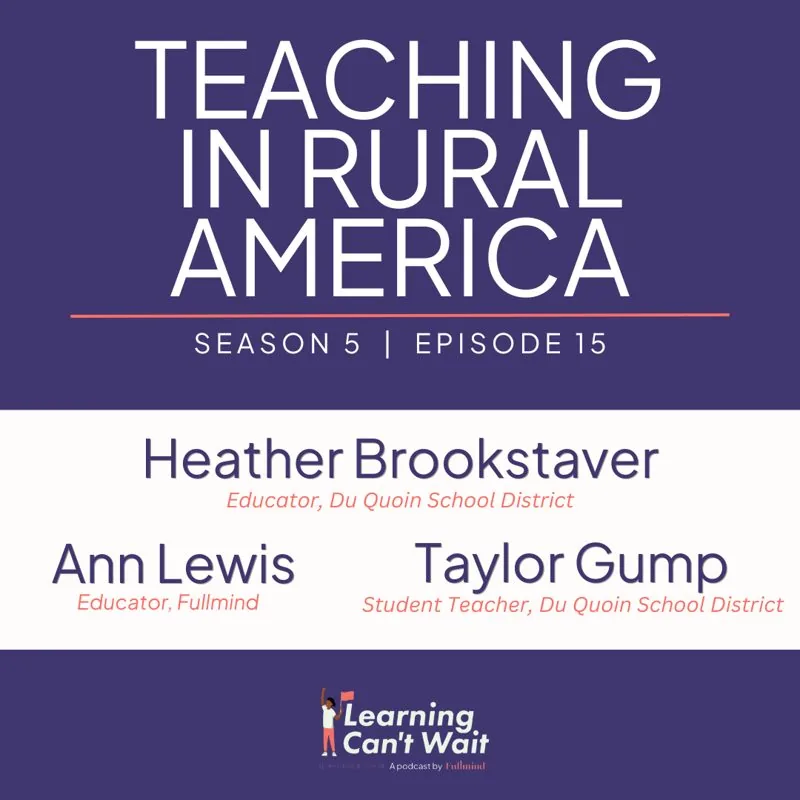 Heather Bookstaver, Ann Lewis, & Taylor Gump: Rural Education, Community Engagement, Technology in SchoolsJune 25, 2024 · Heather Bookstaver, Ann Lewis, Taylor Gump
For Education Leaders
Get proven strategies and expert analysis from the host of the Learning Can't Wait podcast, delivered straight to your inbox.




























































How can we help? Let’s connect.
Tell us what you need. It takes about a minute, and you’ll see the next steps right away.
Meet an education consultant
Talk through your students, schedule and goals.
Get a proposal for your district
A plan built around your needs and budget.
Prefer to call? 210-617-3009
Thanks! Pick a time that works
A 30-minute call with an education consultant. Your details are already filled in.
Your one-pagers
Matched to what you told us. They download as one PDF.
Every child deserves the opportunity to access exceptional education.