Connect with the Fullmind Team

For Education Leaders
Get proven strategies and expert analysis from the host of the Learning Can't Wait podcast, delivered straight to your inbox.
SWD Services & IEP Fulfillment
Our virtual special education services give students with disabilities live, small-group instruction from special education–certified educators, aligned to each student's IEP goals, with progress reporting your team can document.
Michigan's Special Education Teachers Are 31% More Likely to Leave, and 55% More Likely to Leave Mid-Year. February Is the Month to Plan For.
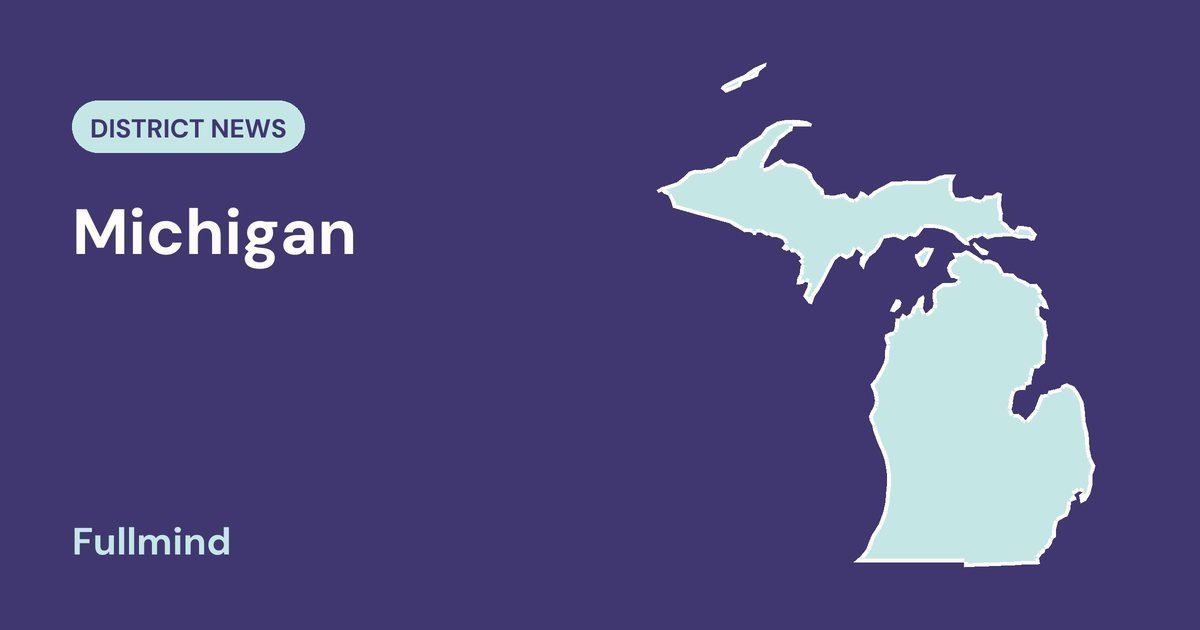
Michigan State University's Education Policy Innovation Collaborative publishes the state's most detailed teacher workforce report, and its 2026 edition has a special education finding that should reorganize how districts plan. Special education teachers make up about 14% of Michigan's public school teachers and 16% of exits, and only 12% of new certification candidates. They are about 31% more likely to leave their positions than elementary classroom teachers and 55% more likely to leave mid-year. Meanwhile the state's population of students with disabilities has grown substantially, widening the gap between supply and demand. In all, 7,952 Michigan teachers did not return for 2024–25; new certifications reached a decade high in 2024–25 and still barely keep pace with exits.
The report also names "educator preparation deserts," districts that rarely host student teachers for special education, and finds that urban districts carry more than double the state-average vacancy rate.
Our view: the 55% number is the one to plan around. A summer departure is a posting; a mid-year departure is a caseload with no certified teacher from February to June, in a market where the replacement does not exist and the IEP minutes do not pause. Michigan's pipeline work, including the OPTIMISE task force on special educator workload, is right and slow. The operational question for a special education director is what she does on the Monday after a resignation, and the answer has to be ready before the resignation.
What happened
From EPIC's 2026 report and its published key findings:
- 7,952 Michigan public school teachers did not return for 2024–25; new certifications reached a decade high but barely keep pace with exits.
- Special educators: 14% of teachers, 16% of exits, 12% of initial certification candidates; 31% more likely to leave than elementary teachers; 55% more likely to leave mid-year.
- The students-with-disabilities population has grown substantially, widening the special education supply gap.
- Shortages fall disproportionately on urban and rural districts, charters, high-poverty communities and students of color; urban districts have more than double the average vacancy rate.
- "Educator preparation deserts" rarely host student teachers for special education or world languages; candidates are less likely to student-teach in urban districts than to work in them after certification.
- The state-funded OPTIMISE task force is targeting special educator workload and paperwork.
The 55% number is the one to plan around.
What it means for districts (analysis)
Everything to this point is sourced to the researchers. The next section is opinion, labeled as such.
Mid-year attrition is a different problem from summer attrition. Summer vacancies have a hiring season. A February resignation in special education has no candidate pool, a caseload of students with IEPs, and four months of undelivered minutes if nothing is arranged.
Disproportionate exit plus disproportionate growth is the vise. Fewer special educators entering, more leaving, more students needing them. Districts should expect every special education caseload to be at risk of a mid-year gap in any given year.
Preparation deserts become hiring deserts. A district that never hosts a special education student teacher never gets the first look at one. The pipeline fix is years; the February gap is now.
Pre-arrange the bridge. The district that has a certified special educator ready to pick up a caseload the week after a resignation, delivering instruction on the school's schedule with the paraprofessional as facilitator, turns a semester-long gap into a scheduling change.
Practical considerations for district leaders
- Identify the special education caseloads most exposed to mid-year departure (single-teacher programs, high-caseload positions) and write the bridge plan for each before January.
- Report weekly, by student, the IEP minutes that a vacant special education position has left undelivered.
- Host special education student teachers if you can; it is the only way out of a preparation desert.
- Put a certified special educator on any vacant caseload within two weeks, with the para as facilitator, while recruiting continues.
- A delivery partner can teach the caseload; it should never decide eligibility, write the IEP or speak for the district to a family.
Where Fullmind fits
Michigan's special educators are 55% more likely to leave mid-year. Fullmind is the plan a director writes in December for the resignation that comes in February: a certified special educator picks up the caseload within two weeks, teaches it live on the school's schedule, and the paraprofessional who knows the students facilitates. Elevate K-12 is now part of Fullmind.
- SWD Services & IEP Fulfillment is the mid-year bridge. Fullmind's special education teachers are state-certified special educators, selected from more than 3,000 educators.
- Related Service Providers cover a speech-language pathologist or school psychologist who leaves in the same window.
- LIVE Staffing backfills the general-education room when a certified colleague is moved onto the vacant caseload; in one partner district Fullmind students were 20% more likely to earn a C or above.
Published Fullmind results so far are in live staffing, math growth and remote instruction, with special education results in progress. Today, what we can show is the model, the certification and the minutes delivered on the district's schedule. What a mid-year gap needs most is speed, and that is the part of the model we can show from the first week.
Run the numbers with us
Send us the special education programs in your district with one teacher and no bench. We will write the bridge plan for each before January: who delivers from week one, what the para's role becomes, and what it costs for a semester. Schedule a consultation with Fullmind.
Bottom line
EPIC's 2026 report finds that Michigan special educators leave at a disproportionate rate and are 55% more likely than elementary classroom teachers to leave mid-year, while the population of students with disabilities keeps growing. The report shows who leaves and when. It does not show which caseloads go uncovered after a mid-year exit, how long those gaps last or how many IEP minutes go undelivered; those effects are our inference.
The decision it informs can be made before January: identify the special education programs that depend on a single teacher, and write down who will deliver each of those caseloads in the week after a mid-year resignation.
Sources: Education Policy Innovation Collaborative, Key Findings from the 2026 Teacher Shortage Report; Education Policy Innovation Collaborative, Michigan Teacher Shortage Study: 2026 Report (Kilbride, Rogers, Powell and Moriarty, January 2026); Fullmind Services and Impact & Research pages. Figures are the researchers' own; the analysis section reflects Fullmind's interpretation.
Podcast
From the Learning Can’t Wait podcast
 Hosted by Hayley Spira-Bauer, Chief Academic Officer at Fullmind
Related episodes
 Matt Giovanniello: Digital Transformation, Leadership & Organizational ChangeNovember 20, 2025 · Matt Giovanniello
 Paige Pullen: Science of reading, Three Sciences Framework & Explicit, systematic instructionDecember 11, 2025 · Paige Pullen
 Lessons from the BXJuly 25, 2022
Michigan on the podcast
Episodes with Michigan connections
 Dr. Vallerie Cave + Shawn Blanchard: Rural Education, Innovation, Student SuccessNovember 5, 2024 · Dr. Vallerie Cave, Shawn Blanchard
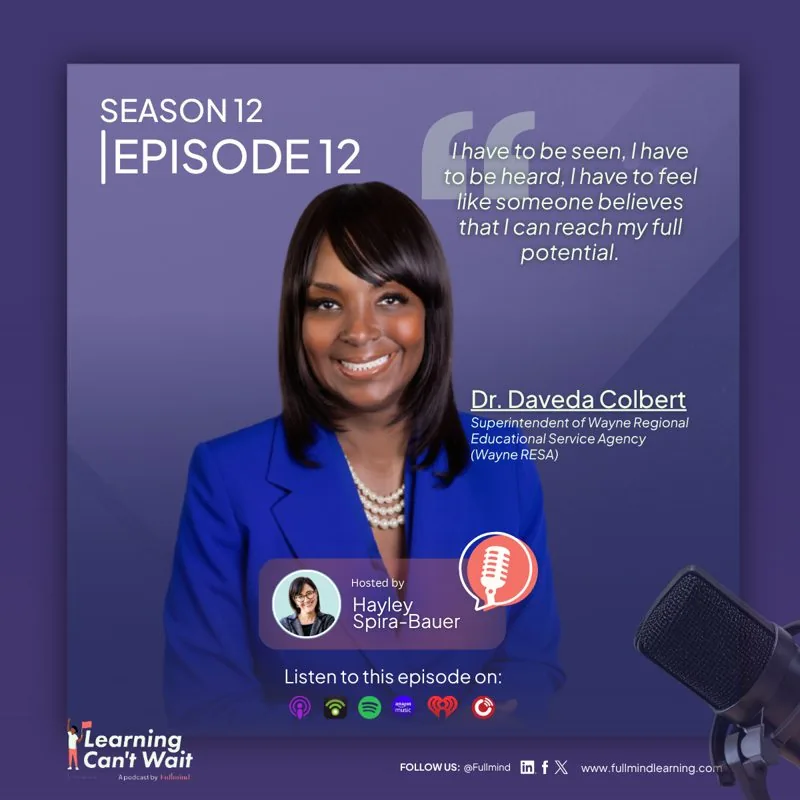 Dr. Daveda Colbert: Leadership, Belonging & ServiceOctober 6, 2026 · Dr. Daveda Colbert
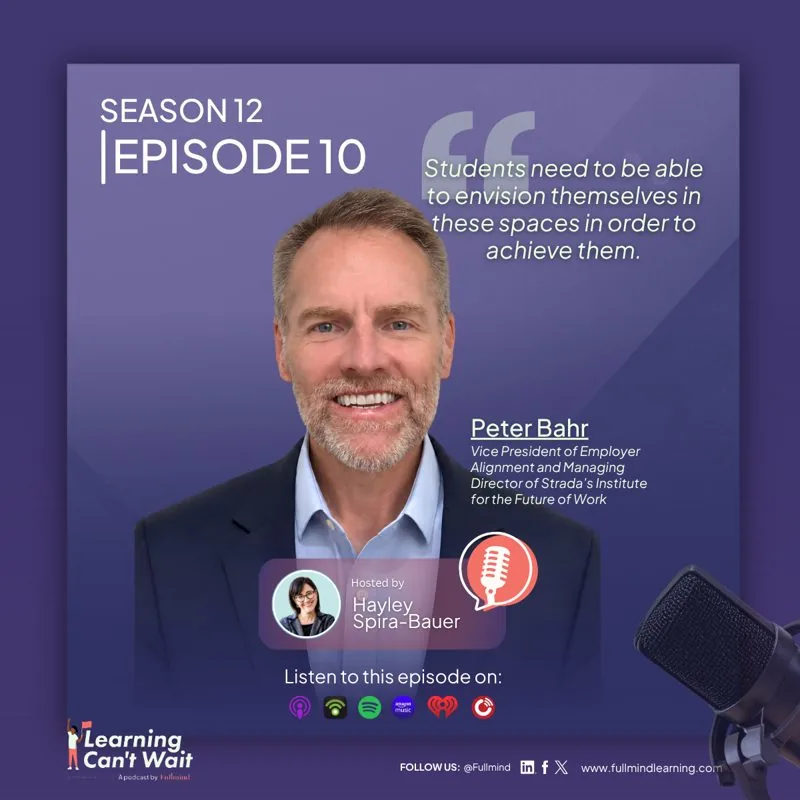 Peter Bahr: Homegrown talent, Career pathways & Work-based learningSeptember 22, 2026 · Peter Bahr
For Education Leaders
Get proven strategies and expert analysis from the host of the Learning Can't Wait podcast, delivered straight to your inbox.



















































How can we help? Let’s connect.
Tell us what you need. It takes about a minute, and you’ll see the next steps right away.
Meet an education consultant
Talk through your students, schedule and goals.
Get a proposal for your district
A plan built around your needs and budget.
Prefer to call? 210-617-3009
Thanks! Pick a time that works
A 30-minute call with an education consultant. Your details are already filled in.
Your one-pagers
Matched to what you told us. They download as one PDF.
Every child deserves the opportunity to access exceptional education.